Paul Baran and Packet Switching: The Network That Was Never Built
Abstract
In the early 1960s, an engineer at RAND asked a Cold War question: how do you build a communication network that keeps working after a nuclear strike takes out a third of it? Paul Baran’s answer was a distributed mesh in which messages are chopped into small blocks, each routed independently, reassembled at the far end. It became one of the foundations of ARPANET and the internet. Baran’s own network was never built: AT&T refused to cooperate, and when the Air Force offered to fund it, Baran killed the project himself rather than watch the wrong agency botch it. He shared credit for the idea with Britain’s Donald Davies for the rest of his life and called his invention “the only solution I could think of.”
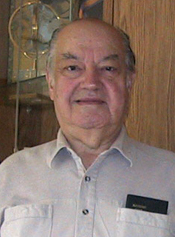
The Boy With the Delivery Bike
Paul Baran was born on April 29, 1926, in Grodno, then in Poland, now in Belarus, the son of Jewish merchants. The family emigrated to the United States in 1928 and settled in Philadelphia, where his father ran a grocery store. Young Paul delivered vegetables on a red cargo bicycle and worked out the shortest routes in his head, an early taste of the routing problems he would spend his career on.
He studied electrical engineering at Drexel University and graduated in 1949. His first job was at the Eckert-Mauchly Computer Corporation in Philadelphia, where he tested vacuum tubes for the first UNIVAC. A stint in the radar division of Hughes Aircraft followed, and he earned a master’s degree in engineering from UCLA in 1959, with a thesis on optical character recognition. That year he joined the RAND Corporation, the Air Force think tank, and was put on the problem of communication systems that could survive attack.
The Survivable Network
The Cold War framed the question exactly. Baran later described it plainly: “If two paranoid, heavily armed countries are staring at each other, you have to think about how to survive a first strike in that unstable situation.” A command network wired like the telephone system had a fatal weakness. Take out a few central switching offices and the whole thing went dark, which meant an enemy could disable a nation’s ability to respond, or to stand down, with a handful of well-placed warheads.
Baran classified networks into three shapes: centralized (one hub, one point of failure), decentralized (a hierarchy of hubs), and distributed (a mesh in which every node connects to several neighbors). Only the distributed mesh degraded gracefully. He calculated that with a redundancy level of only three or four links per node, a network could keep functioning even after most of its nodes were destroyed.
Making the mesh work required a second idea. Instead of opening a dedicated circuit for the length of a conversation, Baran proposed breaking every message into standard-sized blocks. Each block carried its own destination address and traveled independently, and each switching node passed it toward the destination by whatever link was working at that instant, a scheme he called “hot-potato” routing. If a node vanished mid-transmission, the surviving nodes rerouted around the hole. Baran named the units message blocks. Donald Davies at Britain’s National Physical Laboratory arrived at the same design independently around 1965 and gave it the word that stuck: packet.
On Distributed Communications
Between 1960 and 1964 Baran wrote up the design as a series of RAND reports, published in 1964 as the eleven-volume On Distributed Communications. Nine of the core technical memoranda were his own. The reports were unclassified and public, which is why the work could later be picked up by others. The internet’s architecture descends from this distributed model, though the first ARPANET was closer to decentralized than to Baran’s full mesh.
Dead End: The Network Nobody Would Build
Baran’s design was sound, and it was never built.
The plan needed the telephone network’s cooperation, and AT&T, which ran a circuit-switched monopoly, wanted no part of a scheme that declared its entire architecture obsolete. Baran met the company’s engineers repeatedly. They insisted packet switching could not work; some, he recalled, seemed unable to accept that a message could be usefully cut into pieces at all.
The Air Force was convinced and offered to fund construction. The catch was the chain of command: implementation would be handed to the Defense Communications Agency, which Baran judged lacked the technical competence to build the system correctly. He concluded that a botched demonstration would poison the idea for years. So in 1965 Baran did something rare for an inventor with a green-lit budget in reach: he recommended the project be shelved rather than built badly, and walked away from it. The distributed survivable network he had spent five years designing was never constructed to his specifications.
The idea outlived the project. When Larry Roberts began designing ARPANET at ARPA in 1967, he found Baran’s public reports and consulted him on the design. Packet switching, dismissed by AT&T and abandoned by its own author, became the basis of the network that became the internet.
Myth: the internet was built to survive nuclear war
Baran’s RAND work genuinely was about surviving a nuclear strike, and that is the source of the persistent claim that the internet itself was designed as a nuclear-proof command system. ARPANET was not: it was built to share scarce computers among university researchers. Its designers knew Baran’s work and borrowed packet switching from it, but did not build ARPANET to his survivability specifications. See The Internet Nuclear War Myth and Myths and Misconceptions.
The Futurist and the Serial Founder
Baran left RAND in 1968 and co-founded the Institute for the Future, a nonprofit forecasting group in Menlo Park. Writing as a futurist in the early 1970s, he described a coming world of home terminals used for banking, news, and what he called teleshopping, and predicted it would erode the traditional supermarket. The forecast ran decades ahead of the technology that would prove it.
He also turned into a serial company founder, launching ventures roughly every few years to commercialize communications technology: StrataCom, which built the first cell-based (ATM) packet switches; Telebit, whose modems used discrete multitone signaling; Metricom, which ran the Ricochet wireless mesh network; and Com21, a cable-modem maker, among others. The discrete multitone technique in Telebit’s modems is a direct ancestor of the DSL and modern Wi-Fi that carry much of today’s internet traffic.
Sharing the Credit
Baran refused to treat packet switching as a personal triumph. “It was absolutely no great achievement,” he said. “It was the only solution I could think of.” He was consistent that the idea belonged to many hands, and he named Davies as an equal co-inventor without prompting.
His clearest statement on credit came in 2001:
The internet is really the work of a thousand people. And of the many people who worked on it, if you take any one of them out, the internet would still be here. It’s like building a cathedral. Someday a historian comes along and asks, “Well, who built the cathedral?” And if you’re not careful, you can fool yourself into thinking you were the one who built it.
The honors came anyway: the IEEE Alexander Graham Bell Medal (1990), the Marconi Prize (1991), the National Medal of Technology and Innovation (2007), and a posthumous induction into the Internet Hall of Fame in 2012.
Paul Baran died of complications from lung cancer on March 26, 2011, in Palo Alto, at the age of 84.
📚 Sources
- Internet Hall of Fame: Paul Baran (inducted 2012)
- Baran, Paul: “On Distributed Communications” — RAND Corporation, Memorandum RM-3420-PR (1964)
- RAND Corporation: “Paul Baran and the Origins of the Internet”
- Borchers, Detlef: “‘Es war die einzige Lösung, die ich denken konnte’ – zum Tode von Paul Baran” — heise online, 28.03.2011
- Hafner, Katie & Lyon, Matthew: Where Wizards Stay Up Late: The Origins of the Internet (1996), Simon & Schuster
- Markoff, John: “Paul Baran, Internet Pioneer, Dies at 84” — The New York Times, March 27, 2011
- Image: Paul Baran.jpg by Andreu Veà, WiWiW.org (CC BY-SA 3.0), via Wikimedia Commons