Stephanie "Steve" Shirley and Freelance Programmers
Abstract
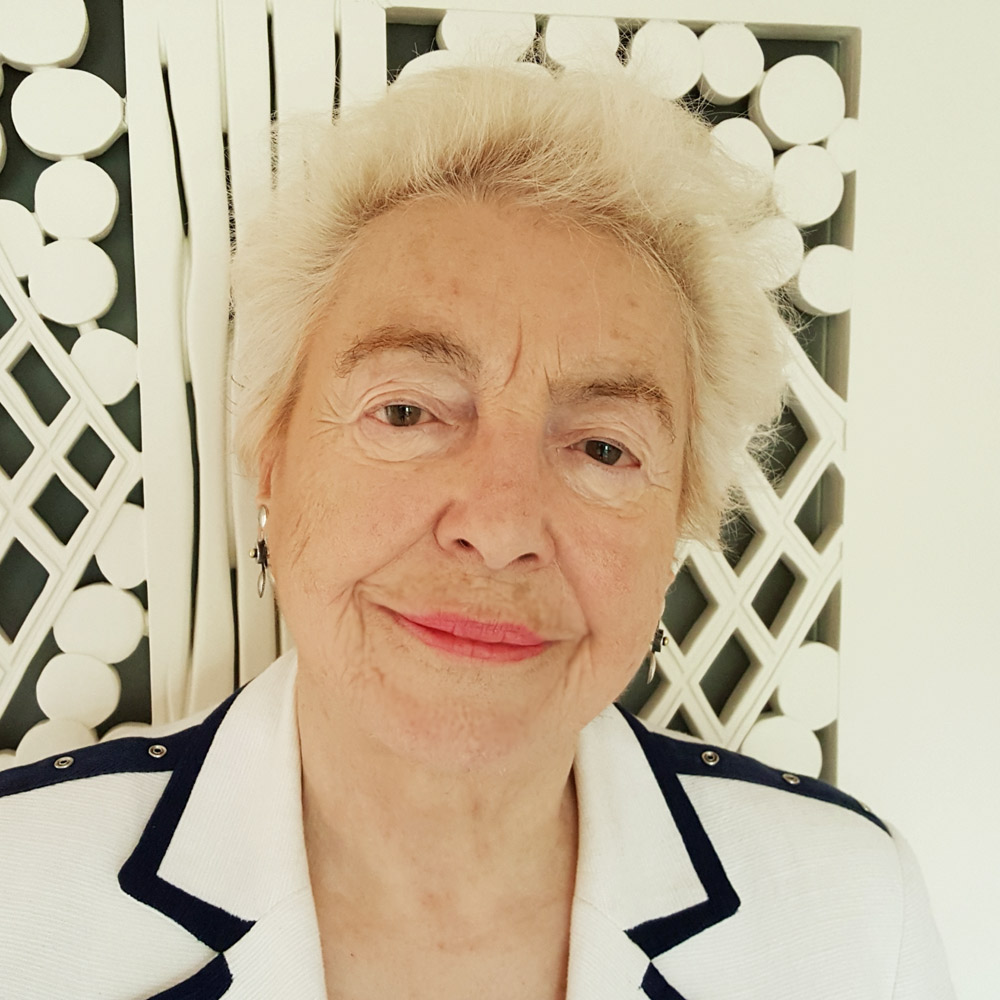
Stephanie Shirley arrived in Britain in 1939 as a five-year-old Kindertransport refugee and decided her rescued life had to be worth the rescue. In 1962 she founded Freelance Programmers with £6 on her dining table: a software house staffed almost entirely by women programming from home, decades before “remote work” had a name. Because letters signed “Stephanie” went unanswered, she signed them “Steve”. The company programmed Concorde’s black box, passed into the hands of its own workforce, and reached a valuation near $3 billion as Xansa, making 70 of her staff millionaires. Shirley gave away more than £67 million, most of it for autism causes, before her death in August 2025.
Kindertransport
Stephanie Shirley was born Vera Buchthal on September 16, 1933, in Dortmund, the daughter of Arnold Buchthal, a Jewish judge stripped of his post by the Nazis, and a Viennese mother. In July 1939, aged five, she was put on a Kindertransport train with her nine-year-old sister Renate and sent to England, where a childless couple in Sutton Coldfield took her in. Her parents survived the war and reclaimed the girls, but the bond never re-formed; she considered her foster parents her real ones. The debt shaped everything after, in her own words: “I wanted my life to have been worth saving.” At eighteen she took British citizenship and chose a new name, Stephanie Brook.
She was good at mathematics, so good that her girls’ school could not teach her and arranged lessons at the local boys’ school. University was out of financial reach. Instead she took a job and spent six years in evening classes earning a mathematics degree (1956).
Dollis Hill
The job was at the Post Office Research Station at Dollis Hill in London, where Tommy Flowers had built Colossus a decade earlier. Shirley built electronic equipment and wrote machine code there through the 1950s, including work on ERNIE, the random-number machine that has drawn Britain’s Premium Bond lottery numbers since 1957. In 1959 she moved to CDL, the firm designing the ICT 1301 computer, and married the physicist Derek Shirley. She also hit the ceiling: she watched promotions go to men and concluded that a woman in the British computer industry of 1962 could rise no further as an employee.
A Company of Women
So she stopped being an employee. In 1962, with £6 of capital and her dining-room table as headquarters, she founded Freelance Programmers, a company built around a labor pool the industry was throwing away: trained women programmers who had been forced out of work by marriage or motherhood. They wrote software at home, on their own hours, connected by telephone and post, with rigorous written standards to make distributed work auditable. Of her first 300 or so staff, three were men. The Sex Discrimination Act of 1975 later made her women-only hiring policy illegal, an irony she enjoyed retelling.
The business plan met the decade head-on. Selling software at all was a novelty in 1962 (it was normally bundled free with hardware), and a woman selling it was answered with silence: her letters of introduction, signed Stephanie, got no replies. Her husband suggested the family nickname, and letters signed “Steve” Shirley got meetings. By the time clients discovered the trick, she was already in the room.
The homeworkers delivered serious engineering. The company’s best-known contract was programming the black-box flight recorder for Concorde, written by a distributed team of women working from home. Other work included software standards and payroll and scheduling systems for British industry.
Ownership and Flotation
The company became F International in 1974 and F.I. Group in 1988. Shirley believed the workforce should own the company it had built, and in 1991 she transferred a controlling interest to the staff. When the company floated on the London Stock Exchange in March 1996, the shares made 70 of her employees millionaires. Renamed Xansa in 2001, the company grew to about 8,500 staff and a valuation near $3 billion before Groupe Steria acquired it in October 2007. Shirley herself had retired in 1993, having served along the way as the first female president of the British Computer Society (1989 to 1990) and as a director of Tandem Computers, the Atomic Energy Authority, and the John Lewis Partnership.
Giles and the Second Career
Shirley’s son Giles, born in 1963, was profoundly autistic and never spoke. Caring for him ran alongside the entire history of the company; he died in 1998, at 35, after an epileptic seizure. Her philanthropy, organized through the Shirley Foundation from 1986, went overwhelmingly to autism: she founded Prior’s Court, a residential school for autistic pupils, and endowed the research charity Autistica. Computing got its share, including the founding donation for the Oxford Internet Institute (2001). By the time the foundation deliberately spent itself out in 2018 she had given away more than £67 million, and she spent a year as the UK government’s first Ambassador for Philanthropy (2009 to 2010).
Honours accumulated: OBE in 1980, DBE in 2000, Companion of Honour in 2017, Fellow of the Royal Academy of Engineering, Fellow of the Computer History Museum (2018). Her memoir Let It Go appeared in 2012, and her 2015 TED talk, “Why do ambitious women have flat heads?”, answered its own title: flat on top from being patted patronizingly, she said, and larger feet from standing closer to the kitchen sink. Dame Stephanie Shirley died in Reading on August 9, 2025, at 91.
📚 Sources
- Stephanie Shirley — Wikipedia
- Xansa — Wikipedia
- In Memoriam: Dame Stephanie Shirley, 1933–2025 — Computer History Museum
- Dame Stephanie Shirley: Why do ambitious women have flat heads? — TED (2015)
- Oxford Internet Institute — Wikipedia
- Image: Dame Stephanie Shirley 2015.jpg by Maximilian Schönherr (CC BY-SA 4.0), via Wikimedia Commons