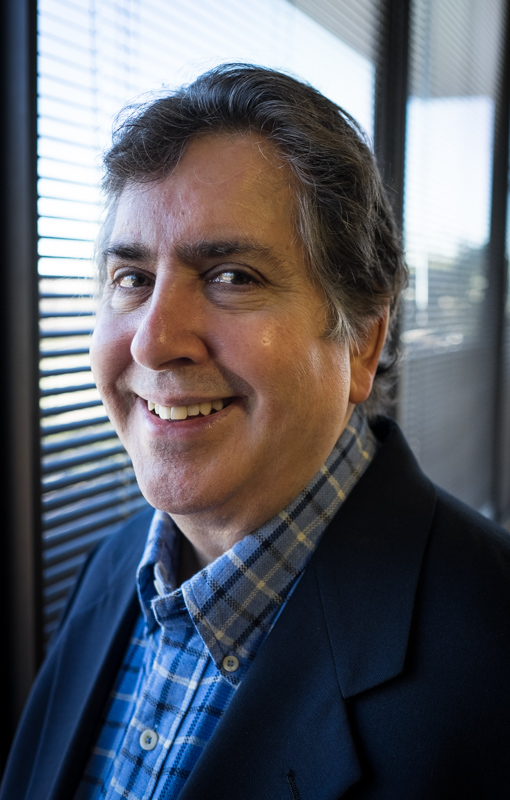
Douglas Lenat and Cyc
Abstract
Douglas Lenat spent his career on one bet: AI systems fail because they lack common sense, and the fix is to type common sense in, one logical assertion at a time. His discovery programs AM and Eurisko made him the only researcher to win a war-game tournament with a computer twice, and in 1984 he traded that fame for Cyc, an attempt to hand-encode all the background knowledge a person absorbs by age ten. Forty years, roughly 2,000 person-years, and about 25 million assertions later, Cyc had paying customers but no common-sense breakthrough. A month before his death in August 2023, Lenat co-wrote a final paper with Gary Marcus arguing that large language models need exactly what Cyc built.
The Automated Mathematician
Douglas Lenat was born on September 13, 1950, in Philadelphia. He took bachelor’s degrees in mathematics and physics and a master’s in applied mathematics at the University of Pennsylvania, all by 1972, then a PhD at Stanford in 1976 under Cordell Green. His dissertation program, AM (Automated Mathematician), did something provocative for its time: instead of proving theorems handed to it, it went looking for interesting mathematics on its own. AM generated and mutated short Lisp programs, interpreted them as mathematical concepts, and used about 250 heuristic rules to judge which ones were worth exploring. Starting from elementary set theory, it worked its way to natural numbers, multiplication, primes, the fundamental theorem of arithmetic, and a statement equivalent to Goldbach’s conjecture. The work won Lenat the IJCAI Computers and Thought Award in 1977 and faculty posts at Carnegie Mellon (1976) and Stanford (1978).
The fine print arrived later. In 1984 Graeme Ritchie and Frederick Hanna went through AM’s published description and found the heuristics tangled into the control flow, key terms left undefined, and signs that user interaction had done some of the discovering. Lenat conceded part of the point: any system generating enough short Lisp programs will produce some that an observer can read as deep mathematics. The mathematics AM “found” was partly in the eye of its audience.
Eurisko and the Traveller Tournament
AM’s successor Eurisko fixed AM’s structural weakness by making the heuristics themselves first-class objects the system could inspect, modify, and invent. Written in Lenat’s representation language RLL-1 on top of Lisp, it could discover new rules of thumb, including rules of thumb about rules of thumb.
Its public demonstration became one of AI’s better stories. In 1981 Lenat entered Eurisko’s output in the US national championship of Trillion Credit Squadron, a naval war game in the Traveller universe in which players design a space fleet under a fixed budget and detailed rules. Human players built balanced fleets of agile capital ships. Eurisko, after exploring the rule book’s corners, submitted 96 nearly stationary, lightly armored gunboats. The swarm won the tournament. The organizers rewrote the rules for 1982; Eurisko won again, this time having discovered among other things that scuttling its own damaged ships kept the fleet effective. When the organizers announced they would cancel the tournament if the program took a third title, Lenat retired it. His paper on the underlying method won the best-paper award at AAAI in 1982, and Eurisko later did useful work in VLSI design.
Eurisko also taught Lenat the lesson that set the rest of his career. The program was clever but ignorant: every new domain required humans to hand-feed it the relevant knowledge before the cleverness could start. The bottleneck of AI, he concluded, was knowledge itself.
The Bet on Common Sense
By the early 1980s the same diagnosis was visible across the field. Expert systems performed impressively inside their narrow rule bases and failed absurdly at their edges, because they lacked what every human expert has underneath the expertise: common sense, the millions of unstated facts about the world (water is wet, dropped objects fall, dead people stay dead) that make ordinary reasoning possible. Lenat’s conclusion was blunt and quotable: “Intelligence is ten million rules.”
In 1984 he left Stanford for Austin to become principal scientist of MCC (Microelectronics and Computer Technology Corporation), the research consortium that American technology companies had founded in 1982 as an answer to Japan’s Fifth Generation program. There he started Cyc, from “encyclopedia”: a project to write down, in formal logic, the common-sense knowledge a system would need before it could learn the rest by itself. The plan was explicitly a pump-priming exercise. Humans would hand-encode knowledge for a decade or two until Cyc knew enough to read books and learn on its own. In 1986 Lenat estimated the priming would take at least 250,000 rules and 1,000 person-years.
Building Cyc
Cyc’s knowledge lives in CycL, a representation language that had grown into higher-order logic by 1989, and is organized into microtheories, internally consistent bundles of assertions that may contradict each other across bundle boundaries (physics in the real world, physics in a cartoon). Staff logicians, informally “cyclists”, entered knowledge by hand, assertion by assertion: #$BillClinton, #$Tree-ThePlant, and the relations among millions of such terms.
By 1994 the base held roughly 100,000 terms and one million assertions, and MCC’s decade was up. Lenat spun the project out as Cycorp at the end of 1994 and ran it as CEO for the rest of his life. The funding followed three phases: consortium money to 1994, US government research contracts (DARPA among them) to about 2006, then commercial applications in finance, energy, and healthcare. By 2002 the project had absorbed about $60 million and 600 person-years; by 2017 the base held about 1.5 million terms and 24.5 million assertions, at a cost of roughly 2,000 person-years. Along the way Lenat became, according to his colleagues, the only person to serve on the scientific advisory boards of both Microsoft and Apple.
OpenCyc and Paying Customers
Cycorp released OpenCyc, a free subset of the ontology, in spring 2002 with 6,000 concepts and 60,000 facts; version 4.0 (June 2012) had grown to 239,000 concepts and about 2 million facts. ResearchCyc, a fuller version for academics, followed in 2006. Real deployments existed: search-term disambiguation for Lycos (until 2001), the CycSecure network-vulnerability tool (2002), a DARPA-funded Terrorism Knowledge Base (2004 to 2008), and a natural-language query interface over cardiothoracic-surgery data at the Cleveland Clinic (2007). None of this was the advertised destination; it was a common-sense engine earning its keep as consulting infrastructure. In 2017 Cycorp discontinued OpenCyc, and the company settled into a deliberately low profile, debt-free and without outside investors.
Dead End: The Encoding Wall
As a path to general intelligence, Cyc is the field’s most thoroughly documented dead end, and its failure is more informative than most successes. Every estimate of “enough” knowledge was wrong in the same direction. The 1986 figure of 250,000 rules became 24.5 million assertions with no takeoff in sight; the moment when Cyc would know enough to start learning by reading never arrived. Machine-learning researcher Pedro Domingos summarized the mainstream verdict when he called the project a catastrophic failure: it needed endless costly hand-fed data and could not evolve on its own. Meanwhile the statistical approach Lenat had bet against, ingesting text at scale rather than encoding it by hand, produced systems that answer common-sense questions Cyc never could, albeit unreliably. The Semantic Web ran into a version of the same wall a decade later: formal ontologies demand precision and labor that the messy world refuses to supply.
What the failure established is worth stating precisely. Cyc did not show that symbolic knowledge is useless; it showed that human common sense is vastly larger than the people who own it can estimate, and that hand-encoding it does not scale to the size of the problem. Lenat never accepted the stronger conclusion, and the last word of the argument is not obviously in: the reasoning that large language models fail at is precisely the kind Cyc performed.
The Last Paper
Lenat was diagnosed with bile duct cancer in 2021. After a recurrence, he spent late 2022 and 2023 working with the cognitive scientist Gary Marcus on a paper distilling what forty years of Cyc had to teach the LLM era. “Getting from Generative AI to Trustworthy AI: What LLMs might learn from Cyc” appeared on arXiv on July 31, 2023. Its argument: LLMs are trained to be plausible rather than correct, and trustworthy AI will need to combine generative models with curated knowledge and formal, auditable reasoning of the kind Cyc pioneered. Lenat died in Austin a month later, on August 31, 2023, at 72. Cycorp continues to operate the knowledge base he spent half his life building.
📚 Sources
- Douglas Lenat — Wikipedia
- Cyc — Wikipedia
- Eurisko — Wikipedia
- Automated Mathematician — Wikipedia
- Lenat, D. & Marcus, G.: “Getting from Generative AI to Trustworthy AI: What LLMs might learn from Cyc” (arXiv:2308.04445, 2023)
- Douglas Lenat obituary — Legacy.com (2023)
- Image: Dbl-smiling.jpg by LordRedthorn (CC BY-SA 4.0), via Wikimedia Commons