Estonia and Eastern Europe's Tech Industry: Digital Governance, Antivirus Pioneers, and the Game Studios
Abstract
Eastern Europe’s contribution to computing history runs in three distinct streams. Estonia built the world’s most advanced digital government, a small Baltic state of 1.3 million people where citizens vote online, incorporate companies in eighteen minutes, and have had digital identity cards since 2002. Czechoslovakia, and later the Czech Republic and Slovakia, produced three of the world’s most significant antivirus companies (ESET, Avast, and AVG) in the paranoid computing environment of the late communist period and its immediate aftermath. Poland produced CD Projekt Red, the studio behind The Witcher games and Cyberpunk 2077. Ukraine built a substantial IT services industry before the Russian invasion of 2022 disrupted it. And across the region, the intersection of Soviet-era mathematical education, low wages in the 1990s, and EU membership (or EU aspiration) produced technical talent that staffed everything from London hedge funds to Silicon Valley engineering teams.
Estonia: The Digital Republic
Estonia’s technology story begins with a political decision made in conditions of genuine urgency.
When Estonia declared independence from the Soviet Union in August 1991, it was one of the poorest countries in Europe. Soviet industrial infrastructure had left the economy oriented toward Moscow; the ruble was collapsing; the country had no established institutions, no currency of its own, and no banking system. The government that assembled under Prime Minister Edgar Savisaar and subsequently Mart Laar (who took office in 1992 at age thirty-two, a historian by training) had to build a functioning state from almost nothing.
Laar’s government made a series of radical decisions: a flat income tax of 26% (effective January 1994, the first country to adopt one), rapid privatization, and early investment in internet infrastructure. The decision to build digital government was partly pragmatic, a country with limited bureaucratic capacity could stretch that capacity further if citizens interacted with government online rather than in person, and partly ideological. A generation of reformers who had grown up under Soviet surveillance chose transparency and digital efficiency as principles.
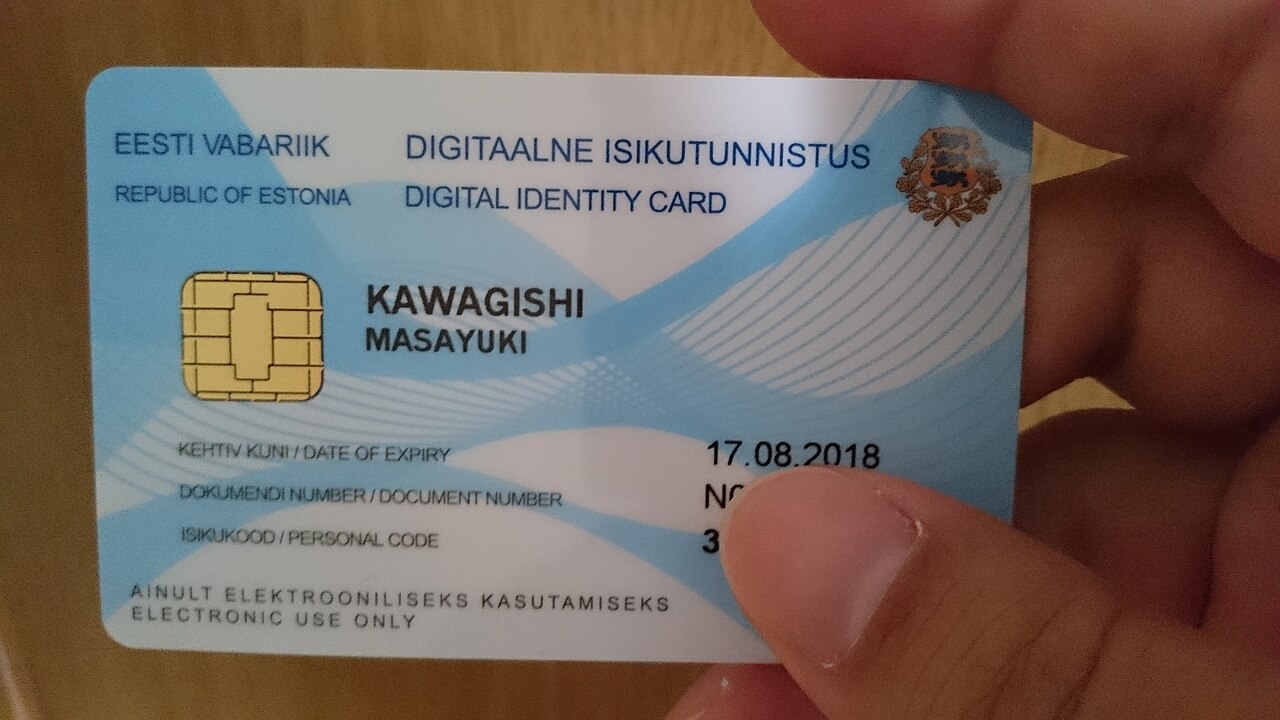
The Tiger Leap program, proposed in 1996 by Toomas Hendrik Ilves (then ambassador to the United States, later president) and education minister Jaak Aaviksoo, put computers and internet connections into Estonian schools; advisers such as Linnar Viik pushed public internet access points into villages and libraries. By 2000, Estonia’s internet penetration was among the highest in Eastern Europe. By 2002, Estonia issued national digital identity cards, smartcards with embedded cryptographic certificates that allowed cardholders to authenticate their identity online and sign documents digitally. The signatures had legal equivalence to handwritten signatures, established by law.
X-Road, launched in 2001 and released as open-source software under an MIT license in 2016, was the technical infrastructure that made e-Estonia possible: a distributed data exchange layer that allowed government databases to interoperate securely without centralizing data. A doctor accessing a patient’s medical record, a police officer verifying a driver’s license, or a tax authority checking a business’s registration, all could query the relevant database through X-Road without any central authority holding all the data. The architecture was privacy-preserving by design: data stays in the system that owns it; only queries cross X-Road.
The services built on this infrastructure:
e-Voting: Available since 2005, online voting allowed Estonians to vote from any internet-connected device during the advance voting period. In the 2023 parliamentary election, 51% of votes were cast online. The system used the national ID card for authentication; to blunt coercion, an i-vote can be re-cast electronically any number of times during the advance period, and a paper ballot cast at a polling station cancels it.
e-Tax: Estonian citizens file taxes online in approximately three minutes. The tax authority pre-fills returns from employer submissions; citizens verify, correct if needed, and submit. Refunds appear in bank accounts within days.
e-Residency: Launched in 2014, the digital residency program allows non-citizens to apply for Estonian digital identity, enabling them to establish EU-registered businesses with Estonian legal and tax infrastructure. The program passed 100,000 e-residents from more than 170 countries in February 2023; in that year e-residents founded about 4,600 new Estonian companies, roughly one-fifth of all new businesses in the country.
Estonia’s model attracted imitators. Finland and Iceland adopted X-Road itself, jointly maintained with Estonia through the Nordic Institute for Interoperability Solutions; Ukraine built its Trembita exchange layer on it, and around 20 countries have adapted the technology. The UK’s Government Digital Service sent staff to Tallinn in 2013 and signed a knowledge-sharing agreement with the Estonian government. e-Estonia demonstrated that digital government was an achievable operational reality.
Skype: Built in Estonia
Skype was conceived by Janus Friis (Danish) and Niklas Zennström (Swedish) and funded through their earlier peer-to-peer network Kazaa. But the software itself was written by three Estonian engineers: Ahti Heinla, Priit Kasesalu, and Jaan Tallinn, schoolmates who had built games together at the Estonian studio Bluemoon. A fourth Estonian, Toivo Annus, ran the Tallinn engineering office.
Skype launched in August 2003, using peer-to-peer technology that routed calls through users’ computers rather than dedicated infrastructure, making voice over IP calls of dramatically better quality than prior products and at no cost. Within three years it had 100 million registered users. eBay acquired it in 2005 for $2.6 billion. Microsoft acquired it from eBay and a consortium of investors in 2011 for $8.5 billion, and shut it down in 2025 after building its own rival, Teams (see Dead End: Skype).
The three Estonian engineers (particularly Jaan Tallinn) used their Skype proceeds to become significant funders of AI safety research. Tallinn co-founded the Centre for the Study of Existential Risk at Cambridge and the Future of Life Institute, becoming one of the most prominent funders of long-termist AI concerns.
TransferWise (now Wise), founded in London in 2011 by Estonians Taavet Hinrikus (Skype’s first employee) and Kristo Käärmann, built international money transfer infrastructure using mid-market exchange rates and peer-to-peer matching. In its fiscal year 2023, Wise moved £105 billion across borders for around 10 million customers, at average fees under 1%.
Bolt (originally Taxify), founded in 2013 by Markus Villig at age nineteen, built a ride-hailing platform operating in 45 countries across Europe, Africa, and Latin America, competing with Uber on pricing and driver conditions. It reached a €7.4 billion valuation in January 2022.
Czech and Slovak Antivirus Heritage
The antivirus software industry has an improbable geographic concentration in the former Czechoslovakia, a product of specific conditions in the late communist period and the first decade after the Velvet Revolution.
ESET, based in Bratislava (Slovakia), was founded in 1992 by Miroslav Trnka, Peter Paško, and Rudolf Hrubý; Trnka and Paško had been developing antivirus software since 1987 under the name “NOD” (the product became NOD32). The communist Czechoslovakia of the late 1980s had significant computer science talent (mathematics and programming were prestigious occupations and relatively insulated from ideological pressure) but access to Western software was limited. Viruses spread on floppy disks through the research community, and the researchers who understood the systems built tools to fight them.
ESET grew into Europe’s largest privately held cybersecurity company, protecting over 110 million users worldwide, and remained privately held and headquartered in Bratislava, a rare example of a globally significant technology company choosing to stay in Central Europe rather than relocate to London, Dublin, or Silicon Valley.
Avast Software, founded in Prague in 1988 by Pavel Baudiš and Eduard Kučera, followed a similar trajectory. Baudiš was a researcher at the Czechoslovak Academy of Sciences when he encountered a boot sector virus and wrote a disinfection tool. What began as a hobby became a commercial product and eventually a publicly traded company. Avast merged with NortonLifeLock in September 2022 in an $8.6 billion deal, the largest acquisition of a Czech technology company; the combined firm took the name Gen Digital.
AVG Technologies, founded as Grisoft in Brno in 1991 (then still Czechoslovakia) by Jan Gritzbach and Tomáš Hofer, produced the AVG AntiVirus that became widely known through its free-for-personal-use offering in the early internet era. Avast acquired AVG in 2016 for $1.3 billion.
The concentration of antivirus excellence in the Czech Republic and Slovakia reflected the region’s tradition of mathematical and cryptographic expertise, a tradition that the communist system had, paradoxically, preserved and developed through its emphasis on technical education.
Poland: CD Projekt Red and The Witcher
CD Projekt was founded in Warsaw in May 1994 by Marcin Iwiński and Michał Kiciński, school friends who had sold imported games at Warsaw’s computer market as teenagers. Poland extended copyright protection to software only in February 1994; until then, copied Western games were sold openly. CD Projekt became one of the country’s first legal importers of CD-ROM games and won Polish gamers over with full Polish localizations, most famously of Baldur’s Gate in 1999.
In 2002, CD Projekt created CD Projekt Red, its game development studio, and licensed the rights to The Witcher, a series of dark fantasy novels by Polish author Andrzej Sapkowski. The first game, released in 2007, was a commercial and critical success. The Witcher 3: Wild Hunt (2015) became one of the most critically acclaimed games ever made, winning over 250 Game of the Year awards. Cyberpunk 2077 (2020) drew eight million preorders, then launched so bug-ridden on the PlayStation 4 and Xbox One that Sony removed it from the PlayStation Store for six months.
CD Projekt Red’s output demonstrates that world-class, culturally ambitious game development could originate from Warsaw as effectively as from Seattle, Tokyo, or Montreal. The company’s production values, narrative ambition, and design philosophy were distinctly European (darker, morally complex, literary in aspiration) in contrast to the escapism or spectacle that defined many American blockbusters.
Poland’s broader technology sector (particularly IT services) grew substantially in the 2000s and 2010s. Kraków, Warsaw, and Wrocław became significant centers for nearshore software development serving Western European and American clients, combining the English-language capability, cultural proximity, and EU legal framework that made Ukraine attractive before 2022, with political stability that Ukraine could not guarantee.
Ukraine: The Interrupted Ascent
Ukraine had, before February 2022, one of the largest IT services industries in Eastern Europe. With approximately 300,000 IT professionals, companies including EPAM Systems (founded 1993 by Belarus-born Arkadiy Dobkin and Leonid Lozner, with major engineering operations in Ukraine, listed on the New York Stock Exchange since 2012 and worth roughly $15 billion in 2023), GlobalLogic, Luxoft, and hundreds of smaller firms provided software development services to Western clients at competitive rates and high quality.
The Russian invasion of February 24, 2022 displaced approximately eight million Ukrainians, including a significant portion of the IT workforce. Ukraine’s government rapidly digitized military operations, the Diia app, which had provided digital government services since 2020, was extended to coordinate civilian mobilization. Tech workers contributed to cyber defense, information warfare, and the digital logistics of a country under attack. Many relocated to Warsaw, Berlin, Kraków, and Lisbon while continuing to work remotely.
The invasion demonstrated both the fragility and resilience of Ukraine’s digital economy. Physical infrastructure was targeted; the workforce adapted. IT services exports reached a record $7.3 billion in 2022, the first year of the full-scale war, then slipped to $6.7 billion in 2023, near the pre-war level, though the human and institutional costs were unmeasurable.
📚 Sources
- Kitsing, Meelis: “Success without Strategy: E-Government Development in Estonia” — Policy & Internet 3(1) (2011)
- Tiigrihüpe (Tiger Leap) — Wikipedia
- The Flat Tax’s Silver Anniversary — Hoover Institution
- X-Road History — x-road.global
- Internet voting in Estonia — valimised.ee (Estonian Electoral Commission)
- Estonian e-Residency community reaches 100,000 members — e-resident.gov.ee (2023)
- World-record 18-minute company registration (InnoEstonia 2009) — RIK
- “Government as a data model”: what I learned in Estonia — UK Government Digital Service blog (2013)
- Skype and the Estonian start-up ecosystem — Estonian World
- Skype — Wikipedia
- Wise plc FY2023 results announcement
- Bolt raises €628 million at €7.4 billion valuation — Tech.eu (January 2022)
- ESET — Wikipedia
- About ESET — eset.com
- Czech cyber security firm Avast bought by US firm — Radio Prague International (2021)
- AVG Technologies (Grisoft) — Wikipedia
- CD Projekt: Corporate History
- Cyberpunk 2077 — Wikipedia
- Arkadiy Dobkin — Wikipedia
- Ukraine’s tech industry after the invasion — The Register (2025)
- IT Ukraine Association
- e-Estonia: Digital Society
- Jaan Tallinn — Wikipedia
- Image: E-Residency card.jpg by Masayuki (Yuki) Kawagishi (CC BY 2.0), via Wikimedia Commons