Ross Ihaka and Robert Gentleman
Abstract
Ross Ihaka (born 1954) and Robert Gentleman (born 1959) were two statisticians at the University of Auckland who wanted a language to teach an introductory course in the department’s Macintosh laboratory and found no commercial package that suited it. Starting in 1992 they wrote their own, a Scheme interpreter underneath and S syntax on top, and named it for the letter before S and for their own first initials. They posted it to StatLib in August 1993, put it under the GPL in June 1995 at the urging of an early user at ETH Zürich, and handed it to a core team in 1997. R 1.0.0 shipped on February 29, 2000. It replaced the commercial product it copied and became the language of academic statistics and, through Gentleman’s Bioconductor, of genomics. Neither man set out to do that.
Two Arrivals
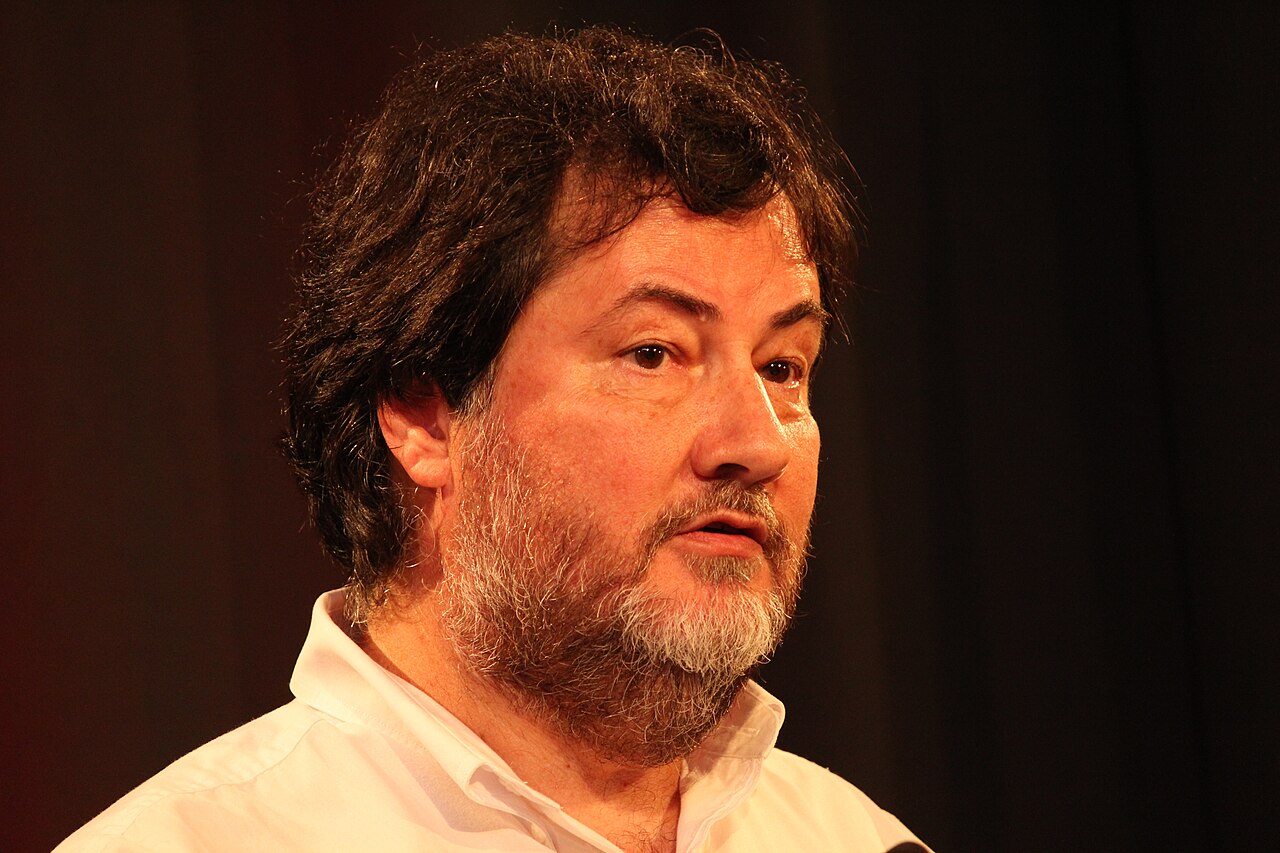
George Ross Ihaka was born in Waiuku, south of Auckland, in 1954, of Ngāti Kahungunu, Rangitāne and European descent. He took his first degree at the University of Auckland and his doctorate at Berkeley in 1985 under David Brillinger, on statistical modelling for seismic interferometry; the thesis was titled Rūaumoko, after the Māori god of earthquakes. He came back to Auckland’s statistics department.
Robert Gentleman was born in Canada in 1959, took a mathematics degree at the University of British Columbia and a statistics doctorate at the University of Washington in 1988 with a thesis on exploratory methods for censored data, and joined the Auckland statistics department. The two colleagues shared an interest in statistical computing and a teaching laboratory that needed better software.
S on Scheme
The environment they had was S, John Chambers’s language from Bell Labs, sold by Statistical Sciences in Seattle as S-PLUS. It was what research statisticians used, and in Ihaka’s words they “saw no suitable commercial environment” for a laboratory of student Macintoshes. Ihaka had read Abelson and Sussman’s Structure and Interpretation of Computer Programs and had noticed that S did not scope variables the way Scheme, the minimal Lisp, did. The two started by writing their own small Scheme-like interpreter, about 1,000 lines of C, and gave it an S-like syntax because both of them knew S well, so that existing S code would mostly run and the students would be learning something with a future. The engine explains features that puzzled S users for years: R closures capture their environment because Scheme’s do.
The two worked on it from 1992, first for the Macintosh laboratory, and in August 1993 posted binaries to StatLib, the Carnegie Mellon statistics archive, with an announcement on the s-news mailing list. It was a teaching tool with a small following until June 1995, when Martin Maechler of ETH Zürich, the most persistent of their early users, persuaded them to release the source under the GNU General Public License. They did, and the project changed character: other people started sending code. Mailing lists followed, then in April 1997 CRAN, the package archive that Kurt Hornik and Fritz Leisch set up in Vienna with twelve packages, and in mid-1997 the R Core Team, a group of about a dozen developers with write access, which took the language out of the founders’ hands. R became a GNU project with version 0.60 on December 5, 1997. The paper that describes the design, “R: A Language for Data Analysis and Graphics”, appeared in the Journal of Computational and Graphical Statistics in 1996. Version 1.0.0 was released on February 29, 2000.
What happened afterwards, the collapse of S-PLUS, the tidyverse, RStudio and the millions of users, is in R and Statistical Computing. The founders’ own view was unsentimental: Ihaka said in later talks that R’s performance and semantics were compromises made for a teaching laboratory in the early 1990s, and that the field deserved something better. In his later years at Auckland he worked on a new statistical language built on Lisp, arguing that R had become impossible to fix without breaking the packages that made it valuable.
Bioconductor

Gentleman left Auckland for the Dana-Farber Cancer Institute and Harvard, and in 2001 started Bioconductor, with Vincent Carey and others, as an open-source project for the analysis of genomic data in R. The timing was the microarray: a single experiment produced tens of thousands of gene-expression measurements, the biologists had no tools, and the commercial tools that appeared were closed and slow to change. Bioconductor gave them packages, a release cycle synchronised with R’s, and a rule that every package ship with runnable documentation. It grew into the standard software for genomics, with more than two thousand packages, and it is the reason R rather than any other language sits under so much of computational biology. Gentleman moved to the Fred Hutchinson Cancer Research Center in Seattle as head of computational biology, to Genentech as senior director of bioinformatics in 2009, to 23andMe as a vice president in 2015, and in 2020 became founding executive director of the Center for Computational Biomedicine at Harvard Medical School. He received the Benjamin Franklin Award in bioinformatics in 2008 and an honorary doctorate from UBC in 2026.
Ihaka received the Royal Society of New Zealand’s Pickering Medal in 2008 for R and retired from Auckland as an associate professor in 2017; the department named an annual lecture after him the same year. He had never left.
📚 Sources
- Ross Ihaka — Wikipedia
- Robert Gentleman (statistician) — Wikipedia
- R (programming language) — Wikipedia (the August 1993 StatLib posting, the Scheme influence, CRAN in April 1997 with twelve packages, GNU status on December 5, 1997, R 1.0.0 on February 29, 2000)
- Ihaka, Ross — “R: Past and Future History”, Interface ‘98 conference, 1998 (Abelson and Sussman, the Macintosh laboratory, the 1,000-line Scheme-like interpreter under S syntax, the August 1993 StatLib posting, Maechler’s persuasion and the June 1995 GPL release, the eleven-member core group in mid-1997)
- An Updated History of R — R-bloggers, October 2017 (development beginning in 1992)
- New leader for computational biomedicine — Harvard Medical School, July 13, 2020 (Gentleman’s career and the 2020 appointment)
- Ihaka, Ross and Robert Gentleman — “R: A Language for Data Analysis and Graphics”, Journal of Computational and Graphical Statistics 5(3), 1996, pp. 299–314
- Gentleman, Robert C. et al. — “Bioconductor: open software development for computational biology and bioinformatics”, Genome Biology 5, R80, 2004
- Image: Ross Ihaka (5189180796).jpg by Kristina D.C. Hoeppner (CC BY-SA 2.0), via Wikimedia Commons
- Image: Robert Gentleman on R Consortium.jpg by R Consortium (CC BY 3.0), via Wikimedia Commons