Chuck Thacker and the Alto
Abstract
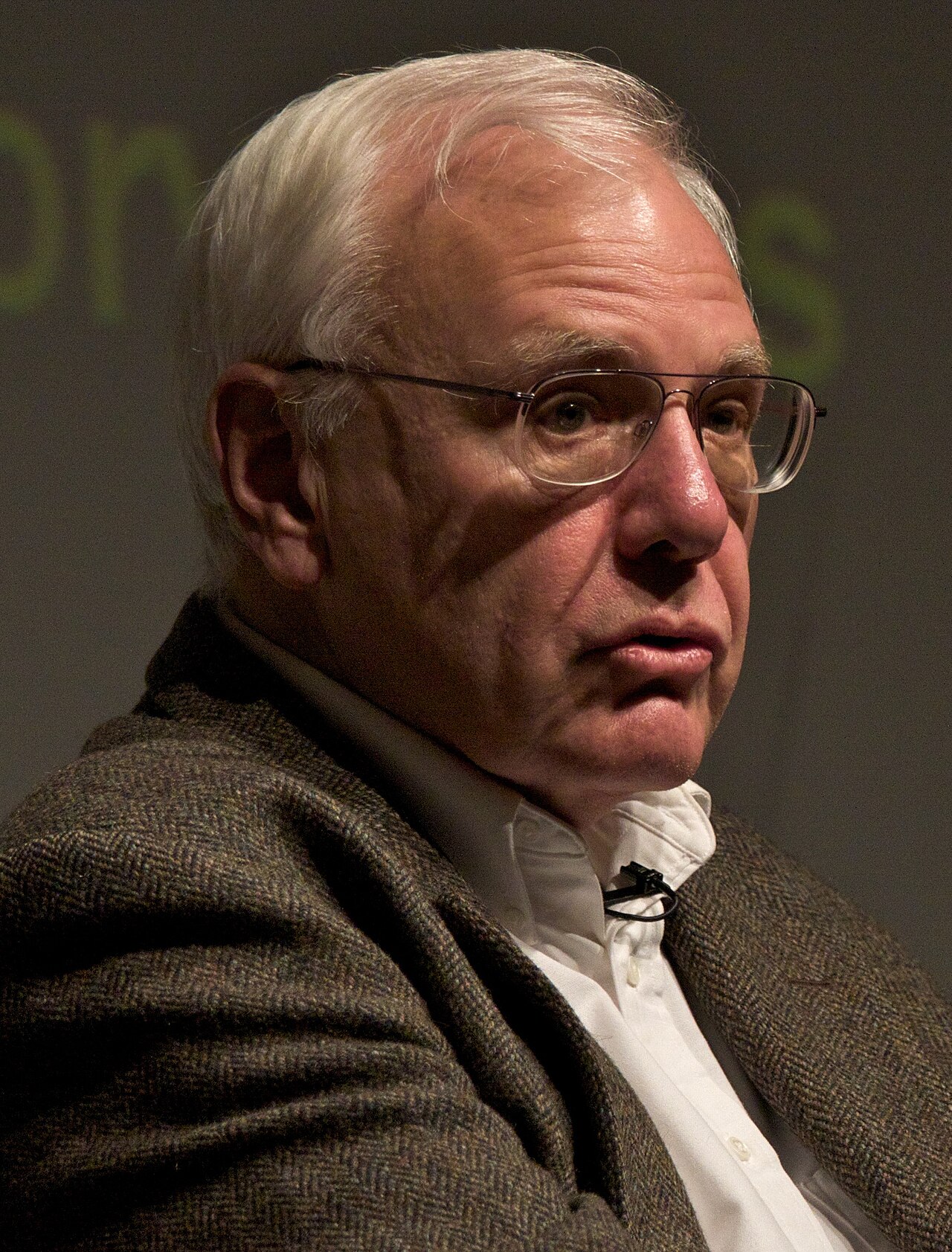
Charles P. Thacker (1943–2017) was the engineer who built the machines that the more famous names at Xerox PARC wrote about. He led the hardware design of the Alto, the first computer with a bitmapped screen, a mouse and a network connection, which ran on 1 March 1973; he is credited as a co-inventor of Ethernet; he designed DEC’s Firefly multiprocessor; and at Microsoft in the late 1990s he built the prototype from which the Tablet PC came. He was a founding member of three research laboratories, held a physics BS and no graduate degree, and received the 2009 Turing Award, the ACM’s citation naming him the creator of “the first modern personal computer.”
Berkeley and Project Genie
Charles Patrick Thacker was born in Pasadena, California, on 26 February 1943 and took a BS in physics at Berkeley in 1967. In 1968 he joined Project Genie, the ARPA-funded group behind the Berkeley Timesharing System, and there met Butler Lampson, with whom he worked for most of the next fifty years. When Genie’s members left the university to sell their design as the Berkeley Computer Corporation, Thacker went with them; when BCC failed, Robert Taylor hired most of the group for the new Xerox Palo Alto Research Center.
The Alto
Lampson’s 1972 memo “Why Alto?” argued for a computer per person rather than a shared mainframe, and Thacker led the small team that built it. The first Alto ran on 1 March 1973.
It had a display of 606 by 808 pixels, mounted in portrait like a sheet of paper, with every pixel addressable from memory; a three-button mouse; 128 kilobytes of memory, expandable to 512; a removable 2.5-megabyte disk cartridge; and a processor built from TTL logic running at 5.88 MHz, whose microcode was shared between the tasks of driving the display, the disk and the network so that the machine’s one processor did what later computers gave to separate controllers. It was the first computer designed from the start around the assumption that the person in front of it would have it to themselves. About 2,000 were built over a decade, at around $32,000 each, and Xerox never sold one; they went to PARC, to Xerox offices and to universities, and on them Alan Kay’s group wrote Smalltalk, Lampson and Charles Simonyi wrote Bravo, the first WYSIWYG editor, and the desktop as it now exists was worked out (The History of Desktop Environments). Steve Jobs saw it in 1979; Xerox’s own attempt to sell the idea, the Star of 1981, is the subject of its own entry.
The Alto needed a network, and Thacker’s name is on that too. Bob Metcalfe designed the protocol and David Boggs the physical layer, and Thacker is credited as a co-inventor; the 2.94-megabit clock came from the Alto’s own (Bob Metcalfe and Ethernet). He also contributed to Gary Starkweather’s laser printer. In 1984 the ACM gave Thacker, Lampson and Taylor its Software System Award for the Alto.
Firefly and the Tablet
In 1983 Thacker was a founder of Digital Equipment Corporation’s Systems Research Center in Palo Alto, where he designed the Firefly, a workstation with several processors sharing memory, which the Turing citation later called the first multiprocessor workstation. In 1997 he moved to Microsoft Research to help set up its laboratory in Cambridge, England, and then, back in the United States, oversaw the design of the hardware prototypes on which Microsoft’s Tablet PC was based: a slate with a pen and a screen you wrote on. He joined the product team to see it to market and returned to research in 2005, and spent his last working years on computer architecture at Microsoft’s Silicon Valley campus, including FPGA hardware for Berkeley’s RAMP project (2006–10), which let new processor designs be tried in hardware rather than simulated.
The Award
The ACM announced on 9 March 2010 that Thacker had won the 2009 Turing Award, “for his pioneering design and realization of the Alto, the first modern personal computer, and the prototype for networked personal computers,” citing also the Ethernet, the Firefly and the tablet. He had received the Draper Prize of the National Academy of Engineering in 2004, with Kay, Lampson and Taylor, for the networked personal computer, and the IEEE von Neumann Medal in 2007; he was a Fellow of the ACM (1994) and of the Computer History Museum (2007), held an honorary doctorate from ETH Zurich and twenty-nine patents, and never took a degree beyond the bachelor’s. He died of complications from oesophageal cancer in Palo Alto on 12 June 2017, aged 74. The Eckert-Mauchly Award came to him that year, posthumously.
Dead End: The Company That Owned the Future
Everything the Alto had, the industry adopted, and Xerox sold none of it. The machine cost $32,000 in 1973 money; the Star, the productised version of 1981, cost $16,595 and needed a network and a file server to be useful; and by the time the price was right the ideas had left through the front door with the people who had seen them. The corporate reasons are told elsewhere in this encyclopedia. Thacker himself moved on twice more. He was, as the ACM put it, a founding member of three major research labs, and in each case the founders wanted the same person to build the hardware.
📚 Sources
- Wikipedia: Charles P. Thacker — life dates, Berkeley BS 1967, Project Genie 1968, BCC, PARC, DEC SRC 1983, Microsoft 1997, RAMP 2006–10, awards, cause of death
- ACM press release, “ACM Turing Award Goes to Creator of First Modern Personal Computer,” 9 March 2010 (PDF) — the citation, the Firefly as first multiprocessor workstation, Microsoft Cambridge and the Tablet PC prototypes, return to research 2005, 29 patents, ETH doctorate, the 1984 Software System Award and 2004 Draper Prize
- Wikipedia: Xerox Alto — Lampson’s 1972 memo, first machines 1 March 1973, display, memory, disk, clock, 3 Mbit/s Ethernet, about 2,000 built, $32,000, the Star
- Metcalfe & Boggs, “Ethernet: Distributed Packet Switching for Local Computer Networks,” Communications of the ACM 19 (7), 1976 (DOI 10.1145/360248.360253) — the 2.94-megabit network of 1973
- Oral History of Chuck Thacker, interviewed by Al Kossow, Computer History Museum, 29 August 2007 (catalog 102658126) — Genie, BCC, PARC, SRC and Microsoft
- ACM Turing Award: Charles P. Thacker (2009)
- Image: Chuckthacker (cropped).jpg by Marcin Wichary (CC BY 2.0), via Wikimedia Commons