Clive Sinclair
Abstract
Clive Sinclair sold electronics at prices nobody else could match, by designing to a cost first and specifying the product afterwards. The method produced the world’s first slimline pocket calculator in 1972, the ZX81 at £49.95 in kit form, and the ZX Spectrum, which sold over five million units and staffed a national software industry. The same method produced the Black Watch, which lost time and money in 1975, and the C5 electric tricycle of 1985, which the Sunday Times called a “Formula One bath-chair” and which took his vehicle company into receivership in ten months. Sinclair Research made £14.28 million profit in 1984 and lost £18 million in 1985. He sold the computer business to Amstrad in April 1986 for £5 million, and spent the rest of his life inventing small electric vehicles that did not sell either.
Radionics
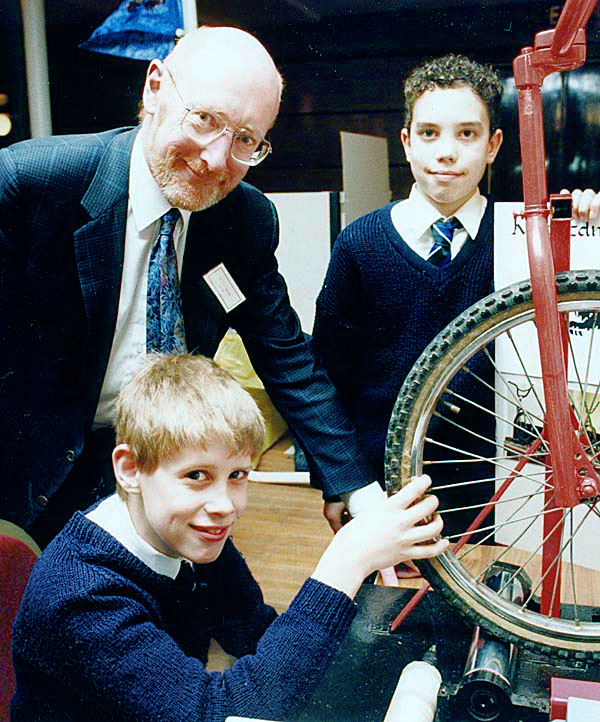
Sinclair was born on 30 July 1940 in Ealing, Middlesex, left school after A-levels, worked as a technical journalist, and formed Sinclair Radionics on 25 July 1961. The first product, in December 1962, was the Sinclair Micro-amplifier; the Slimline radio kit followed in 1963 at just under £2.50, and the X-10 in 1964 was one of the first commercial Class-D amplifiers.
The pattern was set early. The products were smaller and cheaper than anything else on the market, sold by mail order from advertisements in hobbyist magazines, and specified optimistically. One 10-watt Class-D design did not work as claimed, and Wireless World is reported to have stopped taking Sinclair advertisements after reader complaints. The distance between what a Sinclair advertisement promised and what the box did became a fixed feature of the business.
The Calculator That Pulsed Its Chip
The Sinclair Executive, launched in September 1972 at £79.95 plus VAT, was the first pocket calculator thin enough to go in a shirt pocket, 9 millimetres deep, at a time when competitors were the size of a paperback. It got there by running the Texas Instruments calculator chip outside its specification: the power supply pulsed current to the chip rather than supplying it continuously, which dropped average consumption from 350 milliwatts to about 20, which allowed hearing-aid batteries, which allowed the case to be thin.
It made £1.8 million for Radionics. By 1974 Executive sales were over £2.5 million, Sinclair was producing 100,000 calculators a month with 55% going for export, and the machine was selling in Japan at six times the price of Japanese models. The cheaper Cambridge followed in 1973 at £29.95 and the Scientific in 1975 at £49.95. The calculator price war that Texas Instruments then started is in The Pocket Calculator.
The Black Watch
The Black Watch, a digital wristwatch introduced in August 1975 at £17.95 to £24.95, went wrong in every direction at once: the case design, the chip, the battery and the timekeeping. Kits arrived that customers could not build, assembled watches kept poor time, and the company could not fill the orders it had taken. Radionics recorded its first loss, £355,000, in the financial year to April 1976.
The rescue came from the state. The National Enterprise Board bought 43% of Sinclair Radionics for £650,000 in April 1976 and held 73% by July 1977. Sinclair, who did not want government supervision, left; the company was renamed Sinclair Electronics in September 1979 and eventually became Thandar.
The ZX Machines
While Radionics was failing, Chris Curry was running a separate Sinclair vehicle that became Science of Cambridge in July 1977. It sold the MK14, a single-board microcomputer kit, from June 1978 at £39.95. Curry left to found Acorn, which took the other British path through the BBC Micro to the ARM processor (see The UK Computing Industry); the company Sinclair kept became Sinclair Research.
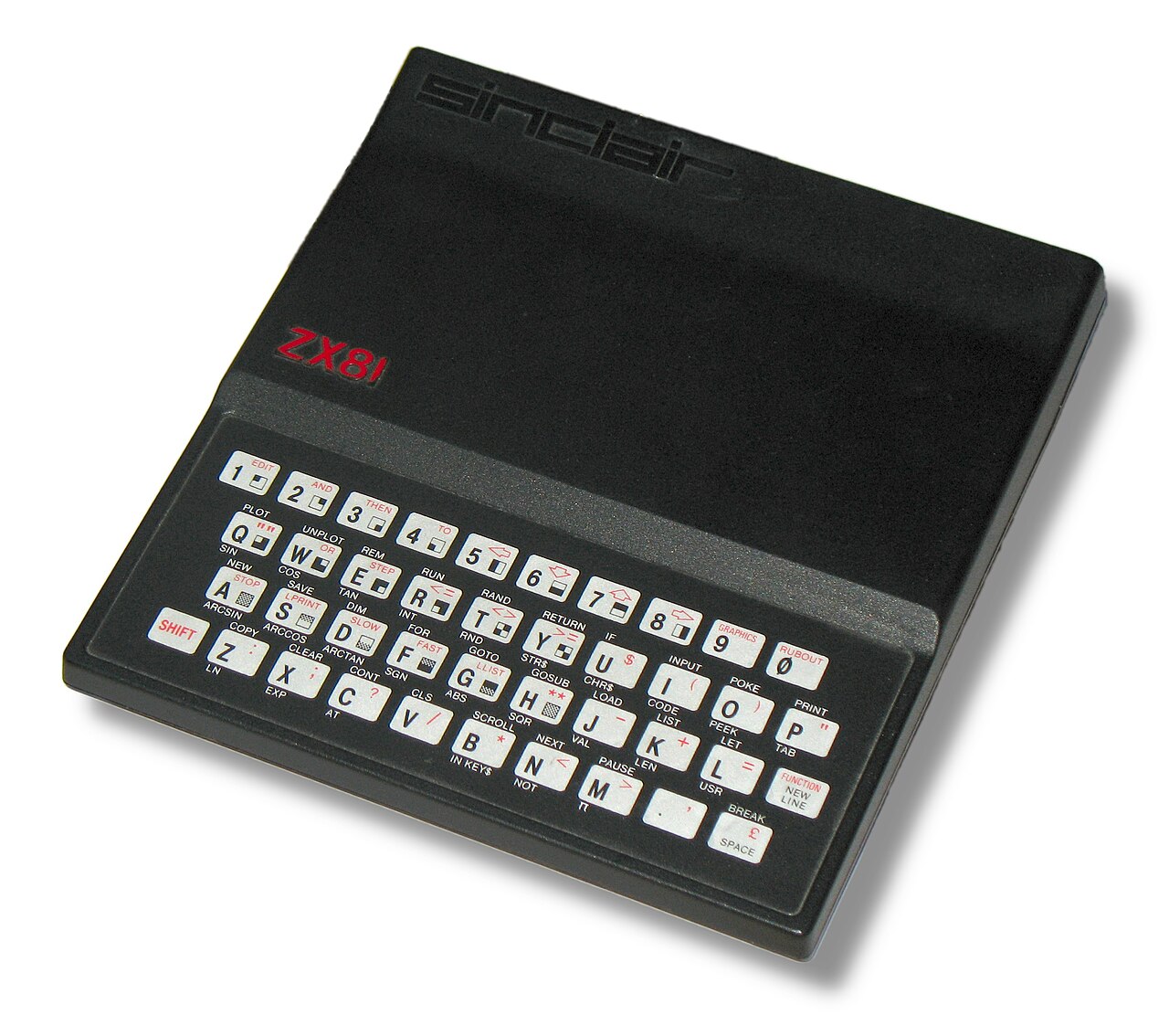
The ZX80 appeared in February 1980 at £79.95 in kit form and £99.95 assembled: 1 KB of RAM, a membrane keyboard, BASIC in ROM, and a design that saved parts by having the processor stop generating the television picture whenever it had to think. The ZX81 of March 1981 cut the chip count further and the price to £49.95 as a kit and £69.95 built, and sold over 1.5 million units. In the United States, Timex sold it as the Timex Sinclair 1000 and moved 550,000 machines in five months.
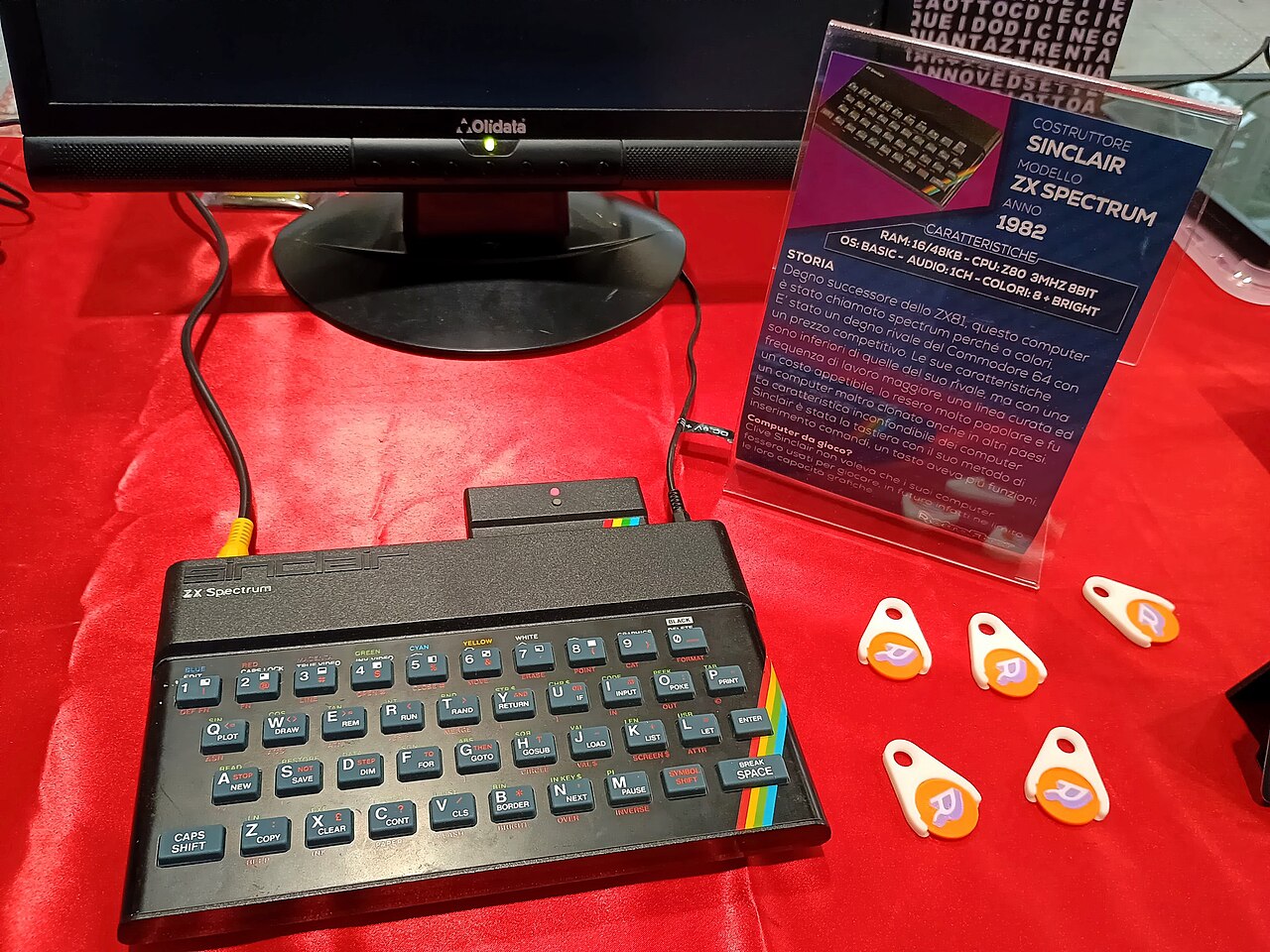
The ZX Spectrum, released on 23 April 1982 at £125 for 16 KB and £175 for 48 KB, added colour and sound and a rubber keyboard, and sold over five million. Its price put a programmable computer into households that had never considered owning one, and the software industry that grew on it was written largely by teenagers in bedrooms. The machines are described alongside their competitors in The Home Computer Boom.
Sinclair was knighted in the 1983 Birthday Honours. Sinclair Research made £14.28 million on turnover of £77.69 million in 1984, and revenue reached £102 million in 1985.
Three Products in One Year
1984 and 1985 were where the method ran out.
The QL, announced on 12 January 1984 at £399, was meant to take Sinclair into business computing: a Motorola 68008 at 7.5 MHz, 128 KB of RAM, and two built-in Microdrive tape-loop cartridges instead of floppy disks. Customers were promised delivery in 28 days and the first machines went out slowly from April, which brought an Advertising Standards Authority investigation. Byte called it a “premature baby” in September 1984 and listed the incomplete operating system, the unreliable Microdrives and the performance. It sold about 150,000 units and was discontinued in April 1986. Business buyers were already standardising on the IBM PC, and Spectrum owners had no reason to move to a machine with seventy games when theirs had thousands.
The TV80, a flat-screen pocket television ready in 1983, went into production at 15,000 units and did not sell.
Dead End: The C5
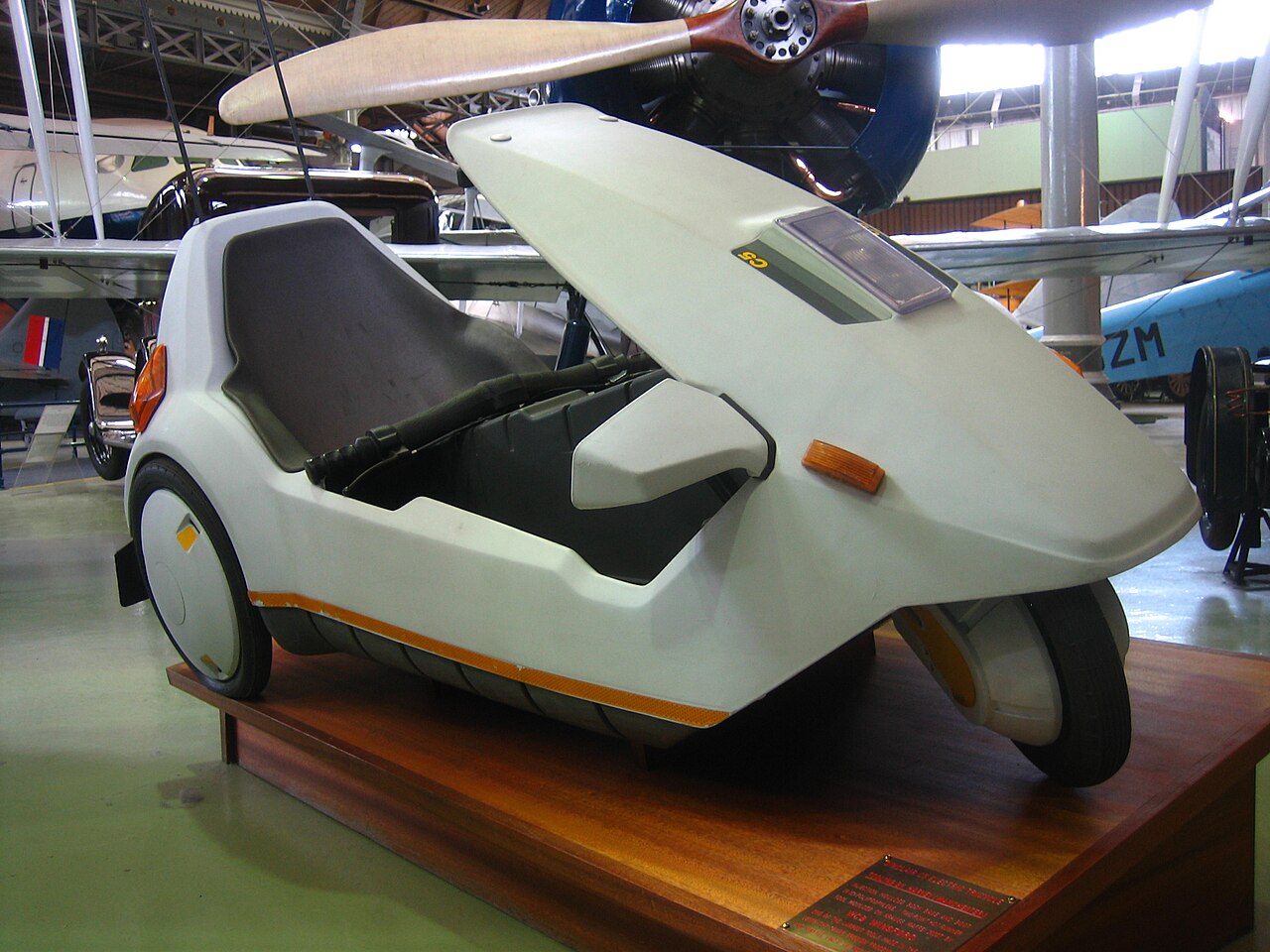
The C5 was unveiled at Alexandra Palace on 10 January 1985 at £399: a one-person electric tricycle with a 250-watt motor, a 12-volt lead-acid battery, a claimed range of 20 miles and a top speed of 15 mph, built at the Hoover factory in Merthyr Tydfil. It needed no driving licence, which was the point of the design, and meant a fourteen-year-old could legally use one on a public road.
The reception was immediate and bad. The Sunday Times called it a “Formula One bath-chair”. Your Computer reported that the motor could not get it up a gentle slope without the rider pedalling. The British Safety Council’s chairman James Tye said he was “shattered that within a few days 14-year-old children will be allowed to drive on the road in this Doodle Bug without a licence”: the driver’s head sat at the height of a lorry’s exhaust pipe, in British weather, with no roof.
Production was cut by 90% in April. Of 14,000 built, fewer than 5,000 sold. Sinclair Vehicles went into receivership on 15 October 1985 owing £7.75 million.
The C5 failed on its engineering (an underpowered motor and a battery that did not deliver the claimed range) and on a judgement about people: Sinclair had designed a vehicle for a road system that had no room for it and asked buyers to accept a level of exposure that the price did not compensate for. The underlying bet, that small electric vehicles would become ordinary, was eventually correct, which is the part that annoyed him for the next thirty years.
After
Sinclair Research lost £18 million in 1985. Robert Maxwell announced a rescue through Pergamon Press in June 1985 and abandoned it in August. On 7 April 1986 Sinclair sold the computer business, including the Spectrum and the QL, to Alan Sugar’s Amstrad for £5 million, keeping the company as a research shell. Amstrad kept the Spectrum line profitable for years, which says something about what the problem had been.
He went on inventing: the Zike electric bicycle in 1992, the folding A-bike in 2006, a series of electric vehicles that sold in the hundreds or the thousands. He chaired British Mensa from 1980 to 1997. He did not use the machines he was famous for; asked by the Guardian in 2010, he said “I don’t use a computer at all. The company does,” and admitted he had other people write his email.
Clive Sinclair died in London on 16 September 2021, aged 81. The British software and games industry that grew out of the Spectrum outlived every company he ran.
📚 Sources
- Clive Sinclair — Wikipedia (born 30 July 1940 in Ealing and died 16 September 2021 in London aged 81; Sinclair Radionics formed 25 July 1961; the Executive in 1972; the Black Watch of 1975; the ZX80 in February 1980 at £79.95 and £99.95; the ZX81 at £49.95 and £69.95; the Spectrum on 23 April 1982 at £125 and £175; the QL in 1984; the TV80 with 15,000 units produced; the C5 in January 1985 with 14,000 built and 4,500–5,000 sold; the April 1986 Amstrad sale for £5 million; the 1983 knighthood; and the Mensa chairmanship from 1980 to 1997)
- Sinclair Radionics — Wikipedia (the Micro-amplifier in December 1962, the Slimline radio kit in 1963, the X-10 Class-D amplifier in 1964 and the Wireless World advertising dispute, the Executive at £79.95 and its £1.8 million profit, the Cambridge at £29.95 in 1973 and the Scientific at £49.95 in 1975, the Black Watch in August 1975 at £17.95–£24.95 and the £355,000 loss in the year to April 1976 shown in the company’s financial table, the National Enterprise Board’s 43% stake for £650,000 in April 1976 rising to 73% by July 1977, and the September 1979 rename)
- Sinclair Executive — Wikipedia (September 1972 at £79.95 plus VAT, the 9-millimetre case, the pulsed power supply that cut average consumption from 350 milliwatts to about 20, £2.5 million of sales and 100,000 calculators a month by 1974 with 55% exported, and Japanese sales at six times local prices)
- Sinclair Research — Wikipedia (Chris Curry’s role and the 1977 rename to Science of Cambridge, the MK14 kit from June 1978 at £39.95, the corporate path to Sinclair Research, £14.28 million profit on £77.69 million turnover in 1984, £102 million revenue and an £18 million loss in 1985, Robert Maxwell’s aborted June–August 1985 rescue, and the 7 April 1986 sale to Amstrad for £5 million)
- Sinclair QL — Wikipedia (announced 12 January 1984 at £399, the 68008 at 7.5 MHz with 128 KB and two Microdrives, the 28-day delivery promise and the slow start in April, the Advertising Standards Authority investigation, Byte’s “premature baby” review of September 1984, about 150,000 units sold, discontinuation in April 1986, and the comparison of roughly 70 QL games with 4,700 for the Spectrum)
- Sinclair C5 — Wikipedia (unveiled 10 January 1985 at Alexandra Palace at £399, built at the Hoover factory in Merthyr Tydfil from November 1984, the 250-watt motor, 12-volt lead-acid battery, 20-mile claimed range and 15 mph top speed, the Sunday Times “Formula One bath-chair” and Your Computer hill-climbing verdicts, James Tye’s British Safety Council statement, the 90% production cut in April 1985, 14,000 built against about 5,000 sold, and the receivership of Sinclair Vehicles on 15 October 1985 owing £7.75 million)
- ZX81 — Wikipedia (March 1981, over 1.5 million units, and the Timex Sinclair 1000 selling 550,000 machines in five months in the United States)
- Sir Clive Sinclair Snubs ‘Appalling’ Modern PCs — Silicon UK (the 2010 Guardian interview in which Sinclair said “I don’t use a computer at all. The company does” and that others wrote his email)
- Image: Sinclair C5.jpg by adactio (CC BY 2.0), via Wikimedia Commons