Italy's Computing Industry: Pisa, Ivrea, and the Sale of 1964
Abstract
For about six years, from 1959 to 1964, Italy had a computer industry of the first rank: a university machine in Pisa funded by local provinces, a transistorised commercial mainframe from Olivetti with cabinets by Ettore Sottsass, and a young engineer at Olivetti who would later design the microprocessor. Then the men who had willed it into being died, the banks demanded that the electronics division go, and General Electric bought it. What Italy kept was a desktop programmable calculator that sold 44,000 units, a semiconductor company that became Europe’s largest, a theorem, a diaspora, and later a small blue circuit board from the same town as the typewriters. This article follows the country’s computing from the Pisa project of 1955 to Arduino, and asks what a national industry looks like once its centre has been sold.
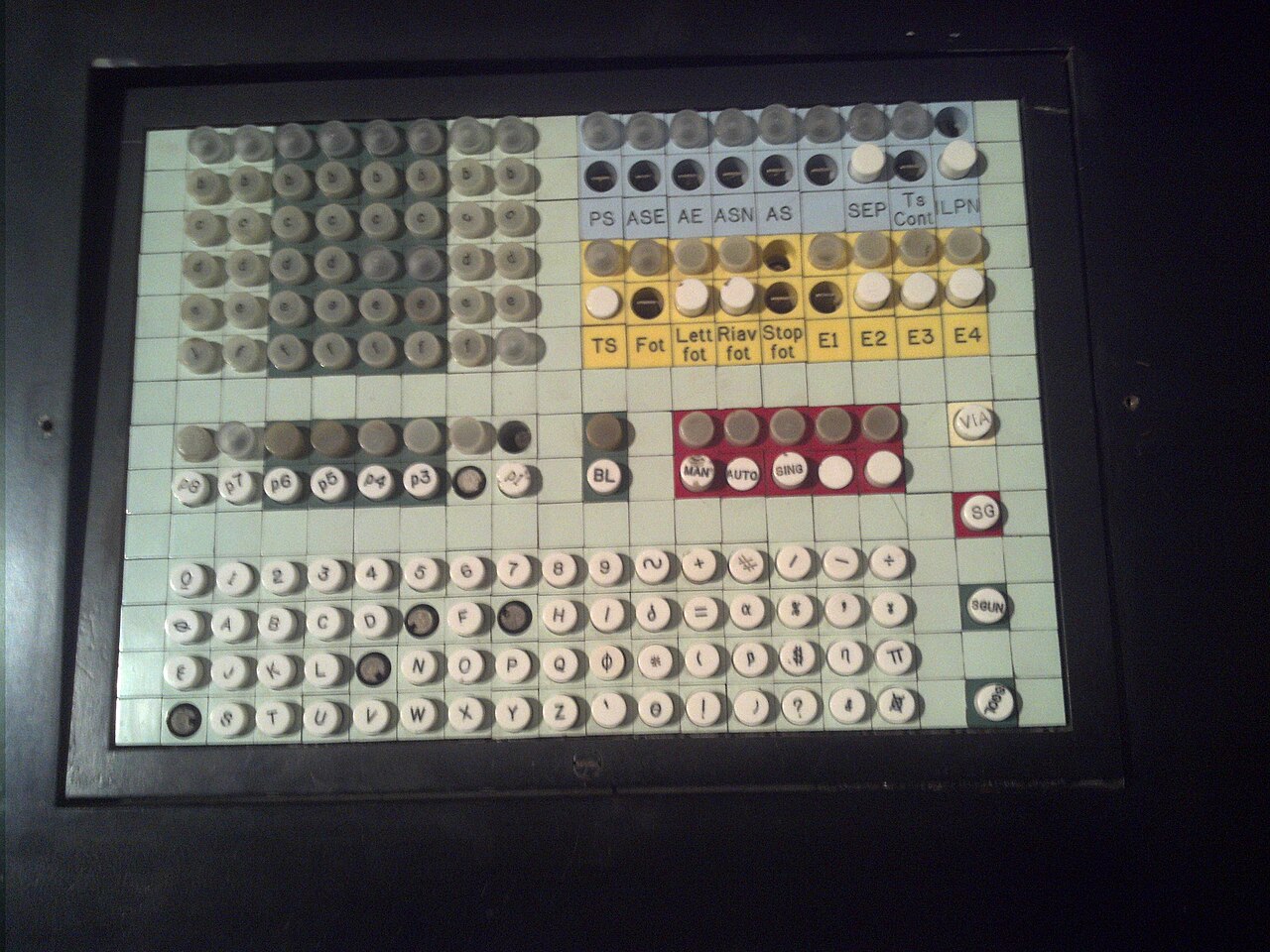
The Pisa Machine
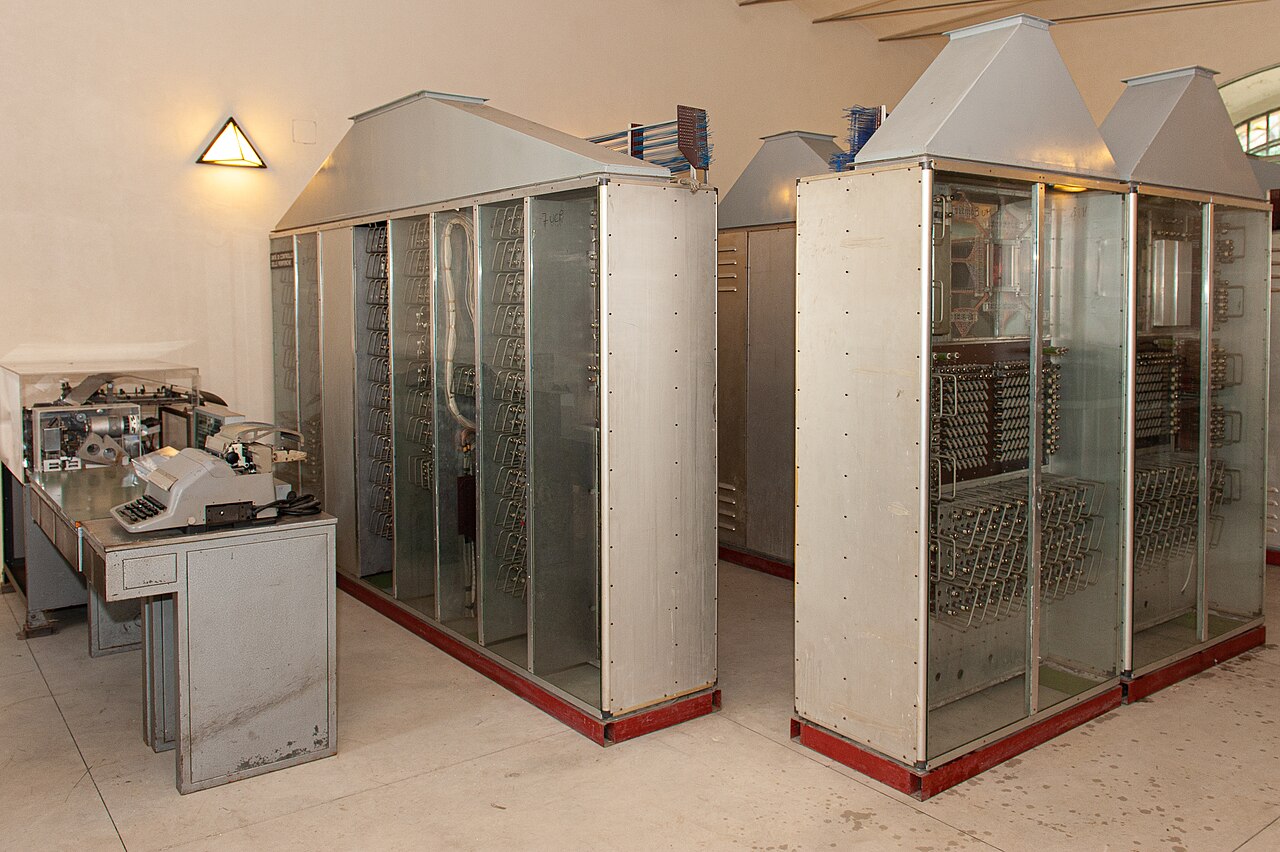
Italian computing started with a letter from a physicist and a cheque from three provinces. In 1954 the University of Pisa was deciding what to do with 150 million lire that the provinces of Pisa, Lucca and Livorno had offered for a scientific project, and Enrico Fermi, visiting from Chicago that summer, wrote to the rector in support of building an electronic computer. (The popular version, in which Fermi told Pisa to buy a computer rather than a particle accelerator, is not what the Italian sources record; the letter endorsed the computer, and no accelerator was on offer.) The university set up the Centro Studi Calcolatrici Elettroniche (CSCE) in March 1955 and began the CEP, the Calcolatrice Elettronica Pisana. A reduced pilot machine ran first; the full CEP was inaugurated on 13 November 1961 by President Giovanni Gronchi. It is preserved today at the university’s Museo degli Strumenti per il Calcolo.
Pisa’s importance lies less in the machine than in what it drew to the town. Olivetti, which had opened a research office in New Haven, Connecticut, in 1952, set up its own electronics laboratory in 1955 at Barbaricina on the edge of Pisa, next to the university project, and staffed it from the same pool of physicists. The Pisa group also gave Italy its first computer-science degree course: the rector Alessandro Faedo and Gianfranco Capriz of the CNR set up the corso di laurea in Scienze dell’Informazione in 1969, with the first lecture on 17 November of that year, and the CNR’s national computing centre CNUCE opened in Pisa the same year. The country’s professional society, AICA, was founded in 1961 out of the same community.
Olivetti and the Elea
Adriano Olivetti wanted his typewriter company in the computer business and recruited Mario Tchou in 1955, a thirty-one-year-old engineer born in Rome to Chinese diplomat parents and then teaching at Columbia, to run the Barbaricina laboratory. Tchou’s team produced the Elea 9003 in 1959, a mainframe built entirely from transistors, among the first commercial machines of that kind anywhere; its cabinets and console were designed by Ettore Sottsass and won the Compasso d’Oro that year. About forty were installed, mostly at Italian banks and industrial companies. A nineteen-year-old named Federico Faggin, hired by Olivetti in 1960, co-designed a small transistor computer with 4K words of twelve-bit magnetic core memory there before going to Padua for a physics degree, which is the first line of the story told in Federico Faggin and the Microprocessor.
Then the two men on whom the venture rested died within twenty months of each other: Adriano Olivetti on a train to Lausanne on 27 February 1960, aged 58, and Mario Tchou in a car crash on the Milan–Turin road on 9 November 1961, aged 37. Olivetti was by then overstretched by its 1959 purchase of the American typewriter maker Underwood, whose factories were worse than the accounts had shown. In 1964 a rescue group of FIAT, Pirelli and the big Italian banks recapitalised the company on the condition that the electronics division go, and Olivetti sold 75 percent of it to General Electric. GE took the rest soon after, abandoned computing itself in 1970 and passed the Italian operation to Honeywell. Italy never built another mainframe line.
The Calculator That Escaped
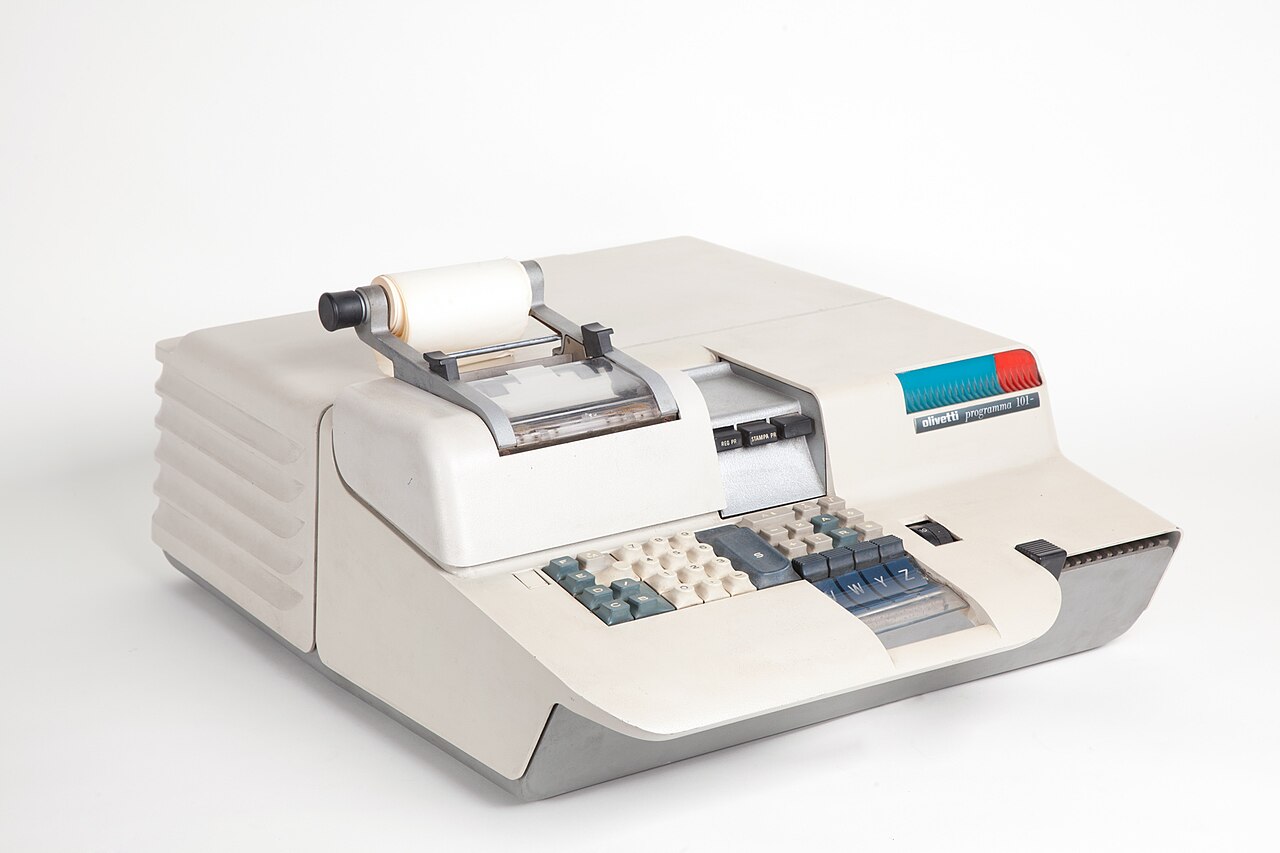
One project stayed behind because, on paper, it was a calculator. Pier Giorgio Perotto and a small team at Ivrea had been building a programmable desktop machine with magnetic-card storage and a printer, and it was left out of the GE transfer. The Programma 101 went on sale in 1965 at $3,200 and sold about 44,000 units, most of them in the United States; NASA bought ten and used them in planning the Apollo 11 landing. When Hewlett-Packard’s 9100A of 1968 was found to use the P101’s magnetic-card design, HP paid Olivetti royalties. Whether the machine deserves the title “first personal computer” is a definitional argument; that it was the first programmable desktop machine sold in quantity is not. (Its New York World’s Fair debut is dated to 1964 by some sources and 1965 by others, so this article gives no year.)
Olivetti’s later computing career was as a maker of other people’s designs. Under Carlo De Benedetti, who took control in 1978, it launched the M20 in 1982 on a Zilog Z8000 with its own operating system, then switched to IBM compatibility with the M24 of 1983, which AT&T sold in America as the PC 6300. For a few years in the mid-1980s Olivetti was the largest office-machine maker in Europe, the second-largest PC vendor in Europe after IBM and, by some counts, the third-largest in the world. Asian clone makers took the margins away in the 1990s; the company needed state support to survive, spun off its PC business in 1997 and its services business in 1998, and in February 1999 used what was left to mount a hostile takeover of Telecom Italia. Since a 2003 reorganisation, Olivetti has been Telecom Italia’s office-equipment subsidiary.
SGS and STMicroelectronics
Italy’s lasting hardware business was silicon, and it was built in the same suburbs where Faggin learned the trade. Società Generale Semiconduttori (SGS) at Agrate Brianza outside Milan went into a joint venture with Fairchild in the 1960s; Faggin joined SGS-Fairchild in 1967, set up its first MOS process, and was transferred to Palo Alto in February 1968, where he invented silicon-gate technology and then the Intel 4004. SGS merged with ATES of L’Aquila in 1972 to form SGS Microelettronica, and by the mid-1980s was too small to stand against Texas Instruments and Motorola. In 1987 it merged with the French state’s Thomson Semiconducteurs, which had bought Mostek in 1985, to form SGS-Thomson, run by Pasquale Pistorio, at first the fourteenth-largest chipmaker in the world with US$850 million in sales. The company listed in Paris and New York on 8 December 1994, took the name STMicroelectronics in 1998 when Thomson sold out, and in 2001 ranked third in the world by sales behind Intel and Toshiba. Its headquarters are in Geneva, its largest fabs at Agrate and Catania, and in 2024 it had 49,602 employees and US$13.27 billion in revenue as Europe’s largest semiconductor manufacturer. A Franco-Italian state holding company remains its anchor shareholder, an arrangement the Olivetti rescue of 1964 refused to make for computers.
Theory and Software
Italy’s contribution to theory is one theorem and one school. In 1966 Corrado Böhm and his student Giuseppe Jacopini proved that any computable function can be written with only sequence, selection and iteration, the result that gave structured programming its licence to abolish goto. Böhm’s later work on the lambda calculus, and the Pisa and Rome schools of semantics and type theory that grew from it, are covered in AICA: Italy’s Computing Society. No Italian software product of the mainframe or PC era became a global standard; the country’s industry was and is systems integration and services for domestic banks, insurers and public administration, much of it descended from the Honeywell and then Bull operations that inherited the Olivetti engineers.
Arduino
The town Olivetti built produced one more platform. The Interaction Design Institute Ivrea, founded by Telecom Italia and Olivetti on 16 June 2000 with a five-year endowment and a first class in 2001, was where Massimo Banzi supervised Hernando Barragán’s 2004 master’s thesis on Wiring, a board and language to let designers use microcontrollers without an engineering degree. In 2005 Banzi and David Mellis adapted it to cheaper chips, and with David Cuartielles, Tom Igoe and Gianluca Martino released Arduino, named after the Bar di Re Arduino where they met, itself named after Arduin of Ivrea, king of Italy in 1002. The hardware was published under a Creative Commons licence and the software under the GPL and LGPL. By mid-2011 over 300,000 official boards had been made and by 2013 about 700,000 were in circulation, with uncounted clones beyond them. A trademark fight between the founders split the project in 2015 and was settled with a merger announced at the World Maker Faire in New York on 1 October 2016. The school itself had by then been gone for a decade: the endowment was not renewed, the institute moved to Milan in 2006 and closed in 2007 after graduating 56 students. Arduino is the only Italian computing product since the Programma 101 to have set a category, and it did so by giving the design away.
Dead End: The Industry That Was Sold
The Italian case is the cleanest instance in Europe of a computer industry lost by a single decision rather than by slow decline. In 1964 the Elea line was losing money, mainframes were about to require the kind of capital IBM was spending on the System/360, and the two people whose authority might have carried the argument were dead. The bankers who rescued Olivetti removed the division as a condition of the loan, and the buyer was a company that would itself leave the business six years later. The Programma 101 proves the engineers were capable of the next thing; the M24 proves the factories could build to world volume; STMicroelectronics proves that an Italian state stake in a technology company can hold for decades. None of those was allowed to add up to a computer industry, because the part in the middle, the one that designs the system, had been sold before any of them existed.
📚 Sources
- Calcolatrice elettronica pisana — Wikipedia (Italian)
- Olivetti Elea — Wikipedia
- Mario Tchou — Wikipedia
- Olivetti — Wikipedia
- Programma 101 — Wikipedia
- Federico Faggin — Wikipedia
- STMicroelectronics — Wikipedia
- Böhm, Corrado & Jacopini, Giuseppe: “Flow Diagrams, Turing Machines and Languages with Only Two Formation Rules” — Communications of the ACM 9(5), 1966
- Arduino — Wikipedia
- Interaction Design Institute Ivrea — Wikipedia
- “La rivoluzione digitale compie 50 anni: nel 1969 l’Ateneo istituì il primo corso di laurea in Informatica in Italia” — Università di Pisa
- Ivrea, industrial city of the 20th century — Wikipedia
- Image: Console of Olivetti Elea 9003 (16242923809).jpg by Marco d’Itri from Milano, Italy (CC BY-SA 2.0), via Wikimedia Commons
- Image: Olivetti Programma 101 - Museo scienza e tecnologia Milano.jpg by Olivetti (progettista/ costruttore), Bellini Mario (designer), Perotto Pier Giorgio (inventore/ progettista) (CC BY-SA 4.0), via Wikimedia Commons