Jim Warren and Jerry Pournelle
Abstract
Two men taught the hobbyist microcomputer world how to talk to itself. Jim Warren (1936–2021), a mathematics teacher who lost a job over nude parties and found another editing Dr. Dobb’s Journal, built the West Coast Computer Faire in 1977, the show where the Apple II and the Commodore PET met the public, and started the paper that became InfoWorld; in 1993 he organised the campaign that got California’s legislature to put its own records on the Internet for free. Jerry Pournelle (1933–2017), a science-fiction novelist with a doctorate in political science, bought a Z80 machine in 1977 to write books faster, and wrote about the experience in Byte for twenty-six years as “Computing at Chaos Manor”, the first widely read computer column written from the user’s chair rather than the engineer’s. Warren organised the community; Pournelle gave it a voice that complained.
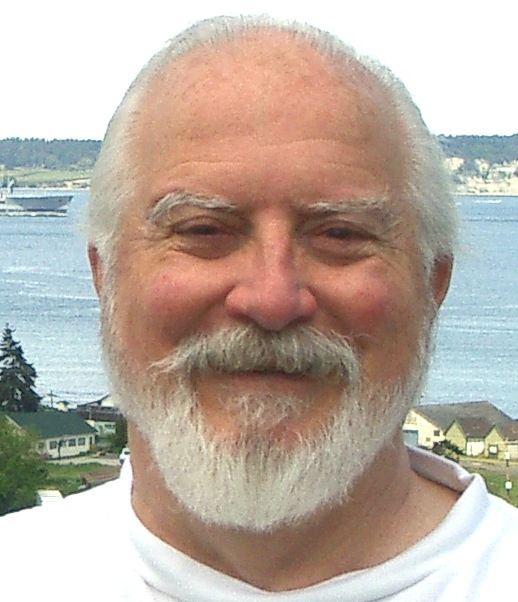
The Free University
James Clarke Warren Jr. was born in Oakland on July 20, 1936, grew up in San Antonio, and was teaching mathematics at 20 while finishing degrees in mathematics and education at Southwest Texas State, followed by a master’s in mathematics and statistics at the University of Texas. He moved to the Bay Area in 1964 to teach at the College of Notre Dame in Belmont and joined the Midpeninsula Free University, the counterculture’s answer to Stanford, where he became known, among other things, for hosting large nude parties. A 1968 San Francisco Chronicle story about the parties did not name him, but the college worked it out, and he was forced to resign. He went back to school, took a master’s in computer engineering at Stanford, and drifted into the group of hobbyists forming around the People’s Computer Company in Menlo Park and the Homebrew Computer Club, whose moderator Lee Felsenstein became a lifelong friend.
Dr. Dobb’s and the Faire
When Bob Albrecht and Dennis Allison at the People’s Computer Company decided in late 1975 to publish the Tiny BASIC listings they had been mailing out, they hired Warren to edit the result. He changed the title from Dr. Dobb’s Journal of Tiny BASIC Calisthenics & Orthodontia to Dr. Dobb’s Journal of Computer Calisthenics & Orthodontia before the first issue went out in January 1976, keeping the subtitle “Running Light Without Overbyte”, and edited it for about eighteen months. It was the first magazine devoted to microcomputer software and it printed source code; the account of how it and its rivals shaped the field is in The Computer Press.
Warren’s larger idea was a show. With Bob Reiling, he rented the San Francisco Civic Auditorium for April 15–17, 1977, and called the event the West Coast Computer Faire, spelling included. They planned for a few thousand and got more than 12,000. Chuck Peddle showed the Commodore PET; Steve Jobs and Steve Wozniak, 22 and 26, demonstrated the Apple II from a booth near the entrance. For the next few years it was the largest computer show in the world and the annual meeting of an industry that had not existed when Warren was teaching algebra. He ran it from the Silicon Gulch Gazette, a newspaper he started in 1977 to promote the Faire and kept going until 1986, and in 1978 started the Intelligent Machines Journal, a fortnightly tabloid about the business of microcomputing. He sold the Journal to Patrick McGovern’s IDG in late 1979; McGovern renamed it InfoWorld. He sold the Faire’s operating rights to Prentice-Hall in 1983 for $3 million. The show passed to Sheldon Adelson’s Interface Group, the COMDEX owners, and ran for the last time in 1991. Warren also hosted the first two seasons of The Computer Chronicles on local Bay Area television in 1981 and 1982, before the programme went national on PBS.
AB 1624
In 1991 Warren organised the first Computers, Freedom and Privacy conference, which brought hackers, civil-liberties lawyers, police and federal prosecutors into one room at a time when they were mostly meeting in court; the conference ran for more than 25 years. The Electronic Frontier Foundation gave him one of its first Pioneer Awards in 1992.
In 1993 he helped Assembly member Debra Bowen, then in her first term, draft Assembly Bill 1624, which required California to put its computerised legislative records, statutes, constitution and regulations on the Internet for free. The bill described the Internet, still unfamiliar to most legislators, as “the largest nonproprietary, nonprofit cooperative public computer network”, so that nobody could object to handing public records to a private company. Warren organised much of the statewide support, and the bill passed four committee votes and three floor votes without a single dissenting vote. It took effect on January 1, 1994, making California the first state to give the public fee-free Internet access to its legislative record. The Playboy Foundation’s Hugh M. Hefner First Amendment Award and the James Madison Freedom-of-Information Award followed in 1994. Warren later moved to the Kitsap Peninsula in Washington; he died of lung cancer in Silverdale on November 24, 2021, aged 85.
Zeke
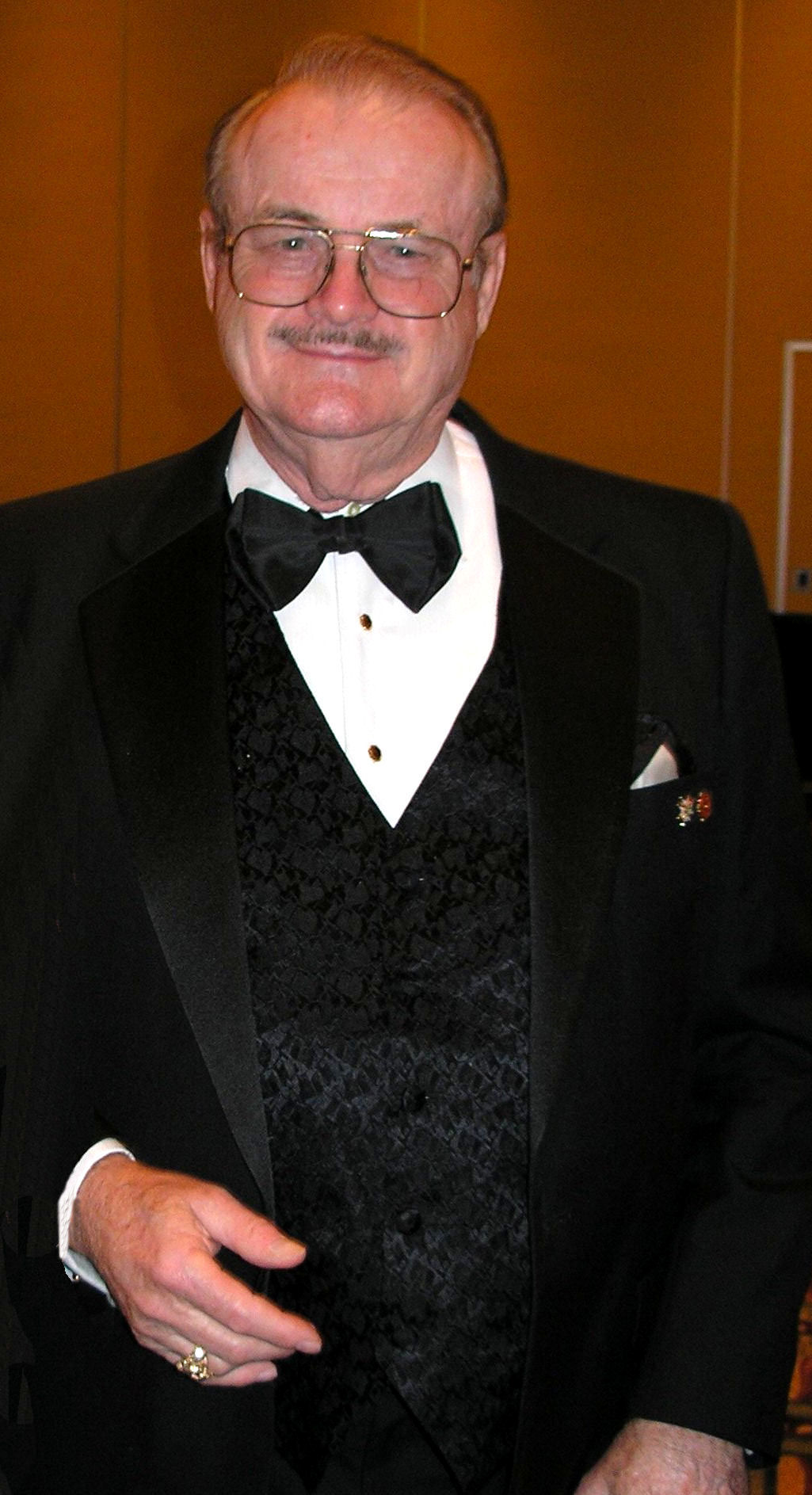
Jerry Eugene Pournelle was born in Shreveport, Louisiana, on August 7, 1933, served in the army during the Korean War, and took a bachelor’s, a master’s in experimental psychology and statistics, and a doctorate in political science from the University of Washington, the last in 1964. He ran the human-factors laboratory at Boeing, was associate director of operations research at North American Rockwell’s space division during Apollo, and founded the Pepperdine Research Institute, before deciding in the early 1970s that he could make a better living writing science fiction. With Larry Niven he wrote The Mote in God’s Eye (1974), Lucifer’s Hammer (1977), which reached second place on the New York Times bestseller list, and Footfall (1985), which reached first. He was president of the Science Fiction Writers of America in 1973 and never won a Hugo; his line about that was that money would get him through times of no Hugos better than Hugos would get him through times of no money.
The computer was a labour-saving device. In 1977 a friend, Tony Pietsch, built him a Z80 machine running at 1 MHz with 64 KB of memory and two eight-inch floppy drives. Pournelle named it Ezekiel, Zeke for short, ran Electric Pencil on it, and said that when he saw a word processor delete and reinsert a paragraph he was hooked. He claimed to be the first author to write a science-fiction novel on a computer; the Smithsonian accepted Zeke as the first computer used to write one, and Pournelle restored it and switched it on when it was installed. Pietsch built duplicate machines for Niven and for Niven’s wife Marilyn, and Oath of Fealty (1982) and Footfall were written on them.
Chaos Manor
McGraw-Hill’s Byte gave Pournelle a column in July 1980, at first called “The User’s Column” and from June 1984 “Computing at Chaos Manor”, Chaos Manor being his house in Studio City, Los Angeles. The premise was that he was not an engineer and did not want to be one. Each month he described what he had tried to do with the machines in the house, what had broken, which manuals had lied, which company’s support line had answered, and what he thought of it all, in the first person and at length. Readers who could not follow Byte’s schematics could follow that, and the column became the magazine’s best-known feature and the model for every hands-on technology column since. He praised what worked, named what did not, and coined rules along the way: that one user should have at least one CPU, and, outside computing, Pournelle’s Iron Law of Bureaucracy, that in any organisation the people devoted to the organisation itself end up in control of it. The column ran in print until Byte closed its paper edition in 1998 and online until 2006, then continued under his own name.
Pournelle was also an early and steady presence online: on BIX, Byte’s bulletin board, on GEnie, and from 1998 in a daily journal at jerrypournelle.com, The View from Chaos Manor, which he described as one of the first blogs. He co-founded the Citizens’ Advisory Council on National Space Policy, whose papers fed the Reagan administration’s Strategic Defense Initiative. He survived a brain tumour in 2008 and a stroke in 2014, kept writing the daily journal, and died of heart failure in Studio City on September 8, 2017, aged 84, shortly after returning from DragonCon.
What They Built
The two men’s institutions outlasted their founders’ involvement in the same way. Warren’s Faire was where a product met its first customers and his Journal became InfoWorld, the trade paper of the industry; his AB 1624 made California’s laws freely readable online in 1994. Pournelle’s column established that the person writing about a computer could be the person who used it, an idea now so ordinary that its origin is invisible.
📚 Sources
- Jim Warren (computer specialist) — Wikipedia
- West Coast Computer Faire — Wikipedia (April 15–17, 1977 at the Civic Auditorium, over 12,000 attendees, the PET and Apple II debuts, the $3 million 1983 sale to Prentice-Hall, the 1991 last show)
- Dr. Dobb’s Journal — Wikipedia (Warren as first editor for about eighteen months from January 1976, the title change)
- Guide to the Jim C. Warren papers — Online Archive of California
- Jerry Pournelle — Wikipedia
- Tom’s Unofficial BYTE FAQ: The Death of BYTE Magazine — Tom R. Halfhill (the column’s move to Byte.com and Pournelle’s 2006 departure)
- Jerry Pournelle (1933–2017) — File 770, September 2017 (death on September 8, 2017, after returning from DragonCon)
- Early Days of Word Processing — Chaos Manor, jerrypournelle.com (Tony Pietsch, the Z80 machine’s specification, Electric Pencil, the Smithsonian donation, the novels written on it)
- RIP, Jerry Pournelle, a pioneer of tech journalism for the non-geeky — Fast Company, September 2017 (the 1980 start of the Byte column and its June 1984 renaming)
- About — Chaos Manor, jerrypournelle.com
- Image: Computing’s Jim Warren in Hansville WA, May 2010.jpg by Jwarren36 (CC BY-SA 3.0), via Wikimedia Commons