Gary Demos
Abstract
Gary Demos spent the 1970s and 1980s solving the problem everyone else skipped: how to get a photographic image into a computer and back onto film without anyone noticing the round trip. He built film scanners and recorders at Information International, animated Peter Fonda’s head for Futureworld in 1976, quit during production of TRON to found Digital Productions, and bought an early Cray X-MP (Cray later named Digital Productions as the X-MP’s first customer) to render The Last Starfighter (1984), a film whose spaceships are computer-generated rather than models. The company was sold in 1986 and dead a year later, along with two other leading CGI studios. Demos kept going: two Academy Scientific and Engineering Awards and a Technical Achievement Award, a compression company that Dolby bought in 2003, roughly a hundred patents, and the Academy’s Gordon E. Sawyer Award for 2005 for a career of technological contribution.
The Lecture at Caltech
By Demos’s own account, he found the subject as a Caltech undergraduate in 1970, at a screening by the filmmaker John Whitney Sr., who made abstract films using surplus military analog computers as animation stands. Demos took his BS in engineering and applied science at Caltech in 1971 and in 1973 went to Utah to work at Evans and Sutherland under Ivan Sutherland, where the hardware and the algorithms of interactive computer graphics were being invented at the same time. He arrived in the industry by way of an art screening and left Utah with the engineering.
Within a few years his business partner was John Whitney Jr., the lecturer’s son.
Triple-I
Information International, Inc., known as Triple-I, was founded in 1962 by Edward Fredkin, better known in computing for naming the trie. The company built precision imaging hardware: CRT film recorders, of which the FR-80 was the commercial success, writing digital images out at up to 16,384 by 16,384 pixels, and scanners using photomultiplier tubes to read film back in. It was equipment for the aerospace and printing trades that happened to be exactly what a film effects house would need, if a film effects house had existed.
Demos and John Whitney Jr. ran the Motion Pictures Product Group and made it exist. Their pixelated android point-of-view in Westworld (1973) is generally counted as the first use of digital image processing in a feature film. For Futureworld (1976) they scanned and animated Peter Fonda’s head, putting three-dimensional computer graphics on screen in a feature for the first time. Tests followed for Star Wars and Close Encounters of the Third Kind, then effects for Looker (1981).
The company’s machine was a Foonly F1, the fastest PDP-10-compatible ever built, assembled by Dave Poole, Phil Petit and Jack Holloway out of Stanford’s cancelled Super-Foonly design after DARPA pulled its funding in 1974. Triple-I was its first customer. Triple-I was one of four graphics firms, with MAGI, Robert Abel and Associates and Digital Effects, that together produced fifteen to twenty minutes of computer animation for Disney’s TRON (1982); its share included the Master Control Program, Sark’s carrier and the Solar Sailer. Demos and Whitney Jr. left before the work was finished (see the Academy’s refusal to consider TRON for a visual-effects nomination, on the grounds that using a computer was cheating).
Renting a Supercomputer
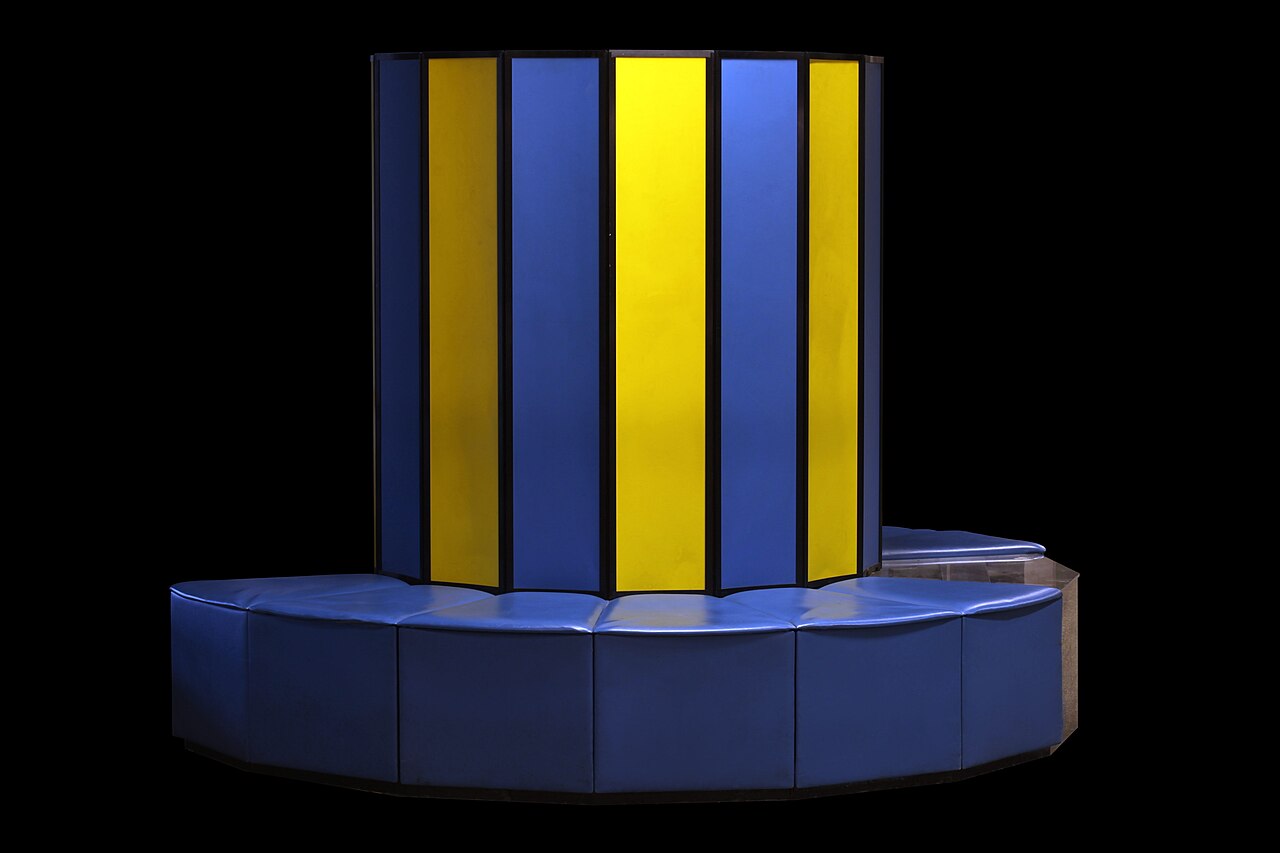
Digital Productions was founded in 1982 (some accounts say late 1981) with backing from Control Data Corporation. The bet was simple and expensive: film-resolution imagery needs more arithmetic than any graphics workstation of the period could supply, so buy the fastest computer on the market and sell time on it as pictures. They ran a Cray-1S, then in October 1983 traded it in for a Cray X-MP; Cray later named the company as the X-MP’s first customer, though HPE’s own Cray history gives that place to the National Magnetic Fusion Energy Computer Center (see Seymour Cray and Supercomputing). The rendering code was written in Fortran, because Fortran was the only language whose compiler vectorized well enough to use the machine.
The Last Starfighter (1984) is what they built it for. Digital Productions delivered 25 to 27 minutes of computer-generated imagery (accounts differ) across roughly 300 shots, with frames averaging 250,000 polygons rendered at 3000 by 5000 pixels in 36-bit color. The spaceships in the film are not models photographed on wires; they are geometry, and they are meant to read as real objects rather than as the deliberately abstract world of TRON. The company also did the hyperspace sequence in The Ice Pirates (1984), effects for 2010: The Year We Make Contact (1984), and work on Labyrinth (1986). Demos and Whitney Jr. shared an Academy Scientific and Engineering Award for 1984 “for the practical simulation of motion picture photography by means of computer-generated images.”
Their sales argument was economic rather than aesthetic: computer animation, they claimed, took about half the time and between a third and a half the cost of building and shooting physical miniatures. For a few years, with a Cray, that was true.
Dead End: The Cray as a Render Farm
The Toronto company Omnibus Computer Graphics bought Digital Productions from Control Data in June 1986, over the founders’ objection, and took over Robert Abel and Associates, another of the leading American CGI houses, in September 1986. Sources differ on both prices; they agree that Omnibus borrowed heavily for the two deals and that the consolidation never happened, since the three studios ran different hardware, different software and different sales operations. By early 1987 the debt was somewhere between $25 and $30 million. On 13 April 1987 Omnibus defaulted and closed all three studios on the same day, and about 150 people in Toronto, Hollywood and Los Angeles arrived at work to find they had none. The industry later called it DOA Day. (See Dead End: Omnibus Computer Graphics.)
The business model was the deeper problem. A supercomputer is a capital asset that must be kept busy, and a film’s effects schedule is bursty: months of nothing, then everything at once. Worse, the hardware assumption expired. Digital Productions had been right that a 1983 workstation could not render a film frame in reasonable time and wrong that this would remain true. Silicon Graphics machines (see Dead End: Silicon Graphics) and then commodity processors in racks made rendering something a studio could buy incrementally, one box at a time, instead of financing a Cray. Pixar rendered Toy Story in 1995 on a farm of ordinary Sun workstations. Demos’s technical judgment about what film-resolution CGI required was correct; his hardware bet had a five-year shelf life.
Getting Film In and Out
The part of the work that outlived the companies is the least visible: the scanning and recording chain. Digital effects are only usable if a live-action negative can be read into a computer at full quality and the result written back out to film so that treated and untreated shots are indistinguishable in the same reel. Everything downstream, compositing, wire removal, digital sets, the digital intermediate that eventually replaced photochemical color timing, depends on that round trip being invisible.
At the 67th Academy Awards, for 1994, the Academy gave a Scientific and Engineering Award to Gary Demos and Dan Cameron of Information International, David DiFrancesco and Gary Starkweather of Pixar, and Scott Squires of Industrial Light and Magic, for pioneering work in the field of film input scanning: five people from three rival organizations. A year later, at the 68th Academy Awards, Demos shared a Technical Achievement Award with David Ruhoff, Dan Cameron and Michelle Feraud for the Digital Productions Digital Film Compositing System.
After Film
Demos founded Whitney-Demos Productions with his partner in 1986, then DemoGraFX in 1988, which moved from making images to moving them: digital video signal processing, compression pre-filtering, and layered image coding of the kind that lets one bitstream carry a base picture plus enhancement layers for higher resolution or dynamic range. Dolby Laboratories acquired DemoGraFX in April 2003, along with its patents and its work on the then-new H.264 standard. Demos holds roughly a hundred patents, joined the film-restoration company Lowry Digital as senior algorithm scientist in 2008, and pursued his own codec research at Image Essence, which he founded in 2005.
For 2005 the Academy gave him the Gordon E. Sawyer Award (presented in February 2006), an Oscar statuette for an individual whose technological contributions have brought credit to the industry. It is the same field he entered by watching an abstract film in a Caltech lecture hall.
📚 Sources
- Digital Productions (Wikipedia) — founding 1982 with Control Data backing, the Cray X-MP, 27 minutes of animation across 300 scenes for The Last Starfighter, 250,000 polygons per frame at 3000×5000, The Ice Pirates, 2010, Labyrinth, and the 1986 Omnibus purchase
- Omnibus Computer Graphics — History of Computer Graphics — the June 1986 Digital Productions purchase from Control Data, the Robert Abel acquisition later that year, the failed consolidation of three incompatible studios, roughly $25 million of debt, and the closure of all three studios on 13 April 1987 (note: prices and the debt figure vary by source, from $6M to $12M for Digital Productions and $25M to $30M of debt)
- Robert Abel & Associates (1971–1987) — Future Visions — the roughly 150 people at Robert Abel in Hollywood, Digital Productions in Los Angeles and Omnibus in Toronto who lost their jobs on 13 April 1987, and the Abel purchase price
- Cray X-MP (Wikipedia) — the 1982 announcement of the X-MP as successor to the Cray-1
- Foonly (Wikipedia) — the F1 as the fastest PDP-10-compatible, built by Dave Poole, Phil Petit and Jack Holloway from Stanford’s Super-Foonly design after DARPA funding ended in 1974, with Triple-I as first customer and its use on Looker and TRON
- Tron (Wikipedia) — the four computer graphics firms (Triple-I, MAGI, Robert Abel and Associates, Digital Effects) and the fifteen to twenty minutes of computer animation
- Information International, Inc. (Wikipedia) — Fredkin’s 1962 founding, the FR-80 film recorder at up to 16384×16384, photomultiplier scanners, the Westworld android vision, Peter Fonda’s head in Futureworld (1976), Looker, the TRON work, and Demos and Whitney Jr. leaving before it was finished
- The Last Starfighter (Wikipedia) — the Cray X-MP, 27 minutes of CGI, the polygon and resolution figures, Fortran and CFT77, and Digital Productions’ cost and time claims against traditional effects
- Gary Demos — History of Computer Graphics — Digital Productions 1982–1986, Whitney-Demos 1986–1988, DemoGraFX 1988–2003, the 2005 Gordon E. Sawyer Award, and his current codec work at Image Essence
- 2018 Caltech Distinguished Alumni — Division of Engineering and Applied Science — BS ‘71 in engineering and applied science, and the award citation “for his pioneering achievement in the development of computer-generated images (CGI) for use in motion pictures, and in digital film scanning and recording”
- Gary Demos — SMPTE speaker biography — the 1984 Academy Scientific and Engineering Award with John Whitney Jr., the 2005 Gordon Sawyer Oscar, the 2012 SMPTE Digital Processing Medal, SMPTE Fellow, roughly 100 patents, and Image Essence LLC
- Gary Demos — “My personal history in the early explorations of computer graphics,” The Visual Computer 21 (2005) — his own account of the John Whitney Sr. screening at Caltech and the years at Evans and Sutherland and Triple-I (paywalled; the Whitney and Sutherland details above are repeated from it by secondary sources and were not read in the original)
- Gordon E. Sawyer Award (Wikipedia) — the award’s definition and Demos as the 2005 recipient
- Dolby acquires DemoGraFX (TV Tech, April 2003) — the acquisition, the compression pre-filtering technology, layered image coding and H.264 expertise
- 67th Academy Awards: Scientific and Technical Awards (DigitalHit.com) · 68th Academy Awards: Technical Achievement Award for the Digital Productions Digital Film Compositing System (DigitalHit.com)
- Studio Daily: Gary Demos Joins Lowry Digital (August 2008)
- HPE: Cray history (National Magnetic Fusion Energy Computer Center as first X-MP customer)
- Cray Inc. on LinkedIn: the X-MP’s first customer was the film company Digital Productions · Digital Productions — History of Computer Graphics (Cray-1S traded in from October 1983 for the first X-MP; hostile Omnibus takeover; 25 minutes of Starfighter animation)
- Scientific and Engineering Award (Academy of Motion Picture Arts and Sciences) — the award class shared by Demos and Whitney Jr. for 1984 and by the film-input-scanning team for 1994
- Image: CRAY X-MP IMG 9135.jpg by Rama (CC BY-SA 2.0 fr), via Wikimedia Commons