Georg Nees and Frieder Nake
Abstract
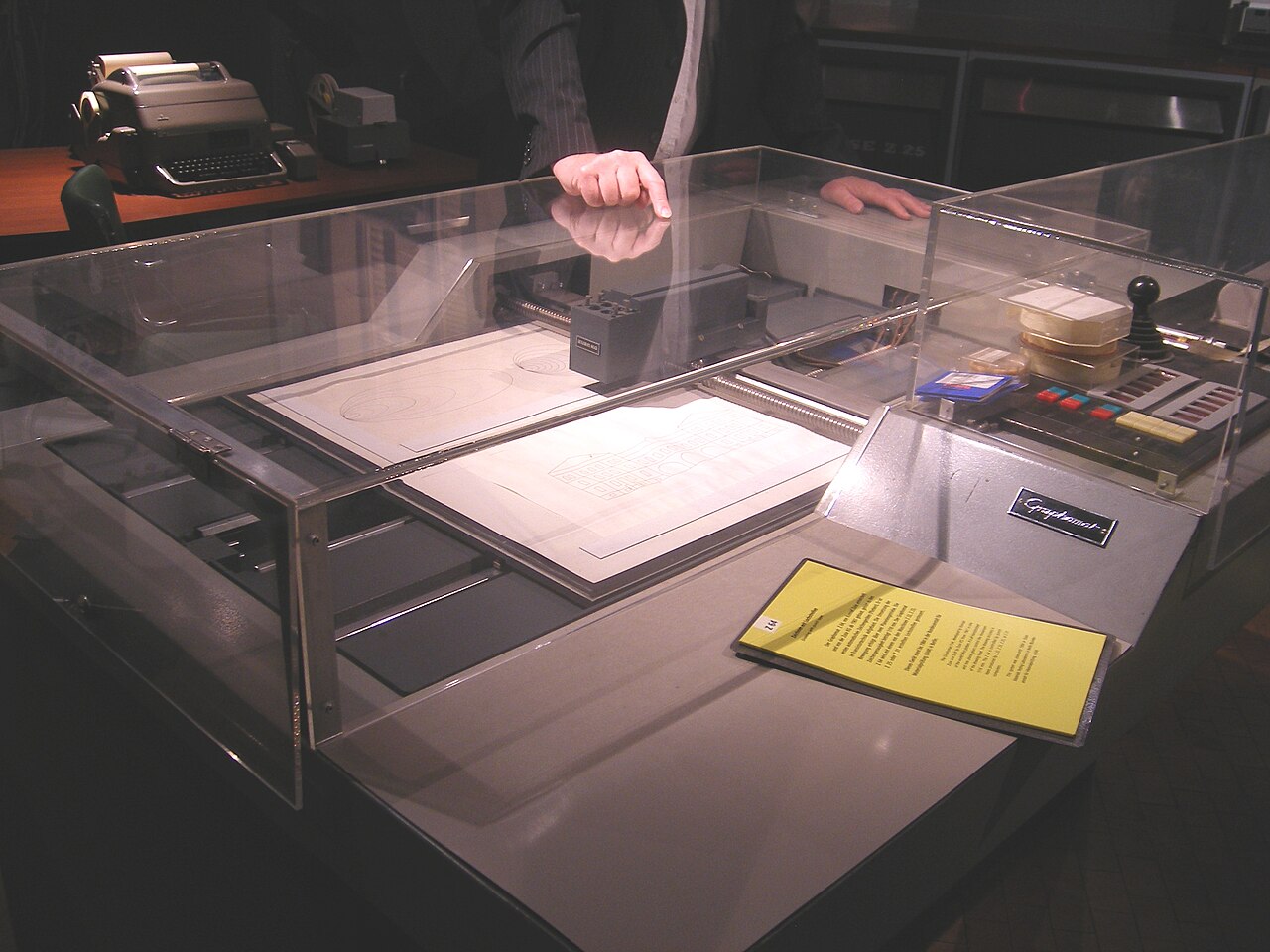
On February 5, 1965, Georg Nees (1926–2016), a Siemens mathematician, hung plotter drawings in the study gallery of the Technische Hochschule Stuttgart, the first exhibition anywhere of pictures made by a digital computer, and a painter in the audience asked whether the machine could draw the way he did; Nees said yes, if he would tell him how. Nine months later Frieder Nake (born 1938), a doctoral student in the university’s computing centre, exhibited beside him. Both had learned their aesthetics from the philosopher Max Bense and their drawing from the same machine, Konrad Zuse’s Graphomat Z64 plotter. Nees wrote the first doctoral thesis on computer art (1969) and Schotter, the picture in which a grid of squares slides into disorder; Nake made a few hundred drawings, including a homage to Paul Klee, then in 1971 published an essay titled “There Should Be No Computer Art” and spent the next fifty years teaching and explaining what they had done.
Bense
The theory came first, and it came from Max Bense (1910–1990), professor of philosophy at the Technische Hochschule Stuttgart, who spent the 1950s and 1960s trying to put aesthetics on the footing of information theory: a work of art as a signal with measurable order and measurable surprise, beauty as a ratio between them. If it could be measured, he argued, it could be produced, and he called the programme generative aesthetics. His seminar attracted engineers and mathematicians as well as poets, and it was the only place in Germany where someone who wanted to make pictures with a computer would be taken seriously. The larger story of what followed is in Computer Art and Generative Art.
Nees
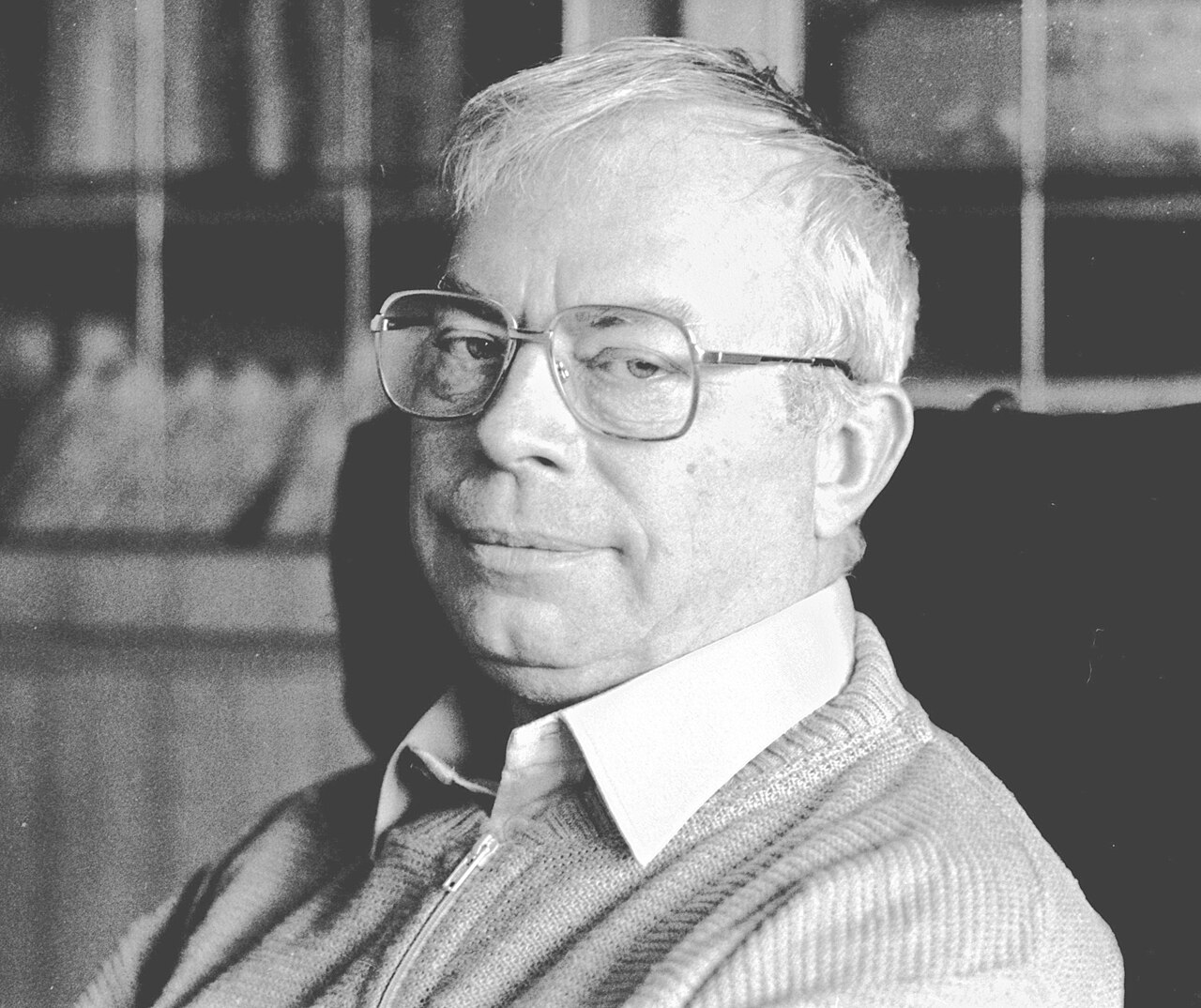
Georg Nees was born in Nuremberg on June 23, 1926, studied mathematics and physics at Erlangen from 1945 to 1951, and joined Siemens-Schuckert in Erlangen as an industrial mathematician in 1951, where he stayed until he retired in 1985. He began programming in 1959. The Graphomat Z64, the drawing machine Zuse KG introduced in 1961 to plot maps and engineering drawings from punched tape, arrived at Siemens, and Nees, who had begun attending Bense’s seminar in 1964, wrote ALGOL programs that fed it: rules for placing lines, with a random-number generator deciding what the rules left open. The pictures had titles like 8-Ecke (eight corners) and 23-Ecke, and they were made by a process no hand had touched.
Bense showed them in the Studiengalerie of the Stuttgart college from February 5, 1965, and wrote a short text for the occasion in which he coined künstliche Kunst, artificial art. The painters present were hostile, and the exchange in which one asked whether the machine could make pictures the way he did, and Nees answered that it could if he would tell him exactly how, is the founding anecdote of the field; the painter’s answer, that he could not, was the point. Nees’s Schotter (gravel, 1968), twelve columns of squares that begin in perfect order at the top and tumble into chaos at the bottom as a random term grows with each row, is the most reproduced computer artwork of the decade and hangs in the Victoria and Albert Museum. His doctorate under Bense, Generative Computergraphik (1969), was the first dissertation on computer art. He was an honorary professor at Erlangen from 1977 and died there on January 3, 2016.
Nake
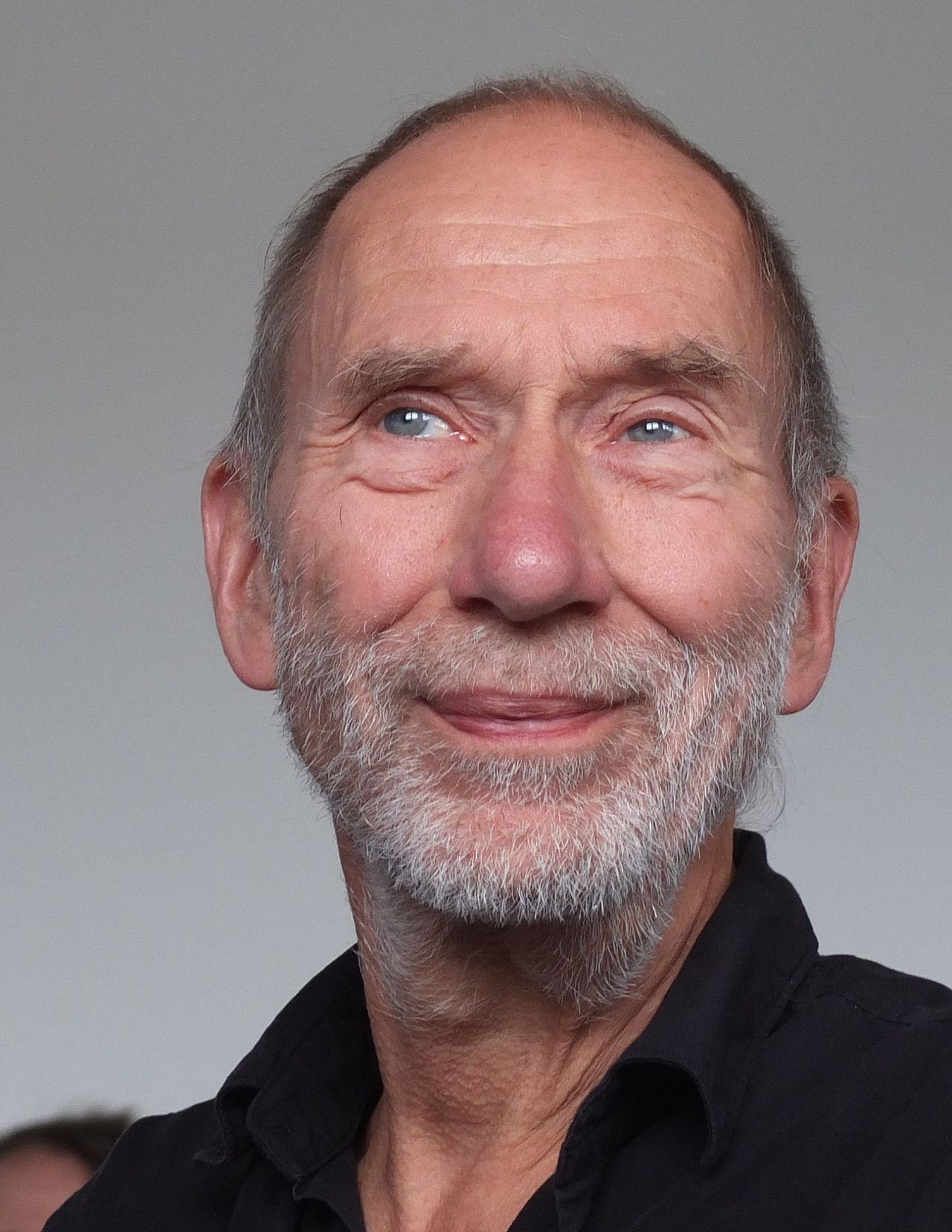
Frieder Nake was born in Stuttgart on December 16, 1938, and studied mathematics at the Technische Hochschule there, taking his doctorate in probability theory in 1967. The computing centre had its own Graphomat, and from 1963 Nake, as an assistant, wrote the software that drove it, then used it. His drawings were made by programs that took decisions from probability distributions he had specified, so that the same program produced a family of related pictures; Hommage à Paul Klee, 13/9/65 Nr. 2 (1965), a field of lines and circles derived from the proportions of a Klee painting, is the one museums own. He exhibited with Nees at the Galerie Wendelin Niedlich in Stuttgart from November 5 to 26, 1965, and in the two exhibitions that put the field on the map in 1968, Cybernetic Serendipity at the ICA in London and Tendencies 4 in Zagreb. Between 1965 and 1969 he made three or four hundred works in ink on paper, and then, largely, stopped.
The stopping was a position. In 1971, in the bulletin of the Computer Arts Society, he published “There Should Be No Computer Art”, arguing that in a period when computers served war and the deskilling of labour, making pretty pictures with them was a distraction and a decoration for the system; art should not be one more product line. He went to Toronto in 1968 and Vancouver in 1970, and in 1972 became professor of computer graphics and interactive systems at the University of Bremen, where he has taught since, and taught digital media at the Bremen art college from 2005 to 2019. Ästhetik als Informationsverarbeitung (1974), aesthetics as information processing, is the book in which Bense’s programme was carried through mathematically and its limits stated. From 1999 he built compArt, a database of early computer art, with his students, and since the neural-network image generators arrived he has been the person journalists call to be told that the 1965 argument, about who is the author when a machine follows rules, has not changed and has not been answered.
📚 Sources
- Georg Nees — Wikipedia
- Frieder Nake — Wikipedia
- Max Bense — Wikipedia
- Georg Nees — compArt database of digital art, University of Bremen (the February 5, 1965 exhibition, the painters’ question, Schotter, the 1969 dissertation)
- Frieder Nake — compArt database of digital art (the 1963 start on the Graphomat, the November 1965 Niedlich exhibition, the 1965–69 output, Toronto, Vancouver and Bremen)
- Schotter — Victoria and Albert Museum collections
- Nake, Frieder — “There Should Be No Computer Art”, PAGE 18, Bulletin of the Computer Arts Society, October 1971, reprinted at the DAM Museum
- Zuse Graphomat Z64 — Wikipedia (German) (the 1961 introduction)
- Image: Zuse Z64 Graphomat.jpg by Steve Parker (CC BY 2.0), via Wikimedia Commons
- Image: Georg Nees-1- BID 1986.jpg by Alexander Kempkens (CC BY-SA 3.0), via Wikimedia Commons
- Image: Frieder Nake 2012.jpg by Matthias Müller-Prove (CC BY-SA 4.0), via Wikimedia Commons