Hans Uszkoreit and German Language Technology
Abstract
Hans Uszkoreit built the institutional backbone of language technology in Germany: the computational linguistics chair in Saarbrücken (1988), the Language Technology Lab at DFKI (1989), the Verbmobil ecosystem, and the Europe-wide META-NET alliance. He spent four decades making machines parse human language with hand-built grammars. His son Jakob co-authored “Attention Is All You Need” (2017), the paper that made most of that toolbox obsolete. Between the two biographies runs the complete arc of natural language processing: from rules written by linguists to patterns learned from data.
Rostock, Prison, Flight
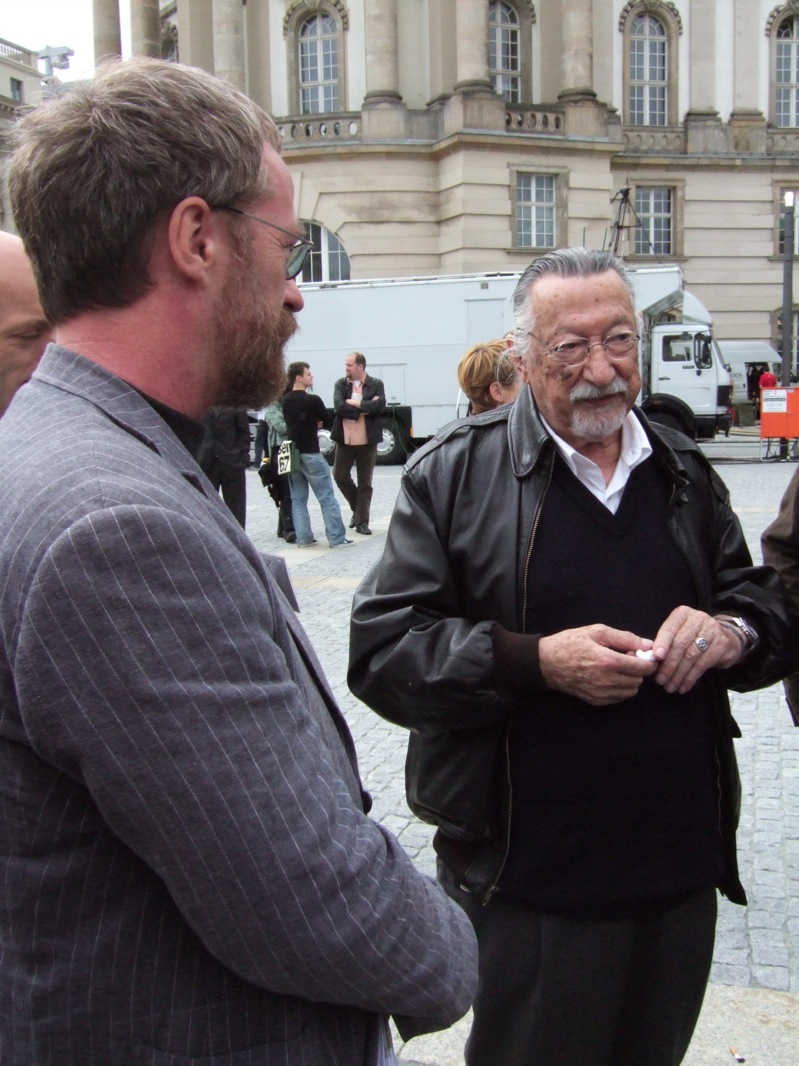
Hans Uszkoreit was born on January 23, 1950, in Rostock, the son of Hans-Georg Uszkoreit, a musicologist who served as a senior official in the East German culture ministry and later as rector of the Dresden music academy. The son did not follow the father’s accommodation with the state: as a teenager he was jailed in the GDR for “subversive agitation.” In 1975 the family fled to West Germany.
Uszkoreit studied linguistics and computer science at the Technical University of Berlin, where he also co-founded the city magazine Zitty. A Fulbright scholarship took him to the University of Texas at Austin in 1977; he completed a PhD in linguistics there in 1984. From 1982 to 1986 he worked as a computer scientist at SRI International’s Artificial Intelligence Center in Menlo Park, with concurrent research at Stanford, then returned to Germany via an IBM research fellowship in Stuttgart.
Saarbrücken and the DFKI Lab
In 1988 Uszkoreit was appointed to the newly created chair of computational linguistics at Saarland University. A year later he became head of the new Language Technology Lab at the German Research Center for Artificial Intelligence (DFKI), founded in 1988 with sites in Kaiserslautern and Saarbrücken. He became one of DFKI’s scientific directors in 1997 and coordinated the DFKI Berlin site from 2010.
The lab’s program was the classical one: deep language processing. Hand-crafted grammars, parsers, information extraction, cross-lingual retrieval, question answering, machine translation, documented in more than 200 publications. With colleagues at Stanford and in Tokyo, Uszkoreit co-initiated DELPH-IN, an international consortium for grammar-based deep processing. Saarbrücken became one of the few places in the world where a student could study computational linguistics from formal grammar theory to working industrial prototype.
Verbmobil
The flagship of this era was Verbmobil (1993 to 2000), a lead project of the German research ministry with 116 million Deutsche Mark in funding and around 30 academic and industrial partners, coordinated by DFKI. The goal: speaker-independent translation of spontaneous speech between German, English, and Japanese, in constrained domains such as appointment scheduling and travel planning. Saarland University and DFKI were among the core partners.
Verbmobil never became a product. It did become a school. The project forced German language technology to confront spontaneous spoken language, where hand-written grammars break on every hesitation and false start, and its architecture ended up combining deep analysis with shallow statistical components. Its annotated corpora and treebanks (built for all three project languages) were exactly the kind of training data the next, statistical era of the field would run on. Spin-offs ranged from voice control in cars to speech-driven search; the final prototype stands in the Deutsches Museum. See Machine Translation for the paradigm shifts that followed.
META-NET and the European Dimension
From 2010 to 2015 Uszkoreit coordinated META-NET, an EU-funded alliance of 60 research centers in 34 countries, which produced white papers documenting the state of language technology for each European language and warned that most of them faced “digital extinction” without it. He led a series of European machine translation projects (EuroMatrix, EuroMatrixPlus, QTLaunchPad) and received Google research awards in 2012 and 2013 for work on relation extraction with Feiyu Xu and Roberto Navigli. Xu, who had come to Saarbrücken as a student in the 1990s and did her doctorate and habilitation there, became his closest collaborator and his wife. From 2017 to 2020 the couple worked in Beijing, Xu building Lenovo’s first AI Lab while Uszkoreit founded the AI company GIANCE and advised Lenovo as Chief AI Advisor. In 2023 he co-founded the Berlin LLM startup Nyonic, which he left in 2024.
The Son
Jakob Uszkoreit, Hans’s son from his first marriage, grew up inside this world and entered the field from the other side. He took a master’s degree in computer science and mathematics at the Technical University of Berlin in 2007, interned at Google Research, and joined Google in 2008, working on Google Translate, then the largest deployed machine translation system in the world and already a statistical one.
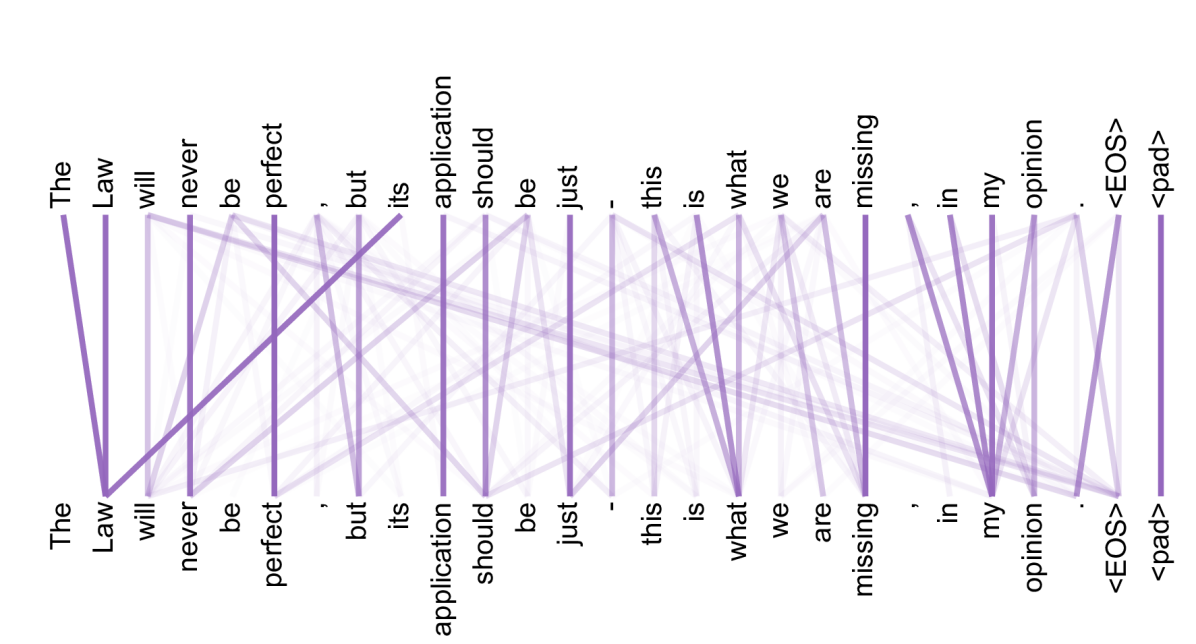
Inside Google, Jakob Uszkoreit became the persistent advocate of a contrarian idea: that self-attention could replace recurrence entirely in neural sequence models. Recurrent networks processed words one after another; attention let a model look at all words of a passage at once and learn which ones mattered for which. The idea met resistance, and Wired’s reconstruction of the period records that the skeptics included his own father. The bet paid off in “Attention Is All You Need” (2017), written with seven Google colleagues, which introduced the Transformer and became the foundation of every major large language model since.
Jakob left Google in July 2021 and co-founded Inceptive with Stanford biochemist Rhiju Das, applying neural sequence models to RNA, treating molecules the way the Transformer treats sentences. In 2023, father and son gave a joint interview to the Frankfurter Allgemeine Zeitung under the headline “Was ChatGPT released on humanity too early?”, the elder Uszkoreit now analyzing an AI world his son’s paper had made possible.
Dead End: Grammar-Based Language Understanding
The research program Hans Uszkoreit’s generation carried, parsing language with explicit, linguist-written grammars into logical representations of meaning, was one of the great sustained efforts of classical AI, and it lost. The reasons were structural. Writing grammars by hand does not scale: every domain, every genre, every disfluency of real speech demands more rules, and the rules interact (the knowledge-acquisition bottleneck that also killed expert systems). Deep parsers were brittle where statistical models were merely inaccurate, and statistical models improved with every added gigabyte of data while grammars improved only with added linguists. When neural methods arrived, they ended the argument: the Transformer learns whatever structure it needs from text alone.
Two qualifications keep the story honest. First, the symbolic era built the infrastructure the statistical era trained on: annotated corpora, treebanks, evaluation methodology, and the trained people (Google’s translation and Transformer teams were full of computational linguists, including one raised by one). Second, the question the grammarians asked, whether these systems actually understand anything, did not go away; it returned as the central debate about large language models. The tools died. The problem is still open.
📚 Sources
- Hans Uszkoreit — Wikipedia (German), biography, GDR youth, career stations, family
- Hans Uszkoreit — Wikipedia (English), career timeline, DFKI roles, awards
- Verbmobil — Wikipedia (German), project phases, funding, results
- Verbmobil project site — DFKI, consortium and goals
- META-NET, the network and the language white papers
- Vaswani, Ashish et al.: “Attention Is All You Need” (2017), arXiv:1706.03762
- Levy, Steven: “8 Google Employees Invented Modern AI. Here’s the Inside Story” — Wired (March 2024), Jakob Uszkoreit’s self-attention advocacy and the skepticism it met
- Sachse, Maximilian & Finsterbusch, Stephan: “Wurde ChatGPT zu früh auf die Menschheit losgelassen?” — FAZ (June 10, 2023), joint interview with Hans and Jakob Uszkoreit
- Inceptive, Jakob Uszkoreit’s RNA company
- Image: Hans Uszkoreit, Joseph Weizenbaum (238430262).jpg by Andreas Schepers (CC BY 2.0), via Wikimedia Commons
- Image: Attention Is All You Need - Full attentions for head 5.png by Google (CC BY-SA 4.0), via Wikimedia Commons