Leonardo Torres Quevedo and El Ajedrecista
Abstract
Everyone knows Babbage, Zuse, and Turing, but a generation before the electronic computer, a Spanish engineer quietly built machines that did things their celebrated work only described on paper. Leonardo Torres Quevedo (1852–1936) constructed El Ajedrecista in 1912, the first machine that could play part of a game entirely on its own: a king-and-rook endgame, decided by electromechanical logic rather than a hidden human. He described floating-point arithmetic in 1914, built working electromechanical calculators that realized Babbage’s wheel-work in relays and electromagnets, pioneered radio remote control, and engineered an aerial cableway over Niagara Falls that still runs. He is one of computing’s most consequential and least-remembered pioneers, and his chess automaton, in a Madrid museum, still works.
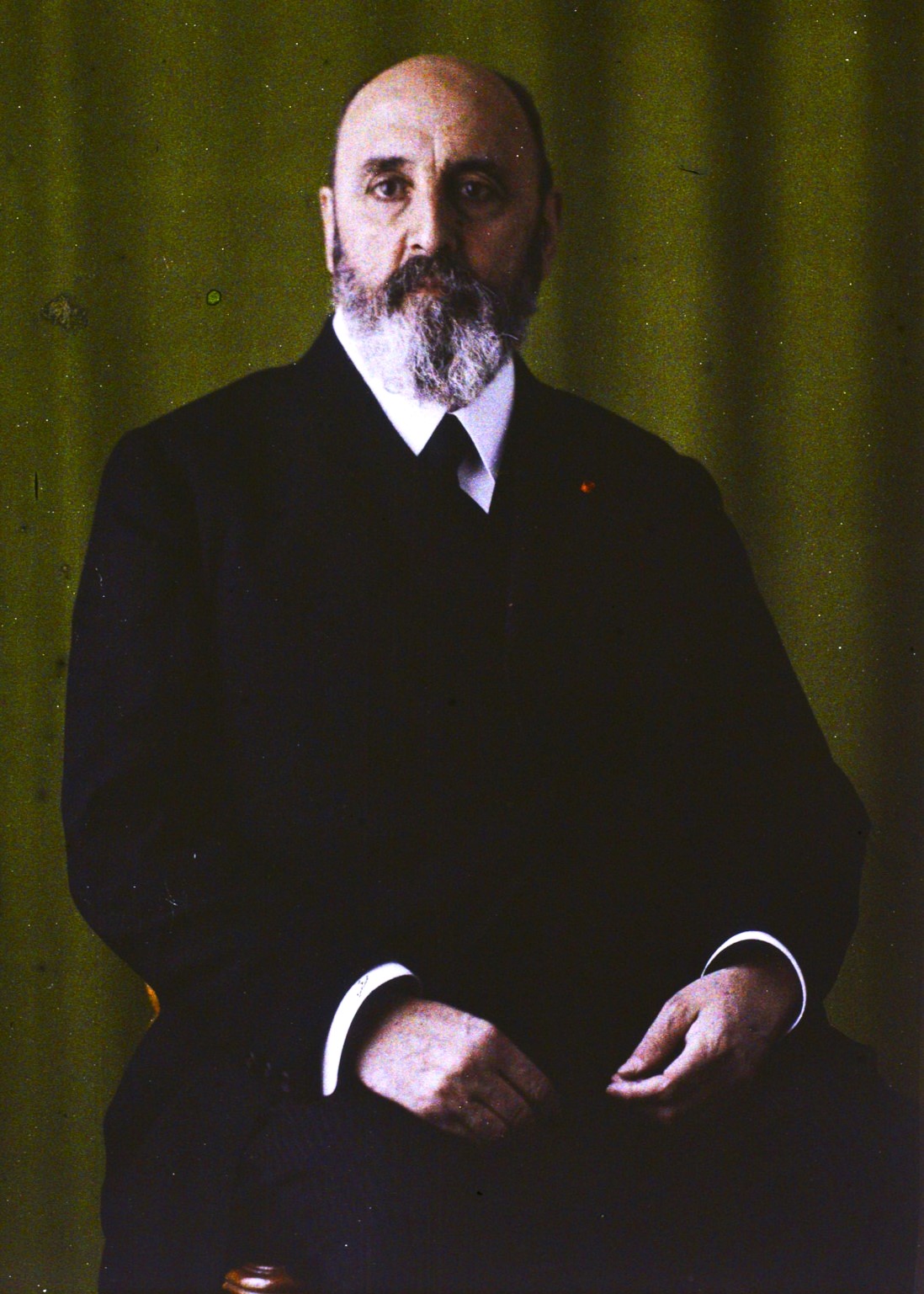
The Forgotten Polymath
Leonardo Torres Quevedo was born on 28 December 1852 in Molledo, in the Cantabria region of northern Spain, and trained as a civil engineer. Financially independent, he spent the 1880s and 1890s as a free-ranging inventor rather than an academic, returning to engineering problems across wildly different domains: structural mechanics, aeronautics, remote control, and calculation. In 1901 he founded the Laboratory of Applied Mechanics in Madrid, which became the workshop for his most ambitious machines.
His reputation in his own time was substantial (he was elected to the Spanish Royal Academy of Sciences and later the Académie des Sciences in Paris) but it faded badly outside Spain in the decades after his death, in part because his work was published in Spanish and French rather than in the English-language record that came to define computing history. The historian Brian Randell was largely responsible for restoring him to that history in the 1970s.
El Ajedrecista: The First Decision-Making Machine
Torres Quevedo began building his chess automaton in 1911 and finished it in 1912. It was shown for the first time in Valladolid in 1913 and made its official public debut at the University of Paris in 1914. He gave it a deliberately narrow task: the king-and-rook versus king endgame. The machine played the side with the king and rook and would, from any legal starting position, drive the opponent’s lone king to checkmate.
This was not the hoax of Wolfgang von Kempelen’s “Turk”, the eighteenth-century cabinet that concealed a human player. El Ajedrecista contained no hidden person. The board sensed the position of the pieces through electrical contacts, and a set of electromechanical rules (encoded in switches and electromagnets) computed the correct reply and moved its own piece. Its algorithm was simple enough that it did not mate in the fewest possible moves, and sometimes not within the fifty moves the fifty-move rule allows, but it played correctly: it never made an illegal move and always won the won position. When the human made an illegal move, the machine signalled the error.
That makes El Ajedrecista a strong candidate for the first machine capable of autonomous decision-making, of taking a sensed input, applying a rule-based procedure, and acting on the result without a human in the loop. It is, in embryo, exactly the perception–computation–action cycle of later automata and robots. A second, improved version was built in 1920 and presented in 1923, developed by Torres Quevedo’s son Gonzalo, which replaced the visible mechanical arm with electromagnets under a standard chessboard. That version survives and still functions; it is held at the Museo Torres Quevedo in Madrid (at the School of Civil Engineering, ETSI Caminos). At a 1951 cybernetics conference in Paris it famously beat grandmaster Savielly Tartakower in the endgame it was built to play.
Essays on Automatics and the Babbage Connection
In 1913 Torres Quevedo wrote Essays on Automatics (Ensayos sobre Automática), published in the journal of the Spanish Royal Academy of Sciences in January 1914, and in French translation in 1915, one of the most prescient documents in early computing. In it he set out a theory of automata (machines that sense their conditions and act on them) and sketched a complete electromechanical analytical machine capable of carrying out arbitrary sequences of arithmetic operations under the control of a program.
Crucially, he framed this explicitly as the realization of Charles Babbage’s Analytical Engine by other means. Where Babbage had tried to build his engine entirely from precision gears and cams (and failed to complete it) Torres Quevedo argued that the same functions could be carried out far more practically with electromagnets, relays, and switches. He was the first to make this argument concretely, and he then proved it: he built working electromechanical calculators that performed the cogwheel arithmetic of a Babbage-style machine in electrical hardware.
Buried almost casually in the same 1913 work is something else remarkable: a description of what we now call floating-point arithmetic, representing numbers as a fixed-precision significand plus an exponent. Randell noted that Torres Quevedo introduced the idea apparently without recognizing how significant it was; it would not become standard in computing for another three decades.
The Electromechanical Arithmometer
In 1920, to mark the centenary of Thomas de Colmar’s commercial arithmometer, Torres Quevedo demonstrated his electromechanical arithmometer in Paris. It was a working automatic calculator that performed arithmetic in the decimal system and (most strikingly) was operated through a typewriter: the user typed a problem, the machine computed, and the result was typed back automatically. This input/output-by-typewriter arrangement is recognizably an ancestor of the computer terminal, decades before one existed. Together with his 1914 demonstration device, it showed in public, twice, that the whole of Babbage’s mechanical scheme could be done electromechanically.
Beyond Calculation: Telekino and the Aero Car
Torres Quevedo’s range went well past computing. As early as 1902–1903 he patented the Telekino, a radio-based remote-control system, and used it to steer boats by wireless in front of crowds (including a 1906 demonstration in Bilbao before King Alfonso XIII) years before remote control was a practical technology. He also designed semi-rigid airships and, most visibly, the Whirlpool Aero Car at Niagara Falls: an aerial cable car spanning the gorge above the whirlpool, opened in 1916 and still carrying passengers more than a century later.
Dead End: A Future That Stayed in the Workshop
Torres Quevedo demonstrated, working and in public, almost every key idea of automatic computation a full generation before the electronic computer: a programmable analytical machine in principle, electromechanical realization of Babbage’s arithmetic, floating-point numbers, machine decision-making, and typewriter I/O. And yet none of it led anywhere directly. His machines were singular laboratory pieces and demonstrations, not products; there was no Spanish electronics or computing industry to take them up, no institution to carry the program forward after him, and the looming Spanish Civil War (he died in Madrid on 18 December 1936, months after it began) extinguished what little continuity remained.
The result is one of computing history’s clearest cases of a dead end of context rather than of ideas. When the electromechanical computer was reinvented in the late 1930s and 1940s (by Konrad Zuse in Berlin with relays, by Howard Aiken with the Harvard Mark I, by Bell Labs) almost none of the pioneers built on Torres Quevedo’s work, because almost none of them knew of it. He had answered the question of how to build Babbage’s engine, and the answer simply sat unread in Spanish and French while the rest of the world rediscovered it the hard way. His genius was real; his bad luck was to be brilliant in the wrong place, in the wrong language, at the wrong time.
📚 Sources
- Leonardo Torres Quevedo — Wikipedia, life, machines, Telekino, Aero Car, and the Babbage connection
- El Ajedrecista — Wikipedia, the chess automaton, its two versions, and the 1951 Tartakower demonstration
- B. Randell, “From Analytical Engine to Electronic Digital Computer: The Contributions of Ludgate, Torres, and Bush” (Annals of the History of Computing 4(4): 327–341, 1982), the scholarship that restored Torres Quevedo to computing history
- F. Gonzalez Redondo & B. Randell, “Leonardo Torres Quevedo, a Brilliant but Forgotten Spanish Inventor” — Communications of the ACM, overview of his career and significance
- Torres y Quevedo Invents El Ajedrecista, the First Decision-Making Automaton — History of Information, dating and significance of the 1912 automaton
- El Ajedrecista — Chess Programming Wiki, technical description of the endgame logic
- Torres y Quevedo’s rook endgame automaton — ChessBase, the chess perspective and the Tartakower game