Ray Ozzie
Abstract
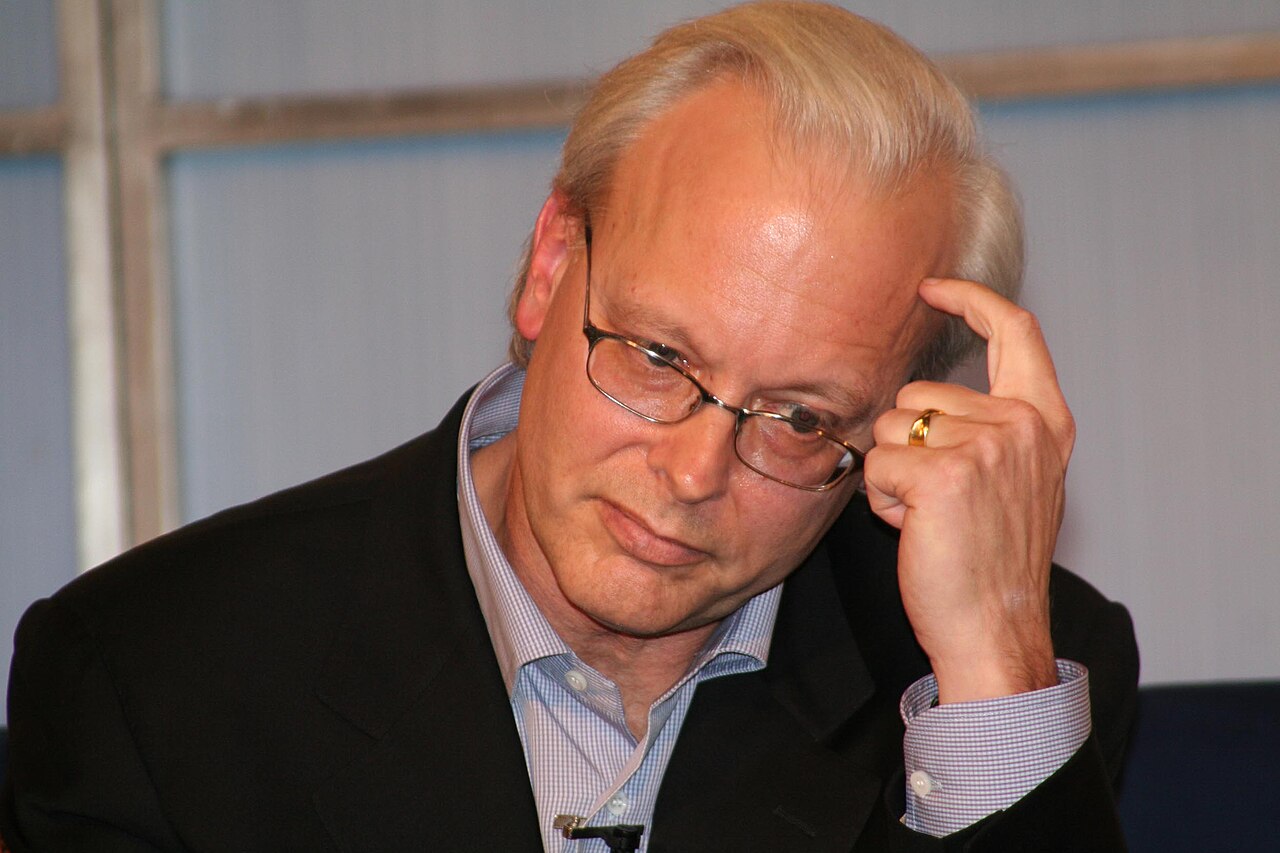
Ray Ozzie (born 1955) used PLATO’s message boards as an Illinois undergraduate in the 1970s and spent the next thirty years rebuilding them for companies. Lotus Notes, which he began in December 1984 with Mitch Kapor’s money and shipped in 1989, was the first groupware product to sell in the tens of thousands of seats and the first widely adopted software to use public-key cryptography; it is the reason IBM paid $3.5 billion for Lotus in 1995. Groove Networks, his second attempt, was bought by Microsoft in 2005, and a year later Bill Gates handed him the title of chief software architect. His 2005 memo “The Internet Services Disruption” told Microsoft it was about to be beaten by the web; the answer he started, code-named Red Dog, became Azure. He left in 2010 with a memo saying the PC era was over, and has since built a phone app and an Internet-of-things company, both of which are, at bottom, ways for people and machines to leave each other notes.
PLATO
Raymond Ozzie was born in Chicago on November 20, 1955, and studied computer science at the University of Illinois at Urbana-Champaign, graduating in 1979. He worked at the Computer-based Education Research Laboratory, where Donald Bitzer’s PLATO system ran, and he lived on it: PLATO Notes, the threaded discussion system David Woolley had written in 1973, Talkomatic, the games, and the sense, unusual in 1977, of a thousand people at terminals across a continent talking through one machine. He said later that everything he built afterwards was an attempt to give the corporate world what students at Illinois had taken for granted. The system and its community are in PLATO and the Birth of Online Community.
After Illinois he worked at Data General under Jonathan Sachs, then at Software Arts with Dan Bricklin and Bob Frankston on VisiCalc and TK!Solver, and in 1983 Sachs and Mitch Kapor recruited him to Lotus, where he led the development of Symphony, the integrated successor to 1-2-3. He wanted to build the PLATO idea, and Kapor agreed to fund it on condition that Symphony shipped first.
Notes
Iris Associates was founded in December 1984 in Westford, Massachusetts, with Lotus as its sole customer. What it built over the next five years was a document database that replicated: every user’s PC held a copy of the shared databases, changes were synchronised over dial-up when machines connected, and the same mechanism carried mail, discussions, forms and workflow. The security was ahead of its time. Notes used RSA public-key cryptography to authenticate users and encrypt mail, the first widely adopted product to do so, which brought Ozzie into the export-control fights of the early 1990s (see The Crypto Wars of the 1990s); the international version was limited to 40-bit keys, and from 1997 to 64-bit keys of which 24 bits were encrypted for the US government, an arrangement Ozzie negotiated with the NSA.
Lotus Notes 1.0 shipped in December 1989. Before the release Price Waterhouse had ordered 10,000 copies, the largest single sale of PC software to that date, and the pattern held: large companies bought it for whole workforces, and by the mid-1990s it had millions of users and no serious rival. Lotus bought Iris outright in 1994, and in 1995 IBM bought Lotus for $3.5 billion, its first hostile takeover, almost entirely to get Notes as its answer to Microsoft’s desktop. The product’s story from the Lotus side is in The Lotus 1-2-3 Story. Microsoft’s Exchange, launched in 1996, spent a decade catching up; IBM sold Notes and Domino to HCL in 2018 for $1.8 billion, and they still run in organisations that adopted them in 1992.
Groove and Microsoft
Ozzie left IBM in 1997 and founded Groove Networks in Beverly, Massachusetts, to do Notes again without a server: peer-to-peer workspaces that synchronised directly between PCs, encrypted end to end, for teams that crossed company boundaries. It found customers in government and disaster response but not a mass market, and in March 2005 Microsoft bought it for about $120 million and made Ozzie one of three chief technical officers.
He was there seven months when he wrote “The Internet Services Disruption”, dated October 28, 2005, and circulated by Gates to the whole executive staff. The memo said that Google and the web had made advertising-funded services, always-on connectivity and software delivered as a service the new platform, that Microsoft’s products were designed for a world that was ending, and that the company had perhaps three to five years to respond. Gates’s covering note compared it to his own 1995 “Internet Tidal Wave” memo. On June 15, 2006, Gates announced that he would leave day-to-day work and that Ozzie would succeed him as chief software architect. Ozzie’s projects were Live Mesh, a synchronisation service that was Groove for consumers, and, from 2008, a cloud operating system his team called Red Dog, run by Dave Cutler, the architect of Windows NT. It was announced as Windows Azure in October 2008. He never had the authority the title implied; the Windows and Office divisions ran themselves, and in October 2010 Steve Ballmer announced his departure. His parting memo, “Dawn of a New Day”, said that the PC-centred world was passing and that Microsoft’s habit of complexity would have to pass with it. The cloud business he started is the one that made Microsoft’s stock triple under his successor’s successor (see Satya Nadella and Microsoft and The Cloud Wars).
After
Talko, a voice-messaging app he founded in 2012, was bought by Microsoft in 2015. Blues Wireless, founded in 2019, sells the Notecard, a small cellular module that lets any device send data to the cloud without a developer having to deal with a carrier, which is the PLATO terminal reduced to a chip. In 2018 he proposed, in a paper called Clear, a design for law-enforcement access to encrypted phones through vendor-held keys, and was criticised by most of the cryptographic community he had once fought the government alongside. He was elected to the National Academy of Engineering in 2004 and made a Fellow of the Computer History Museum in 2021.
📚 Sources
- Ray Ozzie — Wikipedia
- HCL Notes — Wikipedia (Iris Associates in 1984, Notes 1.0 in December 1989, the Price Waterhouse order, the first commercial public-key use, IBM’s 1995 purchase, the 2018 sale to HCL)
- Lotus Software — Wikipedia (the 1994 purchase of Iris, IBM’s $3.5 billion acquisition in 1995)
- Ozzie, Ray — “The Internet Services Disruption”, internal Microsoft memo, October 28, 2005, full text as published by Dave Winer
- Five Years Later, Ray Ozzie Pens Another Great Memo: “Dawn Of A New Day” — TechCrunch, October 25, 2010
- Microsoft Announces Plans for July 2008 Transition for Bill Gates — Microsoft press release, June 15, 2006 (403 to scripts, loads in a browser)
- Meet 2021 CHM Fellow Honoree Raymond Ozzie — Computer History Museum
- Image: Ray Ozzie (292909366).jpg by JD Lasica (CC BY 2.0), via Wikimedia Commons