Sonic Team: Naka, Ohshima and Yasuhara
Abstract
Sonic the Hedgehog (1991) was made by three Sega employees in their twenties. Yuji Naka programmed it, Naoto Ohshima drew the hedgehog, and Hirokazu Yasuhara designed the levels and the one-button control scheme. The game took about 14 months against the three months Sega usually allowed, sold millions as the Genesis pack-in, and gave Sega the lead over Nintendo in the American 16-bit market for a while. Naka quit over pay after its release and was hired back in California. The trio split up in the late 1990s: Ohshima founded his own studios, Yasuhara went on to Naughty Dog and Nintendo, and Naka built Phantasy Star Online (2000), the first successful online role-playing game on a home console. Naka and Ohshima worked together again on Balan Wonderworld (2021), which flopped. In 2023 a Tokyo court convicted Naka of insider trading.
Three Recruits
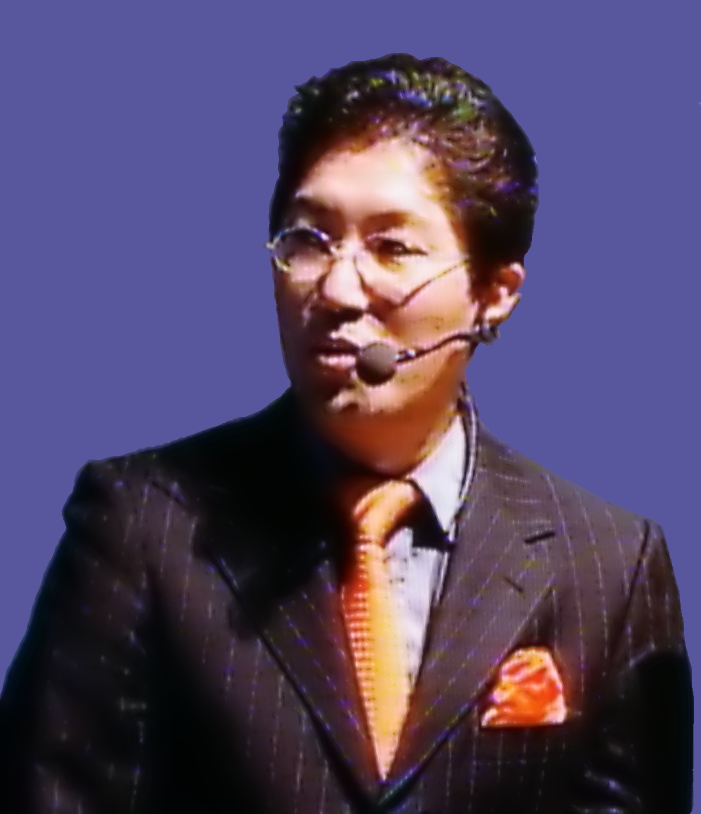
Yuji Naka was born on September 17, 1965, in Hirakata, Osaka Prefecture. He did not go to university. He learned to program at the house of Kazuya Nishioka, who wrote a programming column for ASCII magazine, and started at Sega in April 1984, straight from an industrial high school. He had told his friends he would be making arcade games; Sega put him in the home-computer department, where his first job was drawing maps for a Lode Runner conversion on the SG-1000. As a training exercise he was told to make a game of his own, “If it’s good, we’ll sell it,” and Sega did sell it: Girl’s Garden (1985). On Phantasy Star (1987), a 4-megabit Master System cartridge, he was lead programmer and wrote wireframe 3D dungeons that scrolled as the party walked. He was credited in Sega games as “YU2”.
Naoto Ohshima, born on February 26, 1964, in Osaka, joined Sega in 1987. His first project was the same Phantasy Star, where he drew monsters and the warrior Odin, because the lead artist Rieko Kodama did not enjoy drawing muscular men. His credit name was “Big Island”, a literal translation of his surname.
Hirokazu Yasuhara, born on October 12, 1965, studied at the Tokyo University of Science and joined Sega in 1988. He was credited as “Carol Yas”.
A Mascot for Sega
In 1988 Sega of Japan ran an internal competition for a character that could compete with Nintendo’s Mario, and in 1990 it told its studios to build a game around one. Naka had a prototype: a fast character rolling as a ball through a long, winding tube. His motive was impatience with Mario. “I didn’t like the slow movement in Mario, so for Sonic, I wanted to find a way to raise the speed,” he said in 2000; once a player had memorized a Super Mario Bros. level, clearing it still took the same time, and “with Sonic, I wanted to shorten that time if I could.”
The ball in his demo had no features. Ohshima, who had started on a project called “Twin Stars” in November 1989, drew the candidates. One was a rabbit that grabbed things with its ears, which the Mega Drive could not animate well enough; others were kangaroos, squirrels and an armadillo. The rolling attack favored an animal with a hard shell or spines. “Two possibilities came up: an armadillo or a hedgehog, but the hedgehog won out because it was faster,” Naka recalled. Ohshima took his sketches to New York and showed them to passers-by in Central Park, where the hedgehog came first. He described the head as Felix the Cat’s on Mickey Mouse’s body; the red shoes came from the boots on the cover of Michael Jackson’s Bad and from Santa Claus’s colors. A mustached man in pajamas from the same sketches became the villain, Dr. Eggman (Robotnik in the West). The name was chosen, Ohshima said, “because it represented speed.”
One Button
Yasuhara joined as the third member, sent to supervise the other two and to design levels. He had been meant to help for three months before a transfer to the United States, which the Gulf War delayed; he stayed about a year and became the game’s lead designer. The team had a problem he summed up in 2008: “we couldn’t get anything to work.” Naka wanted a game played with a single button, where Mario used two. “If you have only one button, then all you can do is jump, so we need to find some way the player can attack at the same time,” Yasuhara said. His answer was that Sonic curls into a ball in the air, and a jump becomes an attack.
Naka added the rings: “as long as you had even one ring, you could still play recklessly and get through ok.” Yasuhara built the stages from a theory. He took the four elements of play from the French sociologist Roger Caillois (competition, chance, vertigo and imitation) and structured each level around goals roughly 30 seconds apart, with longer arcs above them, alternating tension and relief. The easy routes were meant for casual players; occasional hard set pieces kept experienced ones interested. Green Hill Zone was redrawn several times, and its checkered ground borrowed the pattern Yu Suzuki had used in Space Harrier to suggest depth (see Yu Suzuki). The three worked, by the team’s accounts, 19 hours a day for several months.
Misconception: Sonic was created by Naka and Ohshima
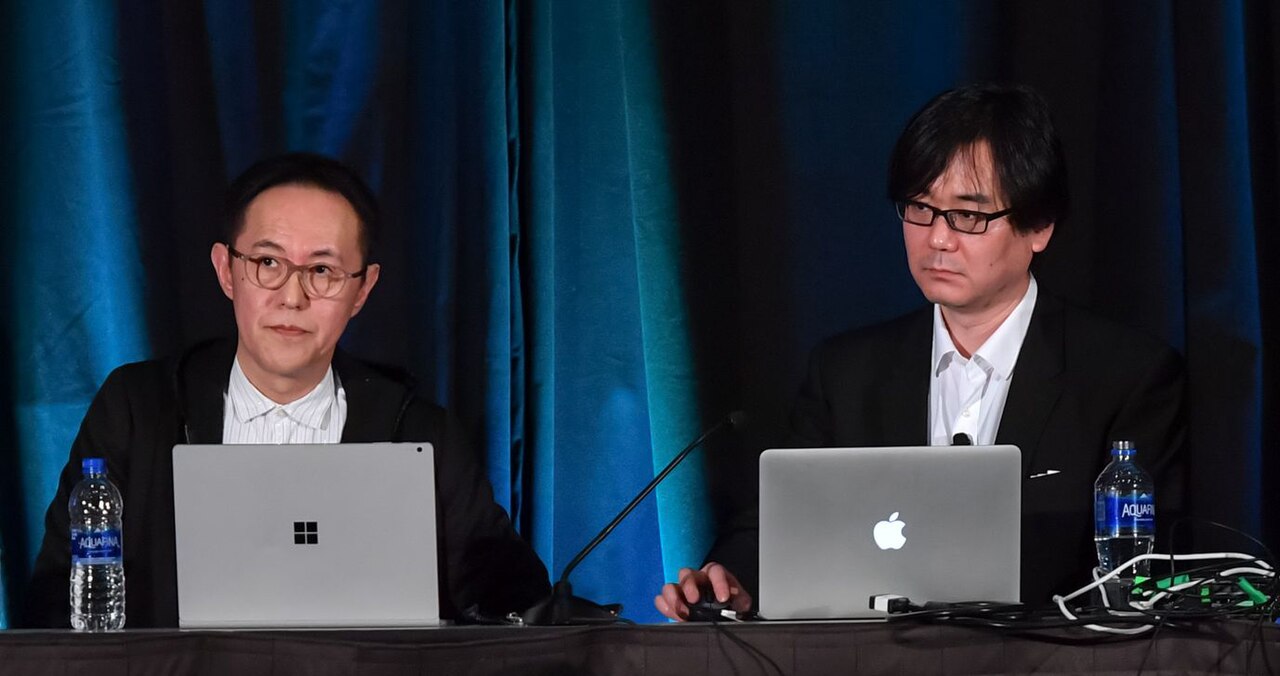
The usual formula, repeated by Sega itself, names two creators: programmer Yuji Naka and artist Naoto Ohshima. Hirokazu Yasuhara, credited in the game only as “Carol Yas”, was the lead game designer. He designed the levels and solved the one-button attack, and he directed Sonic the Hedgehog 3. Ohshima and Yasuhara presented the game’s history together at GDC in 2018, using Yasuhara’s original design documents. See Myths and Misconceptions.
The Mega Drive Engine
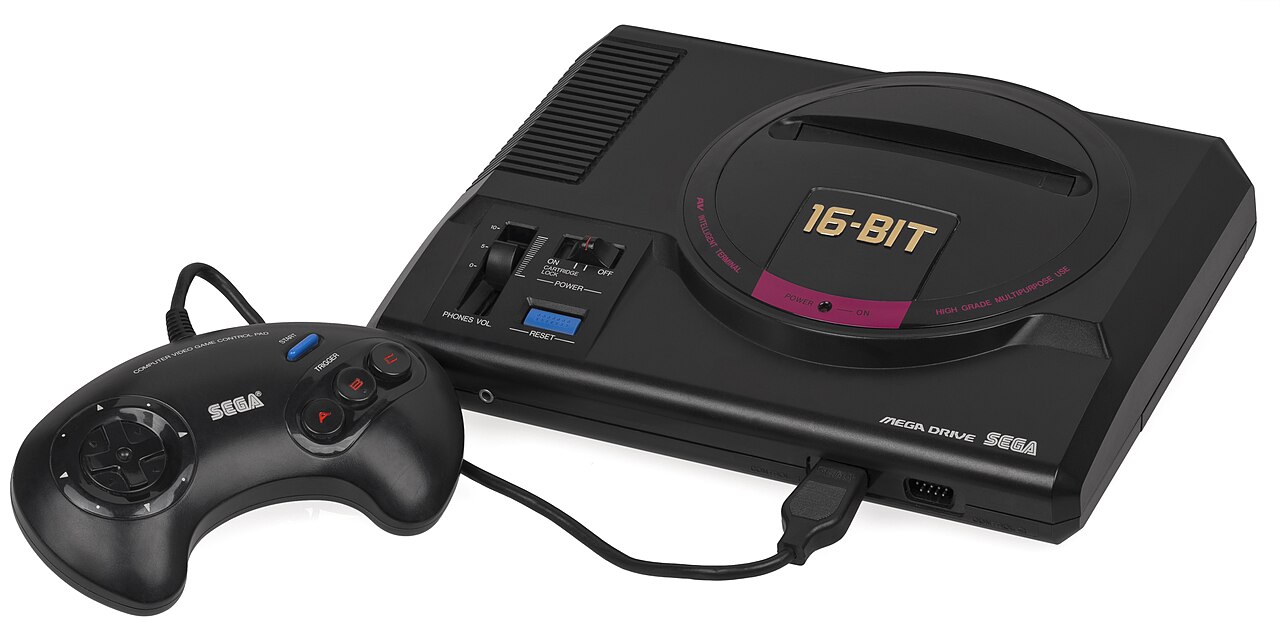
The speed was a programming problem. Platform games of the time moved characters over flat floors and walls; Naka wrote routines that let the sprite follow curves, ramps and full loops, keep its momentum and not fall through the geometry at high speed, and he reworked the animation so that the character stayed readable when it ran faster. The rotating maze of the special stages had been considered impossible on the console. “It really is nice and smooth. I think it rivals the Super Famicom in terms of speed, too,” Yasuhara said in 1991, a pointed comparison, since rotation was the showpiece of Nintendo’s new machine.
The music came from Masato Nakamura, bassist of the pop band Dreams Come True, who found the Mega Drive’s limit of four simultaneous sounds made composing close to impossible. A scrapped sound test with Sonic breakdancing to an animal band freed cartridge space for the two-syllable “Se-ga!” chant at startup.
Myth: Blast Processing made Sonic fast
Sega of America’s advertising claimed the Genesis had “Blast Processing” that the Super NES lacked, and the slogan is still often offered as the reason Sonic could run so fast. The phrase came from Scott Bayless, a senior producer at Sega of America. In the run-up to the Sega CD’s Western launch he described to the PR team a trick found by technical director Marty Franz: timing a DMA transfer to the scan line to “blast data into the DACs.” Marketing kept the word. The trick consumed nearly all the CPU, was unreliable across hardware revisions, and no shipping game used it. Sonic was fast because of Naka’s code. “Sadly I have to take responsibility for that ghastly phrase,” Bayless said in 2022. See Myths and Misconceptions.
Sales and the Pack-In
Sega showed the game at the Tokyo Toy Show in June 1990 and at the Winter Consumer Electronics Show in January 1991. It was finished in May 1991 and released in North America and Europe in June and in Japan on July 26, 1991. Sega of America’s chief executive, Tom Kalinske, made it the game packed with the Genesis in November 1991, replacing Altered Beast. In Sega’s playtests, 80 percent of Mario fans preferred Sonic. In the last quarter of 1991 the Genesis outsold the new Super NES about two to one in the United States, and in January 1992 Sega’s market share peaked at about 65 percent. The Genesis bundle alone accounted for more than 15 million copies by 2009 (see The Video Game Console Wars and Sega).
Inside Sega the project counted as an overrun. Mark Cerny, then setting up Sega’s American studio, recalled in 2025 that the usual budget was “three people, three months”, and the Sonic team “ended up needing four and a half people for 14 months.” Naka “was just getting yelled at and quit the company.” In his own account, Sega had had little faith in the game, and his monthly salary was 160,000 yen. Cerny put it at $30,000 a year, perhaps doubled by a bonus in a good year.
California
Cerny had founded the Sega Technical Institute (STI) in 1990 in Palo Alto to put Japanese and American developers in one studio. He hired Naka back at double his old salary, and Yasuhara, already assigned to the United States, came too. “Mark was my boss, and 12 or 13 of us worked for a year to create Sonic 2,” Naka said. The Japanese team was used to crunch and the Americans kept normal hours, and the language barrier kept the two groups largely apart. Sonic the Hedgehog 2 was released on November 24, 1992, and was reported in November 1993 as the best-selling 16-bit game to date.
Sonic 3 grew too large for its deadline, a McDonald’s Happy Meal promotion that had been fixed in advance, so Sega split it. Sonic the Hedgehog 3 came out in February 1994, directed by Yasuhara, and Sonic & Knuckles in October 1994. The second cartridge had a slot on top: plugged into it, Sonic 3 became the complete game.
Ohshima stayed in Japan and directed Sonic CD (September 23, 1993) for the Mega-CD, a game built around time travel, with past and future versions of every stage. Naka exchanged ideas with him but was not on the team. It sold more than 1.5 million copies, the add-on’s best seller.
Sonic Team
Naka returned to Japan in August 1994, shortly before Sonic & Knuckles came out, and Sonic Team, the name the original Sonic team had already used, became the name of his studio. Its first Saturn game was not a Sonic game. “We had planned to make a Sonic game on the Sega Saturn, actually, but they told us ’let’s make something simpler first’,” Naka said, and the simpler thing was Nights into Dreams (July 5, 1996), a flying game set in dreams, directed by Ohshima and programmed and produced by Naka. Sega designed an analog controller, the Saturn 3D Controller, alongside it and packed it with some copies. It sold 392,383 copies in Japan. Sonic Adventure (1998), the 3D launch showpiece of the Dreamcast, was the last game Naka and Ohshima made together at Sega.
The trio then dispersed. Ohshima founded Artoon in 1999, directed Blinx: The Time Sweeper (2002) for Microsoft’s Xbox, and the studio developed Yoshi’s Island DS (2006) for Nintendo, the company Sonic had been drawn to beat. When Artoon was absorbed into AQ Interactive in 2010, he co-founded Arzest. Yasuhara left Sega, joined Naughty Dog in 2002 and designed for Jak II, Jak 3 and Uncharted: Drake’s Fortune (2007), working again with Mark Cerny; he moved to Namco Bandai in 2008, to Nintendo Software Technology in April 2012, and after 2016 to Unity.
Phantasy Star Online

“I’d always wanted to make a game with online networking,” Naka said in 2000. “I’d chatted with people on the computer over 15 years before, using a 2400 baud modem.” The Dreamcast shipped with a modem, and Sonic Team used the puzzle game ChuChu Rocket! (1999), the only game Naka directed at Sega, to learn network programming before the larger project. For Phantasy Star Online itself he studied Diablo, Ultima Online and EverQuest.
Phantasy Star Online was released in Japan on December 21, 2000. Up to four players formed a party, and a word-select system of about 2,000 predefined phrases translated between Japanese, English, French, German and Spanish, so that players who shared no language could still coordinate. Each server held 1,000 players. By April 2001 the game had more than 235,000 registered players, and it won the Japan Game Award for game of the year. It was the first online role-playing game on a home console to find a large audience, and it came with the fees and server upkeep that console online play has carried since (see MMORPGs and Virtual Worlds). The last official servers, for the Japanese PC version Blue Burst, were switched off on December 27, 2010.
The Dreamcast itself was discontinued in March 2001. Naka became chief executive of SONICTEAM, Ltd., the subsidiary Sega spun out, and stayed on as an executive until he announced on March 16, 2006, that he was leaving to found his own studio, Prope, which made games for the Wii and for phones.
Balan Wonderworld
In January 2018 Naka joined Square Enix and set up a subsidiary, Balan Company, to make a platform game with Ohshima’s Arzest as developer and Ohshima as character designer. Balan Wonderworld was released on March 26, 2021, on six platforms.
Dead end: the reunion
Reviews put Balan Wonderworld between 36 and 51 on Metacritic, depending on the platform. In Japan it sold fewer than 2,100 physical copies in its first week, and it missed the UK top 40. Naka left Square Enix in April 2021. A year later he said Square Enix had removed him as director six months before release after a dispute over Arzest’s plan to submit a build with known bugs unfixed, called it “a true disgrace that Balan Wonderworld was released in the state that it was in,” and sued Square Enix. The suit was dismissed.
Insider Trading
On November 17, 2022, the Tokyo District Public Prosecutors Office arrested Naka. While at Square Enix he had seen internal materials on the company’s joint projects with outside developers, and before Dragon Quest Tact was announced he bought about 10,000 shares of its developer, Aiming, for around 2.8 million yen. On December 7 he was arrested again, over shares of ATeam, bought before the announcement of Final Fantasy VII: The First Soldier. Another former Square Enix employee and an acquaintance were arrested in the same case. Naka pleaded guilty in March 2023. On July 7, 2023, the Tokyo District Court sentenced him to two and a half years in prison, suspended for four years, and ordered payments totaling about 173 million yen in fines and forfeited proceeds.
📚 Sources
- Yuji Naka — Wikipedia
- Naoto Ohshima — Wikipedia
- Hirokazu Yasuhara — Wikipedia
- “Yuji Naka – 2000 Developer Interview” (Game Maestro Vol. 2) — shmuplations (early career, Mario speed, quitting, STI team size, Nights, PSO and the 2400 baud modem)
- “Sonic the Hedgehog – Developer Interview Collection” — shmuplations (Naka 2001 on speed, hedgehog, rings; Yasuhara 1991 on the special stage)
- Sheffield, Brandon: “Game Design Psychology: The Full Hirokazu Yasuhara Interview” — Game Developer (August 2008)
- “Classic Game Postmortem: Sonic the Hedgehog”, Naoto Ohshima and Hirokazu Yasuhara — GDC Vault (2018) · YouTube
- Sonic the Hedgehog (1991 video game) — Wikipedia (mascot competition, character designs, development, release, sales and market share)
- Sonic the Hedgehog (1991)/Staff — Sonic Wiki Zone (credit names)
- Phantasy Star (video game) — Wikipedia
- "‘Sonic Was Terribly Controversial’ – Mark Cerny On Why Yuji Naka Quit" — Time Extension (December 2025)
- “The Man Behind Sega’s ‘Blast Processing’ Gimmick Is Sorry For Creating ‘That Ghastly Phrase’” — Time Extension (September 2022)
- Sega Technical Institute — Wikipedia (founding, Sonic 2, the Sonic 3 split)
- Sonic CD — Wikipedia
- Nights into Dreams — Wikipedia
- ChuChu Rocket! — Wikipedia
- Artoon — Wikipedia (founding, absorption into AQ Interactive, Arzest; Blinx, Yoshi’s Island DS)
- Phantasy Star Online — Wikipedia
- Balan Wonderworld — Wikipedia
- “Global Sales Data Suggests Balan Wonderworld Has Massively Flopped” — Nintendo Life (April 2021)
- “Yuji Naka claims he was removed as director of Balan Wonderworld before it crash landed” — Game Developer (April 2022)
- “Yuji Naka arrested in Dragon Quest Tact insider trading scandal” — Gematsu (November 2022)
- “Yuji Naka gets a $1.2 million fine and a suspended prison sentence for insider trading” — VGC (July 2023)
- Image: Naoto ohshima hirokazu yasuhara gdc 2018 cropped.jpg by Game Developers Conference (CC BY 2.5), via Wikimedia Commons
- Image: Yuji Naka Tokyo Game Show 2008 cropped.jpg by switchstyle; derivative work: Tachymètre and Leovilok (CC BY 2.0), via Wikimedia Commons