Hungary's Computing Industry: The M-3, the "Analysers" of KFKI, and the Boy Who Watched the Ural
Abstract
Hungary’s first computer, a copy of the Soviet M-3, ran on 21 January 1959 in a Budapest research group that had built it from mid-1957 with no prior experience. In the 1960s the Party froze all domestic computer development and ordered machines bought from the USSR, so the physicists at KFKI called their computers “analysers” and built 1,435 of them between 1968 and 1989, most of them re-implementations of DEC’s PDP-8, PDP-11 and VAX, outside every official programme. The country’s Ryad obligation was met with a French licence, its best-known computer scientist left as a teenager for Denmark and ended up writing Microsoft Word, and its first post-communist software export was an architect’s CAD program that Steve Jobs sent an Apple to encourage. This article is the Hungarian thread that Comecon Computing follows only as far as Videoton.
The M-3
Hungary came late to computing even by the standards of the bloc. The Cybernetics Research Group of the Hungarian Academy of Sciences, led by Rezső Tarján (1908–1978) with István Aczél and Tamás Frey, began building a computer in mid-1957 from the documentation of the Soviet M-3, with Győző Kovács as deputy head of the development team and Bálint Dömölki among the engineers. The M-3 ran its first program on 21 January 1959. It was a valve machine of the first generation, slow and unreliable, and it was the only computer in the country; by 1965 Hungary, with ten million people, still had fewer than fifty computers, only one of them outside Budapest. Dömölki went on to found the Hungarian school of systems programming and to lead the MProlog system, the country’s best-known software export of the socialist period.
The Analysers
What happened next is the Hungarian story in one anecdote. In the 1960s the Central Committee of the Party ruled that all domestic computer development was to be frozen and computers were to be bought from the Soviet Union. The engineers of the Research Institute for Measurement and Computing Techniques at KFKI, the Central Research Institute for Physics in Budapest, were therefore not allowed to build a computer, so they built an “analyser”: the TPA, Tárolt Programú Analizátor, the stored-program analyser, exactly as DEC had called its first machine a Programmed Data Processor to avoid the word “computer”. The rule was later repealed; the name stayed.
The first TPA, the transistorised TPA 1001, was a re-implementation of DEC’s PDP-8, built between 1966 and 1968 and in production from 1968; its designers joined the DEC user society DECUS in 1969 and so got the PDP-8’s software library. About 600 were sold in Hungary and Comecon. The TPA project ran from 1968 to 1989, the name until 1992, and 1,435 machines were sold in all: about 800 of the PDP-8-compatible TPA-8 line (TPA/i, TPA/s, TPA/l, TPA Quadro), the KFKI’s own 16-bit TPA-70 of 1970 to 1975, which failed for lack of software, and from 1977 the TPA-11 line compatible with the PDP-11 (TPA 1140 in 1977, 1148 in 1981, 11/440 in 1982, 11/420 in 1985) and then with the VAX (the TPA-11/580, the smaller 11/540 and the multiprocessor 11/560). Of the 1,435, 1,215 were designed from scratch as compatible re-implementations, 105 were card-by-card copies and 115 were built on original DEC processors in the late 1980s. The TPAs fitted none of the official programmes: the Comecon minicomputer line SM EVM started in 1974, after them, and left them out, so they survived on their users and on personal connections in the Party. Some “TPAs” were VAX-11/780s smuggled past the CoCom embargo with KFKI stickers over the DEC badge, which everyone knew and nobody said. After 1989 the institute formed a joint venture with Digital and the state computing company Számalk, and the design and manufacturing staff were dispersed.
Ryad by Licence
Hungary’s official participation in the bloc programme took a different route, told in full in Comecon Computing. When Kosygin invited the satellites to join the Unified System in January 1968, Hungary was negotiating a licence from France’s CII; it offered Ryad a machine smaller than the smallest System/360, got the offer accepted, and bought the CII licence for what became the Mitra 15, paying 40 percent of it in Hungarian engineering services. The licence went in December 1970 to Videoton, the television maker in Székesfehérvár, which built a computer factory in 1971, showed the ES-1010 or R10 at the Budapest fair in 1972, sold almost 500 across Comecon and became the second-largest computer maker among the satellites. The same 1968 economic reform that let Videoton finance itself through exports created Hungary’s first software house, INFELOR, out of the statistics office’s data-processing laboratory of 1965, and a computing coordination institute, SZKI, at the end of 1968, whose staff worked alongside CII’s in Paris and by the 1980s functioned as a Western-style software company inside a socialist economy.
The Emigrant
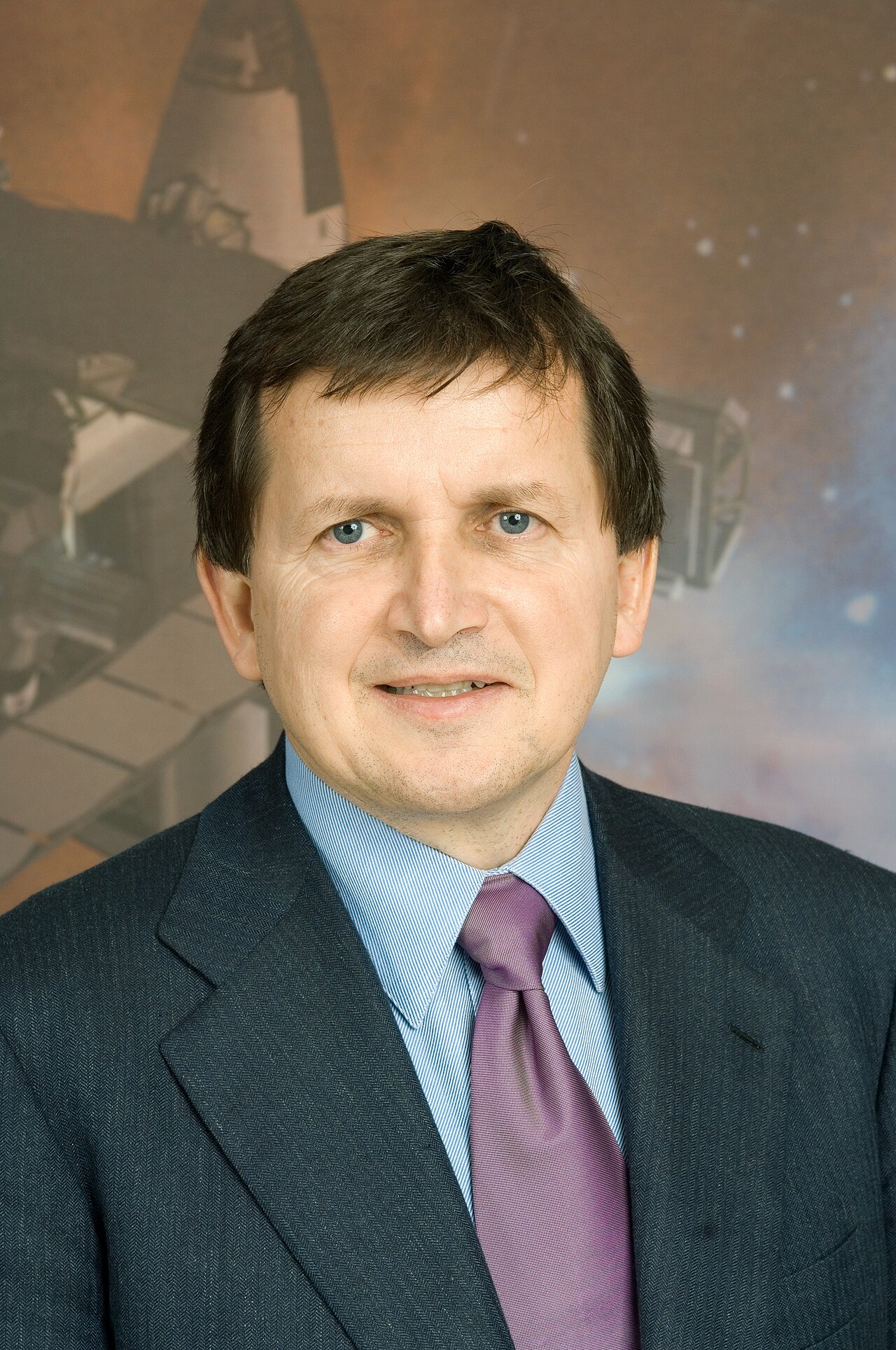
Charles Simonyi was born in Budapest on 10 September 1948, the son of the electrical-engineering professor Károly Simonyi, and as a teenager worked as a night watchman in a computer laboratory that had a Soviet Ural II, on which he learned to program. In 1966 he left for Denmark and a job at Regnecentralen on the RC 4000, the machine whose operating system Per Brinch Hansen was writing (see The Nordic Tech Industry); in 1968 he moved to Berkeley, took his degree in 1972, and at Xerox PARC in 1974 wrote Bravo, the first WYSIWYG document editor. He took a Stanford PhD in 1977, joined Microsoft in 1981 and built its applications group, Word and Excel, and the identifier convention still called Hungarian notation; left in 2002 to found Intentional Software, which Microsoft bought in 2017; and flew to the International Space Station twice, on Soyuz TMA-10 on 7 April 2007 and Soyuz TMA-14 on 26 March 2009, the only paying passenger to go twice. His net worth was put at $7.5 billion in January 2025. Hungary’s contribution to the personal computer was made by someone the country had let leave as a teenager.
After 1989
The first Hungarian software company to sell to the world was founded before the system fell. Gábor Bojár started Graphisoft in Budapest in 1982, writing terrain-modelling software on microcomputers while running a mathematics department; Apple began supporting the company in 1984, after Steve Jobs saw its 3D work and sent it a machine, and ArchiCAD was introduced in 1987 with the “Virtual Building” idea that the industry later renamed building information modelling. Graphisoft listed in Frankfurt in 1998 and Budapest in 2000 and was bought by Germany’s Nemetschek in 2007. Videoton went into liquidation in 1991 and came back as a contract manufacturer; the KFKI computer works closed; the software houses of the SZKI generation became the nucleus of an outsourcing industry, and the region’s later startup economy is covered in Estonia and Eastern Europe’s Tech Industry.
Dead End: The Programme That Was Not Allowed
Hungary is the country where the planning system’s hostility to its own engineers is documented most plainly: a Party ruling that computers were not to be built, which the engineers evaded by changing the noun. The 1,435 TPAs are the largest body of domestic computer design in the bloc outside the USSR and East Germany, and they were produced without state support, outside both Comecon programmes, by an institute whose formal business was physics. What that arrangement could not produce was the next step. The TPA-70, the one original architecture, died for want of software the institute could not afford to write; everything else was a re-implementation of DEC, kept alive by DECUS tapes and by the users’ need for small machines that the official IBM clones could not fill. When the embargo ended, the institute’s own machines were replaced by the originals within two years. The lasting Hungarian products were the ones that did not need a factory: Dömölki’s MProlog, Bojár’s ArchiCAD, and the Word that a Budapest teenager grew up to write somewhere else.
📚 Sources
- Szabó, Máté: “From The West To The East And Back Again: Hungary And The Ryad” — SoRuCom 2020 (M-3 by 1959, fewer than 50 computers in 1965, TPA 1001, EMG 830, CII licence, Videoton R10)
- Kovács, Győző: “50 Years Ago We Constructed the First Hungarian Tube Computer, the M-3” — IFIP WG 9.7, History of Computing (2010)
- “The story of the first electronic computer in Hungary” — NJSZT iTF (M-3 first run 21 January 1959, Tarján, Aczél, Frey)
- Varga, Ákos: “The TPA story” — hampage.hu (the analyser name, 1,435 machines 1968–1989, the model lines, the relabelled VAXes)
- Charles Simonyi — Wikipedia
- Graphisoft — Wikipedia
- Videoton (company) — Wikipedia