Emulation and Retrocomputing
Abstract
Emulation, one computer imitating another, was named and first sold by IBM in 1963 as a way to keep customers’ old software running on new mainframes. Forty years later the same technique became the backbone of software preservation: MAME documents arcade hardware, the Internet Archive runs vintage software in the browser, and volunteer teams keep 60-year-old machines physically running in museums. Between the two eras sits a legal minefield. Courts ruled the emulator itself lawful in 2000, but the software it exists to run mostly remains under copyright, out of print, and owned by companies with no obligation to keep it available.
Emulation as a Sales Tool
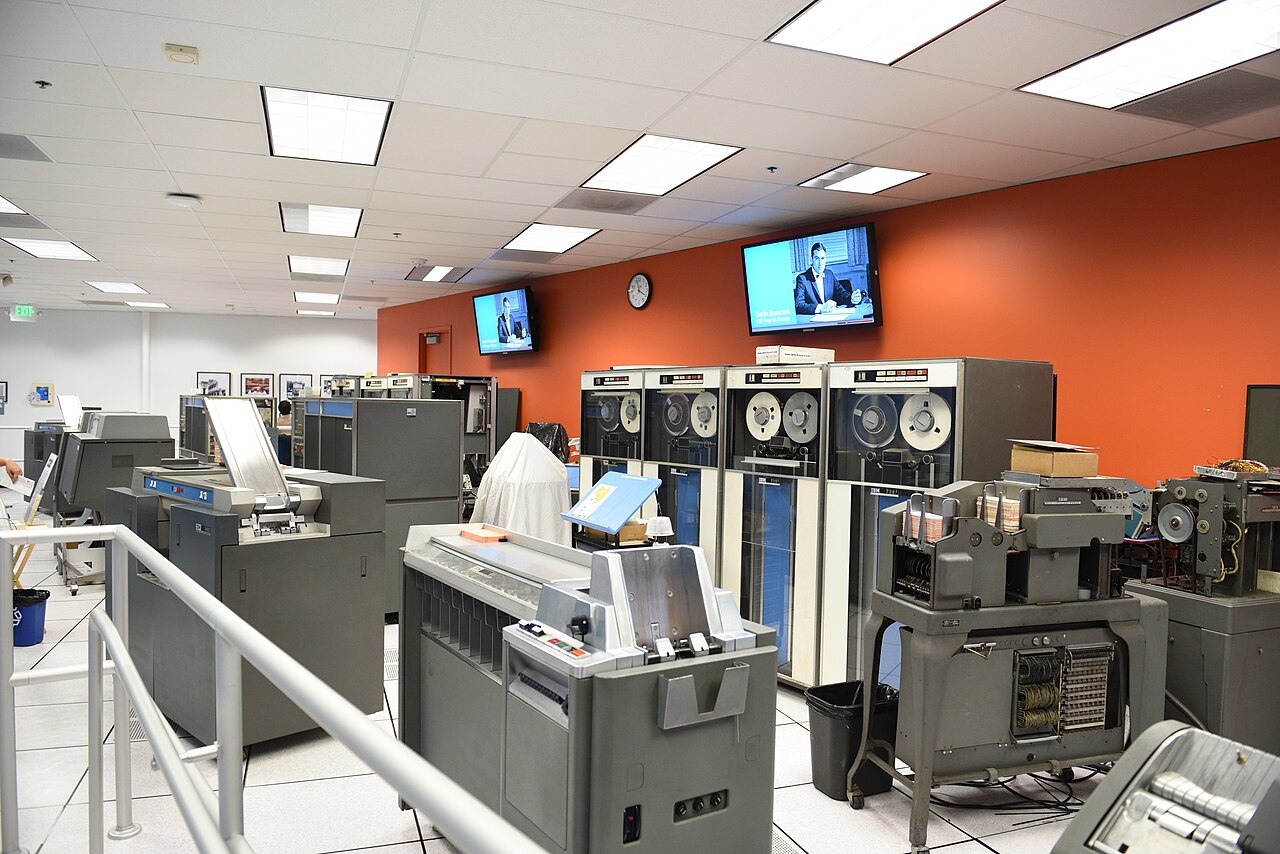
The word “emulator” was coined at IBM in 1963, during development of System/360. The problem was commercial: IBM wanted its 1401 customers to move up to the new architecture, but their software was written for the 1401, and a rewrite was an expense many would refuse (Honeywell was courting exactly those customers with its 1401-compatible H-200). Pure software simulation of the 1401 on a System/360 was too slow to be usable. IBM’s engineers found that a combination of software, microcode, and dedicated hardware could run 1401 programs on a System/360 faster than a real 1401 ran them, and named the hybrid technique emulation to distinguish it from mere simulation. The emulator was not an afterthought; for many customers it was the reason the upgrade was safe to sign.
The pattern repeated whenever a vendor changed architectures underneath its installed base. Apple shipped a 68k emulator inside every PowerPC Macintosh from 1994, ran classic Mac OS software on the new chips for years, and did it again with Rosetta (PowerPC to Intel, 2006) and Rosetta 2 (Intel to ARM, 2020) in the macOS lineage. Infocom had already generalized the idea in 1979: target an imaginary machine and emulate it everywhere (see the Z-machine). For its first three decades, emulation was a tool for moving forward: it existed so that old software could follow its users onto new hardware.
MAME
Running old software because you missed it, on hardware that no longer existed, needed a different kind of emulator. On 24 December 1996 Nicola Salmoria, an Italian programmer, began writing emulators for individual arcade boards, starting with the Pac-Man hardware. He merged them into a single framework and released MAME 0.1 (Multiple Arcade Machine Emulator) on 5 February 1997. Arcade games were the hardest preservation case in computing: each game was a unique circuit board that lived in a cabinet, earned coins for a few years, and was then scrapped or converted into whatever game was popular next. No consumer ever owned the machine, so no attic collection was coming to save it.
MAME’s answer was to define itself as a documentation project. The stated goal is to describe, in code, exactly how each piece of hardware works, with accuracy taking precedence over speed; that the documentation happens to be executable, and the executable happens to play Galaga, is presented as a fortunate side effect. The framing is partly legal caution, but it is also engineering policy: MAME emulates the original ROMs and circuits rather than approximating game behavior, which is why it slows down on weak host machines instead of guessing. The project absorbed its sibling MESS (the same approach applied to home computers and consoles) in May 2015, and in March 2016 relicensed the whole codebase under free licenses (GPL-2.0-or-later overall, most files BSD-3-Clause), completing the shift from hobby project to public preservation infrastructure. Today MAME documents thousands of machines, from arcade boards to chess computers and slot machines, and hardware researchers use its CPU cores as reference implementations.
The Emulator in Court
Whether any of this was legal took a corporate fight to settle. In 1999 Connectix released the Virtual Game Station, a commercial PlayStation emulator for the Mac, and Sony sued. To build it, Connectix had repeatedly copied Sony’s copyrighted BIOS while reverse engineering the console. In February 2000 the Ninth Circuit ruled in Sony v. Connectix that this intermediate copying was fair use: the final product contained none of Sony’s code, and a transformative product that let PlayStation games run on a computer was legitimate competition, not piracy. The parallel case Sony v. Bleem (2000) added that using screenshots of Sony’s games in comparative advertising was fair use too. The rulings did not save either company: Connectix sold Sony the Virtual Game Station rights in March 2001 and the product was discontinued, while Bleem, victorious in court, folded in November 2001 under its legal costs. The doctrine survived and is the foundation of the entire field: the emulator is legal; the copyrighted games it runs are a separate question.
That separate question resurfaced in 2024 with the opposite outcome. Nintendo sued Tropic Haze, developer of the Switch emulator Yuzu, arguing not copyright infringement by the emulator but violation of the DMCA’s anti-circumvention rules: Yuzu was built to decrypt Switch games using extracted cryptographic keys, and Nintendo’s complaint said a leaked copy of The Legend of Zelda: Tears of the Kingdom had been downloaded over a million times before the game’s release. Tropic Haze settled within a week (March 2024) for $2.4 million, shut down Yuzu and its 3DS sibling Citra, and handed Nintendo the domain. Encryption changed the legal terrain: Connectix protected reverse engineering a console, but a modern emulator that must break DRM to function fights on much worse ground.
Abandonware
Most old software is not sold, not supported, and not formally released from copyright: abandonware, a gray zone the size of an industry’s entire back catalog. Copyright lasts decades longer than any software market, so a game can be simultaneously impossible to buy and illegal to copy. A 2023 study by the Video Game History Foundation and the Software Preservation Network quantified the gap: 87 percent of games released in the United States before 2010 are out of print. The number got worse the same year it was published, when Nintendo closed the 3DS and Wii U eShops in March 2023 and most legally purchasable Game Boy titles fell out of release in one stroke.
The law has moved in small steps. The triennial DMCA exemption process granted preservation institutions the right to circumvent copy protection on abandoned games for local play in 2015, and extended it in 2018 to games whose activation servers were switched off. In October 2024 the Copyright Office refused the next step, remote scholarly access to library game collections, siding with the Entertainment Software Association’s objection that researchers might play the games for fun. The commercial route has done more: GOG (founded 2008 as Good Old Games) built a business licensing old titles from rights holders, patching them to run on modern systems via bundled emulators such as DOSBox, and selling them DRM-free, proof that part of the gray market was simply unmet demand (see Copyright and IP in the Digital Age).
The Museum in the Browser
In December 2013 the Internet Archive launched the Console Living Room, playable 1970s and 1980s console games running directly in the browser. The enabling work was JSMESS, an effort led by archivist Jason Scott (whose Archive Team rescues shutting-down websites, see Link Rot and the Digital Dark Age) to compile the MESS/MAME emulator to JavaScript, so that running a vintage program required exactly one click and no installation. The Internet Arcade followed in November 2014 with about 900 coin-op games, and the MS-DOS software library in January 2015 with roughly 2,400 programs, each curated to actually work. The collection has since grown past a million software titles, making the Archive the field’s de facto working software museum. Its legal position rests on the DMCA preservation exemptions and on nobody with standing choosing to fight a library. The browser strategy widened the audience: a program that runs from a link can be handed to students, cited in a footnote, or tried out of idle curiosity, none of which happens when playing it first requires configuring an emulator.
Running the Real Iron
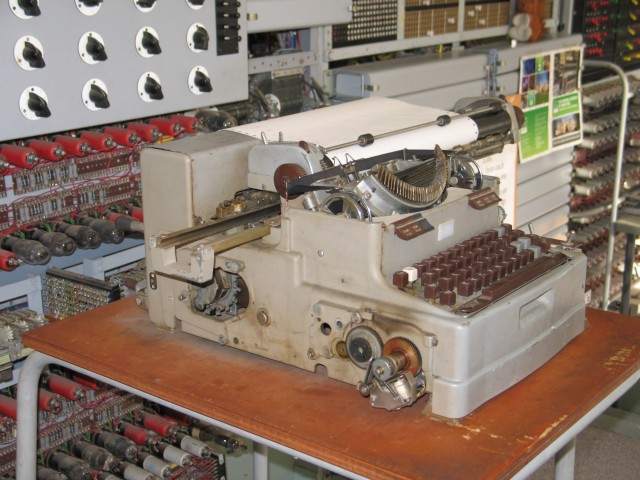
Emulation preserves behavior; it cannot preserve the smell of warm oil, the noise of a chain printer, or the fact that a machine was a physical place people worked in. That is the museums’ job, and the serious ones run their machines. At the Computer History Museum in Mountain View, a volunteer team restored a DEC PDP-1 between 2003 and 2005 and demonstrates Spacewar! on it, the game in its original habitat. A second team under Robert Garner, staffed largely by retired IBM field engineers then in their seventies and eighties, spent over 20,000 hours from 2004 restoring two complete IBM 1401 systems to working order; the effort won the Computer Conservation Society’s Tony Sale Award in 2014. The award’s namesake set the standard for the discipline: Tony Sale led the volunteer rebuild of Colossus, the 1944 codebreaking machine whose originals were dismantled for secrecy (see Tommy Flowers and Colossus). Begun in 1993, the working Mark 2 marked its completion in November 2007 with a Cipher Challenge: Lorenz-enciphered messages were radioed from the Heinz Nixdorf MuseumsForum in Paderborn, and the rebuilt Colossus raced radio amateurs worldwide to break them (a German amateur with a laptop won). It runs today at The National Museum of Computing at Bletchley Park. Germany’s contribution is the replica tradition around Konrad Zuse’s machines, including the Z1 rebuilt by Zuse himself in the 1980s and his son Horst’s working Z3 of 2010.
Between software emulation and original iron a third path emerged: reimplementing vintage hardware on FPGAs, chips whose logic circuits are reconfigurable. The MiSTer project, started in June 2017 by Alexey Melnikov on the Terasic DE10-Nano board, hosts community-written cores that turn the FPGA into a cycle-accurate Amiga, Genesis, or Neo Geo, with none of the input lag a software emulator adds and none of the failing capacitors a 40-year-old motherboard brings. The approach treats MAME-style documentation as a manufacturing specification: a circuit described precisely enough can be instantiated again.
Dead End: Preservation by Permission
The industry’s preferred answer to all of this has been licensed re-release: mini consoles, subscription back catalogs like Nintendo Switch Online, remasters. As a business it works; as preservation it is a dead end, and the 87 percent figure is the proof. Licensed reissues cover the few hundred titles per platform worth marketing, skip everything with tangled rights (licensed music, defunct studios, disputed ownership), and vanish again when the storefront closes, as the eShop shutdown demonstrated. Every rights holder that told regulators emulation was theft has meanwhile shipped emulators of its own: the NES Classic, PlayStation Plus’s game streaming, and Virtual Console were software emulation, sold back to the customer. The companies were never against emulation. They were against not being paid for it, which is a coherent business position but not a preservation plan, and US copyright terms of 95 years mean no commercial game yet made has ever entered the public domain by expiry. Until one does, the working archive of the medium is being kept by a nonprofit library, a documentation project started on Christmas Eve 1996, and volunteers with oscilloscopes.
📚 Sources
- Wikipedia: Emulator (IBM coins the term, 1963)
- ibm-1401.info: 1401 Emulation in the System/360
- Wikipedia: MAME
- MAMEdev.org: official project site and legal information
- LWN: MAME is now Free and Open Source Software (2016 relicensing)
- Wikipedia: Multi Emulator Super System (MESS, merged into MAME 2015)
- U.S. Copyright Office fair-use summary: Sony v. Connectix, 203 F.3d 596 (9th Cir. 2000)
- Wikipedia: Sony Computer Entertainment, Inc. v. Connectix Corp.
- Wikipedia: Bleem! (won in court, folded November 2001)
- The Register: PlayStation emulator developer Bleem folds (2001)
- Android Authority: Yuzu creators to pay Nintendo $2.4 million (March 2024)
- Managing IP: Nintendo v Yuzu, the legal boundaries of console emulators
- Video Game History Foundation: 87% Missing — the Disappearance of Classic Video Games (2023 study)
- EFF: The New DMCA §1201 Exemption for Video Games (2015)
- EFF: The Expanded DMCA Exemption for Video Game Preservation (2018)
- Video Game History Foundation: Statement on the DMCA 2024 triennial review ruling
- Wikipedia: GOG.com
- Internet Archive Blog: The Console Living Room (December 2013)
- Jason Scott: The MS-DOS Showcase (January 2015)
- Internet Archive Help Center: MS-DOS Emulation
- Computer History Museum: Computer Restorations (PDP-1, IBM 1401)
- Computer History Museum: IBM 1401 restoration wins the 2014 Tony Sale Award
- The National Museum of Computing: The Colossus Rebuild
- Wikipedia: Colossus computer (rebuild 1993–2008, Cipher Challenge November 2007)
- Wikipedia: MiSTer (FPGA project, 2017)
- Image: IBM 1401 Demo Lab, Computer History Museum, California.jpg by Robert Garner (CC BY 2.0), via Wikimedia Commons
- Image: Colossus Computer, Bletchley Park - geograph.org.uk - 1590878.jpg by Ian Petticrew (CC BY-SA 2.0), via Wikimedia Commons