The History of Word Processing
Abstract
“Word processing” began as an IBM sales term for a $10,000 typewriter that recorded keystrokes on magnetic tape, introduced in 1964 so that a secretary could correct one line without retyping the page. Over the next thirty years the same job moved through three kinds of machine. First came dedicated office appliances: IBM’s MT/ST, Evelyn Berezin’s Redactron Data Secretary, the screen-based systems of Vydec, Lexitron and AES, and Wang’s 1976 Word Processing System, which made the category a boardroom purchase. Then came programs on personal computers: Electric Pencil in 1976, WordStar in 1979, WordPerfect, and Microsoft Word, which Charles Simonyi built on ideas from Xerox PARC’s Bravo. By the mid-1990s Word held most of the market and the dedicated machines were gone, in Japan as much as in America. The third move, into the web browser, came with Writely and Google Docs in 2006.
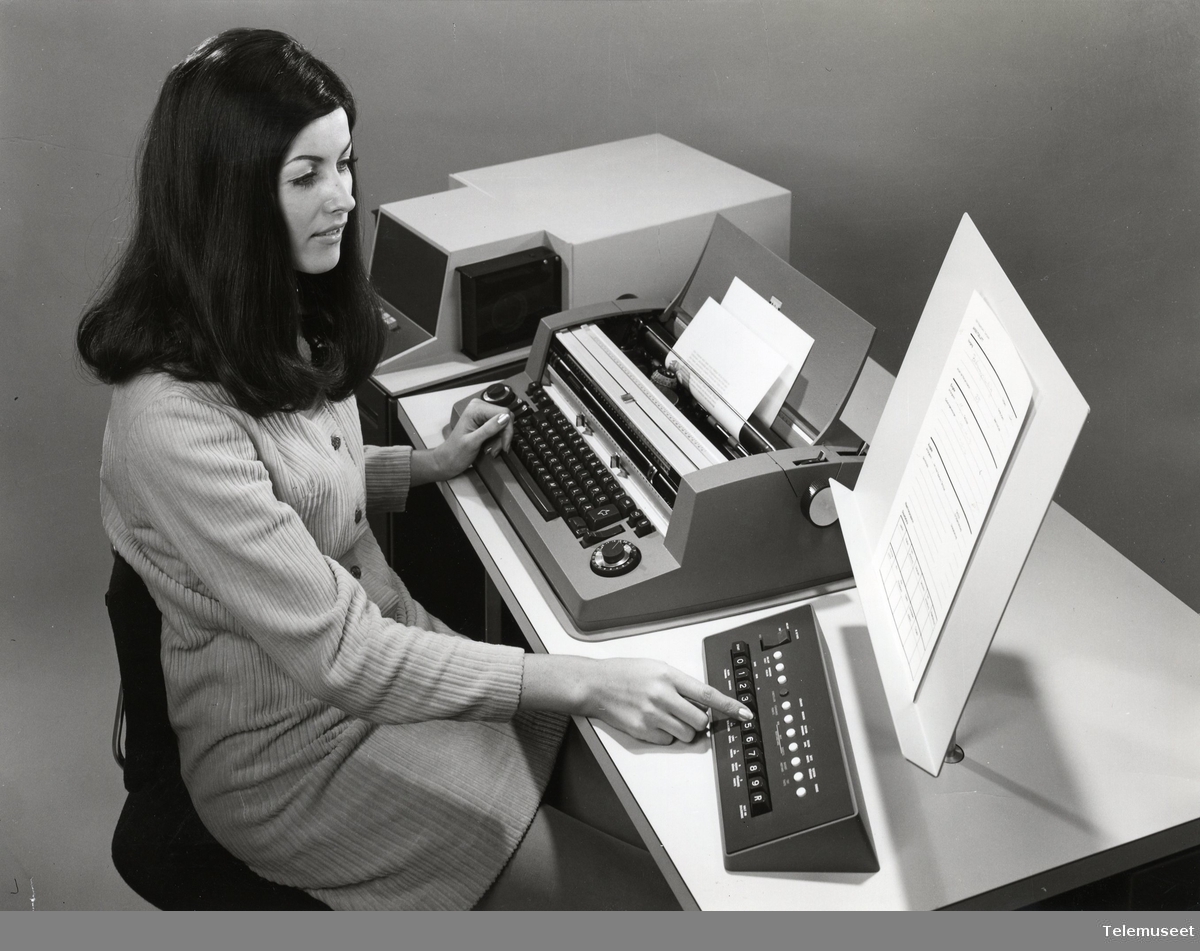
An IBM Word
The phrase came from IBM’s German subsidiary. In the 1950s Ulrich Steinhilper, of IBM’s German subsidiary, coined Textverarbeitung, text processing, so that typewriters could be sold with the same arguments as the “data processing” machines of IBM’s computer divisions. IBM used the English form, word processing, to explain why a typewriter was worth what it charged for the Magnetic Tape Selectric Typewriter (MT/ST), introduced in 1964. The MT/ST combined an IBM Selectric with a tape drive: every keystroke was printed and recorded on tape, a correction typed over a mistake replaced it on the tape, and on playback the machine retyped the whole document without errors at about 150 words a minute. It had no processor in the modern sense; the logic was a bank of relays. The US price was about $10,000, and most customers rented, which suited IBM, whose office-products division lived on its lease base.
The British novelist Len Deighton leased one, sold in Europe as the MT72, in 1968, after his assistant Ellenor Handley mentioned to the IBM technician who serviced his typewriters that she was retyping chapter drafts dozens of times over. The 200-pound machine was lifted by crane through a window of his Georgian house. Deighton’s model had a second tape reel, so Handley could keep two bodies of text on line and merge them, and Deighton’s 1970 novel Bomber, a book of many interlocking episodes, became, in the literary scholar Matthew Kirschenbaum’s careful phrase, the first published novel written with a product explicitly brought to market as a “word processor.”
Appliances for the Typing Pool
The MT/ST was aimed at the typing pool, the room of typists that large offices ran to produce letters and contracts. Its competitors in the early 1970s were small companies. Evelyn Berezin’s Redactron shipped the Data Secretary in September 1971, still with a typewriter and no screen, and in June 1975 built its 10,000th word processor. Screens came next. Lexitron and Linolex sold video-display editing stations from 1972, Vydec a screen-and-diskette system in 1973, and Stephen Dorsey’s Canadian company AES the AES-90 in late 1974, which showed the text on a screen as it would print and stored up to 340,000 words on an 8-inch floppy disk.
Business Week’s briefing on the market, on 30 June 1975, ran under the headline “A market mostly for the giants”: IBM still had nearly 90 percent of the $450 million market for editing typewriters, and analysts expected at least two-thirds of the 1980 market to be IBM’s. Berezin, whom the magazine quoted as president of Redactron, said her problem was money, not technology: “getting money in the past year has been a horror.” She sold Redactron to Burroughs in 1976.
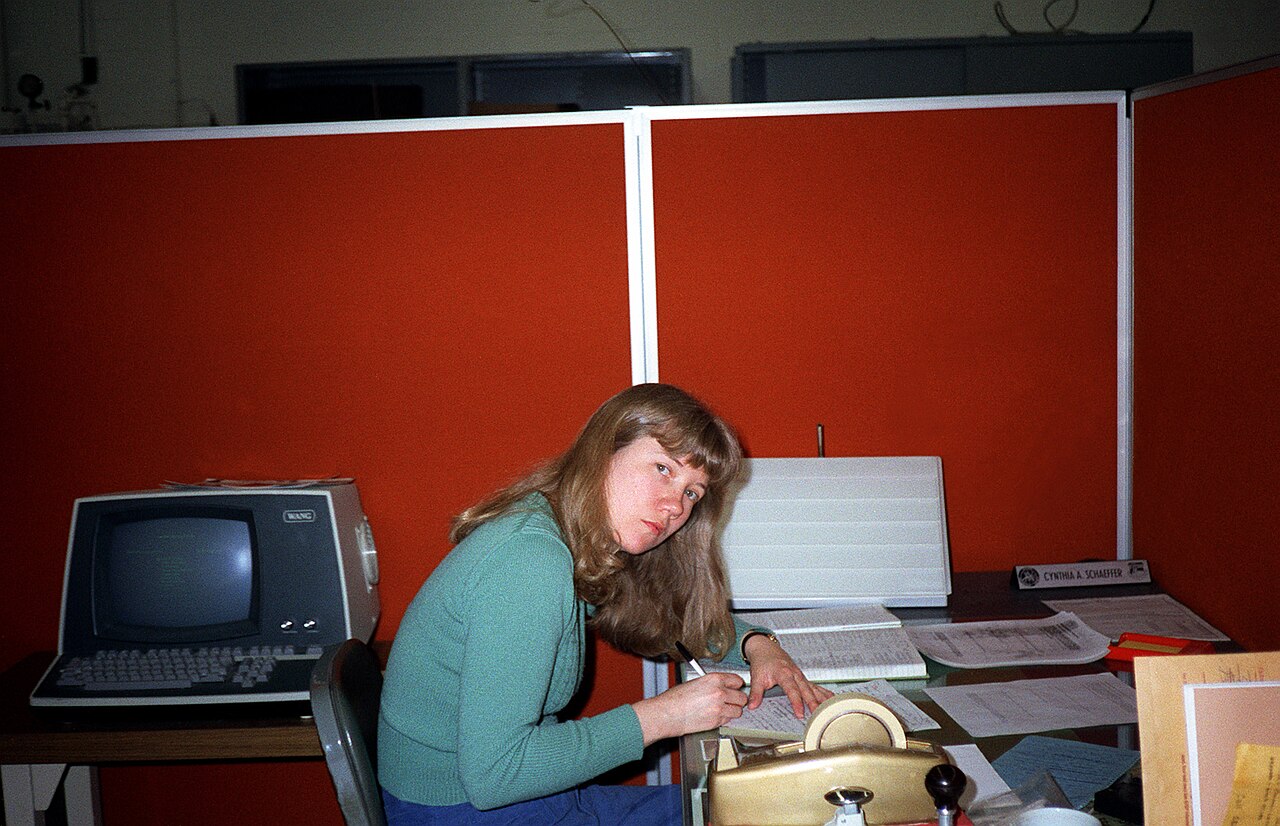
The same year, Wang Laboratories unveiled the Wang Word Processing System, a screen-based system on which a secretary could see a page, move paragraphs and print. It turned word processing from an improved typewriter into office automation, and helped make Wang a company with about $3 billion a year in revenue at its 1980s peak (see Dead End: Wang Labs).
Bravo
At Xerox PARC the problem was approached from the other end. In 1974 Butler Lampson and Charles Simonyi wrote Bravo for the Alto, the first editor that displayed text on screen in the fonts, sizes and layout in which it would print, later called WYSIWYG, “what you see is what you get”. Larry Tesler and Tim Mott built Gypsy on the same machine in 1974–75 for an educational publisher, without Bravo’s modes and with cut, copy and paste. Xerox sold these ideas only in its Star workstation of 1981, at a price few offices paid. Simonyi, a Hungarian émigré (see Hungary’s Computing Industry), joined Microsoft in 1981.
Programs on Microcomputers
Michael Shrayer, who wanted to write documentation for his Altair without a typewriter, released Electric Pencil in December 1976, the first word processor for microcomputers and the first to wrap words at the end of a line as the user typed. He sold it by mail order through advertisements in hobby magazines and ported it to 78 versions, but stopped developing it, and it lost the market to WordStar.
WordStar, written by Rob Barnaby for Seymour Rubinstein’s MicroPro International and released in June 1979 for CP/M, sold 5,000 copies in its first eight months. Its cursor keys were Control plus the diamond of E, S, D and X, so that a touch typist never left the home row, and a generation of writers learned them. Bundled with the Osborne 1 (see Dead End: Osborne), it made MicroPro’s revenue rise from $500,000 in 1979 to $72 million in fiscal 1984. WordStar 2000, released in 1984, changed the file format and the commands its users knew, and many of them moved to WordPerfect, which held 85 percent of the DOS word-processor market in 1992. William F. Buckley Jr. stayed: “I’m told there are better programs, but I’m also told there are better alphabets.”
At Microsoft, Simonyi and Richard Brodie wrote Multi-Tool Word, announced in 1983; demonstration copies were bound into the November 1983 issue of PC World, an early case of software handed out on a magazine disk. Word 1.0 for the Macintosh followed on 18 January 1985 and Word for Windows in 1989. When Windows 3.0 arrived in 1990 WordPerfect was late to it, and Dataquest estimated in 1991 that Word had 55 percent of the Windows word-processor market; in the first quarter of 1996 Word had 80 percent of the worldwide market. The laser printer and PostScript carried the WYSIWYG idea into typesetting (see The Desktop Publishing Revolution).
Kanji
Japanese could not be typed on a typewriter of reasonable size, so Japan got word processors late and kept them longer. Researchers under Ken-ichi Mori at Toshiba’s research centre worked out kana-to-kanji conversion, in which the typist enters the phonetic reading of a phrase and the machine proposes the characters from a dictionary. Toshiba announced the JW-10, the first Japanese word processor, in September 1978 and shipped it in February 1979, a desk-sized machine based on a minicomputer, at ¥6.3 million. Prices then fell as they did in the West: Fujitsu sold a model at ¥220,000 in 1984, and in 1985 Toshiba’s laptop-sized Rupo cost ¥99,800. Dedicated word processors became a household appliance in Japan, with a record 2.71 million shipped in 1989.
Dead End: The Word-Processing Machine
The dedicated word processor lost because it was a computer that was allowed to run only one program. Once a general-purpose PC cost less than a Wang terminal, the PC ran the same job as one application among many, and the buyer got a spreadsheet and a database with it. In the United States the change was over by the end of the 1980s; Wang filed for bankruptcy in 1992. In Japan it came with Windows 95: 260,000 dedicated word processors were sold in 2000, under a tenth of the 1989 peak, Matsushita withdrew in December 2000, and Sharp, the last maker, stopped production in 2001. IBM ended support for the MT/ST in 1983.
The Browser
The next move took the document off the PC. Writely, built by Sam Schillace, Steve Newman and Claudia Carpenter at the small company Upstartle using the browser’s then-new ability to edit text in a web page, launched in August 2005. Google announced the acquisition of Upstartle on 9 March 2006 and released Google Docs, based on Writely, on 10 October 2006. Several people could now edit the same document at once, and after a rebuild in April 2010 they saw each other’s changes a character at a time, a feature no desktop word processor had.
📚 Sources
- Kirschenbaum, Matthew, “The Book-Writing Machine: What was the first novel ever written on a word processor?”, Slate, March 2013 (Steinhilper and Textverarbeitung, Handley and the IBM technician, the second tape reel, “word processing” as IBM marketing, the $10,000 MT/ST, Deighton’s MT72 in 1968, Handley, the window and crane, 150 words a minute, the careful “first” claim); Kirschenbaum’s book is Track Changes: A Literary History of Word Processing (Harvard University Press, 2016)
- IBM MT/ST, Wikipedia (1964 introduction, most customers rented, relays, 1983 end of support)
- “Executive Briefing: A market mostly for the giants”, Business Week, 30 June 1975, transcription (IBM nearly 90 percent of a $450 million market, the two-thirds forecast for 1980, Redactron’s 10,000th unit, Berezin’s quotation, Lexitron and Vydec); for the wider “office of the future” episode see Haigh, Thomas, “Remembering the Office of the Future: The Origins of Word Processing and Office Automation”, IEEE Annals of the History of Computing 28 (4), 2006
- Word processor, Wikipedia (Vydec 1973, WordPerfect 1979, the 1991 Dataquest shares) and “Word Processing and Personal Computers”, Low End Mac, 2016 (Lexitron and Linolex video-display systems, 1972) and AES-90, Wikipedia (Dorsey, late 1974, WYSIWYG display, 340,000 words per floppy)
- Electric Pencil, Wikipedia (Shrayer, December 1976, word wrap, mail order, 78 versions)
- WordStar, Wikipedia (Barnaby, June 1979, 5,000 copies in eight months, MicroPro revenue, the control diamond, WordStar 2000, the Buckley quotation)
- Microsoft Word, Wikipedia (Simonyi and Brodie, the November 1983 PC World demo disk, Word for Mac 18 January 1985, Word for Windows 1989, 55 percent in 1991, 80 percent in Q1 1996)
- Brief History of Japanese Word Processors, IPSJ Computer Museum and JW-10, IPSJ Computer Museum (announcement September 1978, shipping February 1979, ¥6.3 million, Fujitsu 1984, Rupo 1985, 2.71 million in 1989, 260,000 in 2000, Matsushita and Sharp) and Milestones: The First Word Processor for the Japanese Language, 1971–1978, ETHW (Ken-ichi Mori’s team)
- Wang Laboratories, Wikipedia (about $3 billion peak revenue, August 1992 bankruptcy), WordPerfect, Wikipedia (85 percent of the DOS market in 1992) and History of Microsoft Word, Wikipedia (Word 1.0 for the Macintosh, 18 January 1985)
- Google Docs, Wikipedia (Writely, August 2005, Schillace, Newman and Carpenter, acquisition 9 March 2006, release 10 October 2006, the April 2010 real-time rebuild)
- Image: IBM Magnetic Tape-Selectric Typewriter in use.jpg by Norsk Teknisk Museum (CC BY-SA 4.0), via Wikimedia Commons