Adrian Lamo: The Homeless Hacker Who Reported Chelsea Manning
Abstract
Adrian Lamo hacked Yahoo!, Microsoft, and the New York Times from public libraries and Kinko’s copy shops, carrying his possessions in a backpack and sleeping on friends’ couches or in abandoned buildings. He called himself “the homeless hacker”, not as a lament but as an identity. He turned himself in to authorities after his most famous intrusion, was sentenced to six months’ home confinement, and spent the next decade as a minor celebrity in the security community. Then Chelsea Manning, a US Army intelligence analyst who had leaked hundreds of thousands of classified documents to WikiLeaks, reached out to him for advice, and Lamo reported her to the FBI. The hacker community never forgave him. He died in 2018 at thirty-seven, his reputation defined entirely by a decision he made in a Starbucks in 2010.
The Wandering Years
Adrian Lamo was born on February 20, 1981, in Malden, Massachusetts, to a Colombian father and an American mother. The family moved frequently; Lamo grew up without stable roots and developed a comfort with transience that would define his adult life. By his late teens he was living without fixed address, moving between cities, sleeping on acquaintances’ floors, and spending long hours in public libraries where he had free internet access.
His hacking technique was both economical and methodologically distinctive. He operated exclusively from public connections (Kinko’s copy shops, public libraries, coffee shops), ensuring that no log entry pointed to a personal account or residential IP address. He accessed systems through unpatched vulnerabilities in widely deployed commercial software (most commonly Microsoft IIS web server flaws and Outlook Web Access misconfigurations) rather than using novel exploits. The vulnerabilities he exploited were known; the organizations he targeted had simply not applied available patches. He documented what he found systematically, keeping notes on the systems he accessed, the data he could see, and the access paths he had used. He often notified victim organizations after the fact.
The “homeless hacker” identity was not false modesty. Lamo genuinely moved between cities, slept in abandoned buildings and on acquaintances’ floors, and used public library computers as his primary workplace. His physical mobility was a security strategy as well as a lifestyle: a hacker without a permanent address generates fewer records than one whose ISP bills arrive monthly. He carried no computers in the conventional sense (his equipment was whatever public terminal happened to be available. The constraints this imposed) no persistent storage, no fast connection, no private workspace, shaped his technique toward methods that could be executed in a single session from an unfamiliar machine.
Between 2001 and 2002, Lamo accessed systems at several major organizations:
Yahoo! (2001): Found and exploited a vulnerability in Yahoo!’s editorial management system, used it to modify the company’s own news articles briefly, and reported the vulnerability to the company.
WorldCom/MCI (2001): Accessed the network of the telecommunications giant through an unpatched Outlook Web Access server, mapped internal systems, and reported vulnerabilities. WorldCom praised his disclosure.
Microsoft (2002): Penetrated Microsoft’s corporate network through a similar vulnerability, browsed internal systems, and again reported the vulnerability.
The New York Times (2002): The hack that made him nationally known. Lamo found an unprotected web portal giving access to the Times’s contributor database, a system used to manage expert sources and their contact information. He added himself to the database under a variety of expertise categories, including “national security” and “terrorist groups.” He also used the Times’s LexisNexis account to conduct searches, the Times was billed for database access by the search, and Lamo ran searches valued at approximately $300,000 before stopping.
The Times hack attracted a different order of attention than his previous intrusions. The New York Times was not a technology company; it was a media institution with legal resources and political connections, and it had been embarrassed by an outsider who had put himself in its expert database. The Times pursued the case aggressively.
Turning Himself In
Lamo’s response to the Times investigation was unusual: he contacted the Times and offered to explain what he had done, then turned himself in to federal authorities in September 2003. His public explanation was that unauthorized access without disclosure was irresponsible, and that the proper response to finding a vulnerability was to report it, even when the proper reporting mechanism was a criminal confession.
He was charged with computer fraud and sentenced in 2004 to six months of home detention, two years of probation, and $65,000 in restitution to the Times and Microsoft. The sentence was light partly because of his disclosure behavior and partly because no financial gain had been involved.
After sentencing, Lamo gave talks at security conferences, consulted on network security, and wrote occasional articles. He was a distinctive figure in the security community, technically skilled, philosophically articulate about the ethics of unauthorized access, and genuinely unusual in having voluntarily surrendered to authorities rather than waiting to be caught.
The Disclosure Ethics
Lamo’s practice of hacking followed by self-reported disclosure occupied an ethically contested zone. Security researchers argued that finding a vulnerability and reporting it to the victim was beneficial regardless of how access was obtained; legal authorities argued that unauthorized access was a crime regardless of what you did afterward; victims argued that the “beneficial hacker” framing was self-serving. Lamo’s case was frequently cited in debates about “full disclosure” versus “responsible disclosure” versus the legal standard of “no unauthorized access, period.” His willingness to turn himself in was either integrity or theater depending on who you asked.
Chelsea Manning
In May 2010, Chelsea Manning (then Bradley Manning) was a twenty-two-year-old Army intelligence analyst stationed in Iraq with access to classified military and diplomatic communications. She had already, by that point, transmitted to WikiLeaks the video footage that would become known as Collateral Murder (showing a US helicopter crew killing civilians and journalists in Baghdad in 2007), as well as hundreds of thousands of diplomatic cables and military incident reports.
Manning reached out to Lamo via AOL Instant Messenger on May 20, 2010. She had read about him online and believed, apparently, that as someone who had been through the legal system for unauthorized computer access, he might understand her situation and offer useful perspective. Over several days of online conversation, Manning described what she had done, why she had done it, and her belief that the leaked material would expose wrongdoing that the public deserved to know.
Lamo reported the conversations to the FBI and Army Criminal Investigation Command within days. He later said his decision was driven by his belief that the scale of Manning’s leaks (particularly the diplomatic cables, which he felt could endanger sources and ongoing operations) represented a genuine national security threat that he was obligated to report. He also, he said, contacted a friend who was a former federal agent before making the decision.
Manning was arrested on May 27, 2010. She was held in military custody for three years before trial, including extended periods in conditions that the UN Special Rapporteur on Torture described as cruel, inhuman, or degrading. She was convicted in 2013 of multiple charges under the Espionage Act and sentenced to thirty-five years in prison. President Obama commuted her sentence to seven years in January 2017; she was released in May 2017.
Warning
Lamo’s decision to report Manning divided opinion absolutely. The hacker community largely viewed him as an informant who had betrayed the trust of someone who had come to him for help, violated an implicit norm of solidarity, and handed a vulnerable person to a military justice system that imprisoned her for three years before trial in conditions condemned by international human rights monitors. Supporters of his decision argued that the scale of the leak (750,000 classified documents) was qualitatively different from typical unauthorized access, and that his legal obligations, whatever the community norms, were clear. Both positions had internal consistency. What was undisputed was that Manning had trusted him and that he had reported her. The hacker community’s verdict was effectively permanent.
The Manning Debate: What He Said and What It Cost Him
Lamo gave many interviews explaining his decision in the years after Manning’s arrest. His accounts were consistent in outline but varied in emphasis. He said he had believed the scale of the leak, particularly the diplomatic cables, which he felt could endanger sources in foreign countries with limited freedom of the press, represented a genuine threat that he felt obligated to report. He said he had tried to reach a lawyer before reporting and been unable to. He said he had contacted a former federal agent who was a friend and discussed the decision before acting.
The hacker community rejected these explanations systematically. The core argument against Lamo was not that his concerns were unreasonable but that his decision to report was a betrayal of a person who had come to him in confidence. Manning had not asked Lamo to evaluate her actions; she had asked for his understanding of a situation similar to his own. She reached out to him because she believed, based on his public history, that he would understand the experience of being legally vulnerable for unauthorized system access driven by something other than profit. The trust was personal. The betrayal, in this reading, was not to a principle but to a person.
Lamo’s defenders (fewer in number but not absent) argued that the scale of Manning’s disclosure genuinely was different from typical unauthorized access, that the potential harm to foreign intelligence sources was real, and that Lamo’s legal obligations under federal law (which imposes affirmative duties to report certain categories of threat) were not imaginary. His decision may have been correct; its cost was paid by Manning, not by him.
What was not disputed: Manning spent three years in military custody under conditions that a UN human rights official found cruel and degrading; was convicted of espionage act violations; received a 35-year sentence; was eventually freed by presidential commutation; and identified Lamo’s report as the precipitating event of her imprisonment.
Death and Legacy
Adrian Lamo died on March 14, 2018, in Wichita, Kansas, at the age of thirty-seven. Despite a full autopsy and toxicology testing, no definitive cause of death was ever established, the official ruling was “undetermined”; toxicology reporting pointed toward an accidental overdose involving a combination of drugs (including kratom). He had been living in Wichita with friends and had struggled with mental health and substance issues for years. Since the Manning disclosure, he had been largely shunned by the security community that had once regarded him with a mixture of admiration and bemusement.
He was not celebrated at his death. The coverage was dominated by the Manning decision. The technically sophisticated intrusions, the unusual ethics of self-disclosure, the years as a minor celebrity in security circles, all had been subsumed by a conversation conducted over AOL Instant Messenger in May 2010.
His legacy, such as it is, operates in two registers simultaneously. In the history of computer intrusion, he is a notable figure: technically skilled, methodologically interesting, ethically unusual for his willingness to self-report. In the history of whistleblowing and its suppression, he is the person who turned Chelsea Manning in. These two identities coexist without resolving into each other. The people who remember him primarily as a hacker and the people who remember him primarily as an informant are not mistaken; they are looking at the same life from different angles.
📚 Sources
- Adrian Lamo — Wikipedia
- Stoll, Cliff: The Cuckoo’s Egg (1989) — broader context of hacker investigation ethics
- Poulsen, Kevin & Zetter, Kim: “U.S. Intelligence Analyst Arrested in Wikileaks Video Probe” — Wired, June 6, 2010
- Fishman, Steve: “Bradley Manning’s Army of One” — New York Magazine, July 3, 2011
- UN Special Rapporteur on Torture: Report on treatment of Bradley Manning in detention (2012)
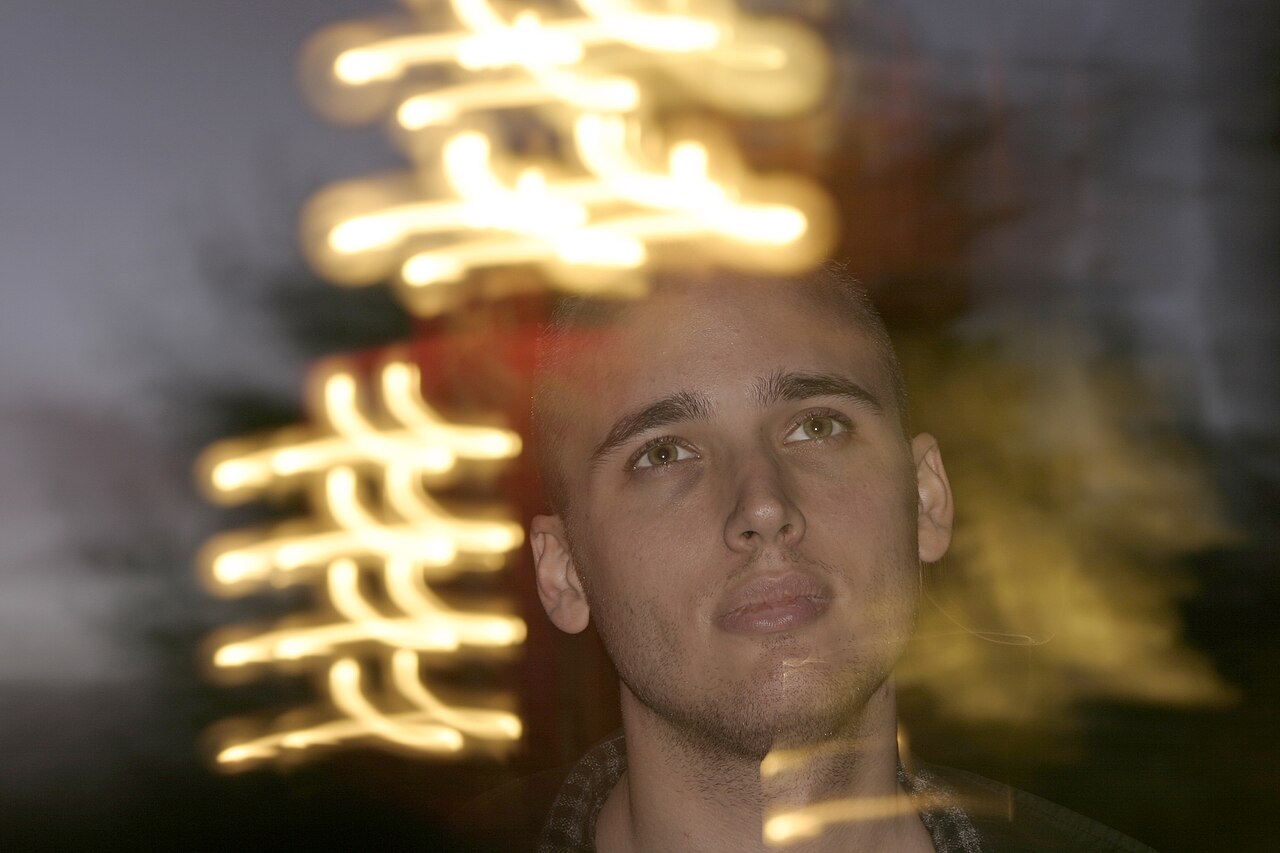
- Image: Adrian Lamo, Fall ‘04.jpg by Adrian Lamo (CC BY-SA 3.0), via Wikimedia Commons