South Korea's Tech Industry: Chaebol, DRAM, and the Miracle on the Han River
Abstract
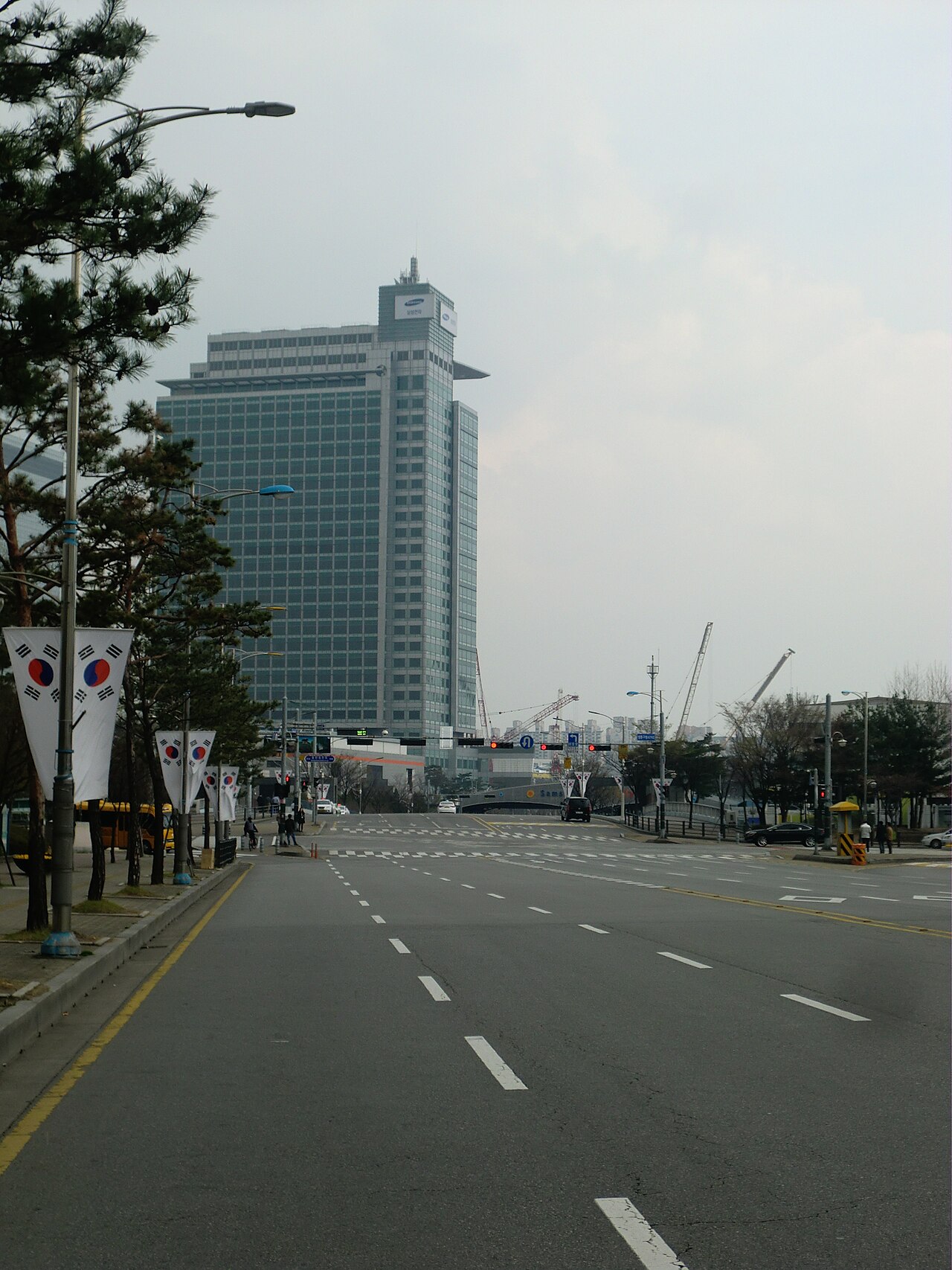
South Korea’s technology story is one of the most compressed industrial transformations in history. In 1953, the country was poorer than Ghana, its cities destroyed by war, its infrastructure nonexistent. By 2000, it was the world’s dominant manufacturer of DRAM memory chips and flat-panel displays, home to two of the world’s largest consumer electronics companies, and connected by internet infrastructure faster than anything in the United States or Europe. The mechanism was the chaebol, a state-directed, family-controlled industrial conglomerate that combined government capital, protected domestic markets, and relentless technology acquisition into a model that defied every conventional prescription for development. Samsung alone accounts for roughly 20% of South Korea’s total export revenue. The country of 51 million people that built this is simultaneously a cautionary tale about concentrated economic power and the most successful state-directed industrial policy in technology history.
War, Rubble, and the Development State
The Korean War ended in July 1953 with an armistice that left the peninsula divided at roughly the 38th parallel. South Korea (the Republic of Korea) had a per-capita GDP lower than most of sub-Saharan Africa, a largely agrarian economy, and cities that had been fought over multiple times by armies equipped with artillery and air support. The north had most of the peninsula’s industrial infrastructure; the south had its people.
What South Korea had, in addition to a population, was a state determined to industrialize by any means available. President Park Chung-hee, who seized power in a 1961 military coup and governed until his assassination in 1979, pursued export-led industrialization with an urgency that brooked no economic orthodoxy. He directed state-controlled banks to provide cheap capital to selected industrial groups, protected domestic markets from foreign competition, and set export targets that companies met under threat of losing access to financing.
The chosen instrument was the chaebol (재벌), a large, diversified, family-controlled industrial conglomerate. The Korean government did not create the chaebol from scratch; it selected existing family businesses and backed them with capital and market access on the condition that they expand into the industries the government designated as strategic. Samsung, founded in 1938 by Lee Byung-chul as a trading company, was one such business. LG (originally Lucky Goldstar), Hyundai, SK, and Daewoo were others.
The chaebol model had structural features that distinguished it from Japanese keiretsu or American conglomerates. Chaebol were controlled by founding families through complex cross-shareholding structures that maintained family governance regardless of market ownership. They received preferential financing from state banks. They were explicitly directed by government industrial policy. And they were expected to compete internationally (not just serve the domestic market) from the beginning.
Samsung’s Semiconductor Bet
The inflection point in South Korea’s technology history was a decision made in 1983 by Lee Byung-chul, Samsung’s founder, against the advice of virtually every expert he consulted.
Samsung entered the DRAM (Dynamic Random Access Memory) semiconductor business in February 1983, announcing the decision with a full-page advertisement in the Korean newspapers before the technology existed. Lee had visited semiconductor factories in the United States and Japan and concluded that memory chips would be the strategic technology of the coming era. Samsung had no semiconductor manufacturing experience. It had no process technology. It had no engineers with relevant expertise.
What it had was capital, government support, and a willingness to acquire what it lacked. Samsung hired Korean-American engineers from US semiconductor companies, recruited Japanese process engineers willing to work on weekends for consulting fees, and licensed process technology from Micron Technology in the United States. It built its first DRAM fabrication plant in Kiheung, construction completed in six months, a timeline that would have been considered impossible by any Western standard.
Samsung produced its first 64K DRAM chip in November 1983, six months after the announcement. The chip was inferior to American and Japanese equivalents. Samsung continued regardless. By 1992, Samsung had surpassed both Japanese and American competitors to become the world’s largest DRAM manufacturer, a position it has not relinquished.
The mechanism was not technological genius but disciplined investment through cycles. When DRAM prices collapsed (as they periodically did due to oversupply) Samsung continued investing in manufacturing capacity while competitors cut back. Each collapse eliminated weaker competitors; each recovery found Samsung with newer, larger fabs than anyone else. The strategy required capital that only a chaebol with state-bank backing could sustain through extended losses. It worked.
SK Hynix and the Memory Duopoly
Samsung’s rise created the conditions for South Korea’s second major memory semiconductor company.
Hyundai Electronics, founded in 1983 (the same year as Samsung’s semiconductor announcement) pursued DRAM through a similar state-backed model. Through a series of acquisitions, mergers, and a near-bankruptcy during the 1997 Asian financial crisis, Hyundai Electronics became Hynix Semiconductor in 2001, and was ultimately acquired by SK Group in 2012 to become SK Hynix.
By the 2020s, Samsung and SK Hynix together manufactured approximately 70% of the world’s DRAM and 50% of its NAND flash memory, the storage chips in every smartphone, SSD, and server. South Korea had achieved in semiconductors what OPEC had achieved in oil: a concentrated control over a commodity that the global economy could not function without. The strategic implications were not lost on governments; the US CHIPS Act of 2022 included provisions specifically designed to attract additional Korean investment in American soil.
KAIST and the Engineering Pipeline
The capital and industrial policy that built Samsung’s fabs required engineers to fill them. The Korea Advanced Institute of Science and Technology (KAIST), founded in 1971 in Daejeon, was the institutional answer.
KAIST was established explicitly to produce the engineers that Korea’s industrial ambitions required, modeled partly on MIT and partly on the specific needs of Korea’s development strategy. It offered full scholarships and military service exemptions to attract the country’s top students, the military exemption was particularly significant in a country with mandatory service for all male citizens. The concentration of technical talent at KAIST and a small number of other elite engineering universities (Seoul National University, POSTECH) created a pipeline from education to Samsung, SK Hynix, LG, and the broader electronics industry that sustained the chaebol model.
The Internet and the PC Bang
South Korea built the world’s fastest consumer internet infrastructure in the late 1990s, and the cultural consequences were immediate and distinctive.
The PC bang (PC방), a commercial space where customers rented computer time by the hour, equipped with high-speed internet connections, proliferated across Korean cities beginning in the late 1990s, initially as cheap internet access points for households that could not afford home connections, and rapidly as social gaming spaces. By 2000, South Korea had over 20,000 PC bangs, serving millions of daily customers.
The game played most obsessively in PC bangs was StarCraft, released by Blizzard Entertainment in 1998. The real-time strategy game (in which players managed military economies, produced units, and fought opponents in real time) was popular globally but became a phenomenon in South Korea of an entirely different order. By 1999, StarCraft had sold over 2 million copies in Korea alone, in a country of 47 million. Players achieved genuine celebrity. OGN (OnGameNet) launched in 2000 as the world’s first dedicated esports television channel, broadcasting StarCraft matches to cable TV audiences. Professional StarCraft players (called “progamers”) signed contracts with corporate-sponsored teams, competed in leagues with structured seasons, and were recognized in public like athletes.
South Korea’s StarCraft phenomenon was the foundation of professional esports as a global industry. The structures developed in Korea (team sponsorships, broadcast rights, professional leagues, dedicated venues) were templates that later esports organizations worldwide copied. The League of Legends World Championship, which filled Seoul’s World Cup Stadium with 40,000 spectators in 2014, was a direct descendant of the PC bang culture of the late 1990s.
Naver and KakaoTalk: Domestic Digital Giants
South Korea’s internet culture produced domestic digital platforms that resisted displacement by American equivalents, a rarity among non-Chinese markets.
Naver, founded in 1999 by Lee Hae-jin, became South Korea’s dominant search engine by offering a product specifically designed for Korean-language search, not a translation of Google’s English-language assumptions, but a product built for how Korean users actually searched. Naver’s “Knowledge iN” service (launched 2002), in which users could ask questions and receive answers from the community, anticipated Yahoo Answers and Quora by years and dominated Korean internet culture. Naver remains Korea’s leading search engine, with approximately 60% market share, in one of the few markets where Google is not dominant.
KakaoTalk, launched in 2010 by Kim Beom-su, became South Korea’s universal messaging platform within two years of launch. By 2012, over 90% of Korean smartphone users were on KakaoTalk. The platform expanded into payments (Kakao Pay), banking (Kakao Bank), ride-hailing (Kakao Mobility), and content, replicating the super-app model that WeChat would later develop in China, but in a democratic market without state backing.
Samsung’s Global Ascent and the Galaxy
Samsung’s consumer electronics division (separate from its semiconductor business) had spent the 1980s and early 1990s as a low-cost manufacturer of televisions and microwave ovens sold under other brands. Lee Kun-hee, who succeeded his father as Samsung’s chairman in 1987, decided in 1993 that this position was no longer acceptable.
In what became known as the “Frankfurt Declaration,” Lee gathered Samsung’s senior executives in Germany and delivered a speech that became legend in Korean corporate culture: “Change everything except your wife and children.” He ordered Samsung to destroy its defective products publicly (workers smashed televisions and phones with hammers in front of the workforce) to signal that quality would no longer be compromised for volume.
The reorientation worked. Samsung’s display technology, developed through massive R&D investment in the 1990s, became the global standard for flat-panel televisions. Its Galaxy smartphone line, launched in 2009 as an Android competitor to the iPhone, reached the world’s best-selling smartphone position by 2012. By 2023, Samsung was simultaneously the world’s largest memory chip manufacturer, the largest OLED display manufacturer, and one of the two largest smartphone manufacturers, a combination of supply chain and consumer electronics dominance without parallel in the industry.
Dead End: The Chaebol Concentration Problem
South Korea’s technology success came with structural costs that have not been resolved.
The chaebol model concentrated economic power in a small number of family-controlled groups to a degree that distorted the entire economy. Samsung’s revenues in peak years equaled roughly 20% of South Korea’s GDP. The political entanglement of chaebol and government produced a recurring pattern of corruption: Lee Kun-hee was convicted of tax evasion in 2008 and received a presidential pardon; his son Lee Jae-yong (Jay Y. Lee) was convicted of bribery related to the 2016 political scandal that removed President Park Geun-hye from office, served part of a prison sentence, and received a presidential pardon in 2022. The cycle of conviction, imprisonment, and pardon had repeated so predictably that Korean commentators developed a sardonic name for it.
The “Too Big to Jail” Problem
South Korea’s courts have consistently sentenced major chaebol leaders to imprisonment for corruption and bribery, and Korean presidents have consistently pardoned them, citing the damage that imprisonment would cause to the national economy. The Samsung chairman’s legal fate has become a reliable indicator of the state of the Korean economy: pardons follow recessions. The concentration of economic power that made Korea’s technology success possible created an accountability vacuum that democratic institutions have been unable to fill.
The innovation ecosystem outside the chaebol also suffered. South Korean venture capital and startups developed later and more slowly than in comparably wealthy economies, partly because talented engineers and managers had strong incentives to join Samsung or LG rather than attempt entrepreneurship. The companies that built global technology platforms from South Korea, Kakao, Krafton (PUBG), Coupang, and HYBE, mostly emerged in the 2000s and 2010s as a second generation.
📚 Sources
- Kim, Linsu: Imitation to Innovation: The Dynamics of Korea’s Technological Learning (1997), Harvard Business School Press
- Chang, Sea-Jin: Financial Crisis and Transformation of Korean Business Groups (2003), Cambridge University Press
- Amsden, Alice H.: Asia’s Next Giant: South Korea and Late Industrialization (1989), Oxford University Press
- Taylor, Martyn D.: “The Korean Chaebol and Global Technology Strategy” — Asian Business & Management 10(3): 359–380 (2011)
- Jin, Dal Yong: Korea’s Online Gaming Empire (2010), MIT Press
- Samsung Electronics: Corporate History and Annual Reports
- KAIST: Institutional History
- IC Insights: DRAM Market Share Report (2023)
- Naver Corporation — Wikipedia
- Hwang, Kyung Moon: A History of Korea (2010), Palgrave Macmillan — economic development chapters
- Image: Samsung Electronics Suwon.JPG by hyolee2 (CC BY-SA 4.0), via Wikimedia Commons