The History of Virtual Reality
Abstract
Virtual reality is one of computing’s oldest ideas and one of its most expensive disappointments. Morton Heilig built a booth that blew wind and smells at its viewer in 1962; Ivan Sutherland hung the first computer-driven head-mounted display from a laboratory ceiling in 1968. Jaron Lanier’s VPL Research sold gloves and goggles in the late 1980s and made “virtual reality” a household phrase, and the first consumer wave (Virtuality arcade pods, the cancelled Sega VR, Nintendo’s Virtual Boy) collapsed by 1997. Palmer Luckey’s Oculus Rift restarted the field in 2012, Facebook bought Oculus for $2 billion in 2014, and the standalone Quest headsets reached tens of millions of buyers. Meta’s VR division has lost about $80 billion since late 2020, and VR has stayed a niche. The problem that has run through all sixty years is the weight on the user’s head, and the latest answer, announced in September 2026, moves the computer into the user’s pocket.
Before the Computer
The ambition is older than the machine. Stereoscopic photographs, two slightly different images viewed one per eye, were a Victorian parlour entertainment, and the stereo viewer is the direct ancestor of every headset’s optics.
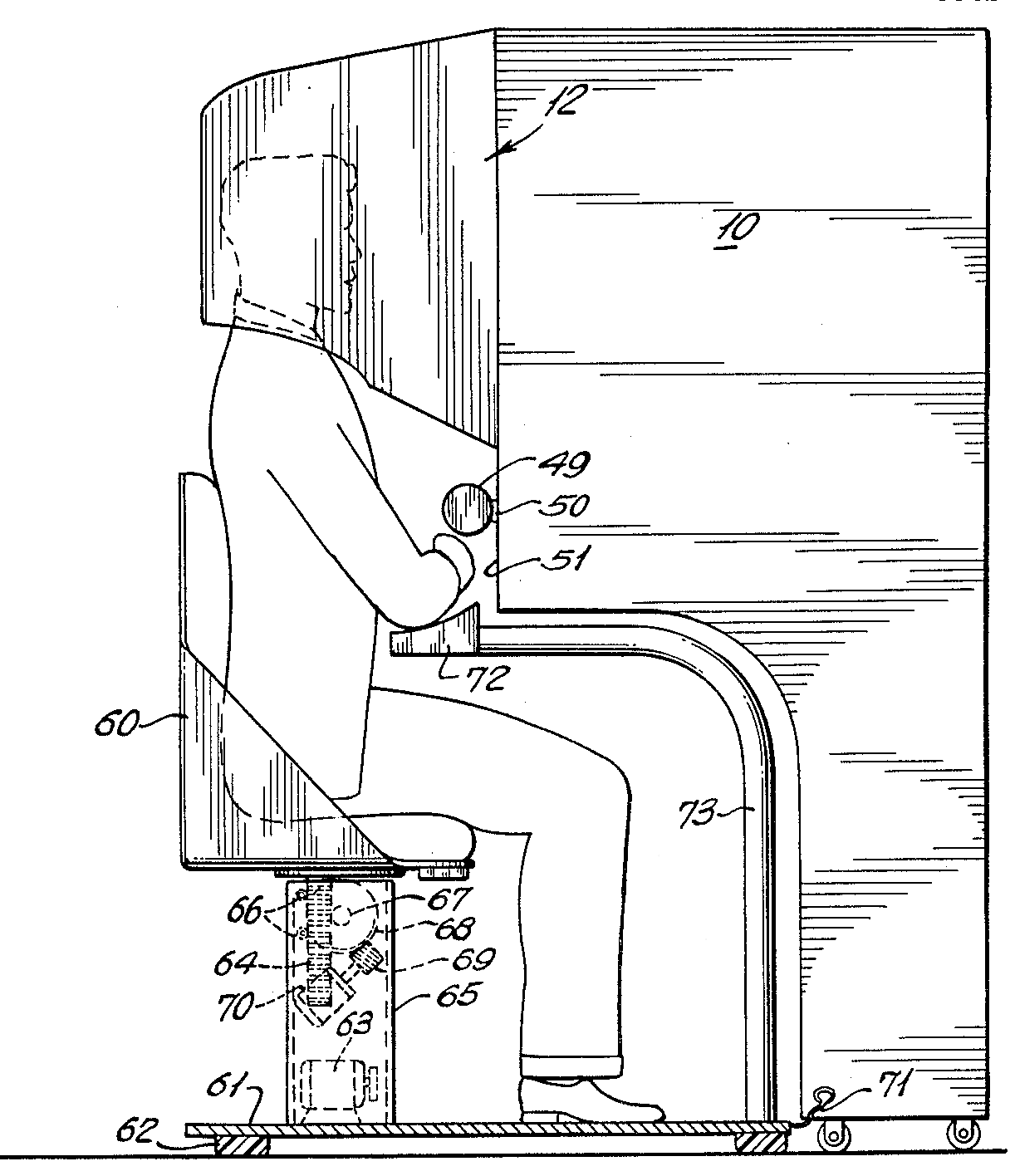
The first person to build a machine for full immersion was a cinematographer. Morton Heilig worked on it from 1957 and patented the Sensorama in 1962 (US Patent 3,050,870). The viewer sat in a booth and watched a stereoscopic colour film of, for example, a motorcycle ride, while the seat vibrated, fans blew wind in their face, and odour emitters released petrol fumes or the smell of pizza at the right moments. Nobody would pay for it: each experience needed its own film, shot with custom cameras, and he could not raise the money to make more of them. The Sensorama work stopped.
A year earlier, in 1961, engineers at Philco had tested a head-mounted display for a different purpose. It showed live video from a remote camera that turned when the wearer turned their head, tracked magnetically, so that an operator could look around a dangerous place without being in it. The display was real, the image was real, and nothing in it was computed.
Sutherland’s Ultimate Display
The intellectual foundation of computer-generated VR is Ivan Sutherland’s 1965 paper “The Ultimate Display,” which described what immersive computing would require with unusual directness:
“The ultimate display would, of course, be a room within which the computer can control the existence of matter. A chair displayed in such a room would be good enough to sit in. Handcuffs displayed in such a room would be confining, and a bullet displayed in such a room would be fatal.”
Sutherland then built the first step. Work began at MIT’s Lincoln Laboratory in 1966, and in 1968 he described the finished system, built with his students Bob Sproull, Quintin Foster and Danny Cohen, in “A Head-Mounted Three-Dimensional Display.” Small CRTs, one for each eye, showed stereoscopic wireframe graphics. A mechanical arm hung from the ceiling carried the weight of the apparatus and measured, through its linkages, where the wearer’s head was pointing, so that the computer could redraw the scene as the head moved. The arm gave the system its nickname, the Sword of Damocles.
The images were simple wireframe rooms and cubes, and the wearer could not walk anywhere. The display was also partly see-through: the wireframe floated over the real laboratory, which makes Sutherland’s device the ancestor of augmented reality as much as of virtual reality.
Artificial Reality and the Air Force
Two strands in the 1970s and early 1980s approached immersion from opposite ends.
Myron Krueger, a computer artist at the University of Wisconsin–Madison, disliked the idea of strapping equipment to people. His environments watched the participant instead: Glowflow (1969, with Dan Sandin and others) was a room of light and sound that responded to the people in it, Psychic Space (1971) sensed them through a pressure-sensitive floor, and Videoplace (shown in 1975 at the Milwaukee Art Museum) filmed visitors, turned them into silhouettes, and let them touch and push computer-generated objects and each other’s shadows across two linked rooms. He called the field artificial reality, the title of his 1983 book.
The US Air Force came from the cockpit. Thomas Furness, stationed at Wright-Patterson Air Force Base from 1966 to 1989, built helmet-mounted displays for fighter pilots. His Visually Coupled Airborne Systems Simulator (VCASS), demonstrated in 1982, put test pilots in a cockpit mock-up wearing a large helmet with tracked CRT displays, and in 1986 it grew into the Super Cockpit programme, in which the airspace, targets and threats were to be drawn as graphics around the pilot. When Furness left the Air Force in 1989 he founded the Human Interface Technology Lab (HITLab) at the University of Washington, one of the first university laboratories devoted to VR.
NASA and VPL Research
At NASA Ames Research Center, Michael McGreevy and Scott Fisher built the VIEW (Virtual Interface Environment Workstation) system in the mid-1980s, with a 1985 head-mounted display based on Eric Howlett’s wide-angle LEEP optics. VIEW added magnetic head tracking, stereo sound, and data gloves that measured finger positions, so that a user could reach into the scene and grab things. NASA wanted it for astronaut training and for operating robots in places humans could not go.
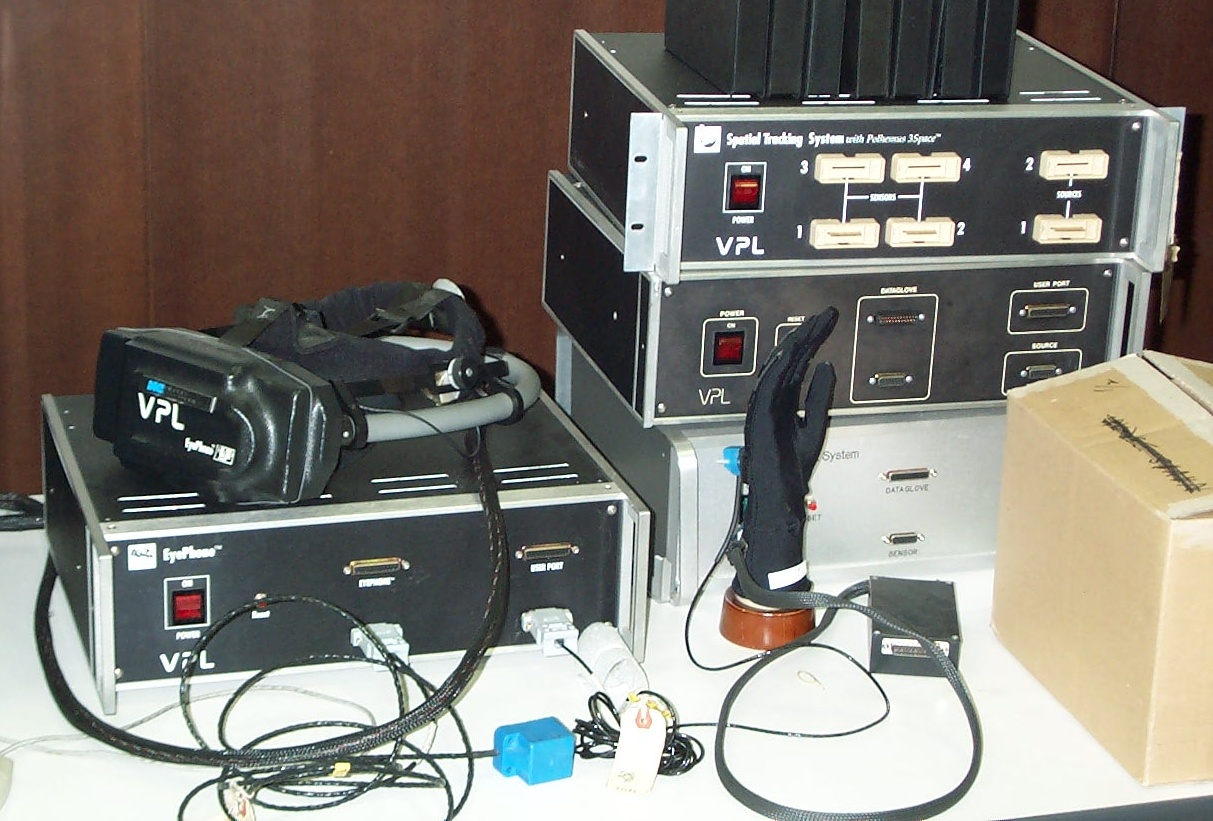
The gloves came from VPL Research, founded in 1984 by Jaron Lanier, a musician and programmer, together with Jean-Jacques Grimaud. VPL sold the DataGlove, a glove with fibre-optic sensors along the fingers and a magnetic position sensor on the back, for about $10,000, and the EyePhone head-mounted display; a complete system cost upwards of $250,000. The EyePhone’s graphics ran at five or six frames per second. VPL also licensed the glove to Mattel, whose $90 Power Glove for the Nintendo Entertainment System (1989) sold about 1.3 million units and was nearly useless as a controller.
Lanier talked about VR as a new medium of “post-symbolic communication,” a place where people could share experiences directly instead of describing them, and journalists loved it. VR was on magazine covers in 1990–1992, and the 1992 film The Lawnmower Man, which used VPL equipment, fixed its image in the public mind. VPL itself was less durable: it filed for bankruptcy in 1990, and its patents ended up with Sun Microsystems in 1998.
Myth: Jaron Lanier coined the term “virtual reality”
Lanier made the phrase famous in the late 1980s, and he is routinely credited with inventing it. He did not. The French dramatist Antonin Artaud wrote of theatre as “la réalité virtuelle” in Le Théâtre et son double in 1938, and the Australian novelist Damien Broderick used “virtual reality” in its modern sense in The Judas Mandala in 1982. Lanier’s contribution was the popularisation, and the first company to sell the equipment under that name. See Myths and Misconceptions.
The CAVE
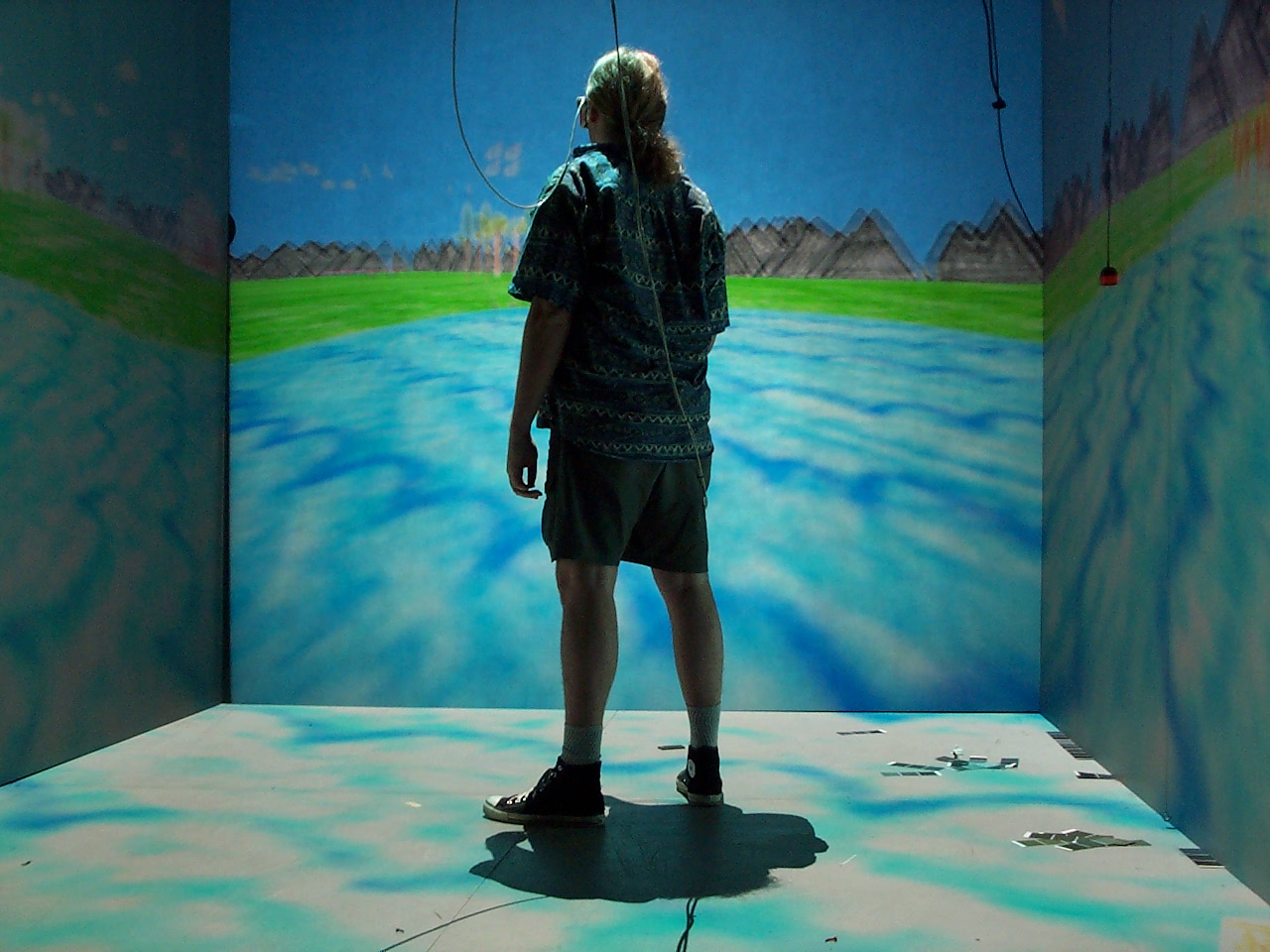
Every head-mounted display from the Sword of Damocles to the EyePhone cut the wearer off from the room and from everyone in it. At the Electronic Visualization Laboratory in Chicago, Tom DeFanti and Dan Sandin wanted a display that several people could stand inside and talk in. Their doctoral student Carolina Cruz-Neira built it: the CAVE (a recursive acronym, CAVE Automatic Virtual Environment), a cube about three metres on a side whose walls were rear-projection screens and whose floor was projected from above. Visitors wore light shutter glasses for stereo; one of them wore a tracker, and the images were drawn from that person’s point of view.
The CAVE premiered at SIGGRAPH ‘92 in Chicago and was described in full at SIGGRAPH ‘93. It cost far more than any headset, needed a graphics supercomputer to drive it, and was never going to be a consumer product. It became the standard for scientific visualisation instead, and CAVE-style rooms were built at universities, oil companies and car manufacturers through the 1990s and 2000s, because engineers could walk around a full-scale model together.
The First Consumer Wave
The early 1990s tried to sell the experience to the public, and every attempt failed.
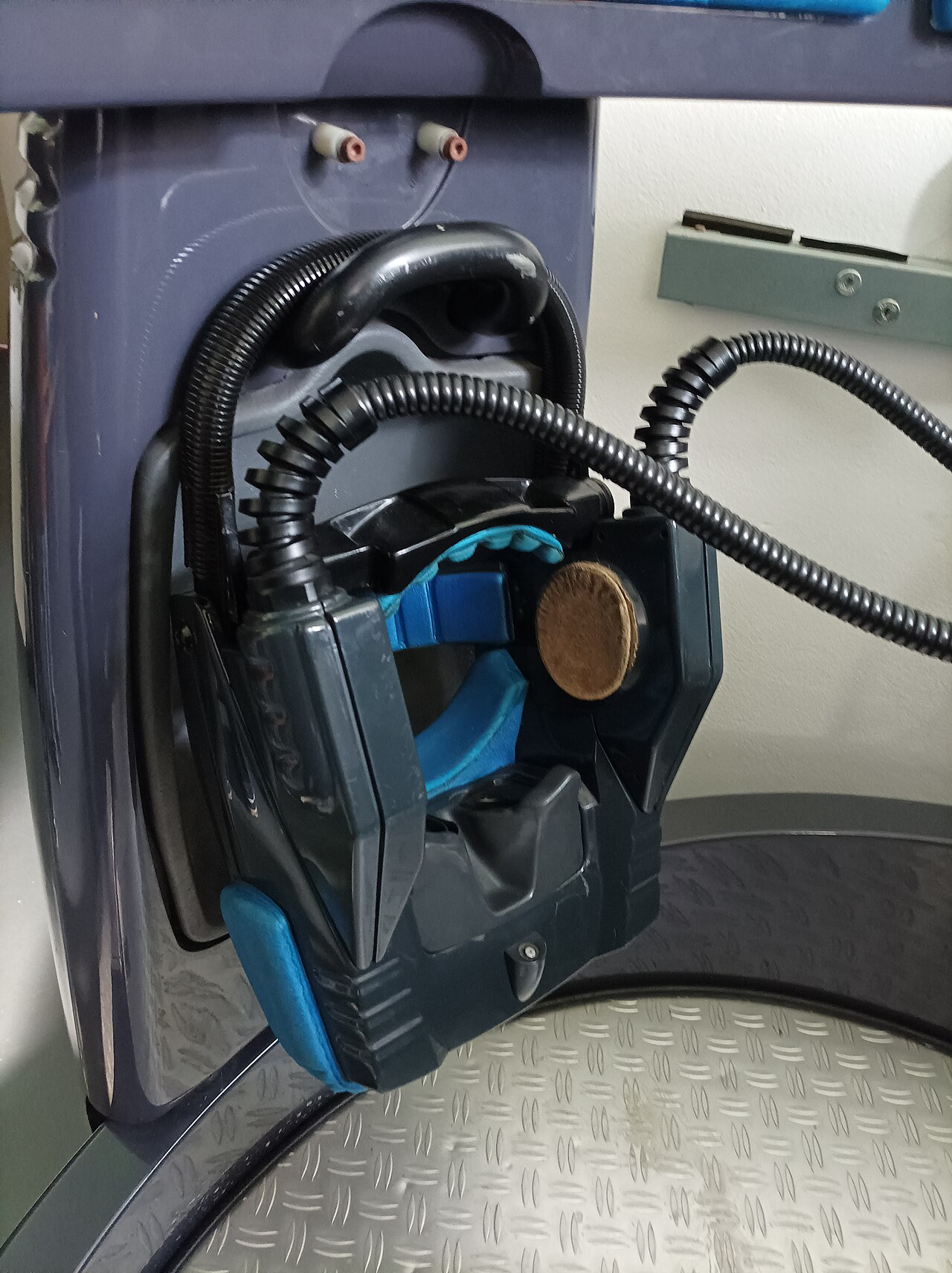
Virtuality came first. Jonathan Waldern had founded W Industries in October 1987; its 1000SU system appeared at the Computer Graphics ‘90 exhibition in London, and the arcade version, the 1000CS, arrived in 1991. A player stood (SU) or sat (SD) in a pod, wearing a heavy headset with two LCD screens of 372 × 250 pixels each, while an Amiga 3000 with a graphics accelerator drew the world. The best-known game was Dactyl Nightmare, a multiplayer shootout on floating platforms where a pterodactyl occasionally swooped down and carried a player off. The pods drew queues in shopping centres for a few minutes a time. The company, renamed Virtuality in 1993, went bankrupt in 1997, with about 1,200 machines in operation.
Sega announced the Sega VR headset for its Mega Drive (Genesis) console in 1991 and showed it, apparently nearly finished, at the Consumer Electronics Show in 1993, at a planned price of $200. It never shipped. Sega’s public explanation was that the effect was “too realistic,” so players might move around and hurt themselves. Tom Kalinske, the head of Sega of America, later said the real reason was reports of motion sickness and severe headaches among testers; SRI International had studied the headset and warned the company about prolonged use. It disappeared from the release schedules in 1994.
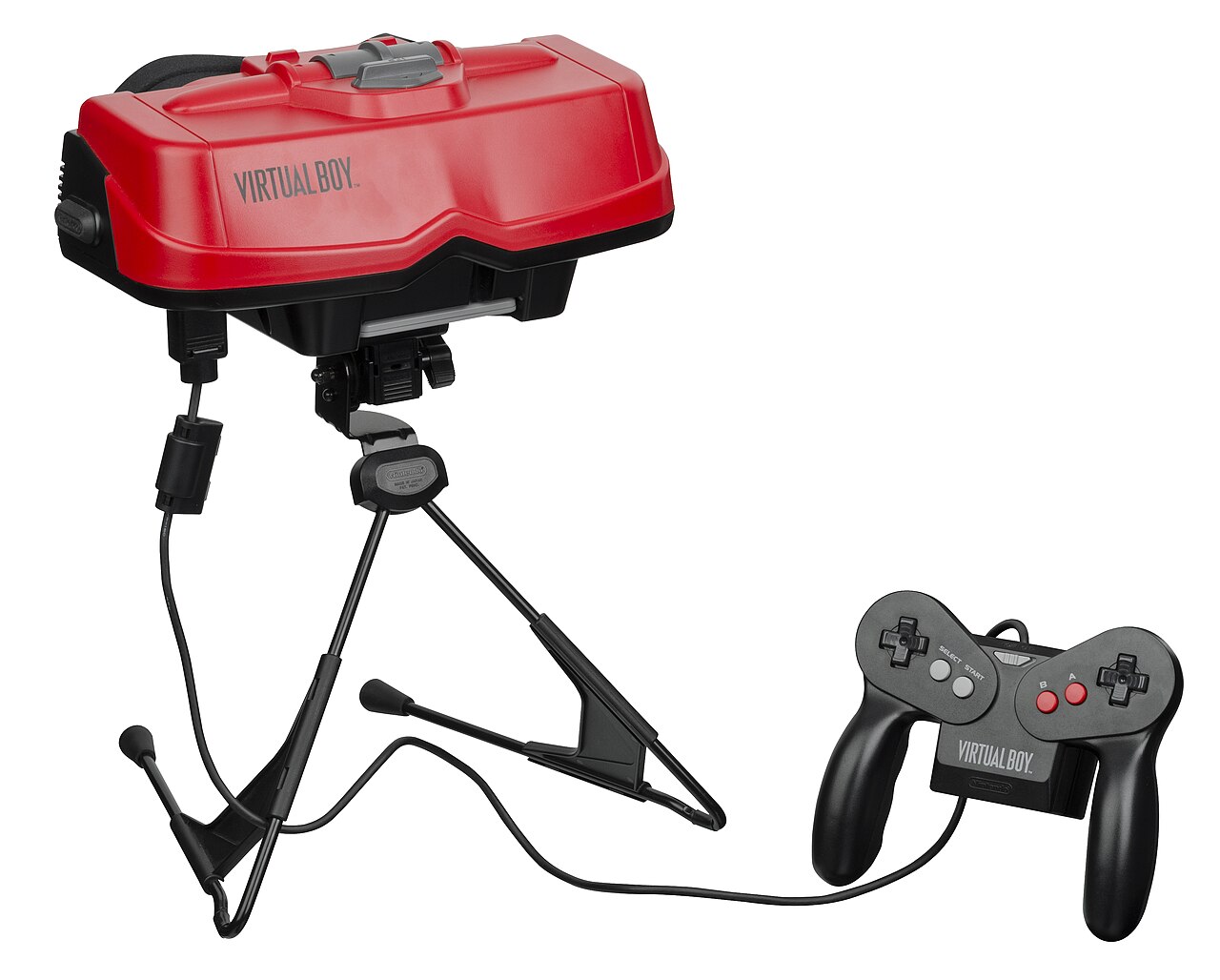
Nintendo’s Virtual Boy did ship, in Japan on July 21, 1995, and in North America on August 14 at $179.95. It was designed under Gunpei Yokoi, creator of the Game Boy, whose rule was to use mature technology in new ways. The display came from Reflection Technology, a Massachusetts company: a single column of red LEDs whose light an oscillating mirror swept across the eye, one column per eye, producing red-on-black stereoscopic images. The unit sat on a stand, and the player had to hunch over and press their face into the visor; many got eye strain and headaches within minutes. Nintendo dropped it in Japan on December 22, 1995, and in North America in 1996, after about 770,000 units, the lowest figure for any Nintendo console.
Around the same time a dozen PC headsets (Forte’s VFX1, the Victormaxx Cybermaxx and others) sold for a few hundred dollars each, and all had the same faults. Their LCD panels were low in resolution and slow to refresh, their trackers lagged, and the PCs of the day could not render 3D scenes at a steady frame rate. The result was cybersickness: when the image lags even slightly behind the movement of the head, the eyes and the balance organs in the inner ear disagree, and many people feel sick. Mid-1990s hardware could not get the latency low enough, and by 1997 consumer VR was a punchline.
The consumer attempt that ran alongside this retreat was browser-based rather than headset-based, and it failed on its own terms: see Dead End: VRML and the First Metaverse and Dead End: Second Life.
The Long Interlude
Between 1997 and 2012, VR survived where the cost of the equipment was small next to the cost of the thing being simulated.
Military simulation used networked simulators for vehicle and infantry training, where six-figure hardware was cheap compared with live exercises. Surgical simulators with force feedback let trainees practise laparoscopic procedures without a patient, and became common in medical education. Car manufacturers reviewed vehicle designs in CAVEs and on large stereo walls before building a clay model, and architects walked clients through buildings that did not yet exist.
These users also measured things. Military and medical researchers ran careful studies of simulator sickness and worked out how much latency, how low a frame rate and how narrow a field of view people would tolerate. When cheap hardware finally arrived, the latency and frame-rate targets it had to meet were already known.
Oculus
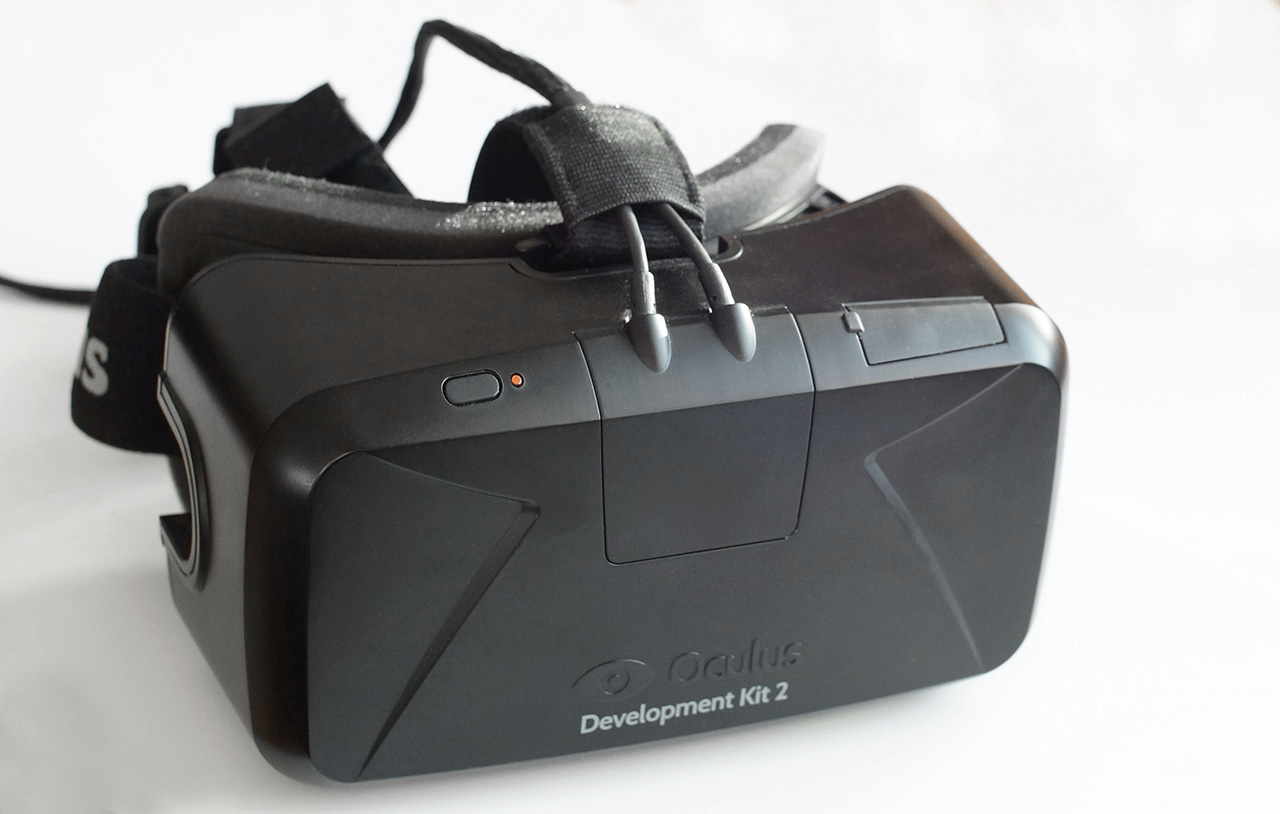
The hardware that arrived was the smartphone’s. By 2010 phones needed small, dense, fast displays and cheap gyroscopes and accelerometers, and they were being made by the hundred million.
Palmer Luckey, a home-schooled teenager in Long Beach who collected old head-mounted displays and thought all of them were bad, built his first prototype in 2010. He put a single phone-sized panel behind a pair of cheap, strongly magnifying lenses and corrected their distortion in software, which gave a much wider field of view than any commercial headset at a fraction of the cost. He posted about it on the Meant to Be Seen 3D forum, where John Carmack of id Software asked for one. Carmack wrapped it in duct tape and demonstrated it running Doom 3 to journalists at E3 in June 2012.
Luckey’s Kickstarter for the Oculus Rift development kit in August 2012 asked for $250,000 and raised $2.4 million from 9,522 backers. Brendan Iribe became chief executive, with Michael Antonov and Nate Mitchell as co-founders; the company raised a $16 million Series A in June 2013 and a $75 million Series B led by Andreessen Horowitz that December.
On March 25, 2014, Facebook announced it would buy Oculus for $2 billion: $400 million in cash, 23.1 million Facebook shares worth $1.6 billion, and up to $300 million more if milestones were met. Mark Zuckerberg had tried a prototype and decided that VR would be the next computing platform after the phone. The developers who had backed a gaming kit on Kickstarter were mostly furious. The consumer Rift shipped on March 28, 2016, at $599, and it needed a powerful gaming PC.
The Headset Boom
The acquisition set off a round of investment across the industry.
Valve and HTC released the HTC Vive on April 5, 2016, at $799. Its “Lighthouse” base stations swept the room with infrared lasers, and sensors on the headset and controllers timed the sweeps to work out their positions, so that users could walk around a play area instead of sitting still. Sony’s PlayStation VR followed on October 13, 2016, at $399, plugged into a console that tens of millions of people already owned, and sold 5 million units by the end of 2019.
At the cheap end, Google Cardboard, a fold-up cardboard viewer with two lenses into which a phone was slotted, was handed out to every attendee at Google I/O on June 25, 2014; more than 15 million viewers had shipped by November 2019. Samsung’s Gear VR (2015), built with Oculus, did the same thing in plastic for Galaxy phones. Phone-based VR gave millions of people their first few minutes in a headset and then died, because it could track only the rotation of the head, not its position.
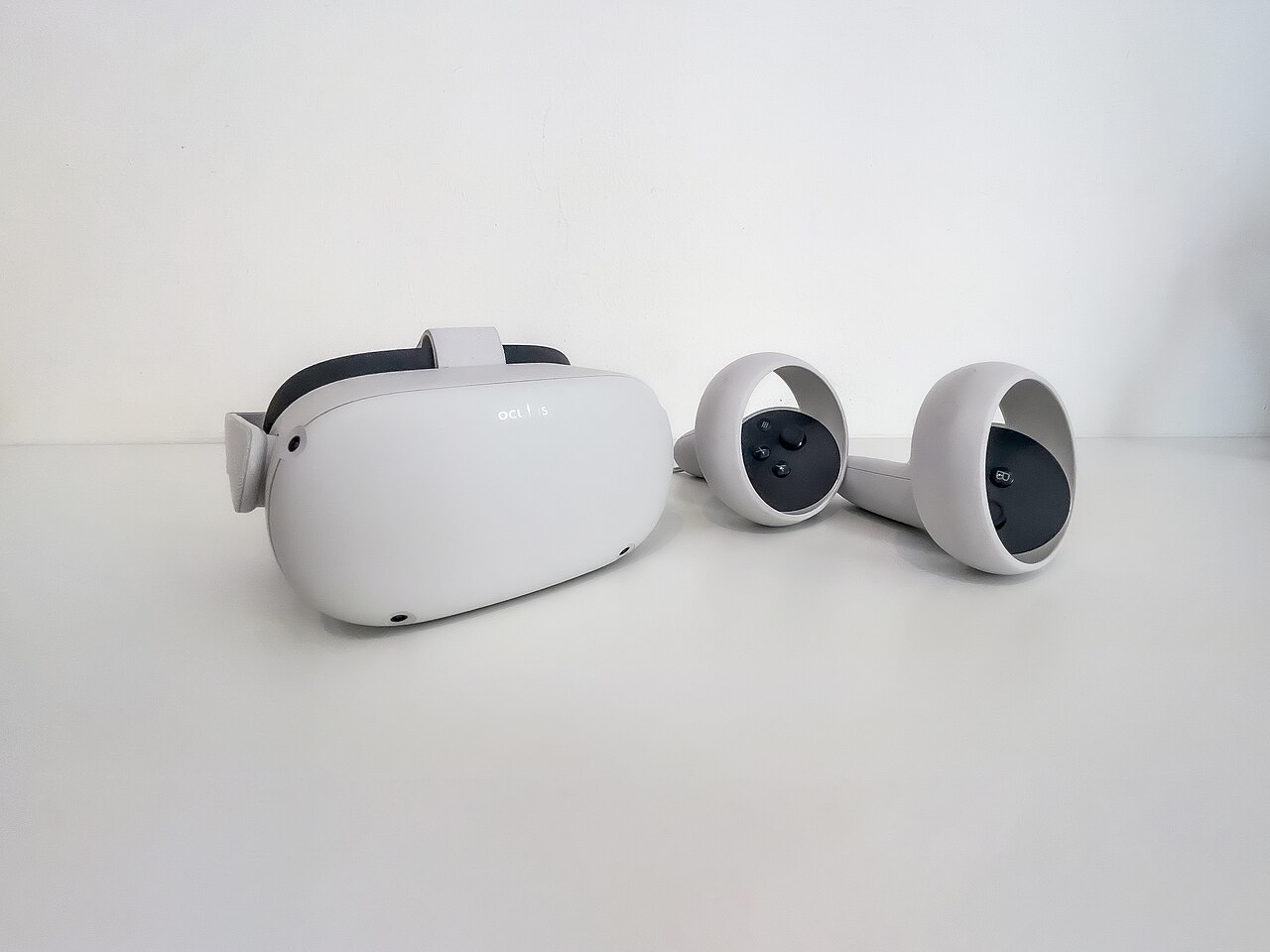
The Oculus Quest, released on May 21, 2019, at $399, put everything into the headset: processor, battery, storage, and four cameras that tracked the headset’s position against the room (“inside-out” tracking) and followed the controllers’ infrared LEDs. It needed no PC, no phone, no base stations and no cable. Hand tracking without controllers followed as an experimental feature that December. The Quest 2 (October 13, 2020, $299) was cheaper and better, and it was the first headset to sell like a consumer electronics product: Qualcomm, which made its chip, said in November 2021 that at least 10 million had shipped, and the market researcher IDC estimated that it accounted for about 80 percent of all VR headsets sold in 2021. Buyers were required to log in with a Facebook account, which many of them resented, until Meta introduced separate accounts in 2022.
In October 2021 Facebook renamed itself Meta, after the “metaverse,” a persistent shared virtual world that Zuckerberg said would be the successor to the mobile internet. The Oculus brand was retired and the division became Reality Labs. The Quest 3 (October 10, 2023, $499.99) added colour passthrough cameras, so that virtual objects could be placed in a video image of the real room; it weighed 515 grams.
Mixed Reality and Magic Leap
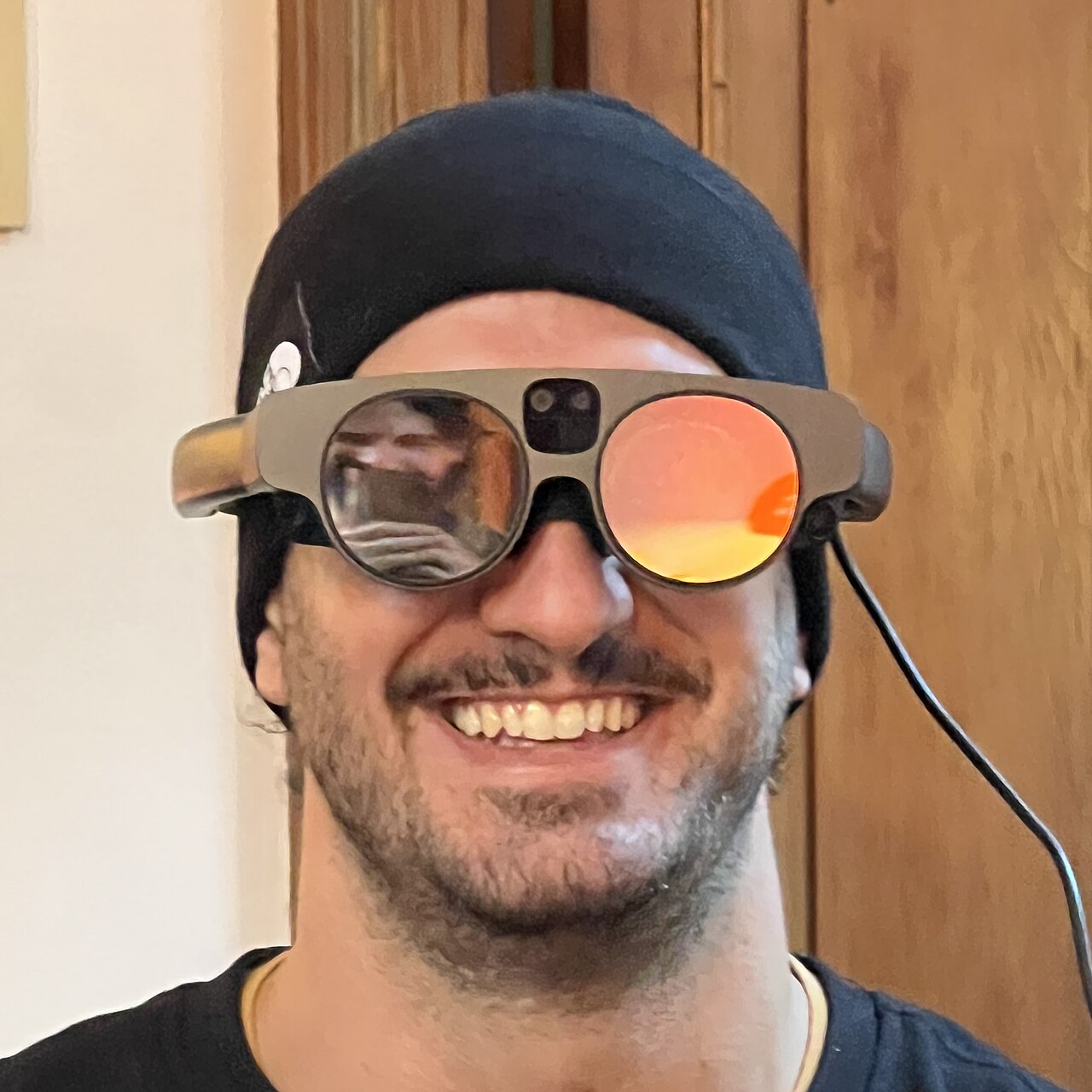
A second line of development went back to the see-through half of Sutherland’s idea: glasses that draw graphics over the real world rather than replacing it.
Microsoft announced HoloLens on January 21, 2015, and shipped the $3,000 Development Edition on March 30, 2016. It was a standalone see-through headset that mapped the room and pinned 3D objects to tables and walls; its field of view was narrow, a small window of graphics in the middle of the wearer’s vision. HoloLens 2 was announced in February 2019 at $3,500, and in November 2018 Microsoft had won a US Army contract worth $479 million to supply 100,000 military versions. The business never grew beyond industrial and military niches. Microsoft stopped making HoloLens 2 in October 2024, and in February 2025 it handed the Army programme (IVAS) to Anduril Industries, the defence company co-founded by Palmer Luckey.
Magic Leap, founded in Florida in 2010 by Rony Abovitz, raised money on the strength of demonstrations few outsiders were allowed to see: $540 million in October 2014 in a round led by Google, $827 million in December 2015, nearly $800 million in 2016, $461 million from Saudi Arabia’s sovereign fund in 2018. The Magic Leap One, announced in December 2017, shipped on August 8, 2018, as a $2,295 “Creator Edition”: goggles tethered by cable to a round computer clipped to the belt. Abovitz had told investors the company would sell at least a million in the first year. According to The Information, it sold about 6,000 in its first six months. In April 2020 the company laid off about half of its staff; Abovitz stepped down, and his successor Peggy Johnson, from Microsoft, turned the company towards business customers. The Magic Leap 2 shipped on September 30, 2022. By 2024 total funding had reached $3.5 billion, and on December 31, 2024, the cloud services for the Magic Leap One were switched off, which left the remaining headsets unusable.
Apple announced the Vision Pro on June 5, 2023, and began selling it in the US on February 2, 2024, at $3,499. It is opaque, like a VR headset, but shows the room through high-resolution cameras, and it is controlled by eye tracking and small finger gestures. Pre-orders sold out quickly; the reviews praised the displays and complained about the weight, 600 to 650 grams on the face plus a separate battery pack. An M5 model with a softer strap followed in October 2025.
The Weight Problem
In January 2026 Reality Labs cut about 10 percent of its staff, some 1,500 jobs, closed three of Meta’s own VR game studios, and put its fitness app Supernatural into maintenance mode; the company said it was shifting money towards AI and camera glasses. The division reported an operating loss of $19.1 billion for 2025 and about $80 billion in total since late 2020.
On September 23, 2026, at its Connect conference, Meta showed a different answer to a problem as old as the Sword of Damocles. The Meta VR Glasses put about 100 grams on the face, one fifth of a Quest 3. They contain no processor at all; the computing, battery and storage sit in a 300-gram puck that clips into a pocket and is connected by a thin fibre-optic cable. The price was set at $1,300, with delivery in spring 2027. The Quest had won its market in 2019 by getting rid of the cable. The new design brings the cable back and runs it to the user’s pocket instead of to a PC.
Why VR Stays Niche
VR headsets sell in the millions per year, while phones sell in the billions. The reasons have been stable for thirty years.
Isolation. A headset closes the wearer off from the room and the people in it. A phone can be used while doing something else; a VR headset cannot.
Comfort. Weight on the face, heat, and pressure make sessions longer than an hour uncomfortable for many users, and some still feel cybersickness even at modern latencies, particularly when the virtual camera moves while the body stays still.
Content. No application has made tens of millions of people buy a headset for it. VR has produced excellent games (Beat Saber, Half-Life: Alyx) and fitness apps, but no equivalent of the spreadsheet for the PC or messaging for the phone.
Vergence and accommodation. In normal vision the eyes point at an object (vergence) and focus at its distance (accommodation) together. A headset’s screen sits at a fixed focal distance while the 3D image asks the eyes to converge at other depths, and the mismatch is tiring. Displays that vary their focus exist in laboratories but not in products at consumer prices.
Where the cost of the alternative is high, VR is established: surgical training, exposure therapy for phobias and PTSD, pain distraction during burn treatment, pilot training, and design reviews in industry.
📚 Sources
- Sutherland, Ivan E.: “The Ultimate Display” (1965) (the foundational essay and the quoted passage)
- Sutherland, Ivan E.: “A Head-Mounted Three-Dimensional Display”, AFIPS Fall Joint Computer Conference (1968)
- The Sword of Damocles (virtual reality), Wikipedia (work from 1966 at Lincoln Laboratory, Sproull, Foster and Cohen, the ceiling arm as support and tracker, the partly see-through display, Philco’s 1961 head-mounted display)
- Sensorama, Wikipedia and Morton Heilig, Wikipedia (work from 1957, US Patent 3,050,870 of 1962, wind, odours and motion chair, failure to find backing)
- Myron W. Krueger, Wikipedia (Glowflow 1969, Psychic Space 1971, Videoplace 1975 at the Milwaukee Art Museum, Artificial Reality 1983)
- Thomas A. Furness III, Wikipedia (Wright-Patterson 1966–1989, fighter cockpits, HITLab at the University of Washington 1989)
- Road to VR: “50 Years of VR with Tom Furness: The Super Cockpit and More” (VCASS demonstrated in 1982, the Super Cockpit programme from 1986)
- Virtual reality, Wikipedia (Artaud 1938, Broderick 1982, Lanier’s popularisation, NASA VIEW and the LEEP optics in 1985, Quest 2’s 80 percent share in 2021)
- VPL Research, Wikipedia (1984, Lanier and Grimaud, DataGlove at $10,000, EyePhone systems upwards of $250,000 and 5–6 frames per second, Power Glove at $90 and 1.3 million units, bankruptcy filing 1990, patents to Sun in 1998, The Lawnmower Man)
- Lanier, Jaron: Dawn of the New Everything (2017) (memoir and history of VPL Research)
- Cruz-Neira, Carolina, Daniel J. Sandin and Thomas A. DeFanti: “Surround-screen projection-based virtual reality: the design and implementation of the CAVE”, SIGGRAPH ‘93 Proceedings (1993)
- Virtuality (product), Wikipedia (W Industries October 1987, Computer Graphics ‘90, 1000CS in 1991, 372 × 250 LCDs, Amiga 3000, Dactyl Nightmare, bankruptcy 1997 with about 1,200 machines)
- Sega VR, Wikipedia (1991 announcement, CES 1993, $200, “too realistic”, Kalinske on motion sickness and headaches, SRI International, dropped 1994)
- Virtual Boy, Wikipedia (release dates, Reflection Technology display, 770,000 units)
- Oculus Rift, Wikipedia and Oculus Rift CV1, Wikipedia (E3 2012, the consumer release on March 28, 2016, at $599)
- Kickstarter: “Oculus Rift: Step Into the Game” ($250,000 goal, $2,437,429 from 9,522 backers)
- TechCrunch: “Oculus VR Raises $75 Million To Help Bring Virtual Reality Goggles To The Masses” (December 12, 2013) and Engadget: “Oculus snags $16 million from investors” (June 17, 2013) (Series A and B)
- GeekWire: “Microsoft wins $480M contract to supply U.S. Army with 100K HoloLens headsets” (November 2018)
- NASA: “The Virtual Interface Environment Workstation (VIEW), 1990” (VIEW at NASA Ames, McGreevy and Fisher)
- Reality Labs, Wikipedia (the 2014 deal’s $400 million cash, 23.1 million shares and $300 million earn-out, the 2021 rename, the 2025 loss of $19.1 billion and $80 billion since late 2020, the January 2026 cuts)
- Road to VR: “Meta Reportedly Laying Off 10 Percent of Reality Labs, Shifting Focus from VR & Horizon Worlds” (January 2026)
- TechCrunch: “Well, there goes the metaverse” (January 19, 2026) (about 1,500 jobs, studio closures, Supernatural in maintenance mode)
- HTC Vive, Wikipedia (April 5, 2016, $799, Lighthouse tracking)
- PlayStation VR, Wikipedia (October 13, 2016, $399, 5 million by December 31, 2019)
- Google Cardboard, Wikipedia (Google I/O, June 25, 2014; 15 million viewers by November 2019)
- Oculus Quest, Wikipedia (May 21, 2019, $399, Oculus Insight inside-out tracking, hand tracking from December 2019)
- Quest 2, Wikipedia (October 13, 2020, $299, Qualcomm’s figure of at least 10 million by November 2021, the Facebook account requirement)
- Meta Quest 3, Wikipedia (October 10, 2023, $499.99, colour passthrough, 515 grams)
- Microsoft HoloLens, Wikipedia (January 21, 2015; Development Edition March 30, 2016, at $3,000; HoloLens 2 at $3,500; the $479 million Army contract of November 2018)
- UploadVR: “Microsoft Is Discontinuing HoloLens 2 As Production Ends” (October 2024) and Redmond: “Microsoft Makes it Official: HoloLens is Dead” (February 14, 2025) (IVAS to Anduril)
- Magic Leap, Wikipedia (funding rounds, Magic Leap One on August 8, 2018, at $2,295, April 2020 layoffs, Peggy Johnson, Magic Leap 2, $3.5 billion raised, cloud shutdown on December 31, 2024)
- Engadget: “Magic Leap reportedly only sold 6,000 AR headsets in six months” (December 6, 2019) (reporting The Information; the one-million hope)
- Apple Vision Pro, Wikipedia (June 5, 2023; February 2, 2024; $3,499; 600–650 grams; M5 model October 2025)
- UploadVR: “Meta VR Glasses Officially Announced, Shipping Spring 2027 For $1300” (September 23, 2026) (about 100 grams on the face, no onboard computing, 300-gram puck on a fibre-optic cable)
- Image: Virtuality 1000CS VR Headset.jpg by RetroEditor (CC BY 4.0), via Wikimedia Commons
- Image: Oculus Rift development kit 2.jpg by Ats Kurvet (CC BY-SA 4.0), via Wikimedia Commons
- Image: Oculus Quest II (50844634326).jpg by Maximilian Prandstätter (CC BY 2.0), via Wikimedia Commons
- Image: Magic Leap One.jpg by Horaciotorrendell (CC BY-SA 4.0), via Wikimedia Commons