Frank Rosenblatt: The Forgotten Pioneer of Neural Networks
Abstract
Frank Rosenblatt built a machine in 1957 that could learn. The Mark I Perceptron (a 400-photocell camera wired to a network of potentiometers on a IBM punched-card cabinet) was the first hardware implementation of a learning algorithm, and its underlying mathematics predicted, six decades in advance, the neural networks now used for image recognition, language translation, and scientific discovery. Rosenblatt drowned in Chesapeake Bay on his forty-third birthday in 1971, before he could see what the idea became. The field he founded was nearly destroyed two years before his death by a book written by his rivals. He was vindicated entirely, posthumously, by researchers who are now among the most celebrated in the history of science.
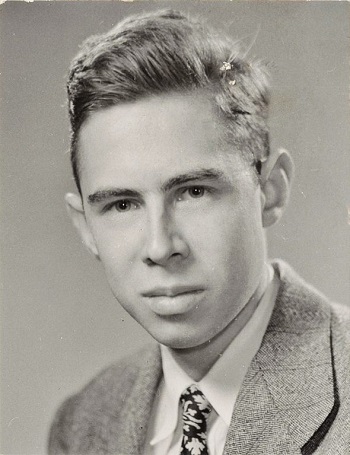
Precocious in New Rochelle
Frank Rosenblatt was born on July 11, 1928, in New Rochelle, New York, a prosperous suburb north of New York City. He was the kind of child who stood out not for any single talent but for the breadth and intensity of his curiosity. He showed early facility with mathematics and biology, and he had the temperament (impatient with convention, energetic, prone to excitement about ideas) that would define his adult career.
He enrolled at Cornell University, where he completed a bachelor’s degree in 1950 and, remaining at Cornell, a PhD in psychology in 1956. His dissertation focused on cognitive processes (how the brain recognized patterns and organized perception) a question that he approached from the intersection of psychology and neurophysiology rather than from pure behaviorism. Rosenblatt was interested in mechanism: not simply what the brain did, but how it did it at the level of neurons and their connections.
After completing his doctorate, he joined the Cornell Aeronautical Laboratory in Buffalo, New York, a defense-oriented research organization that had emerged from Cornell’s wartime aeronautics work and was, by the mid-1950s, doing research across engineering, psychology, and applied science. The laboratory gave Rosenblatt resources and the freedom to pursue interdisciplinary questions. He was twenty-eight years old, newly graduated, and interested in a question that most of his colleagues regarded as either unanswerable or premature: could a machine learn to perceive?
The Perceptron Idea
The intellectual context for Rosenblatt’s work was a set of ideas about neural computation that had been developing since the early 1940s. Warren McCulloch and Walter Pitts had published in 1943 a mathematical model of a neuron as a simple threshold logic unit (a device that fired if its inputs exceeded a threshold) and had shown that networks of such units could, in principle, compute any logical function. Donald Hebb had proposed in 1949 a rule for how synaptic connections between neurons might strengthen through use: neurons that fired together, wired together. These ideas suggested that learning might be implemented as a physical process of adjusting connection strengths, but they remained theoretical.
Rosenblatt’s contribution was to take these theoretical neurons and build a learning rule (a concrete algorithm for adjusting connection weights in response to correct and incorrect classifications) and then to implement it in hardware.
The core idea was disarmingly simple. A perceptron received inputs (from photocells, or from any signal source), multiplied each input by a weight (a number that could be adjusted), summed the weighted inputs, and produced an output based on whether the sum exceeded a threshold. During training, when the perceptron made a correct classification, the weights were left alone. When it made an incorrect classification, the weights were adjusted: increased if the input had been underweighted, decreased if overweighted.
Rosenblatt proved a theorem (the perceptron convergence theorem) showing that if a linear threshold function existed that could correctly classify the training data, his learning algorithm would find it in a finite number of steps. This was not a guarantee that a solution existed; it was a guarantee that if a solution existed, the algorithm would find it. The theorem was the mathematical bedrock on which the perceptron rested.
The Mark I Hardware
Filing an internal Cornell Aeronautical Laboratory report on January 7, 1957 (“The Perceptron: A Perceiving and Recognizing Automaton”) Rosenblatt moved from theory to hardware. The Mark I Perceptron, built beginning in 1957 and operational by 1958, was a physical machine approximately the size of a refrigerator.
Its architecture was deliberately biological in inspiration:
The sensory layer consisted of a 20×20 grid of 400 photocells (cadmium sulfide photoresistors that responded to light) mounted in a camera-like housing. Each photocell corresponded to a pixel in a simple image.
The association layer contained 512 “association units”, variable resistors (potentiometers) whose settings could be adjusted by small electric motors under program control. The connections between the photocell layer and the association layer were randomly wired, not designed, not optimized, but connected through a random patch panel. This was a deliberate design choice: Rosenblatt believed, inspired by neuroscience, that the brain’s connectivity was not precisely determined, and that random initial connectivity followed by learning was a more realistic model than carefully engineered wiring.
The output layer processed the association unit signals to produce a binary classification: “yes” or “no,” “recognized” or “not recognized.”
To train the Mark I, an operator would present images to the photocell camera; if the classification was correct, nothing happened; if incorrect, the motors adjusted the potentiometers to modify the connection weights. After sufficient training examples, the machine could generalize, recognizing images it had not seen before if they were sufficiently similar to training examples.
The Navy funded the project generously: approximately $6.5 million was invested in Rosenblatt’s perceptron research through the Office of Naval Research between 1958 and the mid-1960s, an enormous sum reflecting genuine military interest in machine vision and autonomous classification.
“New Navy Device Learns by Doing”
On July 8, 1958, the New York Times ran a front-page article with the headline: “New Navy Device Learns by Doing: Psychologist’s Perceptron Is Hailed as Forerunner of a Brain.” The article described the Mark I and quoted Navy sources describing it as “the embryo of an electronic computer that [the Navy] expects will be able to walk, talk, see, write, reproduce itself and be conscious of its existence.”
The Times article made Rosenblatt famous overnight and created a problem that would haunt him for the rest of his career. The Navy’s statements were extravagant; Rosenblatt’s own statements to the press were nearly as optimistic. He predicted that perceptrons would within ten years be capable of recognizing faces, translating languages, and performing tasks that required genuine intelligence. These predictions were, in retrospect, approximately sixty years premature, but Rosenblatt made them with the enthusiasm of someone who had just seen a machine learn, and who believed he had found a fundamental principle.
The scientific community was uncomfortable with the hype. Rosenblatt was a psychologist, not a computer scientist or mathematician; his audience at computing and AI conferences was not entirely sympathetic. More significantly, the hype attracted rivals.
Minsky, Papert, and the Rivalry
Among those who watched the perceptron’s publicity with skepticism (and, some witnesses said, with active hostility) was Marvin Minsky at MIT.
Minsky and Rosenblatt had known each other since high school in New York: both had attended the Bronx High School of Science, graduating in the same class of 1945. Their careers had diverged (Minsky toward mathematical logic and symbol-processing AI, Rosenblatt toward neural and connectionist models) in ways that reflected genuinely different theories about what intelligence was and how to build it. Minsky believed that intelligence was manipulation of symbolic structures; Rosenblatt believed it was pattern recognition in networks of connected units. These were not merely technical disagreements; they were philosophical ones about the nature of mind.
The conflict became institutional. Minsky, with Seymour Papert, spent years developing a mathematical critique of the perceptron. In 1969, they published Perceptrons: An Introduction to Computational Geometry, a book that presented a rigorous analysis of what single-layer perceptrons could and could not compute.
The book’s central result was devastating for perceptron enthusiasm: it proved that single-layer perceptrons were unable to compute certain functions, including the XOR (exclusive or) function. XOR returns true if exactly one of two inputs is true and false otherwise, a simple logical operation, but one that requires a non-linear boundary to separate the true cases from the false cases in input space. A single-layer perceptron, limited to a linear threshold function, could not draw a non-linear boundary. Minsky and Papert proved this rigorously.
The proof was correct. The conclusion that many researchers drew from it (that perceptrons and neural network models were fundamentally limited and not worth pursuing) was not.
The Perceptrons Book and Its Consequences
The Perceptrons book has been interpreted, and self-described, as having significantly contributed to the “AI Winter”, the reduction in funding and interest in neural network research that followed its publication. Some researchers who lived through that period argue that Minsky and Papert’s critique was accurate as far as it went but was widely misunderstood as applying to all neural networks rather than specifically to single-layer perceptrons.
Multi-layer networks (“perceptrons” with hidden layers between input and output) were not addressed in the 1969 book. The book acknowledged this incompleteness but speculated that such networks would be similarly limited. This speculation was presented cautiously in the book but was interpreted less cautiously in the broader research community. Funding for neural network research declined sharply after 1969. The neural network researchers who continued through the 1970s and early 1980s did so with reduced support and against the prestige of the dominant, Minsky-influenced AI community.
Death at 43
Frank Rosenblatt drowned on July 11, 1971 (his forty-third birthday) in Chesapeake Bay near the Maryland shore. He was on a boat that capsized; his body was recovered from the water. The exact circumstances were never fully documented.
He had spent the final years of his career under the shadow of Perceptrons and the deflation of neural network research that followed it. His research had continued, but the field had turned against his approach. He did not know that he would be vindicated.
Rosenblatt left behind a body of work (the convergence theorem, the hardware implementation, the conceptual framework of learning as weight adjustment) that would prove foundational. He also left colleagues and students who remembered him as one of the most intellectually energetic and personally compelling scientists they had encountered: excited by ideas, willing to speculate widely, occasionally reckless in his public statements, but genuinely committed to understanding how learning worked at a physical level.
The 1986 Vindication
The seeds of vindication were planted before most researchers noticed. In 1974, Paul Werbos developed the backpropagation algorithm in his Harvard PhD thesis, a method to train multi-layer networks by propagating error signals backward through the layers, efficiently computing the gradient for all weights simultaneously. Werbos’s work was largely ignored; the field had been chilled by Perceptrons, and few were looking for solutions to a problem the community had declared intractable.
Fifteen years after Rosenblatt’s death, the neural network problem that Minsky and Papert had identified was solved.
David Rumelhart, Geoffrey Hinton, and Ronald Williams published in Nature in October 1986 a paper demonstrating that backpropagation (an algorithm for computing the gradient of an error function with respect to the weights in a multi-layer network) could efficiently train networks with hidden layers. Backpropagation had been developed and rediscovered independently by several researchers across the preceding decade; the 1986 paper presented it in a form accessible to the broad research community and demonstrated its effectiveness on problems including XOR, which a three-unit multi-layer network solved trivially.
The limitation that Perceptrons had identified (that a single layer could not compute XOR) was real. The implication that no network could compute XOR was false. A network with one hidden layer could compute it. The multi-layer network was exactly what Minsky and Papert had declined to analyze.
The 1986 backpropagation paper launched the second wave of neural network research. Within a decade, Yann LeCun at Bell Labs had used backpropagation to train convolutional neural networks for handwritten digit recognition, deploying them in check-reading systems that processed millions of bank checks per day. Geoffrey Hinton at the University of Toronto continued developing deep learning techniques through the 2000s despite persistent skepticism from much of the AI community. Yoshua Bengio at the Université de Montréal contributed foundational theoretical work on deep architectures.
In 2018, Hinton, LeCun, and Bengio received the ACM Turing Award (described as “the Nobel Prize of computing”) for their contributions to deep learning. Their acceptance statements acknowledged the intellectual lineage: Rosenblatt’s perceptron, the weight adjustment learning rule, the conviction that networks of simple connected units could learn to recognize patterns.
Rosenblatt had been right about the principle. He had been wrong about the timeline. And he had not lived to receive any vindication at all.
Dead End: The Single-Layer Perceptron’s Real Limits
Minsky and Papert were right about single-layer perceptrons. The limitation they proved (inability to represent non-linearly separable functions) is a genuine constraint that no amount of training can overcome. The XOR problem is real, not a pathological edge case. A network with a single layer of weights, no matter how many neurons, cannot draw a curved decision boundary in input space.
What made their critique historically damaging was not its correctness but its incompleteness. They analyzed one architecture and implied conclusions about an entire class. The step from “single-layer perceptrons cannot do X” to “neural network approaches cannot do X” was not logically warranted, but it was widely made, including by funding agencies who preferred clean verdicts to nuanced assessments.
What Minsky and Papert Left Implicit
The 1969 Perceptrons book was rigorous mathematics applied to a limited architecture. Multi-layer networks can in principle represent any computable function, a fact formalized by the universal approximation theorem, proved in 1989 by George Cybenko. The practical question was whether such networks could be trained efficiently. Backpropagation answered yes. Minsky himself later acknowledged that the book’s influence on funding decisions had exceeded its mathematical scope.
The field drew two lessons from the perceptron episode that shaped subsequent decades: that premature claims of machine intelligence invited backlash damaging to legitimate research, and that mathematical analysis of simplified models could have disproportionate influence on resource allocation regardless of whether the simplifications were justified. Both lessons remain relevant to understanding how AI research cycles between optimism and winter.
The Legacy
The gap between Rosenblatt’s death in 1971 and the Hinton-LeCun-Bengio Turing Award in 2018 spans nearly five decades, longer than Rosenblatt’s entire life. In that interval, the ideas he pioneered were buried by the Perceptrons critique, sustained by a small community of committed researchers, revived by the 1986 backpropagation paper, and eventually scaled by computational resources and training data that would have been inconceivable in 1957.
The Mark I Perceptron is on display at the Smithsonian National Museum of American History. Its photocell array and motor-driven potentiometers look nothing like the billions-of-parameter transformer networks that now generate text, translate languages, and identify cancer in medical images. The mathematical relationship between them is direct.
Rosenblatt named his machine after the simplest possible visual feature detector, the cell in the retina that responds to light in a particular region. He built something that could learn from examples because neurons learned from experience. He was a psychologist who built hardware because he was convinced that the mind could be instantiated in a machine, and that understanding the mechanism of learning required building the mechanism.
He was correct. He was forty-three years old when he died, and the revolution he started is still accelerating.
📚 Sources
- Rosenblatt, Frank: “The Perceptron: A Probabilistic Model for Information Storage and Organization in the Brain” — Psychological Review, 65(6): 386–408 (1958)
- Rosenblatt, Frank: Principles of Neurodynamics: Perceptrons and the Theory of Brain Mechanisms (1962), Spartan Books
- Minsky, Marvin & Papert, Seymour: Perceptrons: An Introduction to Computational Geometry (1969), MIT Press
- Rumelhart, David E., Hinton, Geoffrey E. & Williams, Ronald J.: “Learning Representations by Back-Propagating Errors” — Nature, 323: 533–536 (October 9, 1986)
- Crevier, Daniel: AI: The Tumultuous History of the Search for Artificial Intelligence (1993), Basic Books — Chapter on the perceptron era
- McCorduck, Pamela: Machines Who Think: A Personal Inquiry into the History and Prospects of Artificial Intelligence (1979), W.H. Freeman
- Olazaran, Mikel: “A Sociological Study of the Official History of the Perceptrons Controversy” — Social Studies of Science, 26(3): 611–659 (1996)
- ACM Turing Award Citation: Yoshua Bengio, Geoffrey Hinton, Yann LeCun (2018)
- New York Times: “New Navy Device Learns by Doing” (July 8, 1958), p. 1
- Anderson, James A. & Rosenfeld, Edward, eds.: Neurocomputing: Foundations of Research (1988), MIT Press — reprints Rosenblatt’s key papers with commentary
- McCulloch, Warren S. & Pitts, Walter: “A Logical Calculus of the Ideas Immanent in Nervous Activity” — Bulletin of Mathematical Biophysics 5: 115–133 (1943)
- Hebb, Donald O.: The Organization of Behavior (1949), Wiley
- Anderson, James A. & Rosenfeld, Edward (eds.): Talking Nets: An Oral History of Neural Networks (1998), MIT Press
- Werbos, Paul J.: “Beyond Regression: New Tools for Prediction and Analysis in the Behavioral Sciences” — PhD thesis, Harvard University (1974)
- Image: Frank Rosenblatt.jpg by Heinz Nixdorf MuseumsForum (CC BY-SA 4.0), via Wikimedia Commons