Demis Hassabis and DeepMind: Games, Proteins, and the Path to AGI
Abstract
Demis Hassabis is a chess prodigy turned neuroscientist turned AI entrepreneur who co-founded DeepMind in London in 2010 with the explicit aim of solving intelligence. Under his leadership, DeepMind produced AlphaGo, the program that defeated the world’s best Go player in 2016 and forced even skeptical AI researchers to revise their timelines, and then AlphaFold, which solved the fifty-year protein-folding problem and earned Hassabis a share of the 2024 Nobel Prize in Chemistry. His career is, in miniature, a history of what modern AI research became: games as a proving ground, scientific problems as the real target, and the question of artificial general intelligence as the organizing ambition.
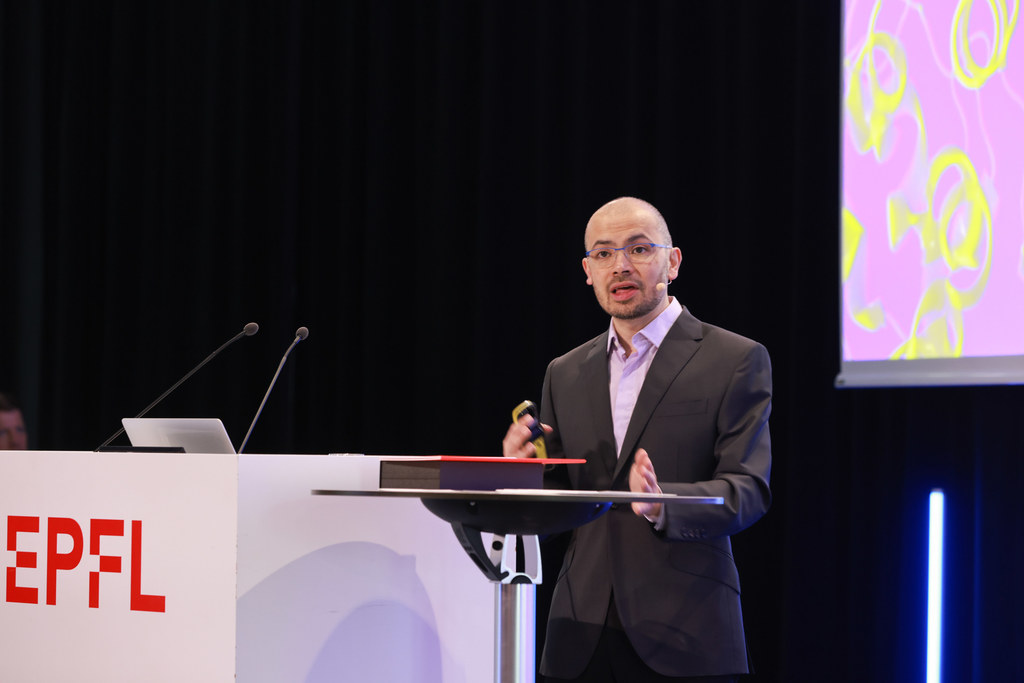
The Chess Prodigy and the Game Designer
Demis Hassabis was born on July 27, 1976, in North London, the son of a Greek-Cypriot father and a Chinese-Singaporean mother. He learned chess at four, taught by his father, and by the age of thirteen was ranked second in the world for his age group in the under-14 category, a distinction that required playing and studying with a seriousness most children reserve for nothing at all.
In 1992, at sixteen, he took a gap year to work at Bullfrog Productions, a British game studio in Guildford. Bullfrog was at the time one of the most interesting companies in British gaming, having produced Populous (1989) under Peter Molyneux. Hassabis joined as the lead programmer on Theme Park (1994), a simulation game that sold over four million copies and won multiple Game of the Year awards. He was seventeen when the project was at its most demanding.
The experience was formative in a specific technical direction. Theme Park required simulating thousands of visitors with individual preferences, queuing behavior, and mood, a precursor to the kind of agent-based reasoning Hassabis would spend his career pursuing. The game’s AI was not intelligent in any deep sense, but it introduced him to the problem of modeling behavior computationally.
After Theme Park, he studied computer science at Queens’ College, Cambridge, graduating with a double first in 1997. He briefly joined Lionhead Studios (Peter Molyneux’s successor company) and contributed AI design work to Black & White (2001), a god-game that used machine learning techniques for its AI-controlled creatures. But Hassabis was already thinking beyond games. He wanted to understand how intelligence worked at a fundamental level, which meant going back to school.
Neuroscience and the Science of Memory
In 2005, Hassabis enrolled as a PhD student at University College London’s Gatsby Computational Neuroscience Unit, completing his doctorate in 2009 under the supervision of Eleanor Maguire. His thesis investigated episodic memory (the brain’s system for storing and replaying specific past experiences) and its role in imagination.
The core finding was striking: patients with damage to the hippocampus, who could not form new episodic memories, were also unable to imagine novel future events. They could not construct mental scenes they had never experienced. Hassabis argued that episodic memory was not a passive recording system but an active constructive one, the same neural machinery that stored the past was used to simulate possible futures. The paper, published in PNAS in 2007 with Maguire and colleagues, was awarded the Science magazine prize for Breakthrough of the Year runner-up.
This finding shaped Hassabis’s view of artificial intelligence. The brain did not simply memorize patterns and replay them; it built internal models of the world and used them to reason about situations it had never encountered. Any AI system worth building, he believed, needed this capacity: not just pattern matching but model-based reasoning. The neuroscience was not decoration on a career in machine learning; it was the source of his research agenda.
Founding DeepMind
In 2010, Hassabis co-founded DeepMind Technologies in London with Shane Legg (a New Zealand AI researcher who had studied under Marcus Hutter and written extensively about machine superintelligence) and Mustafa Suleyman, a childhood friend of Hassabis who came from an NGO background and brought organizational and policy instincts the technical founders lacked. The three pooled roughly £300,000 to start; the company operated initially from a small office in Holborn.
The founding premise was unusually direct: DeepMind intended to build artificial general intelligence, and it intended to do so safely. This dual commitment (capability and safety together) distinguished it from most commercial AI efforts of the time, which focused on narrow applications. DeepMind hired neuroscientists alongside machine learning engineers, hosted philosophy seminars alongside paper reading groups, and maintained from the start that the safety question was not separable from the capability question.
Their approach was reinforcement learning: training agents to pursue goals by rewarding good behavior and penalizing bad behavior, exactly as animals learn. The initial focus was on games, not because games were the end goal, but because games offered controlled environments with clear reward signals, measurable progress, and the kind of strategic depth that required genuine learning rather than lookup.
Google Acquisition and Atari
In January 2014, Google acquired DeepMind for a reported price of approximately £400 million (around $500 million). The acquisition was the largest ever for a European AI company at the time and included an unusual condition: an ethics board to oversee the use of DeepMind’s technology. Hassabis, Legg, and Suleyman all joined Google while maintaining DeepMind’s operational independence in London.
The acquisition followed the publication in Nature in 2015 (based on work from 2013) of DeepMind’s first major result: the Deep Q-Network (DQN), a reinforcement learning system that learned to play forty-nine Atari 2600 games from raw pixel input (seeing only the screen and the score, like a human player) and achieved superhuman performance on twenty-nine of them. The same algorithm, unchanged, learned to play completely different games. This was the demonstration of generality that Hassabis had been working toward: a single learning system mastering diverse tasks.
The Nature paper was significant not because Atari games matter but because they were proof of concept. A system that could learn Pong, Breakout, and Space Invaders from the same algorithm (without being told anything specific about any of them) was exhibiting something that looked, at least, like general learning.
AlphaGo and the Moment Everything Shifted
The board game Go had been an unsolved AI problem for decades. Chess had fallen to computers in 1997, when Deep Blue defeated Garry Kasparov. Go resisted. Its branching factor (the number of possible moves at each step) is roughly 250, compared to chess’s 35, making exhaustive search computationally prohibitive. The best human players described their intuition in terms that seemed irreducibly human: “reading the board,” “feeling the shape.” The expert consensus in 2015 was that a computer would not defeat a top Go player for another decade.
DeepMind’s AlphaGo defeated European champion Fan Hui 5–0 in October 2015. In March 2016, it faced Lee Sedol (one of the greatest Go players of his generation, ranked second in the world, and extremely confident before the match) in a five-game series in Seoul broadcast live to an audience of 200 million viewers. AlphaGo won 4–1.
The single game Lee Sedol won (Game 4) became famous. He resigned from Game 1 in shock. He lost Game 2 after what commentators described as an AlphaGo move of such strange beauty that human observers needed minutes to evaluate it. Game 3 was another AlphaGo victory. Then, in Game 4, Lee Sedol found a move (Move 78, since called “the divine move”) that AlphaGo had not predicted, causing a cascade of errors that led to Lee’s only win. He wept after the game, and said the experience of finding that move, against an opponent of superhuman strength, was the greatest achievement of his career. He retired from professional Go in 2019, saying an AI entity “cannot be defeated.”
The response among AI researchers was more significant than the media coverage. Before AlphaGo, the consensus was that tasks requiring intuition, pattern recognition across enormous search spaces, and “creativity” were beyond near-term AI. After AlphaGo, that consensus evaporated. Many researchers later cited March 2016 as the moment their sense of the field’s timeline fundamentally changed.
AlphaGo Zero (2017) went further: trained with no human game data at all, starting only from the rules of Go, it surpassed the original AlphaGo in forty days of self-play. AlphaZero (also 2017) extended the approach to chess and shogi simultaneously, reaching superhuman performance in all three games with the same algorithm. AlphaZero’s chess was of particular note to human players: it played in a style described as “alien”, aggressive, positional, and unlike any human or prior computer chess.
AlphaFold: Fifty Years of Biology
The protein-folding problem had been open since the 1970s: given a protein’s amino acid sequence, predict its three-dimensional structure. Proteins fold into specific shapes based on physical and chemical interactions, and that shape determines function. Figuring out the structure experimentally (through X-ray crystallography or cryo-electron microscopy) is expensive, slow, and sometimes impossible. An accurate computational predictor would transform biology and medicine.
AlphaFold1 competed in the CASP13 benchmark in 2018 and won decisively, outperforming all other methods. AlphaFold2 competed in CASP14 in 2020 and achieved median accuracy of 92.4 GDT, within the margin of experimental error, meaning it was effectively solving the problem for most proteins. The biology community’s reaction combined astonishment and immediate application.
In 2021, DeepMind released AlphaFold2’s predictions for nearly all 20,000 proteins in the human proteome, freely, publicly, without charge. By 2022, the AlphaFold Protein Structure Database (developed with EMBL-EBI) contained predicted structures for over 200 million proteins from virtually every organism on Earth. Researchers studying neglected tropical diseases, potential antibiotic targets, and cancer biology began using the database as a foundational resource.
In October 2024, Demis Hassabis and DeepMind’s John Jumper shared the Nobel Prize in Chemistry with protein designer David Baker. The Nobel committee cited AlphaFold as a solution to the protein-folding problem and a transformative tool for biological research. Hassabis was forty-eight years old.
Tensions and Departures
DeepMind’s relationship with Google was never entirely comfortable. The ethics board mandated at acquisition was never publicly constituted in a meaningful form. Mustafa Suleyman, responsible for applying DeepMind’s research to real-world health projects including the controversial Streams app (which processed health data from NHS patients under conditions that the UK’s Information Commissioner found in breach of data protection law), left DeepMind in 2019 after an internal investigation into management conduct. He later joined Microsoft as head of AI.
Shane Legg remained at DeepMind as Chief AGI Scientist, pursuing research on AI safety and the long-term behavior of advanced systems. Hassabis became CEO of Google DeepMind in 2023 following the merger of DeepMind with the Google Brain team, a combination that brought together two distinct cultures, one oriented toward fundamental research and one toward product applications.
The merger was read in different ways: as the concentration of Google’s AI resources under a single leader with a track record, or as the subordination of DeepMind’s research mission to Google’s commercial imperatives. Hassabis described it as the right structure for what he saw as the crucial next phase: moving from demonstrating AI’s potential to deploying it at scale.
What AlphaFold Means
The significance of AlphaFold is not only that a specific fifty-year scientific problem was solved. It is what the solution implies about the method. AlphaFold did not encode knowledge of protein chemistry in the way a traditional scientific program would; it learned the structure of protein folding from experimental data. The same approach (deep learning on large datasets with careful architectural design) has since been applied to predicting protein-protein interactions, designing novel proteins with desired properties, and predicting the effects of mutations.
Tip
AlphaFold2 uses a transformer-based architecture (related to those behind large language models) combined with multiple sequence alignments, evolutionary information about which amino acids tend to appear together in related proteins. The combination of deep learning and evolutionary biology was not obvious; it was a research insight, not an engineering given.
Hassabis has argued consistently that games were always a means to an end: structured environments in which to develop and test techniques before applying them to real problems. The protein-folding result, he contends, is the first demonstration at scientific scale of what that path was leading toward. The next targets he has named include drug discovery, materials science, and fundamental mathematics.
Whether this constitutes progress toward artificial general intelligence is contested. AlphaFold is powerful and narrow. AlphaGo is powerful and narrow. The question of whether combining many powerful narrow systems produces something that deserves to be called general intelligence is, as of 2026, unresolved. Hassabis has spent his career accumulating evidence for an answer, without yet giving one.
📚 Sources
- Silver, David et al.: “Mastering the game of Go with deep neural networks and tree search,” Nature 529 (2016)
- Silver, David et al.: “Mastering the game of Go without human knowledge,” Nature 550 (2017)
- Jumper, John et al.: “Highly accurate protein structure prediction with AlphaFold,” Nature 596 (2021)
- Mnih, Volodymyr et al.: “Human-level control through deep reinforcement learning,” Nature 518 (2015)
- Hassabis, Demis et al.: “Patients with hippocampal amnesia cannot imagine new experiences,” PNAS 104 (2007)
- Suleyman, Mustafa: The Coming Wave (2023), Crown
- DeepMind — Wikipedia
- Nobel Prize Committee: “Scientific Background: Computational Protein Design and Protein Structure Prediction,” Chemistry Prize 2024
- Metz, Cade: Genius Makers: The Mavericks Who Brought AI to Google, Facebook, and the World (2021), Dutton
- Image: Demis Hassabis.jpg by Alain Herzog (CC BY-SA 4.0), via Wikimedia Commons