Radia Perlman and the Spanning Tree Protocol
Abstract
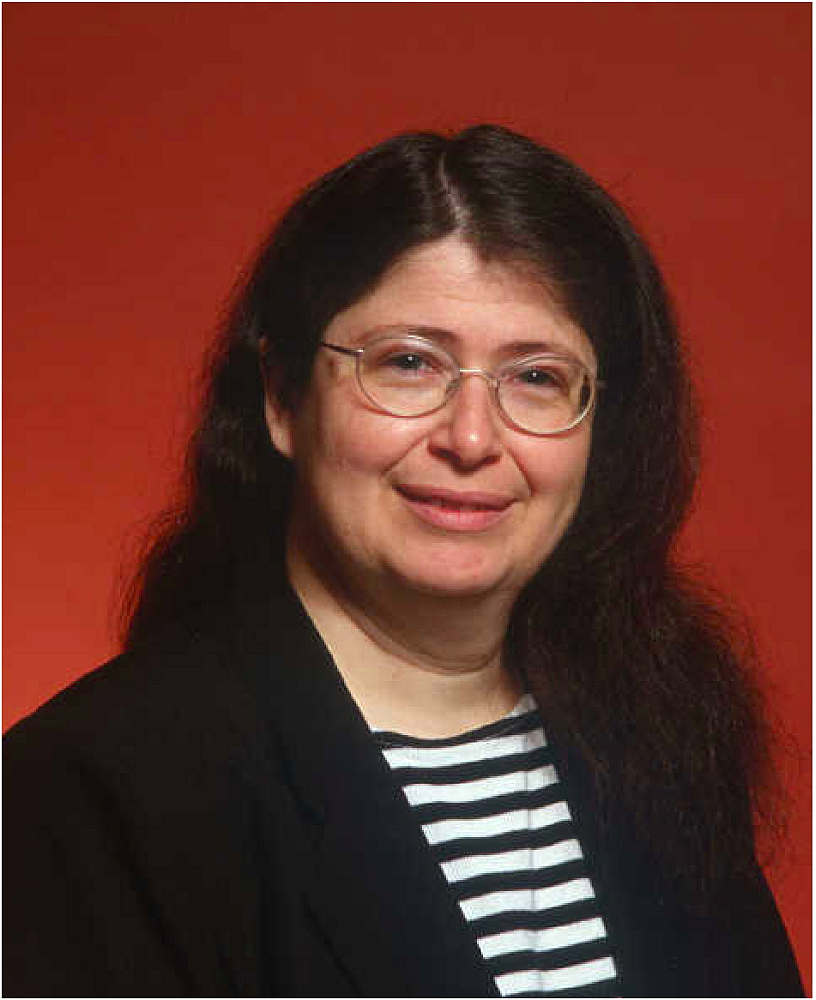
Radia Perlman invented the Spanning Tree Protocol (STP) in 1985, solving the problem of how to connect multiple Ethernet bridges into a reliable network without creating loops that would paralyze traffic. Every modern Ethernet network (from home routers to data center fabrics) uses STP or one of its descendants to prevent broadcast storms. She has been called the “Mother of the Internet,” a title she actively resists, pointing out that the internet is the work of thousands of people. What she does not dispute is that without STP, large-scale Ethernet networks would not function, and without large-scale Ethernet networks, the internet’s physical infrastructure would not exist in its current form.
Loops and Broadcast Storms
The problem Perlman solved in 1985 was invisible in simple networks but catastrophic in complex ones.
An Ethernet bridge connects two or more Ethernet segments, forwarding frames between them. When a bridge receives a frame destined for an unknown address, it floods the frame to all connected segments, the simplest possible behavior, requiring no prior configuration. For small networks, this works correctly.
For large networks with multiple bridges, the simple flooding behavior creates a catastrophic failure mode. If the network contains a loop (a path that leads back to its starting point) a flooded frame will circulate indefinitely. As each bridge floods the frame to all its connected segments, including the segment from which it just received the frame, the frame multiplies and circulates. Within seconds, a loop causes a broadcast storm that consumes all network bandwidth, effectively shutting down the network. Removing one bridge from the loop requires knowing which one to remove, which requires understanding the network topology, which requires the network to be functioning, a circular dependency.
Perlman was working at Digital Equipment Corporation (DEC) in 1985 when her manager asked her to solve this problem. The initial estimate was that the problem would take several years to solve. Perlman solved it in a week.
The Spanning Tree Algorithm
The insight was mathematical: a network without loops is a tree (a connected graph with no cycles. Given any connected graph with possible cycles, there exists a subgraph that is a tree) a spanning tree: that connects all nodes using exactly N-1 edges (for N nodes) with no cycles. If bridges could determine a spanning tree of the network topology and forward traffic only along the tree’s edges, loops would be eliminated without removing physical links, the unused links would be available for recovery if active ones failed.
The challenge: the spanning tree must be computed by the bridges themselves, automatically, without centralized configuration, using only the information they can observe by exchanging messages.
Perlman’s Spanning Tree Protocol accomplishes this through a distributed election process:
- Bridges exchange Bridge Protocol Data Units (BPDUs), small messages containing each bridge’s ID and path costs
- Bridges elect a Root Bridge, the bridge with the lowest bridge ID (a combination of a priority value and the bridge’s MAC address)
- Each bridge determines its Root Port, the port that provides the shortest path to the Root Bridge
- For each network segment, bridges elect a Designated Bridge, the bridge that provides the best path to the Root Bridge for that segment
- All ports not designated as Root Ports or Designated Bridge ports are blocked; they do not forward traffic
The result is a loop-free tree topology computed entirely through message exchange, with no central controller. If a bridge fails or a link goes down, the protocol detects the change and recomputes the spanning tree automatically.
Perlman summarized the algorithm’s elegance in a poem she wrote to explain it, which became famous in networking circles for demonstrating that even complex protocols have underlying simplicity:
I think that I shall never see A graph more lovely than a tree. A tree whose crucial property Is loop-free connectivity. A tree that must be sure to span So packets can reach every LAN. First, the root must be selected. By ID, it is elected. Least-cost paths from root are traced. In the tree, these paths are placed. A mesh is made by folks like me Then bridges find a spanning tree.
The poem is not just playful; it is a precise informal specification of the algorithm.
IEEE 802.1D and Standardization
STP was standardized as IEEE 802.1D in 1990. The standard became the foundation of enterprise Ethernet networking. Every managed Ethernet switch shipped since the early 1990s has implemented STP or one of its successors.
The original STP has known limitations: convergence after topology changes takes 30–50 seconds (the time required for the spanning tree to recompute and for bridges to transition ports from blocking to forwarding state), which is unacceptable for modern networks. Subsequent protocols addressed these limitations:
Rapid Spanning Tree Protocol (RSTP, IEEE 802.1w, 2001): Convergence in 1–2 seconds by using negotiated port state transitions rather than timers.
Multiple Spanning Tree Protocol (MSTP, IEEE 802.1s, 2002): Multiple spanning tree instances for different VLANs, allowing load balancing across redundant links.
Shortest Path Bridging (SPB, IEEE 802.1aq, 2012): An IEEE-developed successor that uses link-state routing rather than spanning trees, enabling better load balancing and faster convergence for data center networks. SPB emerged as the IEEE’s rival to Perlman’s own link-state successor effort, TRILL (developed at the IETF); the two were competing approaches to the same problem.
Beyond STP
Spanning Tree is not Perlman’s only contribution. She has worked extensively on:
Network security: Her PhD thesis from MIT (where she earned her doctorate while working at DEC and later Sun Microsystems) addressed robust routing under Byzantine failures, networks that remain functional even when some nodes are compromised or malicious.
TRILL (Transparent Interconnection of Lots of Links): A protocol using IS-IS link-state routing inside Ethernet networks to enable optimal routing rather than spanning tree’s suboptimal forwarding.
PKI and certificate systems: Perlman has written critically about the design of public key infrastructure, arguing that most deployed PKI systems have flawed trust models that are poorly understood by their users. Her book Network Security: Private Communication in a Public World (co-authored with Charlie Kaufman and Mike Speciner) is a standard reference.
She is known in the networking community not just for her technical contributions but for her willingness to identify and name design flaws in widely deployed standards, including her own earlier work. The development of TRILL and SPB was motivated by genuine limitations in STP that she identified and spent years working to fix.
The “Mother of the Internet” Problem
The nickname “Mother of the Internet” appears frequently in media coverage of Perlman and is consistently, gently corrected. Her objections are substantive, not merely modest:
First, the internet (specifically the IP-layer routing of packets across heterogeneous networks) and Ethernet (the link-layer protocol STP manages) are different things. STP is essential to large-scale Ethernet but not to IP routing.
Second, the internet was built by thousands of people over decades: Vint Cerf and Bob Kahn (TCP/IP), Larry Roberts (ARPANET), Tim Berners-Lee (the web), and many more. Attributing it to a single individual is historically inaccurate regardless of which individual is named.
What Perlman will accept: she invented STP, STP made large-scale Ethernet possible, and large-scale Ethernet is the physical substrate on which the internet’s local area network layer operates. The causal chain is real; the title is an oversimplification.
📚 Sources
- Wikipedia: Radia Perlman
- Wikipedia: Spanning Tree Protocol
- Radia Perlman: Interconnections — Bridges, Routers, Switches, and Internetworking Protocols (2000) — Addison-Wesley
- Kaufman, Perlman & Speciner: Network Security — Private Communication in a Public World (2002) — Prentice Hall
- IEEE 802.1D — Spanning Tree Protocol Standard
- Perlman: TRILL: Routing Bridges — IETF RFC 6325 (2011)
- Computer History Museum: Radia Perlman Oral History
- Image: Radia Perlman.png by Intel Free Press (CC BY-SA 2.0), via Wikimedia Commons