Latin America's Tech Industry: MercadoLibre, Nubank, and the Fintech Continent
Abstract
Latin America’s technology story is, at its core, a story about financial exclusion and what happens when engineers decide to solve it. It has a prehistory that the fintech decade tends to hide: a Ferranti Mercury in Buenos Aires in 1961, a Brazilian-built minicomputer in 1972 and a fifteen-year Brazilian import ban on foreign computers that ended in a trade war with the United States. A region of 650 million people in which over 45% of adults lacked bank accounts in 2015, where inflation routinely destroyed savings, where remittances crossed borders at 8% fees, and where small businesses paid credit card processing fees that consumed their margins; this was not a gap in the market. It was a continent-sized opportunity. MercadoLibre built the region’s dominant e-commerce and payments platform starting in 1999. Nubank built the world’s largest digital bank starting in 2013. Rappi, Clip, Kavak, and dozens of others followed. By 2021, Latin America had produced more tech unicorns in a single year than in the previous decade combined, attracting capital from SoftBank, Tiger Global, Sequoia, and Andreessen Horowitz. The boom compressed. The structural challenges (currency devaluation, regulatory fragmentation, infrastructure gaps) did not.
The University Machines, 1957–1972
The region’s first computers were bought, not built, and the two earliest are still arguing about which came first. The city government of São Paulo installed a Univac 120 in 1957 to bill its water utility. Mexico’s UNAM counts its IBM 650 as the first in Latin America: the engineer Sergio Beltrán López had seen IBM machines in California while studying the geology under Mexico City, persuaded the university to buy one, and the machine started work on 8 June 1958 in the basement of the Faculty of Sciences, with the Centro de Cálculo Electrónico growing around it. São Paulo’s machine was earlier; UNAM’s was the first at a university and the first with a research group attached.
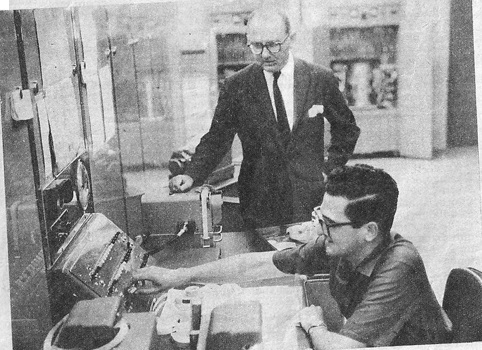
Argentina’s entry was the most ambitious. Manuel Sadosky, a mathematician at the University of Buenos Aires, pushed an international tender through in 1959, and the Instituto de Cálculo bought a Ferranti Mercury for £152,099. It arrived on 24 November 1960, filled eighteen metres of cabinets in Pabellón I of the Ciudad Universitaria and entered service in January 1961. The staff named it Clementina after the tune in Ferranti’s sample programs. Cecilia Berdichevsky was among its first programmers; Wilfred Durán and four students, Liana Lew, Noemí García, Ana Cristina Zoltan and Clarisa Cortés, wrote COMIC, the first Argentine programming language, for it. On 29 July 1966, a month after the military coup, police cleared the faculty with truncheons in what became known as the Noche de los Bastones Largos. Sadosky and most of the institute went into exile, and Clementina ran on with a shrinking staff until spare parts ran out in mid-1971 (see SADIO Argentina for Sadosky’s later career).
Brazil’s first home-built computer came out of a classroom. In 1971 Glen Langdon Jr., an American professor who had worked at IBM Brazil, proposed that the Digital Systems Laboratory of the Escola Politécnica at the University of São Paulo build its own machine as a course project. Eighteen graduate students did: Patinho Feio (“Ugly Duckling”), an eight-bit computer of 450 integrated circuits on 45 boards, weighing 100 kilos, was presented on 24 July 1972 before the state governor and the university rector. A photographer stepped on its power cable during the ceremony and the machine took too long to restart. It worked afterwards. The design led to the G-10, commissioned by the Brazilian Navy from USP and PUC-Rio, and from there to the MC 500, sold from 1974 by the new state company Cobra Computadores, the first Brazilian commercial computer; members of the Patinho Feio team founded Scopus Tecnologia in 1975. Chile’s contribution in the same years was a control room rather than a computer: Project Cybersyn, 1971 to 1973.
Dead End: Brazil’s Market Reserve
Cobra’s founding was the start of the largest computing-policy experiment in the region. Brazil’s military government classified computing as strategic in the early 1970s, first under the coordinating body CAPRE and from 1979 under the Secretaria Especial de Informática (SEI), staffed by officers linked to the intelligence service. The policy was a reserva de mercado: foreign firms were kept out of minicomputers and microcomputers so that Brazilian companies could learn to build them. Congress wrote it into law on 29 October 1984 as Lei 7.232, the Informatics Law, with an eight-year term. Severo Gomes and Cristina Tavares carried the bill; Roberto Campos challenged it as unconstitutional and lost. The manufacturers’ association ABICOMP, the data-processing union and the Brazilian Computer Society all lobbied for it.
The results were domestic firms (Cobra, Itautec, Scopus, Elebra) building machines a generation behind the imports they replaced, at higher prices, and a grey market in smuggled PCs. Washington opened a Section 301 case, and on 13 November 1987 President Reagan announced sanctions against Brazil, citing US$105 million in damages to American companies. The 1991 revision of the law redefined “national company” to let foreign capital back in, and the reserve expired on schedule in October 1992. Brazil kept a computing profession and a research community that had grown up on its own machines. It did not keep a computer industry: within a few years the domestic manufacturers were assemblers of imported designs. The lesson repeated across the region was that a protected market could produce engineers but not a product anyone outside it wanted.
The Infrastructure of Exclusion
Understanding Latin America’s technology industry requires understanding what was missing.
In Brazil (the region’s largest economy) approximately 35% of adults had no bank account as of 2015. In Mexico, the figure was 63%. In Colombia, 54%. The reasons were structural: bank branches concentrated in cities, minimum balance requirements that excluded low-income accounts, identification requirements that many informal workers could not satisfy, and banking fees that consumed a meaningful fraction of small transactions. The formal financial system had been designed for and by the urban middle and upper classes; the majority of the population used cash for everything.
Cross-border remittances (the money that migrant workers sent home to families) cost an average of 8% of the transfer value in 2015, according to World Bank data. A Mexican worker in Los Angeles sending $300 home paid $24 in fees. Multiplied across the hundreds of millions of dollars in monthly remittance flows, this represented an enormous tax on the region’s poorest households, captured by banks and Western Union.
Small and medium businesses paid consumer-style credit card processing fees (often 3-5% of transaction value) because there was no infrastructure for better pricing. Card terminals required upfront hardware costs of hundreds of dollars that many merchants could not afford. The majority of transactions were cash.
These were the conditions in which Latin America’s fintech boom was possible, and which explain why fintech (not social media, search, or productivity software) dominated the region’s technology output.
MercadoLibre: The Latin American Amazon and PayPal
Marcos Galperin was a Stanford MBA student in 1999 when he drafted a business plan for an online marketplace. He pitched it to private-equity investor John Muse (of Hicks, Muse, Tate & Furst), a guest speaker at Stanford whom Galperin offered to drive to the airport, and secured an initial investment. He launched MercadoLibre (Spanish for “free market”) in Argentina in August 1999, shortly after returning from Stanford.
The timing was improbable. The Argentine peso was pegged to the dollar under the convertibility plan; Argentine internet penetration was minimal; e-commerce infrastructure (logistics, payments, consumer trust) did not exist. Galperin built the marketplace anyway, expanding into Brazil, Mexico, Colombia, Venezuela, and eventually most of Latin America.
MercadoLibre’s survival through the 2001 Argentine economic crisis (which included a 70% peso devaluation, frozen bank accounts, and social unrest that killed dozens) depended on prudent cash management and a September 2001 investment from eBay, which took a 19.5% stake. The company then reinvented itself around payments, building MercadoPago (2003), a PayPal-like system that allowed buyers and sellers to transact without sharing bank account information or credit cards. (Galperin would relocate himself and the company’s headquarters to Montevideo, Uruguay much later, around 2019–2020, citing Argentina’s inflation and regulatory environment, not the 2001 crisis.)
MercadoPago solved a trust problem specific to Latin America: consumers would not enter credit card details on websites they did not trust, and the region lacked the institutional infrastructure of escrow services, consumer protection laws, and bank dispute resolution that made US e-commerce workable. MercadoPago held funds in escrow until buyers confirmed receipt; sellers received payment only after delivery confirmation. The system enabled e-commerce by removing the trust requirement from individual transactions.
By 2023, MercadoLibre was the most valuable company headquartered in Latin America, with revenues of $14.5 billion and over 218 million active users. MercadoPago had become larger than the marketplace itself, a full financial services platform offering credit, insurance, and investment products to users who had no prior relationship with formal financial institutions. MercadoLibre had effectively become a bank for the unbanked, using transaction history as a credit score substitute.
Nubank: The World’s Largest Digital Bank
David Vélez came to Brazil in 2012 as a venture capital investor and tried to open a bank account. It took him five hours, required extensive documentation, and produced a credit card with a 10.9% monthly interest rate (over 200% annualized) accompanied by an opaque fee structure. Vélez concluded that Brazilian banking was a cartel offering deliberately bad service to captive customers, and that a digital bank with no branches, no legacy technology, and no inherited organizational culture could do better.
He founded Nubank in São Paulo in 2013 with co-founders Cristina Junqueira and Edward Wible. The first product was a purple credit card with no annual fee (unheard of in Brazil) managed entirely through a mobile app. The application process was entirely digital; approval took minutes rather than weeks. The interest rate was still high (Brazilian interest rates were and remain among the world’s highest, reflecting the central bank’s inflation-targeting regime and the cost structure of Brazil’s banking system), but transparent and consistently lower than incumbent alternatives.
Nubank grew through word of mouth and a waiting list that became a status symbol. By 2015 it had 500,000 customers. By 2018 it had 8 million. By 2021 it had 48 million customers across Brazil, Mexico, and Colombia. Its 2021 IPO on the New York Stock Exchange valued the company at $41 billion, the largest IPO of a Latin American company in history.
By 2023, Nubank had approximately 85 million customers, more than any other digital bank in the world, and more than most traditional banks in Europe. In Brazil, it had become the fourth-largest credit card issuer. It had accounts for roughly one-third of Brazil’s entire adult population.
Why Brazil?
Brazil’s banking sector was (and remains) among the most concentrated and profitable in the world. Five banks (Itaú, Bradesco, Caixa, Banco do Brasil, Santander Brasil) controlled over 80% of banking assets. The concentration produced margins that funded enormous incumbent technology teams (Brazilian banks spent more on technology than most European ones) but the incumbent culture optimized for extracting value from existing customers rather than serving underserved ones. The regulatory environment, managed by the Banco Central do Brasil, eventually actively supported fintech entry through regulatory sandbox programs and the mandatory adoption of open banking standards.
Pix: The State as Fintech Disruptor
The most significant financial technology development in Latin America was not a startup but a government product.
Pix, launched by the Banco Central do Brasil on November 16, 2020, was an instant payment infrastructure that allowed any Brazilian with a bank account or fintech account to transfer money to any other Brazilian instantly, 24 hours a day, seven days a week, at no cost for individuals. Banks and fintechs were required by regulation to implement Pix if they had over 500,000 customer accounts.
Adoption was immediate and total. Within eighteen months, 120 million Brazilians had registered Pix keys, more than 60% of the adult population. By 2023, Pix processed over 3 billion transactions per month, surpassing credit cards as Brazil’s most-used payment method. The cost of transferring money between Brazilian accounts, which had previously ranged from R$5 to R$20 per transaction, dropped to zero.
Pix demonstrated that the most powerful fintech in Latin America was not a startup but a central bank willing to mandate infrastructure. The private fintech industry had spent a decade trying to reduce the friction and cost of payments; the Banco Central achieved it in eighteen months by regulatory fiat.
The Regional Ecosystem: Colombia, Mexico, Chile
Colombia produced Rappi, founded in 2015 by Simón Borrero, Sebastián Mejía, and Felipe Villamarín. Rappi began as a delivery app and expanded into payments, financial services, and eventually a super-app model serving Colombia, Brazil, Mexico, Argentina, and Peru. It raised $1 billion from SoftBank in 2019 at a $3.5 billion valuation, the first Colombian unicorn.
Mexico produced Clip (card readers for small merchants, 2012), Kavak (used car marketplace, 2016), and Konfio (SME lending). Mexico City became the region’s second major tech hub after São Paulo, attracting investment and talent from throughout Central America and the United States.
Chile (with smaller population but higher GDP per capita and better institutional quality) produced NotCo (AI-generated plant-based food), Cornershop (grocery delivery, acquired by Uber), and Buk (HR software). Chile’s startup ecosystem benefited from government support through CORFO (the state development agency) and relative political stability.
Dead End: Currency, Regulation, and the Funding Cliff
Latin America’s technology boom of 2019–2021 was real. The bust that followed was also real.
Global venture capital flows into Latin America peaked at approximately $19 billion in 2021, driven by SoftBank’s Vision Fund (which made over $4 billion in Latin American investments), Tiger Global, and a wave of US-based funds entering the region. As global interest rates rose in 2022 and technology valuations contracted, Latin American startups faced a funding environment that had changed faster than their businesses could adapt.
The structural challenges that had always existed became acute:
Currency risk: Companies raising dollars, spending in local currencies, and earning in local currencies faced existential exposure when the Brazilian real, Argentine peso, and Colombian peso all depreciated significantly against the dollar in 2022–2023. Argentine inflation exceeded 100% annually. A startup valued in dollars but operating in Argentina was losing value faster than it could earn it.
Regulatory fragmentation: Each Latin American country has different financial regulations, tax codes, labor laws, and data protection requirements. A company operating in Brazil, Mexico, Colombia, Argentina, and Chile effectively operates in five different regulatory environments requiring five different compliance operations. The cost overhead limited which companies could scale pan-regionally.
Logistics infrastructure: Latin America’s physical infrastructure (roads, postal systems, last-mile delivery) remained poor outside major cities. E-commerce companies that worked efficiently in São Paulo and Mexico City faced structural limitations outside them. MercadoLibre invested heavily in its own logistics network (Mercado Envíos) for this reason; few others could afford equivalent investment.
📚 Sources
- Clementina (computadora) — Wikipedia (Spanish)
- Cecilia Berdichevsky — Wikipedia
- “Hace 60 años la UNAM puso en marcha la primera computadora en AL” — Gaceta UNAM
- “1957: o primeiro computador chegava ao Brasil” — Embarcados
- “The legacy of the ugly duckling” — Pesquisa FAPESP
- Patinho Feio — Wikipedia
- Política Nacional de Informática — Wikipedia (Portuguese)
- Schwartzman, Simon: “High Technology and Self-Reliance: Brazil Enters the Computer Age” (1985)
- Galperin, Hernán & Girard, Bruce: “Microtelcos in Latin America and the Caribbean” — in Digital Poverty: Latin American and Caribbean Perspectives (2007), Practical Action Publishing
- Nubank — Wikipedia
- MercadoLibre: Annual Report 2023
- Banco Central do Brasil: Pix Statistics and Implementation Reports
- LAVCA (Latin American Venture Capital Association): Industry Data 2021–2023
- World Bank: Global Findex Database 2021 — Financial Inclusion in Latin America
- SoftBank Latin America Fund: Portfolio and investment announcements (2019–2021)
- The Economist: “Latin America’s technology boom” (June 2021)
- ECLAC (UN Economic Commission for Latin America and the Caribbean): Digital Economy Outlook 2022