China's Tech Industry: From Follower to Frontier
Abstract
In 1978, China had no commercial computing industry. It did have a computing tradition: a state institute founded in 1956, a first machine copied from Soviet blueprints in 1958, a first independent design in 1960, and a line of classified mainframes that did the arithmetic for the bomb. Its universities had been shuttered for a decade by the Cultural Revolution, its scientists scattered or silenced, its access to foreign technology restricted by Cold War export controls. By 2020, China produced more computer science research than any other country, hosted two of the world’s ten most valuable technology companies (Alibaba and Tencent), and controlled critical links in the global semiconductor supply chain. The story of how this happened, through deliberate state strategy, extraordinary talent mobilization, a billion-person domestic market, and a willingness to absorb foreign technology by any means necessary, is the defining geopolitical technology story of the early 21st century.
The Institute Years, 1956–1983
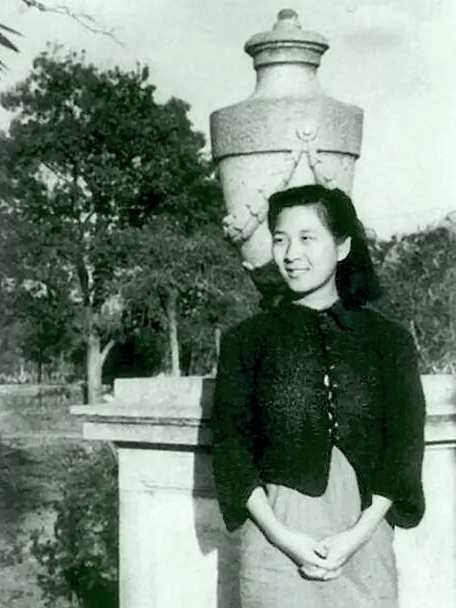
Chinese computing began as a proposal in a mathematics institute. Hua Luogeng first proposed building a Chinese electronic computer in 1952, and in early 1953 a research team formed under him at the Academy of Sciences’ Institute of Mathematics. The State Council approved a preparatory committee for an Institute of Computing Technology (ICT) of the Chinese Academy of Sciences on 25 August 1956, the country’s first body devoted to computer research. Hua had recruited Xia Peisu, an electrical engineer with a 1950 Edinburgh doctorate, in 1952 to lead the computer work. Xia taught China’s first course in computer theory in 1956 and wrote its first systematic textbook. The institute moved to Zhongguancun in Beijing in February 1958, where it still is.
The first machines were Soviet. In September 1957 the institute obtained the blueprints of the Soviet M-3, and on 1 August 1958 the copy, the Model 103, ran a four-instruction program: about 30 operations a second on a magnetic drum, 1,500 to 2,000 once core memory was fitted. Built with State Factory 738, the Beijing Wired Electric Factory, it was first called the “August First” machine and later the DJS-1; about 49 were made between 1958 and 1966. The Model 104, a copy of the BESM-II with 4,200 tubes and a 39-bit floating-point word, was debugged in April 1959 and delivered that October, and ran China’s first home-written compiler in 1961. It did 10,000 operations a second, and the country’s nuclear and weather programmes queued for it.
The Soviet advisers were recalled in 1960, when the Sino-Soviet split ended technical aid, and the institute was on its own. That year Xia Peisu’s Model 107 became operational, the first general-purpose computer designed in China, which is why the China Computer Federation gave her its first lifetime achievement award in 2010 and Loongson’s architect Hu Weiwu, her student, named a processor after her. The Model 119 of 1964, the institute’s first self-developed large computer, played a part in the calculations for China’s first nuclear test in October 1964. Ci Yungui’s 441-B series gave China its first transistorised general-purpose computers in the 1960s. The Cultural Revolution then closed the universities for a decade; the institute kept working, and in 1972 delivered the 48-bit Model 111, the first computer built entirely from Chinese-made integrated circuits, followed by the 013 with 768K of core memory in 1976.
The line ended with two supercomputers. The 757 vector machine, certified in 1983, is the subject of the Dead End section below. The other, Yinhe-I (“Galaxy”), was built by Ci Yungui’s team at the National University of Defense Technology in Changsha and completed in 1983 at 100 million operations a second, the first Chinese machine in that class. Ci had been elected to the Academy in 1980; he died in Beijing on 21 July 1990. By then the institute’s commercial spin-offs had begun: Legend, later Lenovo, in 1984, then Dawning, Loongson and Cambricon. What China had in 1978 was not an industry, but it was thirty years of designers who knew how to build a computer without buying one.
The Foundation: Reform and the Return of Science
Deng Xiaoping’s Reform and Opening Up policy (1978) restarted Chinese higher education after the Cultural Revolution’s decade of destruction. Universities reopened, the gaokao university entrance exam was restored, and science and engineering were declared the path to national modernization. The State Council’s 1986 863 Program (named for its launch date: March 1986) targeted seven high-technology areas, including computers and automation, with directed funding designed to close the gap with the West.
The early domestic computing industry was defined by state-owned enterprises making IBM-compatible clones under license or reverse-engineered. Lenovo (then Legend, founded 1984 by Liu Chuanzhi at the Institute of Computing Technology) was an exception, a hybrid of state institute spinout and commercial enterprise that would eventually acquire IBM’s PC division in 2005, becoming the world’s largest PC maker.
Huawei: The Infrastructure Champion
Huawei was founded in 1987 by Ren Zhengfei, a former People’s Liberation Army engineer, in Shenzhen with 21,000 yuan of capital. Its early business was reselling imported telephone switches. By the late 1990s it was developing its own switching equipment. By the 2000s it was underbidding Ericsson, Nokia, and Cisco in developing-world telecom contracts, trading lower margins for market share.
Huawei’s rise was built on genuine engineering capability, aggressive pricing, and (according to US government allegations documented in a 2020 indictment) systematic appropriation of competitors’ technology through employee hiring, joint ventures, and theft. The company has denied the theft allegations. Whatever the mechanism, it became the world’s largest telecom equipment maker and, through its HiSilicon subsidiary, one of the few companies capable of designing its own smartphone chips at the leading process node.
The US placed Huawei on the Commerce Department’s Entity List in 2019, blocking it from purchasing chips manufactured with US technology, a restriction that, given TSMC’s dependence on ASML EUV lithography machines manufactured under US export agreements, effectively cut Huawei off from advanced chip supply. HiSilicon’s Kirin processors, which had rivaled Apple’s A-series chips, disappeared from new products within two years. They came back in September 2023: the Mate 60 Pro shipped with a Kirin 9000S that TechInsights teardowns identified as SMIC’s second-generation 7nm (N+2) process, restoring 5G to Huawei’s flagship without any access to EUV lithography.
The Internet Giants: BAT and Beyond
China’s connection to the world’s networks began with an email. On September 20, 1987, the Institute for Computer Applications in Beijing sent the country’s first email over a CSNET link to the University of Karlsruhe, set up with Werner Zorn’s German team (see Germany’s IT Industry). Its text: “Across the Great Wall we can reach every corner in the world.” The phrase became famous in China; the permanent TCP/IP connection followed only on April 20, 1994.
China’s internet industry consolidated around three companies that became known as BAT: Baidu, Alibaba, and Tencent.
Baidu (Robin Li, 2000) dominated Chinese search through PageRank-equivalent algorithms adapted for Chinese-language content and, critically, through Google’s departure from mainland China in 2010 following disputes over censorship and state-sponsored hacking of Gmail accounts. Baidu became the default search engine for a billion users, funding its advertising revenue into autonomous driving research (Apollo project) and AI infrastructure.
Alibaba (Jack Ma, 1999) began as a B2B trade platform connecting Chinese manufacturers with foreign buyers. The pivot to consumer e-commerce through Taobao (2003), launched in direct competition with eBay’s entry into China, created the foundation of Chinese retail commerce. Alipay (2004), initially a workaround for the lack of consumer credit card infrastructure, became the world’s largest mobile payment platform, processing more transactions than Visa and Mastercard combined by 2019. Alibaba’s 2014 IPO on the New York Stock Exchange raised $25 billion, then the largest IPO in history.
Tencent (Ma Huateng, 1998) built its empire on messaging: OICQ (later QQ), which cloned ICQ’s model in 1999, followed by WeChat (2011), which evolved from messaging into a super-app integrating payments, social media, government services, food delivery, and ride-hailing within a single application. WeChat’s architecture (an operating system within an operating system) became the model that Western tech companies spent a decade trying and failing to replicate. Tencent also became the world’s largest video game company through investments and acquisitions: League of Legends publisher Riot Games (2011), Clash of Clans publisher Supercell (2016), and a significant stake in Epic Games.
ByteDance (Zhang Yiming, 2012) disrupted the BAT equilibrium. Its algorithm-first approach (building recommendation systems before building content) produced Toutiao (news aggregation) and TikTok/Douyin (short video). TikTok’s export beyond China represented something Chinese internet companies had rarely achieved: a consumer product that competed globally with American platforms on their own terms, reaching a billion monthly active users by 2021.
The Great Firewall: Architecture and Industrial Policy
The Golden Shield Project (colloquially the “Great Firewall”) operates through several technical mechanisms working in combination. At the network layer, China’s internet is connected to the global internet through a small number of international exchange points controlled by the three state-owned telecommunications carriers (China Telecom, China Unicom, China Mobile). All traffic to and from foreign destinations passes through these choke points. The filtering uses deep packet inspection (DPI) to identify and block traffic based on destination IP, DNS queries, and URL patterns, not just domain names but specific URLs and query strings. SNI (Server Name Indication) in TLS connections is inspected to block HTTPS traffic to blocked domains. The system also uses DNS poisoning to return false IP addresses for blocked domains, forcing users toward domestic alternatives even when circumvention is not attempted. VPNs and Tor are blocked through traffic pattern analysis, encrypted connections to known VPN endpoints are identified and disrupted, though technically sophisticated users can circumvent these measures through obfuscated protocols. Enforcement is not perfect; it is calibrated. The stated rationale is national security and social stability. The economic effect is a domestic market protected from foreign competition, allowing Chinese companies to scale to hundreds of millions of users before facing international rivals. Whether this protection explains or merely contributed to Chinese tech success is disputed (India, which has no such firewall, has produced Reliance Jio but no Alibaba) but the combination of massive protected market and state-directed R&D investment produced companies with genuine global capability that then competed internationally.
The Semiconductor Ambition
China consumes more semiconductors than any other country, taking in roughly 60% of the world’s chip output in 2020, and fabricates a small fraction of them domestically. Reducing this dependence became a national priority after the ZTE sanctions of 2018 (the US temporarily banned ZTE from purchasing US components, nearly destroying the company) and the Huawei restrictions of 2019.
SMIC (Semiconductor Manufacturing International Corporation, founded 2000) is China’s leading foundry. As of 2024 it can manufacture at approximately the 7nm node, five to seven years behind TSMC’s leading edge. The gap is structural: advanced chip manufacturing requires EUV lithography machines made exclusively by ASML in the Netherlands, which are subject to Dutch and US export controls. China has not been able to acquire EUV machines and has been forced to continue at older DUV nodes.
The Chinese government’s response has been the “Made in China 2025” industrial policy (2015), directing hundreds of billions of yuan into semiconductor R&D, and the founding of state-backed investment funds totaling over $100 billion. The National IC Fund (the “Big Fund”) has invested in SMIC, Yangtze Memory Technologies (NAND flash), and dozens of fabless chip designers. YMTC surprised the industry in 2022 when its 232-layer 3D NAND flash was found shipping in a retail SSD (the first 200-plus-layer NAND seen in production, briefly ahead of Samsung, Micron, and SK Hynix) demonstrating that Chinese engineers could match leading-edge memory technology when shielded from foreign competition.
The Decoupling
The 2018–2024 period saw accelerating US-China technology decoupling. The Trump administration added Huawei, SMIC, and dozens of other Chinese tech companies to export restriction lists. The Biden administration’s October 2022 advanced chip export controls went further: banning not just sales of advanced chips to China but sales of chip-making equipment and (controversially) restricting US citizens and permanent residents from working in China’s advanced semiconductor industry. The CHIPS and Science Act (2022) added $52 billion in US domestic semiconductor subsidies.
China’s response has been accelerated domestic substitution across the technology stack, from operating systems (replacing Windows in government systems with Linux-based Kylin OS) to database software (replacing Oracle with domestic alternatives) to chips. The pace of substitution has consistently been faster than Western analysts predicted.
Dead End: The Siloed Supercomputer
An illustration of China’s early state-directed computing trajectory is the Model 757, the country’s first large-scale vector computer, developed at the CAS Institute of Computing Technology and granted state certification in November 1983. The machine ran vector operations at 10 million per second and scalar operations at 2.8 million, and it was a genuine engineering achievement, taking the Chinese Academy of Sciences’ special prize in 1983 and the first-class National Science and Technology Progress Award in 1985. But it had been commissioned by the State Council and Central Military Commission in 1975 for the Ninth Institute, China’s nuclear-weapons design establishment, and that is where it went. Its classified, mission-specific role meant its results circulated narrowly, its engineers could not collaborate internationally, and its architecture could not be improved through the open feedback loops that made Western computing innovation cumulative. It was, in effect, the inverse of Silicon Valley’s model: capable engineers and adequate resources, but minimal knowledge transfer. The Reform era’s decision to open Chinese science to international publication and collaboration (imperfect and politically constrained as that openness was) was the single policy change that made everything else possible.
📚 Sources
- Institute of Computing Technology — Wikipedia
- Hua Luogeng — Wikipedia
- Xia Peisu — Wikipedia
- 103型计算机 — Chinese Wikipedia (Soviet M-3 blueprints, first run 1 August 1958, ~49 built)
- 104机 — Chinese Wikipedia (BESM-II copy, debugged April 1959, 10,000 ops/s)
- Ci Yungui — Wikipedia
- National University of Defense Technology — Wikipedia (Yinhe-I 1983, 100 MFLOPS)
- Lee, Kai-Fu: AI Superpowers: China, Silicon Valley, and the New World Order (2018), Houghton Mifflin Harcourt
- McGregor, James: No Ancient Wisdom, No Followers: The Challenges of Chinese Authoritarian Capitalism (2012), Prospecta Press
- Huawei — Wikipedia
- Semiconductor Industry Association: China’s New Semiconductor Policies: Issues and Implications (2021)
- Zegart, Amy & Morell, Michael: “Spies, Lies, and Algorithms” — Foreign Affairs, May/June 2019
- Naughton, Barry: The Chinese Economy: Adaptation and Growth (2018), MIT Press
- TechInsights: YMTC 232-Layer TLC 3D NAND (2022 disruptive-event teardown)
- TechInsights: “TechInsights Finds SMIC 7nm (N+2) in Huawei Mate 60 Pro” (2023)
- 757 大型向量计算机 — Chinese Wikipedia (1983 state certification, Ninth Institute delivery)
- Internet in China — Wikipedia (first email to Karlsruhe, September 20, 1987)