Valve and Steam
Abstract
In 2003 a game studio decided the real problem was not making games but delivering them. Valve, founded by two ex-Microsoft programmers, built Steam to patch its own multiplayer games over dial-up. When Half-Life 2 shipped in 2004 requiring players to install Steam even for a boxed disc, the reaction was fury. Two decades later Steam sells most of the PC games in the world, takes a cut of nearly every sale, and has made a privately held company of a few hundred people one of the most profitable per employee in the industry. Along the way it rewrote how software is bought: no discs, no ownership of a physical object, a library that lives on a server, refunds and reviews as platform features, and a 30% platform fee that became the industry’s default and then its biggest fight.
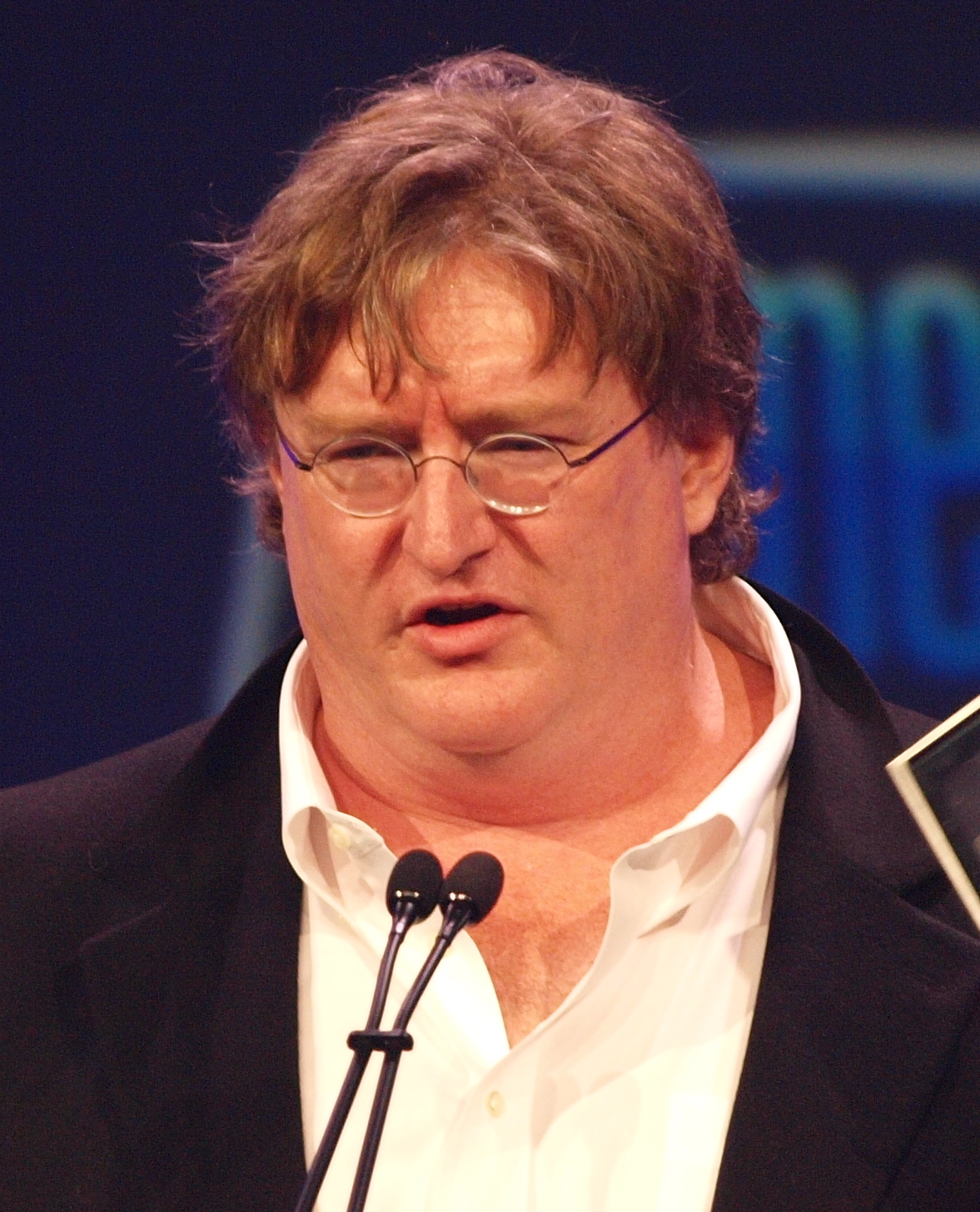
Two Microsoft Programmers
Gabe Newell and Mike Harrington left Microsoft and founded Valve on 24 August 1996. Newell had spent thirteen years at Microsoft, worked on the first three versions of Windows, and left rich enough to fund a game studio out of pocket. Neither had shipped a game. Their first, Half-Life (1998), was built on a licensed version of id Software’s Quake engine and was assembled the hard way: the team scrapped a nearly finished version they judged mediocre and rebuilt it, a process Valve later formalized as the “Cabal,” small cross-discipline groups iterating on design. Half-Life sold in the millions and won a shelf of game-of-the-year awards. Harrington sold his stake to Newell in 2000, leaving Newell in control of a company he has run ever since (see The PC Gaming Revolution for the game side of this history).
The more consequential product of Half-Life was not the game but its mod scene. Counter-Strike, made by two hobbyists as a Half-Life modification in 1999, became one of the most-played online games in the world. Valve hired the modders and absorbed the game. And Counter-Strike is what created the problem Steam was built to solve.
The Update Problem
A single-player game shipped on a disc and was done. An online game was never done. Counter-Strike needed constant patching to fix bugs, balance weapons, and close the exploits that cheaters found. Valve was pushing updates to millions of players over dial-up and early broadband, through a patchwork of mirror sites, and every patch fractured the player base into incompatible versions for days. Cheating was rampant and hard to fight when the client was a static file anyone could modify.
Newell’s answer was to make the game a service that talked to Valve’s servers. Steam launched on 12 September 2003. In its first form it was unglamorous: an updater and anti-cheat layer that kept a player’s Valve games current automatically and verified their files. The store came later. The point in 2003 was control of the client after the sale, something a boxed disc never gave a publisher.
The Launch Nobody Forgave
Valve had already learned how exposed its software was. In 2002 a German programmer, Axel Gembe, found a Valve server with a username build and a blank password, and by September 2003 had downloaded the unfinished source code of the still-secret Half-Life 2. It leaked publicly in early October 2003, months before release. Valve had already announced a delay in September; the leak did not cause it, but it damaged morale inside the company and slowed development further. Newell’s eventual response to Gembe was strange: he offered him a job interview, which turned into a sting that led to Gembe’s arrest in Germany.
Half-Life 2 shipped on 16 November 2004, and Valve made a decision that defined Steam. Every copy, including the millions sold on disc in stores, required the buyer to install Steam, create an account, and activate the game online before playing. It was the first high-profile game to force digital activation on retail buyers. Valve’s servers buckled under launch-day load; players who had bought a physical box sat locked out of a game they owned, waiting on an authentication server. The reaction was open hostility. Steam was described as spyware, as a leash, as a solution to a problem players did not have. Valve did not back down, and the precedent held: from then on, owning a Valve game meant having a Steam account.
Owning the Store
Steam opened to other publishers’ games in 2005 and slowly became the thing PC gaming ran on. The pitch to developers was direct: no manufacturing, no shipping, no retail shelf space to buy, no unsold inventory, and instant patching. The pitch to players was a library that followed the account rather than the disc. Valve took 30% of each sale, a figure it did not invent but did make standard.
By 2013 Steam handled around 75% of PC game distribution. In 2017 sales through the store were roughly $4.3 billion, at least 18% of global PC game revenue. By 2021 it carried more than 34,000 games and had about 132 million monthly active users; in October 2022 the concurrent-user record passed 30 million people logged in at once. A PC game not on Steam was, for most buyers, invisible. That leverage is the whole story of the modern platform: Valve never forced anyone to sell through Steam, and a developer could ship on GOG, the Epic Games Store, or a website. The pressure toward Steam was commercial, not technical, which is exactly what made it durable.
Curation followed the growth. Steam Greenlight (2012) let the community vote on which submitted games got published, a system that drew complaints about popularity contests and was replaced in 2017 by Steam Direct, a flat $100-per-game fee. The gate went from taste to a turnstile, and the store filled with tens of thousands of titles a year.
Refunds, Reviews, and the Rules
For years Valve simply did not give refunds, on the theory that digital goods were not returnable. That collided with consumer law. Australia’s competition regulator, the ACCC, sued Valve in 2014; in 2016 the Federal Court found Valve had misled consumers about their statutory right to refunds for faulty goods, and imposed a A$3 million penalty, upheld when the High Court refused Valve’s appeal in 2018. The court noted Valve had taken the view that it was not subject to Australian law at all. In June 2015, before the case concluded, Valve introduced a global refund policy: money back within two weeks of purchase if the game had been played under two hours. A grudging legal defeat became a consumer feature.
Steam’s user reviews, added in 2013, gave players a thumbs-up/thumbs-down verdict aggregated into a store rating. It also gave them a weapon. “Review bombing,” coordinated floods of negative reviews to punish a developer over a price change, a political statement, or a broken update, became a recurring event, and Valve spent years building tools to detect and discount off-topic review waves without silencing legitimate anger. The store had become a place where the crowd could set fire to a product in an afternoon.
In late 2018, with rivals preparing to undercut the standard rate, Valve softened its fee: still 30% by default, but 25% on revenue above $10 million per game and 20% above $50 million, retroactive to October 2018. Days after the announcement, Epic Games launched its rival store with a 12% cut. The breaks went to the biggest publishers, the ones with the leverage to leave. Epic’s separate antitrust suit against Apple in 2020 put the same 30% “platform tax,” charged by Apple, Google, and Valve alike, in front of a court and made the number a matter of public argument.
The Hardware Detours
Valve’s instinct was always to control the layer below its store, and that led it into hardware, badly at first. In 2015 it launched Steam Machines, third-party living-room PCs running the Linux-based SteamOS, together with the Steam Controller and Steam Link. The goal was to break Windows’ grip on PC gaming and put Steam on the television against consoles. The Steam Machines failed: they were priced like consoles but ran a Linux ecosystem with a thin game library, offered no clear advantage over a Windows PC, and were quietly delisted. The Steam Controller was discontinued. It is the clearest dead end in Valve’s history, a bet that the market did not want a Steam-branded box in the living room.
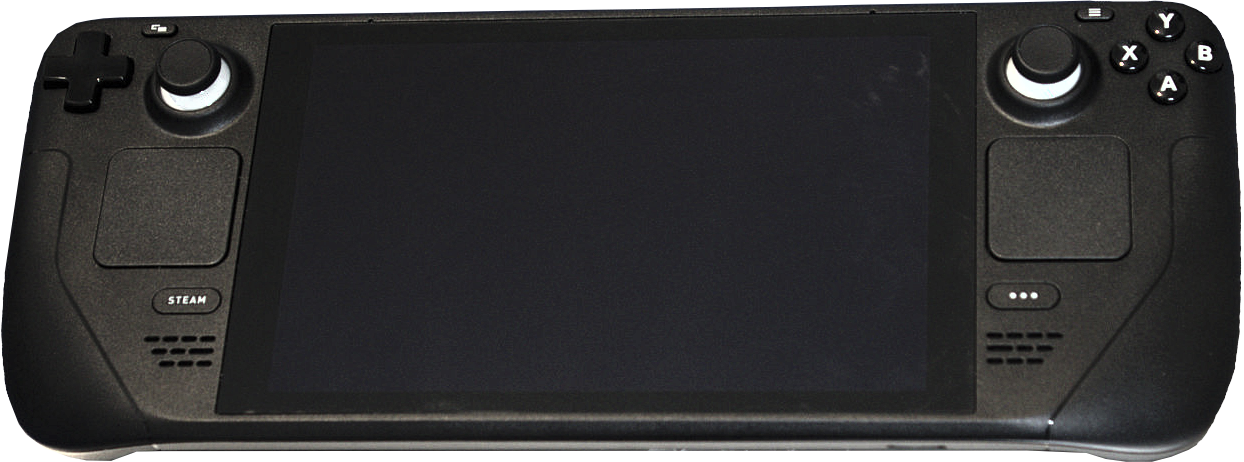
The pieces survived the failure and reassembled into a success. In February 2022 Valve shipped the Steam Deck, a handheld PC running an updated SteamOS with the compatibility work (Proton) that let Windows games run on Linux, the descendant of the Steam Machines effort. This time the product fit: a portable that played a buyer’s existing Steam library, priced against the Nintendo Switch, sold well enough to spawn competitors and give Linux gaming its largest install base ever. The living-room console had failed; the same software, in a handheld, worked.
Dead End: Steam Machines
Valve’s 2015 attempt to put Steam on the television as a console alternative sold poorly and was abandoned within a few years. The Steam Machines were priced like consoles but delivered a Windows-less PC with a small native game catalog and no reason to prefer them over a normal PC. What is instructive is that Valve did not throw the work away: SteamOS, the Proton compatibility layer, and the controller research all fed directly into the Steam Deck seven years later. The product died; the platform groundwork it laid shipped in a form people actually wanted.
A Company Without Managers
Valve stayed private, and stayed strange. Its widely leaked employee handbook describes a flat structure with no formal managers, desks on wheels so people can roll themselves onto whichever project they choose, and no assigned bosses. The model has been praised as radical and criticized as a hidden hierarchy where informal power and cliques decide who thrives. What is not in dispute is the output per head: a company of a few hundred people running the dominant PC storefront, estimated to be among the most profitable per employee anywhere in technology, which made Newell personally worth an estimated near-$10 billion.
The same company became famous for what it would not finish. Half-Life 2 ended on a cliffhanger in 2004; the episodic sequels stopped in 2007; Half-Life 3 never came, and “Valve can’t count to three” became a running joke about a studio that no longer needed to ship games because the store printed money. Valve returned to Half-Life only in 2020, with the VR title Half-Life: Alyx, built in part to sell its VR hardware, the same pattern as always: the games exist to move the platform, and the platform is the business.
📚 Sources
- Valve Corporation — Wikipedia (founding 1996, Newell/Harrington, company history)
- Gabe Newell — Wikipedia (Microsoft years, Valve, net worth)
- Steam (service) — Wikipedia (2003 launch, market share, refunds, revenue tiers, reviews, Greenlight/Direct, user numbers)
- Half-Life 2 leak — Combine OverWiki (Axel Gembe, 2003 source-code theft and timeline)
- Valve to pay $3 million in penalties for misrepresenting gamers’ consumer guarantee rights — ACCC (Australia refund ruling)
- Australian court reaffirms that Valve misled gamers, $2.3 million fine upheld — PC Gamer (2018 appeal upheld)
- Steam tops 30 million concurrent users to set new all-time peak — Game Developer (October 2022 record)
- High Court dismisses Valve’s special leave to appeal application — ACCC (April 2018)
- Epic Games Store — Wikipedia (December 2018 launch, 12% cut)
- Half-Life 2 — Wikipedia (16 November 2004 release, Steam activation, leak’s effect on development, episodes)
- Steam Deck — Wikipedia (25 February 2022 release, SteamOS, Proton)
- How Valve Founder Gabe Newell Turned ‘Half-Life’ Into A Nearly $10 Billion Fortune — Forbes
- Image: Gabe Newell GDC 2010 (cropped 2).jpg by Official GDC (CC BY 2.0), via Wikimedia Commons
- Image: Steam Deck (front).png by Liam Dawe/GamingOnLinux, PNG version by VulcanSphere (CC BY-SA 4.0), via Wikimedia Commons