Bluetooth
Abstract
Bluetooth is a short-range wireless standard that almost wasn’t. In 1994, engineers at Ericsson began developing a cable-replacement radio technology for connecting mobile phones to headsets and accessories. What started as an internal Ericsson project became a multi-company effort after the 1998 formation of the Bluetooth Special Interest Group (a consortium that included Ericsson, Intel, Nokia, IBM, and Toshiba) and eventually a standard found in virtually every consumer electronics device on earth. The path from concept to ubiquity took nearly a decade, passed through enormous technical complexity, survived a period when the technology seemed too complicated for consumers to use, and was twice nearly killed by industry impatience before the explosive growth of wireless headphones, smartwatches, and IoT sensors made Bluetooth invisible infrastructure. Bluetooth is named for Harald Bluetooth, a 10th-century Danish king who unified warring Danish tribes, chosen as a metaphor for unifying communication protocols.
Ericsson and the Cable Replacement Problem
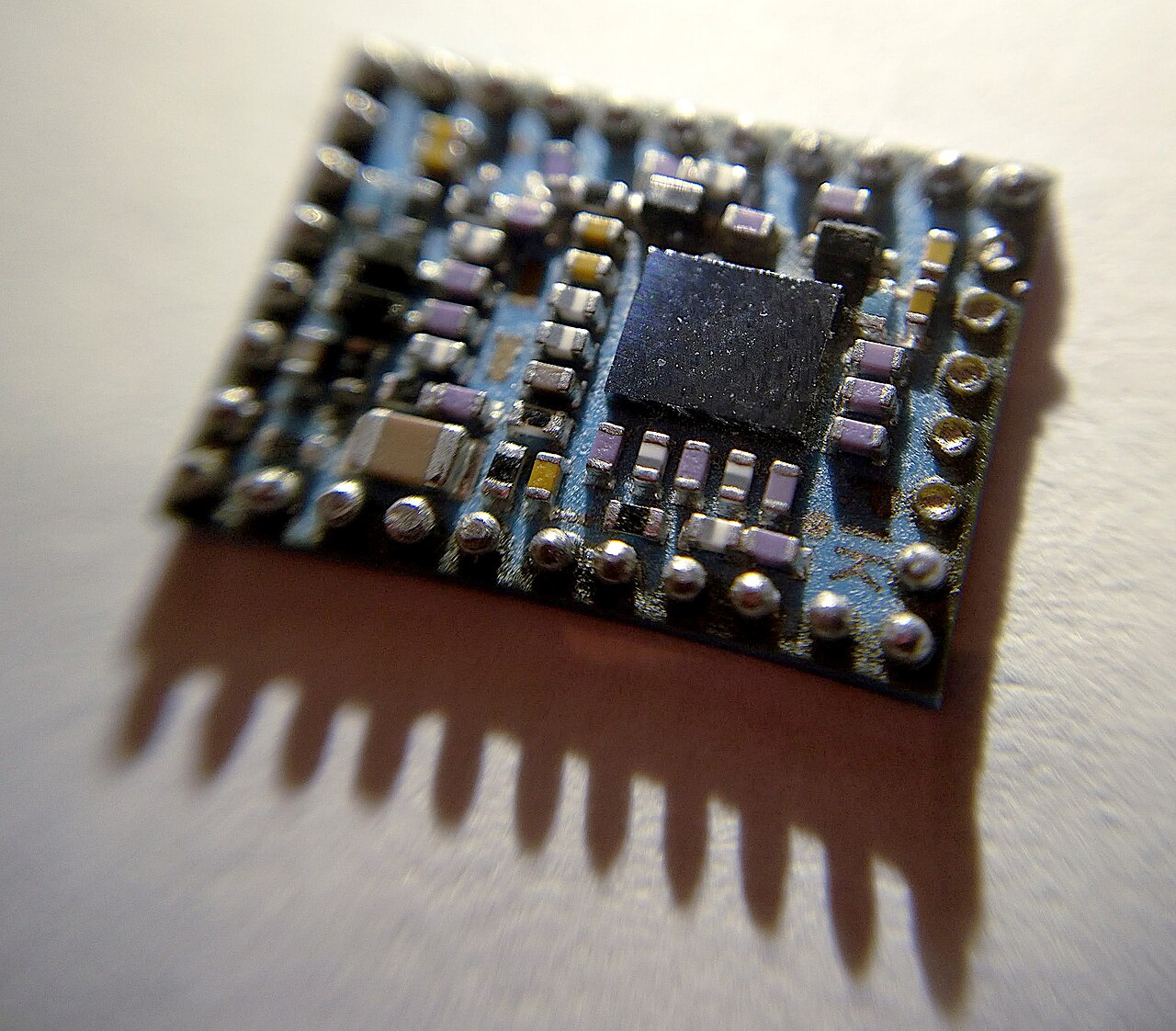
In 1994, Jaap Haartsen and Sven Mattisson at Ericsson’s Mobile Platform division began work on a radio system to replace the cable connecting a mobile phone to its accessories, hands-free headsets, data cards, and portable printers. The cable was a practical nuisance: it required physical proximity, added bulk, and created connection management problems when users switched between devices.
The frequency band Haartsen and his colleagues targeted was the 2.4 GHz ISM band (Industrial, Scientific, and Medical), an unlicensed spectrum allocated globally for devices including microwave ovens and early WiFi equipment. Using unlicensed spectrum meant no regulatory licensing fees for manufacturers, critical for a technology that would need to be included in low-cost accessories.
The 2.4 GHz band had problems. It was crowded with other signals. Microwave ovens, baby monitors, and early 802.11 WiFi networks all operated in the same frequencies. A cable replacement radio that interfered with or was disrupted by ordinary household appliances would be useless. Haartsen’s team addressed this with frequency-hopping spread spectrum (FHSS): rather than transmitting on a fixed frequency, Bluetooth devices hop rapidly between 79 frequencies within the 2.4 GHz band, completing 1,600 hops per second. Any individual frequency might be disrupted by interference, but the rapid hopping distributes the signal across the band, most hops land on clear frequencies, and error correction handles the few that don’t.
Frequency-hopping spread spectrum had been proposed for anti-jamming military communications as far back as 1941, when Hedy Lamarr and composer George Antheil filed a patent for a “Secret Communications System” using frequency hopping for torpedo guidance. The military patents expired before commercial wireless communications needed the technique.
The Bluetooth Special Interest Group
Ericsson recognized that a proprietary cable-replacement standard would have limited value, the accessory ecosystem needed manufacturers to adopt a single protocol. In May 1998, Ericsson launched the Bluetooth Special Interest Group (SIG) with founding members Intel, Nokia, IBM, and Toshiba. The name came from Intel’s Jim Kardach, who proposed it in 1997 after reading about Harald Bluetooth. The SIG was structured to develop and license the Bluetooth standard free of per-unit royalties, with the goal of maximizing adoption.
The specification work was complex. Bluetooth was not simply a radio standard; it defined a full protocol stack from the radio physical layer through link management, logical link control, and application-level profiles. A “profile” defined how two devices should communicate for a specific use case: the Headset Profile defined audio connections between phones and headsets; the Serial Port Profile defined cable emulation; the File Transfer Profile defined file exchange between devices.
The profile system was the Bluetooth SIG’s solution to interoperability: two devices that both implemented the same profile were guaranteed to work together, regardless of manufacturer. In practice, the first versions of Bluetooth profiles were complex enough that implementations were often incompatible in subtle ways, and the pairing process (the cryptographic handshake that established a secure connection between devices) was confusing and frequently failed in ways users could not diagnose.
Bluetooth 1.0, released in 1999, embodied these problems. The core specification ran to more than a thousand pages. Devices from different manufacturers frequently refused to pair. Data transfer rates were low (721 kbps in the best case). Battery consumption was significant by the standards of mobile devices in 1999. The technology press received it skeptically.
The Years of Struggle
From 1999 to roughly 2004, Bluetooth’s future was uncertain. Products shipped but rarely worked reliably. A Bluetooth headset might pair successfully with one phone and fail with another from the same manufacturer’s product line. The user experience (requiring users to put devices in “discovery mode,” enter PIN codes, and diagnose failures with no error messages) was antithetical to the plug-and-play simplicity the technology had promised.
Industry attention drifted toward WiFi, which was solving a more visible problem at higher speeds. Apple supported Bluetooth only through a D-Link USB adapter and a preference pane in Mac OS X 10.2 (2002); the first Mac with the radio built in was the aluminium PowerBook G4 of January 2003.
The Bluetooth SIG responded with successive specification revisions. Bluetooth 1.1 (2001) fixed the worst interoperability problems. Bluetooth 1.2 (2003) added Adaptive Frequency Hopping (AFH), which detected which frequencies were occupied by other devices (particularly WiFi) and avoided them. AFH dramatically reduced interference between Bluetooth and WiFi networks that shared the 2.4 GHz band.
Bluetooth 2.0 + EDR (Enhanced Data Rate, 2004) tripled the data transfer rate to 3 Mbps, enabling audio streaming at CD-quality bitrates. Stereo audio over Bluetooth became practical. The A2DP profile (Advanced Audio Distribution Profile) defined how two-channel audio would stream between devices. Wireless headphones became possible, not just mono headsets, but stereo listening.
Ubiquity and the Smartphone Era
The smartphone era rescued Bluetooth from its troubled adolescence. The first iPhone (2007) included Bluetooth 2.0 and used it for hands-free calling. Android phones included Bluetooth from their earliest versions. When smartphones became universal, Bluetooth was included as standard.
Accessory manufacturers responded to the installed base. Wireless Bluetooth headphones, led by products like the Motorola S9, the Jawbone Era, and later Apple’s AirPods (2016), grew into a multi-billion dollar market. Bluetooth speakers (portable battery-powered speakers that received audio wirelessly) proliferated from 2010 onward. Fitness trackers (Fitbit, Garmin) used Bluetooth to sync data to smartphones. Bluetooth keyboards and mice became standard PC accessories.
Bluetooth Low Energy (BLE), added in Bluetooth 4.0 (2010), was a transformative addition. BLE used a different protocol than classic Bluetooth, optimized for devices that transmitted small amounts of data infrequently, sensors, beacons, medical devices, smart home accessories. A BLE sensor running on a coin cell battery could transmit data for years before needing replacement. BLE enabled an entirely new category of IoT devices.
Bluetooth beacons (small BLE devices that broadcast a unique identifier) enabled location services inside buildings where GPS was unavailable. Apple’s iBeacon (2013) standard and the competing Eddystone (Google, 2015) were used in retail stores to push location-aware notifications, in museums as audio guide triggers, and in asset tracking systems.
Bluetooth mesh networking (introduced in 2017 as a profile built on Bluetooth Low Energy) allowed Bluetooth devices to relay messages across a network of nodes, enabling smart lighting systems, building automation, and industrial sensor networks where direct range to a central device was impossible.
Bluetooth 5 and Beyond
Bluetooth 5.0 (2016) doubled the speed of BLE to 2 Mbps, multiplied broadcast message capacity eightfold, and quadrupled range, to a claimed 240 metres in the open. Bluetooth 5.1 (2019) added Direction Finding, using multiple antennas to determine the precise location and orientation of a nearby device, enabling centimeter-accurate indoor positioning.
Bluetooth 5.2 (2020) added the LE Audio specification, which replaced the Classic Audio system used since 2004 with a new audio architecture based on BLE. LE Audio introduced the LC3 codec (Low Complexity Communication Codec) that achieved better sound quality than the older SBC codec at lower bitrates, and the Auracast broadcast audio specification that allowed a single Bluetooth transmitter to broadcast audio to multiple receivers simultaneously, enabling public hearing loops, silent discos, and language interpretation systems.
The Bluetooth SIG’s 2024 market update put annual shipments above 5.3 billion devices, with Bluetooth 6.0 arriving that year to raise Classic range and data rate again. From its origins as a cable replacement for mobile phone headsets, Bluetooth had become one of the most pervasive wireless technologies ever deployed, present in phones, computers, headphones, cars, medical devices, industrial sensors, and household appliances on every inhabited continent.
📚 Sources
- Jaap Haartsen, “The Bluetooth Radio System” — IEEE Personal Communications 7(1) (2000) · IEEE Personal Communications article by Bluetooth’s primary inventor
- Bluetooth 5 Core Specification · Bluetooth SIG technical specification archive
- The Story of the Bluetooth Name · explanation of the Harald Bluetooth naming and the logo’s origin in runic initials; official history of the specification’s development
- LE Audio Overview · Bluetooth SIG’s summary of LC3 codec and Auracast
- Hedy Lamarr’s FHSS Patent · US Patent 2,292,387, “Secret Communication System,” filed June 1941, granted August 1942
- 2024 Bluetooth Market Update — Bluetooth SIG
- Image: Ericsson Bluetooth module.jpg by Nixdorf (CC BY-SA 4.0), via Wikimedia Commons