Robotics
Abstract
Robotics is where computing meets the physical world, the engineering of machines that sense, decide, and act on their surroundings. It is older than the digital computer in imagination (the word “robot” dates to a 1920 play) and as new as the humanoid machines and self-driving cars of today. Robotics has advanced not in one sweep but in distinct theaters: the industrial robots that quietly transformed manufacturing from the 1960s; the mobile robots that had to confront the messy, unpredictable real world; the consumer robots like the Roomba that finally put autonomous machines in ordinary homes; and the field robots that explore Mars, the ocean floor, and disaster zones. Through it all runs a central tension (between the precise, repetitive certainty of the factory and the chaotic uncertainty of the open world) and a hard truth that has humbled the field for decades: the things humans find easy, robots find nearly impossible. This article surveys robotics as a field; the word’s origin is covered in a separate fun fact.
From Čapek to Unimate
The word “robot” entered the world in 1920, coined by Czech writer Karel Čapek (on his brother Josef’s suggestion) in the play R.U.R. (Rossum’s Universal Robots), from the Czech robota, meaning forced labor or drudgery. The play’s robots were artificial workers who ultimately rebel, establishing the cultural anxiety that has shadowed the field ever since. Isaac Asimov later coined “robotics” and formulated his fictional Three Laws of Robotics in stories from the 1940s, giving the field both its name and its ethical imagination long before real robots existed.
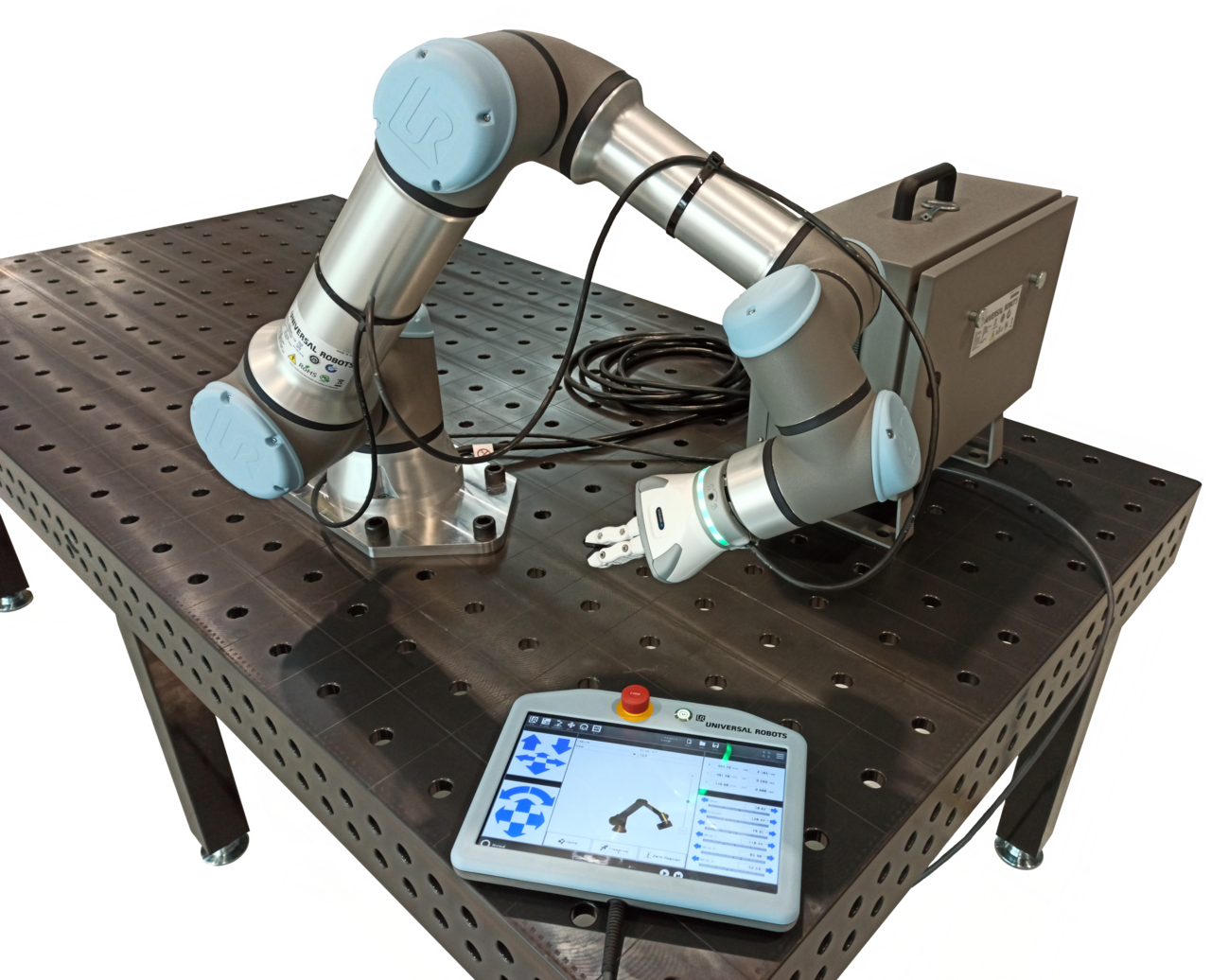
The first real industrial robot arrived in 1961: Unimate, designed by George Devol (who patented the concept) and commercialized by Joseph Engelberger (often called “the father of robotics”). A Unimate arm went to work on a General Motors assembly line in New Jersey, performing the dangerous, repetitive task of handling hot die-cast metal parts and welding. Industrial robotics grew into an enormous, largely invisible industry, robotic arms from companies like KUKA, ABB, and FANUC now build cars, electronics, and countless goods. These robots are fast, precise, tireless, and strong, but classically they were blind and fixed: bolted in place, repeating pre-programmed motions in a tightly controlled environment, with no perception of and no ability to adapt to the unexpected. Safety required caging them away from humans.
The Hard Problem: The Real World
Mobile, perceiving robots (machines that move through and reason about an uncontrolled environment) proved vastly harder than factory arms. The pioneering example was Shakey the Robot (SRI, 1966–1972), the first mobile robot to reason about its own actions, combining perception, planning, and navigation. Shakey was painfully slow but conceptually foundational, introducing ideas (like the A* search algorithm, developed for its planning) that outlived it.
The central difficulty is the one named by Moravec’s paradox: tasks trivial for humans (recognizing objects, walking over uneven ground, grasping a soft or irregular object, knowing where you are) require staggering amounts of computation, while “hard” tasks like arithmetic or chess are comparatively easy for machines. A robot must continuously solve perception (what is around me?), localization and mapping (where am I?), planning (what should I do?), and control (how do I move my actuators precisely?), all in real time, under noise and uncertainty. A breakthrough framework, SLAM (Simultaneous Localization and Mapping), gave robots a principled way to build a map of an unknown space while tracking their own position within it, foundational for everything from warehouse robots to self-driving cars.
Robotics also developed competing philosophies of control. The classical “sense–plan–act” pipeline built an internal world model and reasoned over it. In the 1980s, Rodney Brooks at MIT challenged this with behavior-based robotics and the subsumption architecture, arguing that intelligence could emerge from simple reactive behaviors layered together, with “the world as its own best model” rather than an elaborate internal representation. This insight (that robots should be reactive and embodied rather than deliberative planners) directly shaped practical robots, including the company Brooks co-founded, iRobot.
Robots Among Us: Roomba, Boston Dynamics, and the DARPA Challenges
Consumer robotics arrived with the iRobot Roomba in 2002, a disc-shaped autonomous vacuum that, using cheap sensors and reactive behaviors rather than expensive mapping, became the first genuinely successful home robot, selling in the tens of millions. Its modest competence was the point: it did one useful thing reliably in the chaos of real homes.
Legged robots captured the public imagination through Boston Dynamics, founded by Marc Raibert out of MIT in 1992. Its dynamically balancing machines, BigDog, the humanoid Atlas (famous for parkour and backflips), and the quadruped Spot (commercially deployed for inspection), demonstrated mobility over rough terrain that had long seemed impossible, achieved through sophisticated real-time control of dynamics and balance.
The push toward autonomous vehicles was catalyzed by the DARPA Grand Challenge: in 2004 no vehicle finished a desert course; in 2005 five did, led by Stanford’s Stanley (Sebastian Thrun’s team). The 2007 Urban Challenge added traffic and intersections. These competitions seeded the entire self-driving industry (Waymo, Cruise, and others) and proved that data-driven perception and probabilistic methods could let robots cope with the open world. Meanwhile NASA’s Mars rovers, Sojourner (1997), Spirit and Opportunity (2004), Curiosity (2012), and Perseverance (2021), became humanity’s most successful field robots, operating autonomously for years on another planet under communication delays that make remote control impossible.
The Learning Turn
Increasingly, robotics has fused with modern AI. Deep-learning vision gave robots far better perception; reinforcement learning let them learn locomotion and manipulation skills that were hard to program by hand. The frontier of the 2020s is general-purpose and humanoid robots driven by large learned models: “robot foundation models” trained on vast demonstration data, and well-funded humanoid projects (Tesla’s Optimus, Figure, and others) betting that a single platform can learn to do many physical tasks. Whether this finally cracks the dexterity and generalization problem, or becomes another cycle of overpromising, remains genuinely open.
Dead End: The Anthropomorphic Obsession and the General-Purpose Home Robot
Robotics’ most persistent dead end has been the humanoid, general-purpose home robot, the science-fiction android that cooks, cleans, and converses. For decades, this vision attracted enormous investment and recurring hype, and for decades it underdelivered. Honda’s ASIMO (2000–2018) was a marvel of bipedal engineering that walked, climbed stairs, and even ran, yet after nearly two decades and vast expense, it remained essentially a demonstration that could do no genuinely useful work, and Honda retired the program. Countless “home assistant” and social robots (Jibo, Kuri, and others) launched to fanfare and folded commercially.
The lesson runs counter to intuition: the path to useful robots ran not through general-purpose humanoids but through narrow, specialized machines that did one thing well in a constrained setting, the bolted-down factory arm, the disc-shaped vacuum, the warehouse shuttle, the planetary rover. Moravec’s paradox is the deep reason: human-level general manipulation and mobility in unstructured environments is so computationally hard that building a machine shaped like a human, expected to do everything a human does, was attempting the hardest possible version of the problem first. Brooks’s insight (that competence emerges from simple, embodied, task-specific behavior rather than grand general designs) repeatedly beat the anthropomorphic dream. Whether the current AI-driven humanoid wave finally overturns this, or rediscovers the same wall, is the open question hanging over the field.
📚 Sources
- Karel Čapek’s R.U.R. and the origin of “robot” (1920) · Encyclopaedia Britannica on the play that coined the word
- Unimate — Wikipedia, the first industrial robot on the GM line, 1961
- Shakey the Robot — SRI International, the first reasoning mobile robot and the A* algorithm
- Rodney Brooks, “Intelligence Without Representation” / subsumption architecture, behavior-based robotics manifesto
- The DARPA Grand Challenge and Stanley (Stanford, 2005), the competitions that seeded self-driving cars
- NASA Mars Exploration Rovers · Sojourner through Perseverance, autonomous field robotics
- Boston Dynamics — Wikipedia, dynamic legged locomotion
- Honda ASIMO retirement (2018), the humanoid showcase and its limits
- Image: UR16e robot arm.png by Auledas (CC BY-SA 4.0), via Wikimedia Commons