Rudolf Kálmán and the Kalman Filter
Abstract
In 1960, Hungarian-born engineer Rudolf E. Kálmán published a recursive algorithm for extracting the true state of a system from noisy measurements, in a mechanical engineering journal, because the electrical engineering establishment was cold to his abstract state-space approach. Within months, an engineer at NASA Ames realized the strange paper solved the navigation problem of the coming Moon missions. The Kalman filter flew on Apollo, and then on essentially everything: every GPS receiver, every aircraft autopilot, every smartphone fusing accelerometer and gyroscope data runs Kálmán’s sixty-year-old recursion. It may be the most-executed nontrivial algorithm in engineering.
The Problem: Truth from Noise
Every sensor lies a little. A radar return, a gyroscope drift, a star fix (each gives a corrupted glimpse of where a vehicle actually is. The mathematical problem) optimally estimating a system’s hidden state from a stream of noisy measurements, had been treated by Wiener in the 1940s, but Wiener filtering worked in the frequency domain, assumed stationary signals, and was painful to apply to real vehicles whose dynamics change second to second.
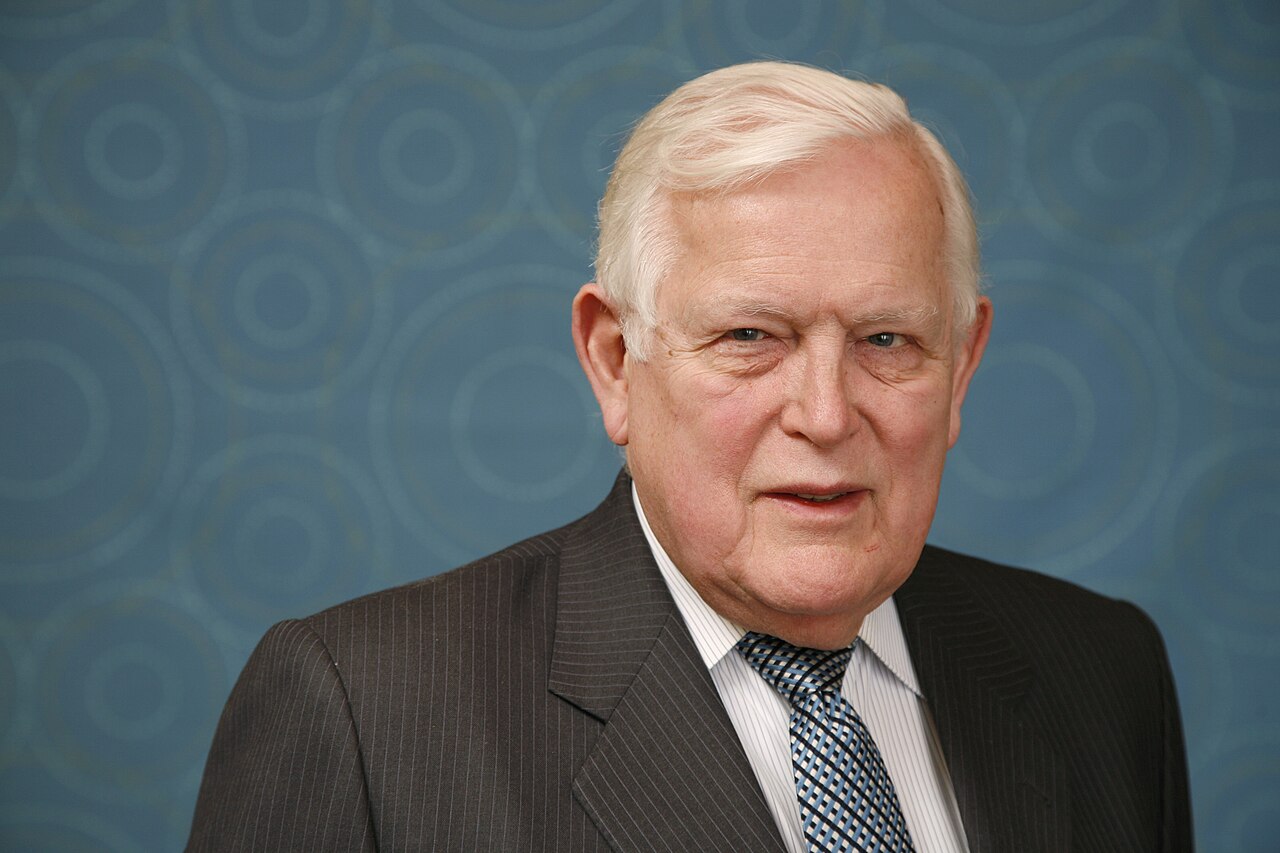
Rudolf Emil Kálmán (born May 19, 1930, in Budapest; emigrated to the US in 1943; doctorate from Columbia in 1957) reformulated the problem in the state-space language of modern control theory while at the Research Institute for Advanced Studies (RIAS) in Baltimore. His filter is a two-step recursion: predict the next state from the system model, then correct that prediction with the new measurement, weighting each by its uncertainty (the Kalman gain). It needs no history (just the previous estimate and the new data) making it ideal for small onboard computers.
His paper, “A New Approach to Linear Filtering and Prediction Problems,” appeared in March 1960, in the ASME’s Journal of Basic Engineering, a mechanical engineering venue, after a distinctly skeptical reception among the signal-processing establishment. It became one of the most cited engineering papers of the century.
Ames, Apollo, and the Extended Filter
At NASA’s Ames Research Center, Stanley F. Schmidt (chief of the Dynamic Analysis Branch) was wrestling with exactly the problem the paper answered: how a spacecraft could navigate itself to the Moon and back from imperfect onboard sightings. Kálmán visited Ames in the autumn of 1960; Schmidt’s team found the paper unconventional and hard going, but Schmidt was convinced it was the answer and put his engineers on it.
Two obstacles fell in sequence. The filter was linear, and orbital mechanics is not, so Schmidt’s group linearized around the current trajectory estimate, creating the extended Kalman filter (EKF), still the workhorse of nonlinear estimation. And it had to run on almost nothing: the filter’s thrift with memory and arithmetic made it one of the few optimal algorithms that could fit the Apollo Guidance Computer. Apollo’s onboard navigation (fusing inertial measurements with astronaut star sightings) was Kalman filtering, and NASA’s own history credits Schmidt’s group with turning Kálmán’s theory into the practical tool of the aerospace age.
The Most-Run Algorithm You’ve Never Seen
The Kalman recursion (conceptually):

  Predict:  x̂ ← model(x̂)          "where should I be?"
  Correct:  x̂ ← x̂ + K·(z − ẑ)     "nudge toward what the
                                     sensors actually say,
            K = Kalman gain          by exactly the amount
                (trust weighting)    the noise statistics justify"
After Apollo, the filter quietly annexed engineering: inertial navigation and autopilots; every GPS receiver (fusing satellite pseudoranges into position and velocity); missile guidance and satellite attitude control; robotics localization and SLAM; radar tracking; economic time-series estimation; battery state-of-charge gauges; and the sensor fusion running continuously in every smartphone, drone, and car stability system. Its descendants (extended, unscented, ensemble Kalman filters) forecast the weather: modern data assimilation feeds atmospheric models by Kalman-type updates over millions of dimensions.
Kálmán collected the field’s highest honors, the IEEE Medal of Honor (1974), the inaugural Kyoto Prize in Advanced Technology (1985), the Charles Stark Draper Prize (2008), and the US National Medal of Science (awarded 2009). Famously prickly about credit and rigor, he spent his later career at the University of Florida and ETH Zürich insisting that system theory was mathematics, not engineering folklore. He died on July 2, 2016.
Why It Won
The Kalman filter’s dominance is a lesson in what makes algorithms immortal: it is optimal (under its assumptions), recursive (constant memory, real-time), general (any linear system with Gaussian noise, and approximately far beyond), and cheap (a few small matrix operations). Like the FFT, it arrived at the exact moment computers became small enough to embed, theory and hardware meeting in the middle.
📚 Sources
- Kalman filter — Wikipedia
- Rudolf E. Kálmán — Wikipedia
- McGee, Leonard A. / Schmidt, Stanley F.: “Discovery of the Kalman Filter as a Practical Tool for Aerospace and Industry” — NASA Technical Memorandum 86847 (1985)
- “Honoring a legacy algorithm” — Aerospace America (AIAA)
- Image: ETH-BIB-Kalman, Rudolf E. (1930-2016)-HK 04-01925.jpg, CC BY-SA 4.0, via Wikimedia Commons