The Middle East's Tech Industry: Oil Money, Startups, and the Vision 2030 Bet
Abstract
The Middle East’s computing history before the sovereign-wealth era is a list of imported machines and one software company: an IBM 650 that planned a Turkish highway in 1960, an IBM 1620 counting Iranian oil in 1962, and a Kuwaiti firm that put Arabic on a home computer in the 1980s. The Middle East’s technology industry exists in the shadow of a question every government in the region is trying to answer: what comes after oil? Saudi Arabia, the UAE, Qatar, and Kuwait collectively hold some of the world’s largest sovereign wealth funds, built on hydrocarbon revenues that could not be assumed to flow forever. Their answer (diversification through technology, tourism, and finance) produced the world’s most lavishly funded startup ecosystems, purpose-built innovation districts, and strategic investments in AI, gaming, and semiconductor companies. The results are mixed. Dubai became a genuine technology hub with real companies. Saudi Arabia committed to a futuristic city in the desert (NEOM) that may never be built as described. Turkey built e-commerce and gaming companies that competed globally. Egypt produced a cluster of software startups. Jordan pioneered the Arab-language internet. The region’s fundamental challenge, reconciling economic openness with political control, and attracting global talent to societies with significant human rights constraints, remains unresolved.
The Imported Decades, 1960–1990
Outside Israel, which built its own machine, the WEIZAC, at the Weizmann Institute in 1955 (see Israel’s Tech Industry and Computer Science Locations), the region’s computing started with purchases in the early 1960s and stayed that way for thirty years. Turkey’s first computer was an IBM 650, bought with American ICA aid money for the General Directorate of Highways (Karayolları) in 1960: a drum memory of 2,000 ten-character words, 78,000 additions a minute, punched-card input, programmed in SOAP and FORTRANSIT. Its first job was the route of a 63-kilometre road between Polatlı and Sivrihisar, a calculation that had taken engineers three to four months and took the machine an hour. Iran’s statistics office had run IBM unit-record equipment for the 1956 census, but the first computer in the country was an IBM 1620 installed by the National Iranian Oil Company at the beginning of 1962 to track production. By 1972 Iran had more than 100 installed computers, including two IBM 370s; by 1977 more than 600, with thirty 370s, most of them leased through about a hundred leasing companies, and Electronic Data Systems held a US$20.5 million contract to computerise the social-security system when the revolution of 1979 stopped it. Aryamehr (now Sharif) University had started the country’s first graduate computer-science programme in 1971 with seventeen students. Egypt’s first machines went to Alexandria University, the National Planning Institute and the statistics agency in the 1960s; the EgyptAir engineer Nabil Ali built the Arab world’s first automated airline reservation system there between 1972 and 1977.
The one home-grown product of the period was software for the alphabet. Roman-alphabet hardware could not display Arabic or Persian, and every country in the region needed someone to solve that. In Iran, terminals from Iran Computer Manufacturing Industries in 1975 to 1978 were the first domestically built hardware, and Persian-text software existed on mainframes before 1979. In Kuwait, Mohammed al-Sharekh founded Sakhr in 1982 and sold Arabised MSX home computers under the Al Alamiah name, with Nabil Ali as head of research from 1985; Ali went on to build the first Arabic lexical database and won the King Faisal Prize for Arabic-language computing in 2012. Iraq’s invasion of Kuwait in 1990 sent Sakhr to Cairo, where it dropped hardware and became a pure software company. The pattern of these decades, hardware imported, the language layer written locally, is the one the oil states of the next section tried to break with money.
Dubai and the UAE: The Hub Strategy
The United Arab Emirates pursued a technology hub strategy with the same deliberateness it had applied to building a financial and logistics hub: identify what global technology companies need (regulatory predictability, talent access, low taxes, English-language environment), provide it more reliably than alternatives, and attract the ecosystem through quality of service rather than domestic market size.
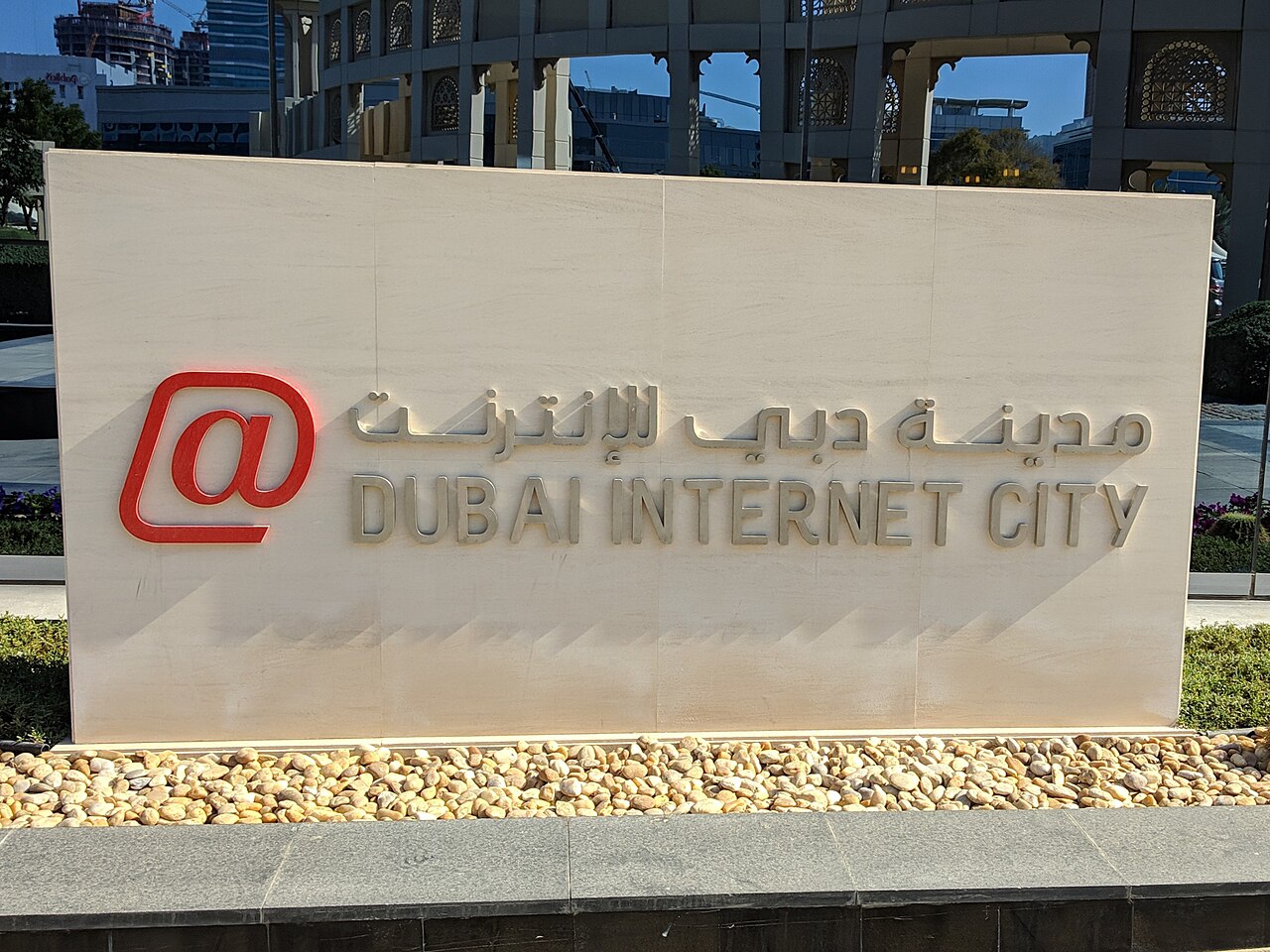
Dubai Internet City, launched in 2000 by the Dubai government, was a free zone offering 100% foreign ownership (rare in the UAE at the time), zero corporate and income tax, and modern telecommunications infrastructure. Microsoft, Oracle, Dell, and eventually every major technology company established Middle East or Africa regional offices in Dubai Internet City. The free zone model (adopted subsequently for Dubai Media City, Dubai Knowledge Park, and dozens of others) made Dubai attractive for companies that needed a regional hub without the regulatory overhead of establishing a company in a jurisdiction with complex ownership requirements.
Careem, founded in Dubai in 2012 by Magnus Olsson and Mudassir Sheikha, built a ride-hailing platform for the Middle East, North Africa, and Pakistan, markets where Uber had limited presence and local conditions (cash transactions, female driver options in some markets, Arabic-language interface) required local adaptation. Careem grew to 48 cities across 13 countries before Uber acquired it for $3.1 billion in January 2020, the largest technology acquisition in Middle East history at the time.
Souq.com, founded in 2005 by Ronaldo Mouchawar in Dubai, built the region’s largest e-commerce marketplace before Amazon acquired it for approximately $580 million in 2017, relaunching it as Amazon.ae and Amazon.sa.
Property Finder (Dubai, 2007), Fetchr (Dubai, logistics startup), and Anghami (Lebanon/UAE, music streaming, “the Spotify of the Arab world”) represented the broader ecosystem of regionally adapted technology companies that used Dubai as a base.
Saudi Arabia: Vision 2030 and the Capital Bet
Saudi Vision 2030, announced by Crown Prince Mohammed bin Salman (MbS) in April 2016, was a strategic framework for transforming Saudi Arabia’s economy beyond oil dependency. Technology was central to the vision: developing a domestic tech industry, attracting foreign technology investment, building e-government infrastructure, and creating entertainment and tourism sectors that had been largely absent from Saudi society.
The Saudi Public Investment Fund (PIF), which MbS chairs, became one of the world’s most active technology investors. PIF was one of the largest investors in SoftBank’s Vision Fund ($45 billion contribution), which in turn was among the largest investors in Uber, WeWork, and dozens of other technology companies. Saudi Arabia’s sovereign wealth effectively funded a significant portion of the global technology venture boom of 2016–2021.
Domestically, Saudi Arabia invested in technology infrastructure through Saudi Aramco’s digital transformation, stc (Saudi Telecom Company) evolving into a digital services group, and the creation of entities like Alat (a $100 billion Saudi-funded technology manufacturing initiative, announced 2024).
NEOM (a planned $500 billion linear city in the desert of northwest Saudi Arabia, announced in 2017) became the most extreme expression of Saudi Arabia’s technology ambitions and its most scrutinized. The project, which envisioned a 170-kilometer long, 200-meter wide mirrored structure called “The Line” housing nine million residents, attracted global architectural and engineering talent, generated significant press coverage, and faced persistent questions about the displacement of indigenous Huwaitat tribal communities (reports of killings and forced displacement emerged in 2020), the physical feasibility of the design, and whether any level of capital could produce a functioning city from a desert that had never had one.
Saudi Arabia’s regulatory environment for technology was undergoing rapid change. Social media restrictions loosened; women were granted the right to drive in 2018 and to travel without male guardians in 2019. The entertainment sector (cinemas, concerts, mixed-gender public events) was opened for the first time. These changes attracted technology investment and talent that had previously avoided Saudi Arabia. They did not resolve concerns about political speech, press freedom, and the risks of operating in a country where the murder of journalist Jamal Khashoggi in 2018 had demonstrated the limits of tolerance for dissent.
Turkey: Trendyol, Peak Games, and the Startup Ecosystem
Turkey (occupying a geographic and cultural position between Europe and the Middle East) built a technology industry that was among the most commercially successful in the region, largely independent of oil wealth.
Peak Games, founded in Istanbul in 2010 by Sidar Şahin, built mobile casual games (Toy Blast, Toon Blast) that achieved hundreds of millions of downloads globally. Zynga acquired Peak Games for $1.8 billion in 2020, the largest technology exit in Turkish history at the time.
Trendyol, Turkey’s dominant e-commerce platform, was founded in 2010 by Demet Mutlu. Alibaba invested in Trendyol at a $1.5 billion valuation in 2018; by 2022, Trendyol was valued at $16.5 billion, Turkey’s most valuable startup. Its model combined marketplace and direct fulfillment, with same-day delivery infrastructure in major Turkish cities, competing against global platforms through local execution quality.
Getir, founded in Istanbul in 2015 by Nazim Salur, pioneered ultra-fast grocery delivery (10-minute delivery promise) before expanding to the UK, Germany, France, the Netherlands, and the United States. At its peak valuation of $11.8 billion (2022), Getir was Turkey’s most globally recognized startup. The subsequent funding contraction of 2022–2023 forced Getir to exit multiple European and American markets and lay off thousands of employees, one of the more dramatic reversals of the startup boom era.
Turkey’s technology ecosystem benefited from a large, young, technically educated population, competitive salaries relative to Western Europe, and a domestic market of 85 million people large enough to support significant B2C companies. It faced structural challenges: high inflation (over 80% at peak in 2022), currency devaluation that created exchange rate risk for dollar-funded companies operating in lira, and political uncertainty under President Erdoğan’s government.
Jordan and the Arab-Language Internet
Jordan produced one of the earliest and most significant Arabic-language internet companies: Maktoob.com, founded in Amman in 1998 by Samih Toukan and Hussam Khoury. Maktoob provided the first Arabic-language email service and web portal, serving an Arab internet audience that had no equivalent to Yahoo! or Hotmail in their language.
Yahoo! acquired Maktoob in 2009 for approximately $164 million, the first major acquisition of an Arab internet company by a US technology giant. The acquisition validated the Arab internet market and Amman’s position as a technology hub, even as the Maktoob brand was subsequently retired.
Jordan’s Oasis500, founded in 2010 as an early-stage investment and accelerator program, became one of the Middle East’s most active startup accelerators, funding over 300 companies in its first decade. Amman’s relatively liberal environment, skilled English-speaking technical workforce, and reasonable operating costs made it attractive for technology companies serving the broader Arab market.
Egypt: Software and the Startup Cluster
Egypt built one of the Arab world’s larger technology industries on the foundation of a large engineering graduate pool (approximately 100,000 engineering graduates annually) and its geographic and cultural position as the largest Arab country.
Instabug, founded in Cairo in 2013 by Omar Gabr and Moataz Soliman, built bug reporting and user feedback infrastructure for mobile apps, a developer tool used by companies including Lyft, T-Mobile, and PayPal. Swvl, founded in Cairo in 2017 by Mostafa Kandil, built a mass transit app for bus routes in Cairo, Nairobi, and Karachi before expanding globally and listing on NASDAQ via SPAC in 2022.
Fawry, founded in 2009, built payment infrastructure that allowed Egyptians to pay bills, top up mobile phone credit, and conduct e-commerce transactions through a network of physical agents, a model similar to M-Pesa’s but adapted for Egypt’s conditions, including a large unbanked population and preference for cash transactions.
The Regional Constraint
The Middle East’s technology ecosystem operates against a structural constraint that capital cannot solve: the region’s most talented engineers often emigrate. Arab technology companies build in markets with currency volatility (Egypt, Lebanon), regulatory uncertainty, limited exit markets for acquirers, and political environments that create personal risk for some categories of activity. The talent and capital exist; the institutional environment (rule of law, protection of intellectual property, tolerance of political speech) lags behind the ambition. The gap is narrowing in some countries (UAE, Saudi Arabia) and widening in others (Lebanon, after 2019’s economic collapse).
📚 Sources
- “Türkiye’nin İlk Bilgisayarı IBM 650” — ÇözümPark (IBM 650 at the General Directorate of Highways, 1960, specs)
- “Türkiye’deki İlk Bilgisayar: IBM 650” — Nuh Azgınoğlu (ICA funding, Polatlı–Sivrihisar road, SOAP/FORTRANSIT)
- Moḥammadīfar, Moḥammad-Reżā: “Computers in Persia” — Encyclopaedia Iranica, Vol. VI, Fasc. 2 (1992)
- Nabil Ali — Wikipedia
- Sakhr Software Company — Wikipedia
- Dubai Internet City: History and tenant list
- Careem — Wikipedia
- Saudi Vision 2030: Official Framework Document
- NEOM: Official Project Documentation
- Trendyol: Investor Relations
- Zynga — Wikipedia
- Maktoob — Wikipedia
- Wamda Research Lab: “State of Entrepreneurship in the Arab World” (2019)
- Magnitt: MENA Venture Report 2023
- Digital economy — Wikipedia
- Image: Dubai Internet City Sign.jpg by Nowitscorrect (CC BY-SA 4.0), via Wikimedia Commons