Ren Zhengfei and Huawei: From PLA Engineer to Global Telecom Giant
Abstract
Ren Zhengfei founded Huawei in Shenzhen in 1987 with approximately $3,000 and a background as a military engineer, an unlikely origin for a company that would become the world’s largest telecommunications equipment manufacturer and the focal point of the most consequential technology conflict of the twenty-first century. By investing relentlessly in research and development while serving markets that Western competitors ignored, Huawei built infrastructure for hundreds of millions of people. Then the United States government moved to cut the company off from its essential supply chain, and the resulting confrontation reshaped the global technology industry.
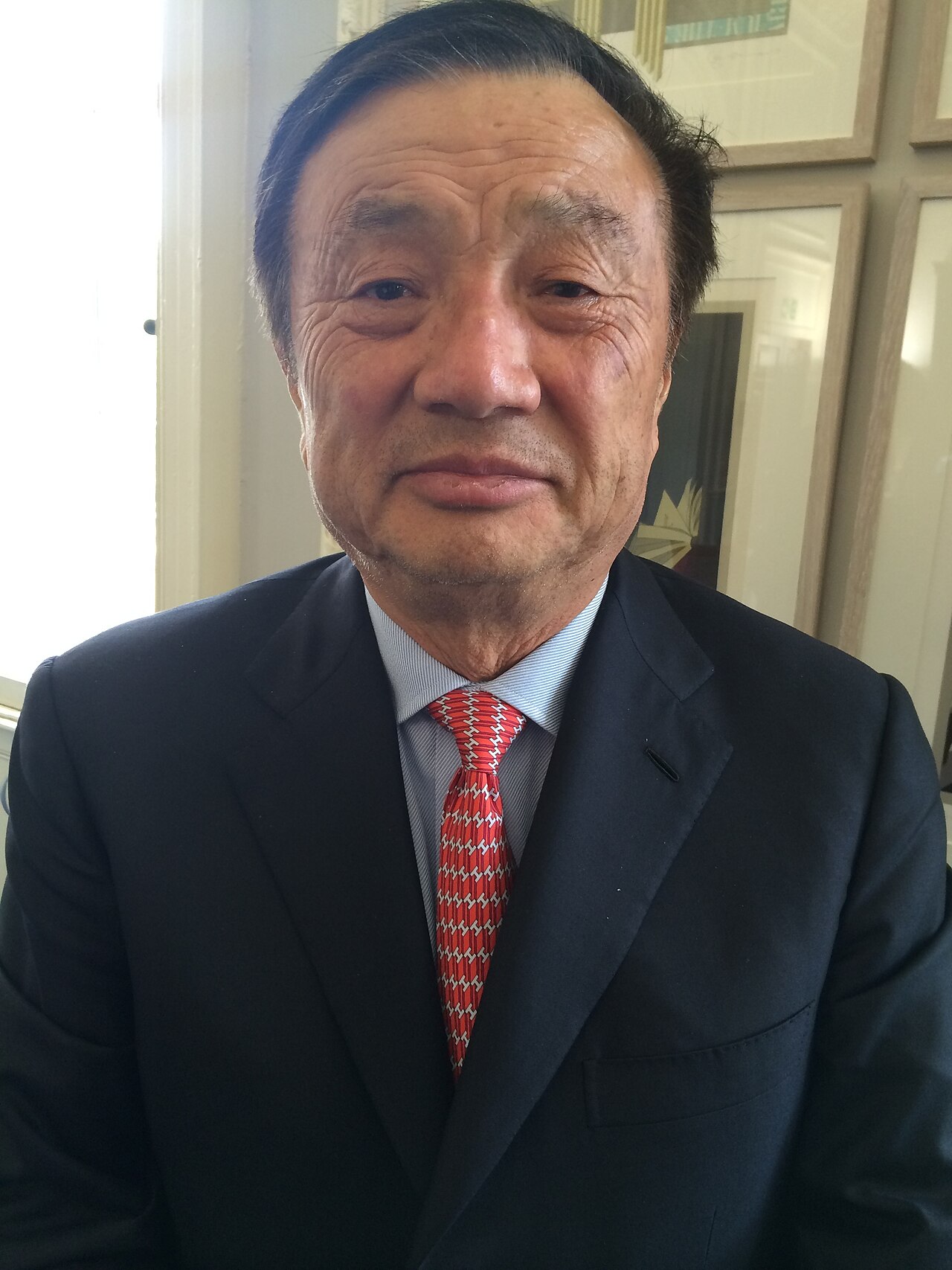
The Engineer from the PLA
Ren Zhengfei was born on October 25, 1944, in Zhenning County, Guizhou, a remote, rural province in southwestern China. His family suffered during the Cultural Revolution; his parents were sent for re-education and the family endured significant privation. He studied at the Chongqing Institute of Civil Engineering and Architecture (later merged into Chongqing University), enrolling in 1963 and graduating in 1968. In 1974 he was drafted into the People’s Liberation Army’s Infrastructure Engineering Corps as a technician, working on a chemical-fiber plant project.
In the PLA, Ren worked on technical and logistics projects and was promoted to deputy director in the engineering corps. He left the military in 1983 when the PLA began downsizing. He spent several years working at a state-owned oil company in Shenzhen (the Special Economic Zone that Deng Xiaoping had designated in 1979 as China’s experiment in market economics) and was cheated in a business deal that left him facing significant personal financial loss, reportedly dismissed from the company as a result.
The circumstances were inauspicious. Ren was forty-three, had no business experience, had lost money he did not have, and was operating in a city that was only beginning to develop the kind of commercial infrastructure that made entrepreneurship feasible. In 1987, he borrowed 21,000 yuan (roughly $3,000 at the exchange rates of the time) from six friends and founded Huawei Technologies in a rented room in Shenzhen.
The name means, roughly, “Chinese achievement” or “China is capable.” The ambition was evident even before the company had a product.
Reselling and the First Product
Huawei’s initial business was straightforward: reselling imported telephone switching equipment from Hong Kong into China’s rapidly growing telecommunications market. China in the late 1980s was installing telephone infrastructure at an extraordinary pace, and foreign equipment vendors (Ericsson, Nokia, Siemens, Alcatel) dominated the market. Huawei was a distributor, not a manufacturer.
The distribution business provided cash flow, but Ren understood that distribution could be disrupted by anyone with access to the same supply relationships. The only durable competitive position was owning the technology. In 1990, he redirected Huawei’s profits into research and development and began building the company’s first proprietary product: a PBX (private branch exchange), a telephone switching system for corporate customers.
The first Huawei PBX was technically inferior to foreign equipment but dramatically cheaper and supported by local service engineers who spoke Mandarin and could be reached quickly. It sold. Huawei plowed the revenue into more R&D, hired engineers from Chinese universities (often paying more than state-owned enterprises, which made it attractive to graduates) and began building a development culture that prized technical investment above all else.
Ren mandated that Huawei spend at least 10% of annual revenue on R&D, a commitment that held even in years when the company was growing fast and could have invested that capital in market expansion instead. The percentage rose over time; by the 2010s, Huawei was spending 15% or more of revenue on R&D and had more registered patents than any Chinese company in history.
Serving the Underserved: China’s Rural Market
Huawei’s path to scale in the 1990s ran through a segment that Ericsson, Nokia, and Alcatel ignored: rural China. State-owned Chinese telecom operators were installing infrastructure across vast rural territories where population density was low, distances were large, and the expected revenue per subscriber was minimal. Foreign vendors focused on urban centers and provincial capitals, where margins were better and logistics simpler.
Huawei sent engineers into the countryside. They lived in the areas they were serving, troubleshot problems in the field, and offered pricing that state-owned equipment buyers could justify to local government overseers. Rural China was not a glamorous market; it was the market Ren could win. By the late 1990s, Huawei had built a dominant position in Chinese rural telecommunications infrastructure and was using that base to fund the R&D to compete in urban markets and, eventually, internationally.
The international expansion followed a similar logic: enter markets that established players underserved. Huawei’s first international contract was in Russia in 1997; it followed with Africa, Southeast Asia, Latin America, and Eastern Europe. In each case, it offered pricing that Western competitors could not match and support infrastructure (local offices, Chinese-speaking engineers, rapid response) that matched or exceeded what customers received from incumbents.
3G, 4G, 5G: The Technology Race
Huawei’s investment in standards and intellectual property was unusual for a company of its generation. Most Chinese technology companies in the 1990s and 2000s were understood to be technology adapters rather than technology creators, manufacturing products designed elsewhere, operating in markets protected by Chinese regulatory preference. Ren bet on original technology.
Huawei invested in 3GPP (the standards body that defines global mobile telecommunications standards) sending engineers to participate in technical working groups starting in the early 2000s. It filed patents on standards-essential technologies and accumulated a portfolio that entitled it to royalties from anyone implementing 3G or 4G equipment. By the time 4G LTE was being standardized, Huawei was a leading contributor to the underlying technical specifications.
By 2012, Huawei had overtaken Ericsson as the world’s largest telecom equipment manufacturer by revenue. Its 5G research and development investment, beginning around 2009, positioned it as the most technically advanced vendor in the next-generation mobile standard. When countries began deploying 5G networks in the late 2010s, Huawei’s equipment was cheaper, often technically superior, and available faster than alternatives from Ericsson, Nokia, or Samsung.
The HiSilicon division, Huawei’s in-house semiconductor design arm founded in 2004, developed the Kirin series of chips for Huawei smartphones, which by 2019 had made Huawei the second-largest smartphone manufacturer in the world by shipments, behind Samsung and ahead of Apple.
The American Campaign and Meng Wanzhou
The US government’s concerns about Huawei had been circulating in intelligence and defense circles for years before becoming public policy. The core argument was that Huawei’s equipment in telecommunications infrastructure could, in theory or practice, provide the Chinese government with access to communications data: that the company’s relationship with Chinese intelligence services created a security risk in any network that used its equipment.
Huawei and Ren denied this consistently. No court had found specific technical evidence of a backdoor. The concern was structural: Chinese law includes provisions that can require Chinese companies to cooperate with intelligence requests, and a company of Huawei’s scale, with equipment in critical infrastructure worldwide, represented a potential intelligence asset regardless of whether it had been actively used as one.
The policy response escalated rapidly:
In 2018, the National Defense Authorization Act (NDAA) prohibited US government agencies from using Huawei equipment. The Federal Communications Commission later prohibited US carriers from using Huawei equipment in their networks and created a “rip and replace” program to fund the removal of existing Huawei equipment from US networks.
On December 1, 2018, Meng Wanzhou (Huawei’s Chief Financial Officer and Ren Zhengfei’s daughter) was arrested at Vancouver International Airport at the request of US authorities. The arrest warrant alleged that Meng had misled HSBC about Huawei’s relationship with a subsidiary that did business in Iran, violating US sanctions. The arrest triggered an immediate diplomatic crisis: China arrested two Canadian citizens, Michael Kovrig and Michael Spavor, in what was widely interpreted as retaliation.
The case dragged on for nearly three years. Meng remained under house arrest in Vancouver, fighting extradition; Kovrig and Spavor remained in Chinese detention. The case was resolved on September 24, 2021: Meng entered a deferred prosecution agreement with the US Department of Justice (neither admitting nor denying the charges) and flew home to China. Within hours, Kovrig and Spavor were released. The implicit exchange was widely understood even if never officially acknowledged.
Info
Meng Wanzhou’s arrest was arguably the most dramatic personal episode in the US-China technology conflict, in part because of the family dimension: Ren Zhengfei’s daughter, detained abroad as leverage against a company her father had built from nothing over thirty years. Ren gave a press conference during her detention in which he appeared controlled and clear-eyed, saying the arrest demonstrated why Huawei needed to be technologically self-sufficient and not dependent on any single supplier.
The Entity List and the Chip Cutoff
In May 2019, the US Department of Commerce added Huawei to the Entity List, a designation that required US companies to obtain a license before selling technology to Huawei. The addition meant that Google was required to remove Huawei devices’ access to the Android Play Store and Google Services, a serious blow to Huawei’s smartphone business outside China, where Google’s apps were standard consumer expectations. It meant that American chip companies (Intel, Qualcomm, Broadcom) could no longer sell to Huawei without licenses.
In August 2020, the rules were tightened further: any chip manufactured using American equipment anywhere in the world required a license to be sold to Huawei. This rule was targeted at TSMC, which manufactured Huawei’s HiSilicon chips on leading-edge processes. TSMC stopped taking Huawei orders. Effectively overnight, Huawei’s ability to obtain the advanced chips it needed for 5G equipment and smartphones was severed.
The Huawei smartphone business outside China collapsed. Inside China, Huawei shifted to an older chipset generation it could still obtain. Its 5G equipment business continued in markets outside the US and its allies (much of Asia, Africa, Latin America, the Middle East) where American restrictions did not apply and Huawei’s pricing remained attractive.
The Mate 60 Pro: Defiance Signal
In August 2023, Huawei launched the Mate 60 Pro smartphone in China, a device that teardown analysis revealed was using a domestically produced 7nm chip manufactured by SMIC (Semiconductor Manufacturing International Corporation), China’s state-backed foundry. The existence of a Chinese 7nm chip, produced without access to ASML’s EUV lithography machines (which had also been placed under export controls), was widely interpreted as a statement: that Chinese chip manufacturing had progressed further than US policy had assumed, and that the chip cutoff had not achieved its goal of preventing Chinese technological advancement.
The chip was less efficient than comparable Taiwan-produced parts, and the yields were understood to be lower. But it existed. See The Semiconductor Race for the broader context of global chip competition.
Ren’s Philosophy and Huawei’s Culture
Ren Zhengfei is rarely interviewed and even more rarely accessible to foreign journalists. What is known of his management philosophy comes from internal documents, occasional speeches, and the company’s public communications. Several themes recur.
He uses military metaphors: Huawei’s competition with Western rivals is described in terms of campaigns, fronts, and strategic reserves. The company’s willingness to accept short-term losses to build long-term market position reflects his belief that survival requires relentless investment in capability rather than extraction of current profit.
He is specifically committed to the idea that Huawei must be technologically self-sufficient. The experience of the entity list and chip cutoff was, he has suggested in post-2019 communications, a demonstration of the vulnerability he had been trying to hedge against for years, the reason HiSilicon existed, the reason Huawei invested in standards. The hedge proved insufficient for the 2020 chip cutoff; Huawei’s subsequent investments in Chinese foundry capabilities, materials science, and design tools reflect the conclusion that even deeper self-sufficiency is required.
Huawei remains privately held. Ren’s ownership stake is approximately 1%; the remainder is held by employees through a share distribution program. The structure means there is no public market, no pressure from quarterly earnings, and no mechanism for hostile acquisition.
For the broader semiconductor competition context, see The Semiconductor Race and Morris Chang and TSMC. For China’s tech industry landscape, see China’s Tech Industry.
📚 Sources
- Sheehan, Matt: The Transpacific Experiment: How China and California Collaborate and Compete for Our Future (2019), Counterpoint
- Economy, Elizabeth: The World According to China (2021), Polity
- US Department of Justice: “CFO of Huawei Charged with Fraud,” press release, December 1, 2018
- US Department of Commerce: Entity List Entry for Huawei Technologies (2019, amended 2020)
- Huawei — Wikipedia
- Huawei Mate 60 — Wikipedia
- Huawei Investment & Holding Co.: Annual Reports 2019–2023
- Rolland, Nadège: “A Concise Guide to the Belt and Road Initiative,” NBR Special Report (2019)
- Image: Ren Zhengfei 2014.jpg by cellanr (CC BY-SA 2.0), via Wikimedia Commons