Germany's IT Industry
Abstract
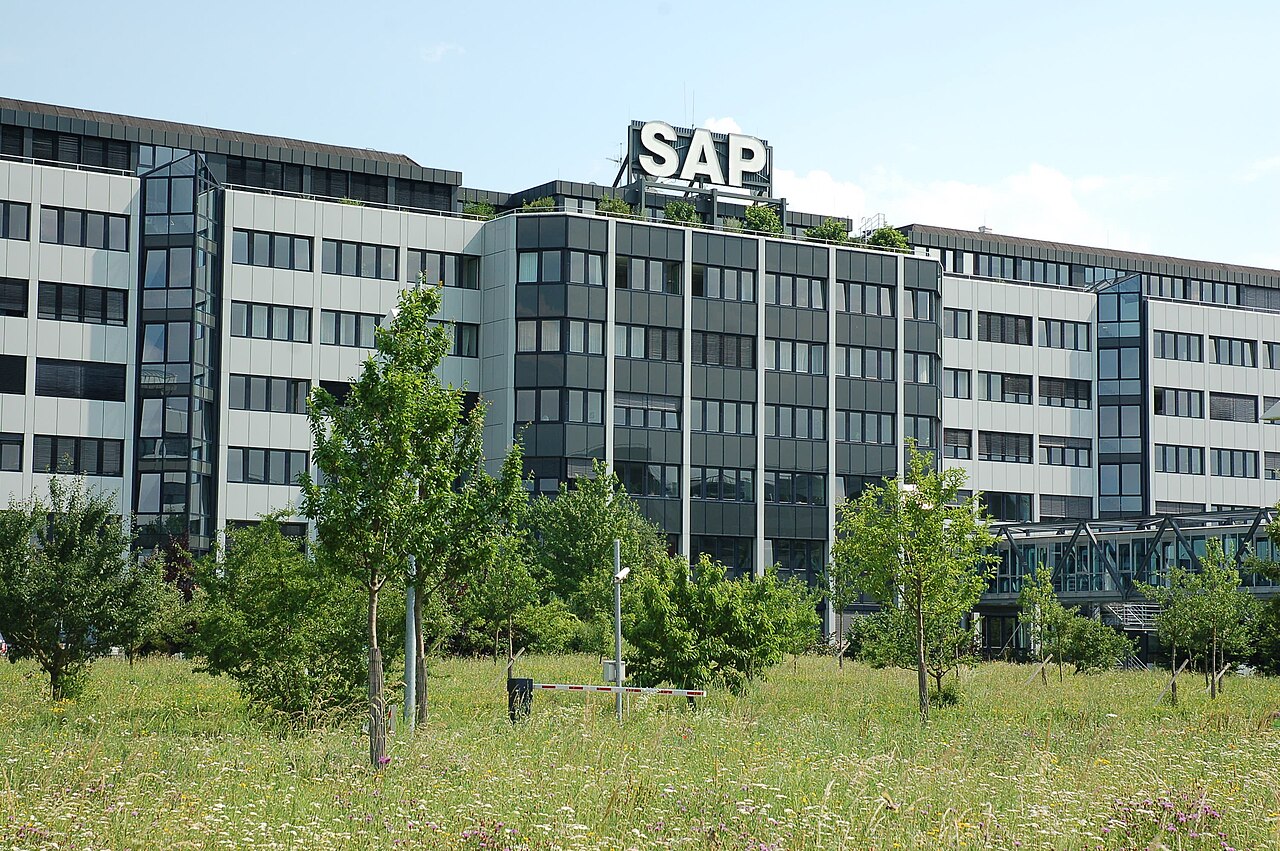
Germany built the world’s first program-controlled computer and one of the world’s most successful enterprise software companies, yet never produced a global consumer technology giant. Its IT industry reflects the country’s broader economic character: methodical, industrial-scale, deeply integrated into manufacturing and process automation, and structurally resistant to the high-risk venture culture that produced Silicon Valley’s dominant platforms. Germany’s technology story is not a failure (SAP’s market value exceeds that of all German car manufacturers combined) but it is a story of enormous capability deployed in ways that consistently left the consumer internet to others.
Konrad Zuse and the Forgotten Origin
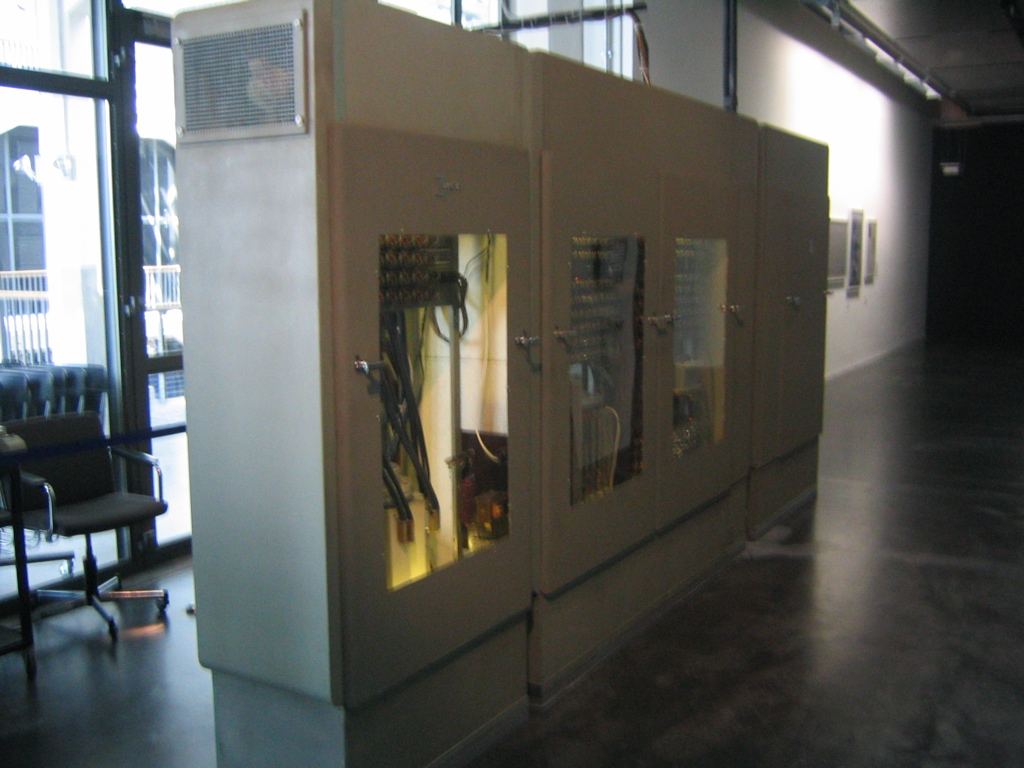
Germany’s claim to computing primacy rests on Konrad Zuse and the Z3, who built the Z3 in Berlin in 1941, the world’s first fully programmable electromechanical computer, operating in binary floating-point arithmetic on punched tape. Zuse worked in near-isolation, without institutional support, largely unaware of parallel developments in Britain and the United States. The Z3 was destroyed in the 1943 Allied bombing of Berlin.
Zuse continued after the war, founding Zuse KG in 1949 to commercialize his designs. He invented Plankalkül (Plan Calculus) in 1945, arguably the first high-level programming language, though it was not published until 1972 and had no practical implementations during Zuse’s active years. Zuse KG built around 250 computers before Siemens took it over (Brown, Boveri & Cie. had bought the firm in 1964 and sold a majority stake to Siemens in 1967, the remainder following in 1969), one of Europe’s first commercially successful computer manufacturers.
The significance of Zuse’s work was acknowledged slowly. American computing history, written by Americans with access to American archives, centered on ENIAC and Von Neumann. German computing history, interrupted by division, reconstruction, and the political awkwardness of wartime innovation, received less international attention. The Z3’s significance as the first operational program-controlled computer only gained wide recognition decades after the fact.
Siemens and the Mainframe Era
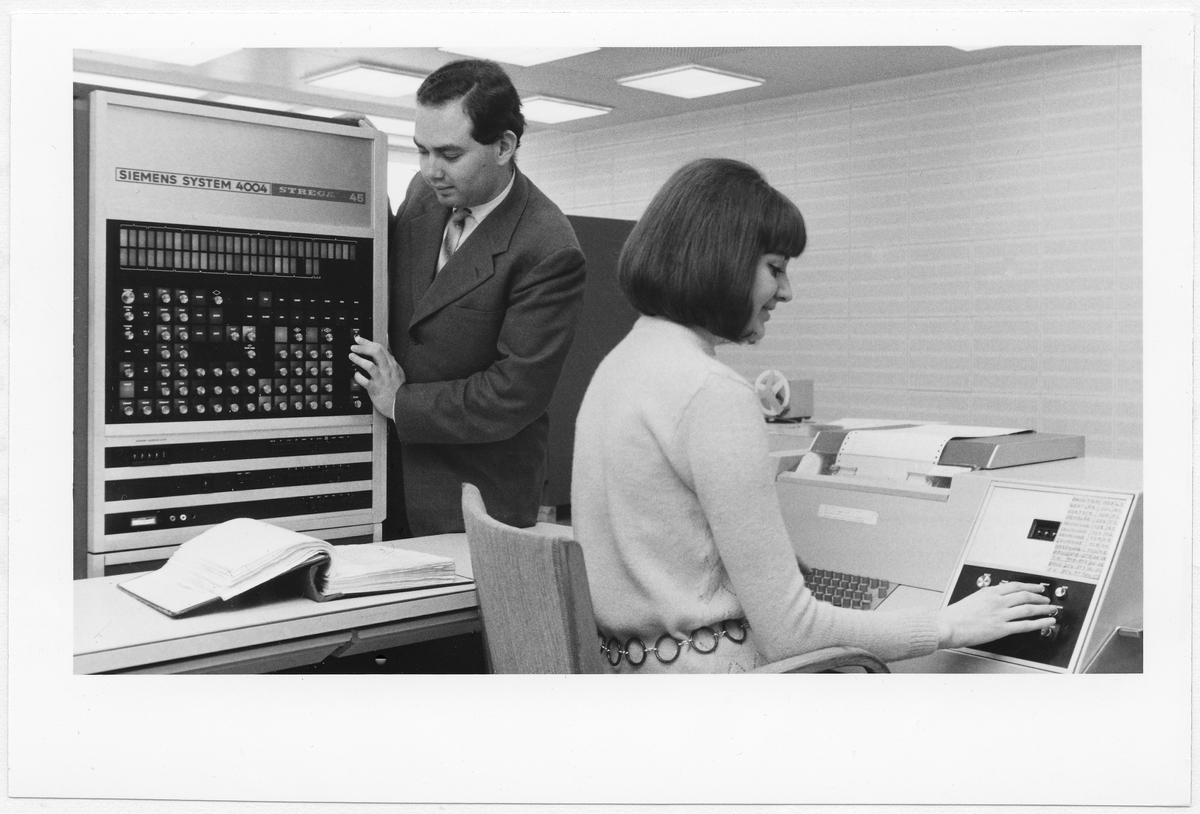
Siemens, founded in 1847 and already one of the world’s largest electrical engineering companies by the twentieth century, entered computing in the late 1950s. Its BS2000 mainframe architecture, developed from the 1970s onward, became the platform for large-scale government and banking IT infrastructure in Germany and Austria. Unlike IBM, which created a global standard and licensed it broadly, Siemens created a proprietary platform optimized for the German market.
This approach was typical of the broader European computing industry of the era: each major nation produced national champions (Bull in France, ICL in Britain, Siemens and Nixdorf in Germany) who competed with IBM through government procurement preferences rather than through technical or commercial superiority. East of the border, the other Germany ran its own computer industry on the same IBM architecture, cloned rather than licensed (see Computing in East Germany: Robotron and the Kombinate). The European Commission funded numerous programs attempting to create European computing standards and European semiconductor industries. None succeeded in producing globally competitive platforms.
Nixdorf Computer, which Heinz Nixdorf built from the Labor für Impulstechnik he founded in Essen in 1952 (headquartered in Paderborn from 1968), became Germany’s most successful independent computer maker. Nixdorf specialized in minicomputers and point-of-sale systems, reaching annual revenues of DM 5 billion by the late 1980s. After Nixdorf’s death at CeBIT in 1986, his successor Klaus Luft kept expanding, hiring 5,000 additional sales staff while the business turned downward from 1988; a strike pushed the company from just-in-time delivery to stockpiling a full year of parts, a policy Luft later admitted was a heavy burden in a market of falling prices. In 1989 the company lost roughly DM 1 billion on DM 5 billion in revenue, and on October 1, 1990 it merged with Siemens’s data-technology division to form Siemens Nixdorf Informationssysteme (SNI): with over 50,000 employees Europe’s largest computer maker, but worldwide only number six behind IBM, DEC, Fujitsu, NEC, and Unisys. That same autumn, Unisys concluded that hardware and software were diverging into separate businesses and abandoned computer manufacturing for services. SNI drew the opposite conclusion and spent five loss-making years as a full-line maker of midrange systems and PCs before the dismantling began: services and telecommunications were spun off in 1995 into Siemens Business Services (today part of Atos), the PC business went to Fujitsu (Fujitsu Siemens Computers, 1999), and the banking and retail technology spun out as Wincor Nixdorf (1999), which dominated the ATM and retail banking technology market globally before merging with Diebold to form Diebold Nixdorf in 2016. Fujitsu closed the Augsburg plant, the last large computer factory in Germany, on September 30, 2020, one day before the merger’s thirtieth anniversary.
The Cadmus Workstations
Germany also produced a Unix workstation industry, briefly. PCS (Periphere Computer Systeme), founded in Munich in 1969 by the brothers Georg and Eberhard Färber, began by building peripherals and process-control systems around DEC minicomputers. In 1982 the company introduced its own Motorola 68000 machines on DEC’s Q-Bus, sold under the Cadmus brand, and ported AT&T’s System V to them. The port, named MUNIX, was the first Unix System V port carried out in Germany, and PCS followed it with MUNIX/net, a network file access protocol based on the Newcastle Connection that competed with Sun’s NFS. Later models moved to the 68020 and 68030 and then to MIPS RISC processors. Cadmus machines were common in German and European university computing pools and research institutes through the late 1980s, one of the few European alternatives to Sun and Apollo, and in 1985 PCS opened a US subsidiary to sell them in the American market.
The episode ended the way most European hardware stories of the era did: acquisition rather than scale. PCS was bought by Mannesmann Kienzle, which was in turn absorbed by Digital Equipment; the workstation line disappeared, and in 1996 a management buyout re-established the company as PCS Systemtechnik, which survives today making access-control and time-recording terminals. The pattern anticipates the software-era question asked below (“Why No German Google?”): the technology was competitive, the domestic market too small, and the capital and distribution to fight a US volume player were never assembled.
Software AG and the First Enterprise Software Companies
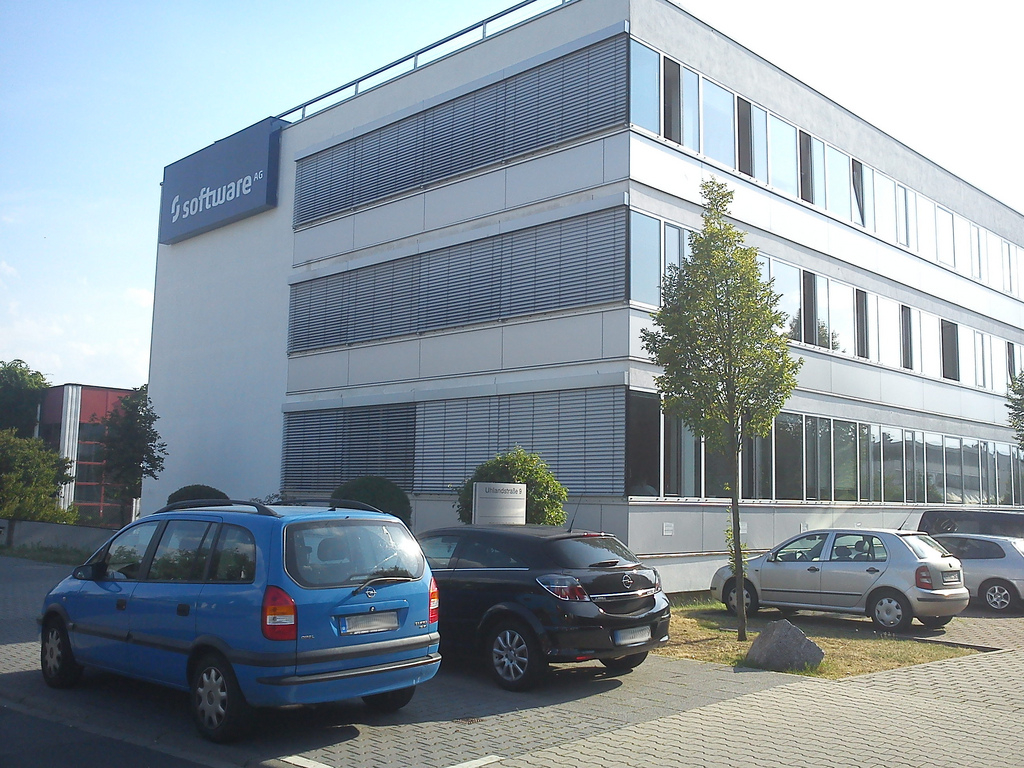
Software AG, founded in 1969 in Darmstadt, is one of the oldest independent software companies in the world. Its flagship product, ADABAS (a database management system) was released in 1971 and became widely used in mainframe environments. Natural, Software AG’s 4GL programming language for ADABAS, was used by large organizations worldwide through the 1980s and 1990s.
Software AG’s trajectory illustrates a pattern common in German enterprise software: deep technical capability in a specific domain, strong relationships with large institutional customers, and a business model based on long-term maintenance contracts rather than rapid market expansion. By the standards of Silicon Valley, Software AG was conservative. By the standards of sustainable enterprise software businesses, it was successful, still operating profitably into the 2020s, having pivoted into process mining and integration platforms.
Info
Software AG was founded the same year as Intel (1968–1969) and six years before Microsoft (1975). It pre-dates Oracle (1977) by eight years. Its longevity (over fifty years as an independent company) reflects the German enterprise software market’s distinctive characteristic: customers that do not change core systems easily, creating installed-base stickiness that protects incumbents for decades.
SAP: The Accidental Giant
The most significant event in German IT history occurred in 1972, when five former IBM employees (Dietmar Hopp, Hasso Plattner, Hans-Werner Hector, Klaus Tschira, and Claus Wellenreuther) founded Systemanalyse Programmentwicklung in Weinheim. The company is known by its German acronym: SAP.
SAP’s founding insight was that large companies needed integrated business software that connected accounting, procurement, manufacturing, sales, and human resources in a single coherent system, replacing the fragmented, department-by-department systems that existed in most organizations. IBM had declined to build such a product; the five founders, all of whom had worked on IBM’s own internal systems, built it themselves.
The first product, SAP R/1, was delivered to ICI (a German subsidiary of the British chemicals company) in 1973. SAP R/2, a mainframe-based system released in the late 1970s, became the backbone of financial management in hundreds of large European companies. SAP R/3, released in 1992, was the breakthrough that made SAP a global company: it was client-server-based, modular, and could run on multiple hardware platforms. R/3 arrived precisely as large American and global companies were replacing their IBM mainframe systems with distributed architectures. SAP’s timing was perfect.
By the mid-1990s, SAP was the world’s largest vendor of enterprise applications software; Oracle remained larger in total software revenue, driven by its database business, but SAP dominated business applications. It became the de facto operating system for large-enterprise business processes (manufacturing, procurement, logistics, finance, HR) with such deep integration into customers’ operations that replacing it was functionally equivalent to rebuilding the company. This depth of integration, which SAP customers called “lock-in” and SAP called “mission-critical deployment,” became one of the most durable competitive moats in technology industry history.
Tip
SAP’s approach to enterprise software created what economists call “switching costs” of enormous magnitude. A large company running SAP typically has hundreds of customizations, integrations with hundreds of external systems, and years of trained staff. Migrating off SAP to a competitor typically costs 2–5x the original implementation cost and takes 3–7 years. This is why SAP has maintained over 80% customer retention rates for decades despite persistent customer complaints about complexity and cost.
The Mittelstand Software Ecosystem
Beneath SAP, Germany developed a dense ecosystem of software companies serving the Mittelstand, the middle-market manufacturing and industrial companies that form the backbone of the German economy. These companies rarely appeared in American technology press coverage. They were not venture-backed, did not pursue IPOs, and had no ambition to become global platforms. They built software for specific industrial applications: production planning for automotive suppliers, quality management for chemical plants, financial consolidation for manufacturing conglomerates.
Companies like IDS Scheer (process modeling, acquired by Software AG), Infor (formed by merging dozens of mid-market ERP companies), and GFT Technologies built businesses worth hundreds of millions of euros by serving industrial customers with deep domain expertise. The model was “Hidden Champion”, a term coined by management professor Hermann Simon for the German mid-market companies that dominated global niche markets without international name recognition.
The Wires of Science: How the Internet Reached Germany
Germany’s connection to the global research networks was built not by industry or government fiat but by a handful of university computer scientists working the seams of bureaucracy. On August 3, 1984, at the University of Karlsruhe, Michael Rotert (working in the group of Werner Zorn) received Germany’s first Internet email, a welcome message sent by Laura Breeden of the American CSNET coordination office (“Willkommen in CSNET!”). Karlsruhe became the German CSNET relay, the country’s gateway to the American research internet. (Karlsruhe’s own accounts often call Germany the “second country” outside the USA online; the ranking is contested, since Israel joined CSNET earlier the same year. See Myths and Misconceptions.) This happened at a time when the official European telecommunications world was committed to the competing OSI/X.25 protocol suite and regarded TCP/IP as an American academic aberration (see Early Networking Failures). Three years later the same Karlsruhe group extended that gateway across a much larger wall: on September 20, 1987, China’s first email left the Institute for Computer Applications (ICA) in Beijing over a CSNET link that Zorn’s team had helped set up with Chinese colleagues, addressed to Karlsruhe. Its English text became famous in China: “Across the Great Wall we can reach every corner in the world.” Germany’s gateway to the American internet was, for a moment, also China’s. On November 5, 1986, the .de country domain was delegated (among the first country codes) and administered from the universities (Dortmund, later Karlsruhe) for over a decade before the registry DENIC moved to Frankfurt; the first .de domains were university names. East Germany’s counterpart .dd was never delegated at all: Cold War politics kept Warsaw Pact states out of the root zone, and the code disappeared with reunification (see The Domain Name System).
The institutional backbone followed the same academic path. The DFN-Verein (Deutsches Forschungsnetz), founded in 1984 as an association of universities and research institutions, built the national science network: the X.25-based WiN (Wissenschaftsnetz, 1990), upgraded through B-WiN (1996) and the IP-based G-WiN (2000) to today’s X-WiN. Behind those acronyms lies the unglamorous regional story of the German internet: computing-center staff at universities large and small who adapted protocols, configured the first routers, fought the Bundespost’s monopoly pricing, and argued their institutions onto the network, the local “Strippenzieher” who put German research on the map years before commercial providers existed. That the German internet was born in university computing centers rather than at a national champion or the post office monopoly is itself the German pattern in miniature: public infrastructure built by engineers, commercialized late. Commercialization, when it came, grew out of the same academic groups. Zorn’s Karlsruhe team spun off Xlink in November 1989 to sell internet connectivity, first to southern German universities and then, in 1990, to its first corporate customer BASF; the group of Dortmund researchers around the EUnet project incorporated EUnet Deutschland in Dortmund in December 1992, the country’s first commercial internet service provider, with Xlink privatized as the second in 1993. The commercial German internet was, in other words, staffed by the same people who had run the university relays a decade earlier.
Deutsche Telekom and the Internet
Germany’s internet development was shaped significantly by Deutsche Telekom’s monopoly on telecommunications infrastructure. The company, privatized in 1996, controlled the local loop (the copper wire connecting homes to telephone exchanges) and set the terms for competitors’ access to it. German regulators were slower than British and American counterparts to force genuine infrastructure access competition, which meant that ADSL broadband arrived later and at higher prices in Germany than in comparable economies.
CompuServe Germany, AOL Germany, and later T-Online (Deutsche Telekom’s own ISP) were the dominant early access providers. The German internet ecosystem of the early 2000s was characterized by high connection costs, cautious user adoption, and strong institutional resistance from publishing and retail industries that feared digital disruption more acutely than their American counterparts.
The Samwer brothers (Oliver, Marc, and Alexander) built a significant German technology business by systematically cloning successful American internet businesses for European markets before the American originals could expand: Alando (eBay clone, sold to eBay in 1999), Jamba (ringtone business), Zalando (Zappos model, IPO 2014), and through Rocket Internet, dozens of “copycat” businesses in emerging markets. The model was commercially successful and deeply controversial, critics called it parasitic; the Samwers called it execution in markets American companies were too slow to enter.
Privacy Culture and Regulatory Influence
Germany’s history, the Nazi Volkskartei (population register used for persecution) and the Stasi’s comprehensive surveillance of East German citizens, produced a privacy culture more intense than any other major economy. The German state of Hesse passed the world’s first data protection law in 1970, and Sweden’s 1973 Data Act was the first at national level. The federal Bundesdatenschutzgesetz (Federal Data Protection Act) followed in 1977, extending comprehensive data protection rules across West Germany. German courts repeatedly ruled against data collection practices that were routine in the United States.
This privacy culture shaped German internet behavior in measurable ways. German internet users adopted real-name policies on social networks later and with more resistance than Americans. Google Street View was forced to blur buildings in Germany and ultimately did not launch the full service there. Facebook’s facial recognition features were disabled in Germany under regulatory pressure years before similar actions were taken elsewhere.
The same instinct settled Germany’s part in the 1990s crypto wars. Interior Minister Manfred Kanther pushed in 1997 for mandatory key escrow, government access to every encrypted message, but coalition partners and the economics and justice ministries blocked him, and in 1999 the Schröder government’s Eckpunkte der deutschen Kryptopolitik committed the state to protecting rather than restricting strong encryption, a stance it still holds. Germany went on to fund GnuPG, the free encryption tool much of the world relies on (see Phil Zimmermann and PGP).
Germany’s influence on global privacy law culminated in the European Union’s General Data Protection Regulation (GDPR), which came into force in 2018. The GDPR was substantially shaped by German data protection philosophy, carried by German MEPs and pressure from German regulators. It imposed data protection requirements on every company serving European users, effectively forcing American technology companies to implement privacy practices developed from the German tradition.
Why No German Google?
The question of why Germany (with its engineering culture, research universities, industrial capacity, and wealth) never produced a global consumer technology platform is genuinely interesting.
Several structural explanations converge. German university research was strong in engineering and natural sciences but organized around traditional academic career paths; the American model of founding companies to commercialize research was culturally and institutionally unusual. German finance was bank-dominated: the Hausbank relationships between companies and their lending banks provided patient capital for manufacturing investment but were poorly suited to high-risk, equity-funded technology ventures. The venture capital industry in Germany was a fraction of the US equivalent in both scale and sophistication through the 1990s and 2000s.
The German language itself was a partial barrier, software built for a German market had a natural ceiling in a country of 83 million people before expensive localization. American companies, building in English, had immediate access to a global market. The European Common Market reduced but did not eliminate this friction.
Cultural factors mattered too. German business culture valorized engineering precision, long-term relationships, and institutional reliability. The Silicon Valley culture of “move fast and break things” (of shipping half-built products to test market reaction, of failing publicly and pivoting) was poorly received by German customers and uncomfortable for German engineers. German employees had strong legal protections against dismissal, making the rapid scaling and rapid contracting of startup headcount operationally difficult.
Finally, Germany’s existing industrial strength was both asset and constraint. The Mittelstand created a domestic market for B2B software that absorbed engineering talent and entrepreneurial energy. Building world-class software for BMW’s supply chain was commercially sensible and technically demanding; it was also a path away from the consumer internet.
The Current Landscape
Germany’s technology industry in the 2020s reflects these historical patterns. SAP remains the dominant global enterprise software company, with annual revenues exceeding €30 billion. TeamViewer became a significant remote access software company. Zalando is one of Europe’s largest e-commerce platforms. DeepL, founded in Cologne in 2017, built a machine translation system that technical users widely prefer to Google Translate for European languages.
The startup ecosystem has matured. Berlin became the most significant startup hub in continental Europe, attracting capital and talent from across Europe and beyond. N26, Delivery Hero, HelloFresh, and Auto1 reached unicorn valuations. Celonis, founded in Munich in 2011, became a leading process mining company with a multi-billion-dollar valuation.
But the largest global technology platforms (search, social networks, cloud infrastructure, consumer devices, operating systems) remain American (or Chinese). Germany’s technology industry is large, profitable, and technically sophisticated. The combination of factors that produce dominant global consumer technology (VC risk culture, English-language native market, fast-fail iteration norms, university-to-startup pipelines) assembled more completely elsewhere.
📚 Sources
- SAP: Die Erfolgsgeschichte — Dietmar Hopp & Ludwig Haag (1992)
- Detlef Borchers: Vor 30 Jahren: Siemens Nixdorf Informationssysteme wird Nr. 1 in Europa — heise online (2020)
- Internet in China — Wikipedia (first email to Karlsruhe, September 20, 1987)
- Werner Zorn — Wikipedia (de)
- Historic First Email From U.S. to Germany Arrives in 1984 — Internet Hall of Fame (Laura Breeden as sender)
- XLINK (Internet service provider) — Wikipedia
- Hermann Simon: Hidden Champions (1996) — Harvard Business School Press
- Z3 (computer) — Wikipedia
- Software AG: 50 Jahre Unternehmensgeschichte — Software AG Corporate History
- Rocket Internet — Wikipedia
- GDPR and Its German Origins — Paul Nemitz, Common Market Law Review (2018)
- Nixdorf Computer — Heinz Nixdorf MuseumsForum
- Periphere Computer Systeme — Wikipedia
- Cadmus Workstations — Wikipedia (de)
- PCS Systemtechnik — Firmengeschichte
- 40 Jahre erste Internet-E-Mail in Deutschland — Karlsruher Institut für Technologie
- DFN-Verein — Geschichte des Deutschen Forschungsnetzes
- DENIC — Wikipedia
- Digital divide — Wikipedia
- Bundesdatenschutzgesetz — Wikipedia (de) (Hesse 1970 as world’s first data protection law; BDSG 1977)
- Image: SAP AG headquarter Walldorf building 1.jpg by Vladislav Bezrukov from Walldorf, Germany (CC BY 2.0), via Wikimedia Commons
- Image: Zuse Z22.jpg by User Lemming81 on de.wikipedia (CC BY-SA 3.0), via Wikimedia Commons
- Image: Software AG Headquarter Darmstadt.jpg by Snipermatze (CC BY-SA 3.0), via Wikimedia Commons