Ireland's Tech Industry: The Tax Rate, the Galway Plant, and the Business of Being Elsewhere's Headquarters
Abstract
Ireland has almost no computing history of its own and one of the largest technology sectors in Europe, and the two facts are connected. In May 1971 Digital Equipment Corporation chose Galway for its first hardware plant in Europe, for the English-speaking workforce, the tax deal and the coming EEC membership; Apple followed to Cork in 1980, Microsoft to Dublin in 1985, Intel to Leixlip in 1989, Dell to Limerick in 1990, Google to Dublin in 2003 and Facebook in 2008. A 10 percent manufacturing tax rate from 1981 and a 12.5 percent corporation tax from 2003 did the work that research institutes did elsewhere. The country produced one Nasdaq software company of its own, Iona, and one global one, Stripe, whose founders left. This article is about a strategy: what a small country gets, and what it does not, when it decides to be the place where other people’s computer companies pay their taxes.
Digital in Galway
The Irish computing industry began as a branch plant. In May 1971 Digital Equipment Corporation announced that it had chosen Galway for its first hardware manufacturing base in Europe, citing an English-speaking workforce, a favourable tax policy, a local university and Ireland’s expected entry into the European Economic Community, which came on 1 January 1973. Production started with 30 employees in a plant at Mervue, 109 by the end of the year, while a 130,000-square-foot factory went up at Ballybrit; when Taoiseach Liam Cosgrave opened Ballybrit in September 1973 the company was hiring forty people a month. A software operation began at Mervue in 1975, a second Ballybrit plant opened in 1976, and a fire destroyed the Mervue building on 22 August 1978, with operations back within fifteen months. At its peak Digital employed more than 1,200 people in Galway, and the city’s engineering and electronics base dates from it.
The plant lasted as long as the minicomputer did. On 24 February 1993 Digital announced that Galway would phase out hardware manufacturing, and the Ballybrit plant closed in 1994 with the loss of 720 jobs, the company citing changed customer buying patterns and excess capacity worldwide (the parent’s own collapse is in DEC and the Minicomputer Era and Route 128). A software centre of about 200 people stayed, passed to Compaq in 1998 and to Hewlett-Packard in 2002. Galway kept the engineers, and today the University of Galway campus houses the Computer and Communications Museum of Ireland, founded in 2010, whose working PDP-11 is the plant’s memorial.
The Model
What the Industrial Development Authority learned from Digital it applied for forty years. Apple opened its Cork plant at Hollyhill on 23 December 1980; by 2016 it employed 6,000 people there and was the only manufacturing site Apple ran itself anywhere in the world. Ireland introduced a 10 percent tax rate for manufacturing in 1981. Intel registered Intel Ireland Limited at Leixlip on 29 September 1989 and built its European fabrication complex at Leixlip in County Kildare from 1989, and Dell put its European plant in Limerick in 1990. Software localisation, the business of turning American products into European-language ones, began when MicroPro came to Dún Laoghaire in 1982 and Lotus set up a Dublin subsidiary in 1984 to assemble international versions of its packages, followed by Microsoft’s software duplication centre at Sandyford in 1985; by the 1990s Dublin was a world centre of the trade, and it gave the country a white-collar industry to go with the assembly lines. Growth averaged 10 percent a year from 1995 to 2000 and 7 percent from 2001 to 2004, the years the press called the Celtic Tiger, and in 2003 the corporation tax rate was set at 12.5 percent for everyone. Google came to Dublin in 2003, Facebook in 2008, and by the 2010s most of the American internet industry ran its non-American business from the Dublin docklands.
The model had a home-grown success to point to. Iona Technologies was founded in 1991 by three Trinity College Dublin academics, Chris Horn, Sean Baker and Annrai O’Toole, with £1,000 each. Its Orbix middleware, launched in 1992, implemented the CORBA object standard; Sun Microsystems bought a quarter of the company for $600,000 in December 1993; and Iona became the first Irish company to float on Nasdaq, reaching a market value of $1.75 billion at its peak and spinning out about thirty companies before Progress Software bought it for about $162 million in June 2008. The other Irish software company of world scale did not stay: Patrick and John Collison, from Limerick, founded Stripe in 2010 in Silicon Valley (see The API Economy).
The Bill
The strategy’s cost arrived as a court case. On 30 August 2016 the European Commission ruled that Ireland’s tax arrangements with Apple were illegal state aid and ordered the recovery of €13 billion plus interest for the years 2004 to 2014, finding that Apple’s effective Irish tax rate had fallen from 1 percent in 2003 to 0.005 percent in 2014. Ireland appealed alongside Apple, which is the detail that explains the model: the state fought to not receive the money, because receiving it would have ended the arrangement that brought the companies. The General Court sided with Ireland on 15 July 2020; the Court of Justice reversed it on 10 September 2024 and the order stood. Apple had already closed its “Double Irish” structure in January 2015, and the reorganisation that followed produced the 26 percent jump in Irish GDP for 2015 that Paul Krugman called “leprechaun economics”.
Dead End: The Industry That Was Never Irish
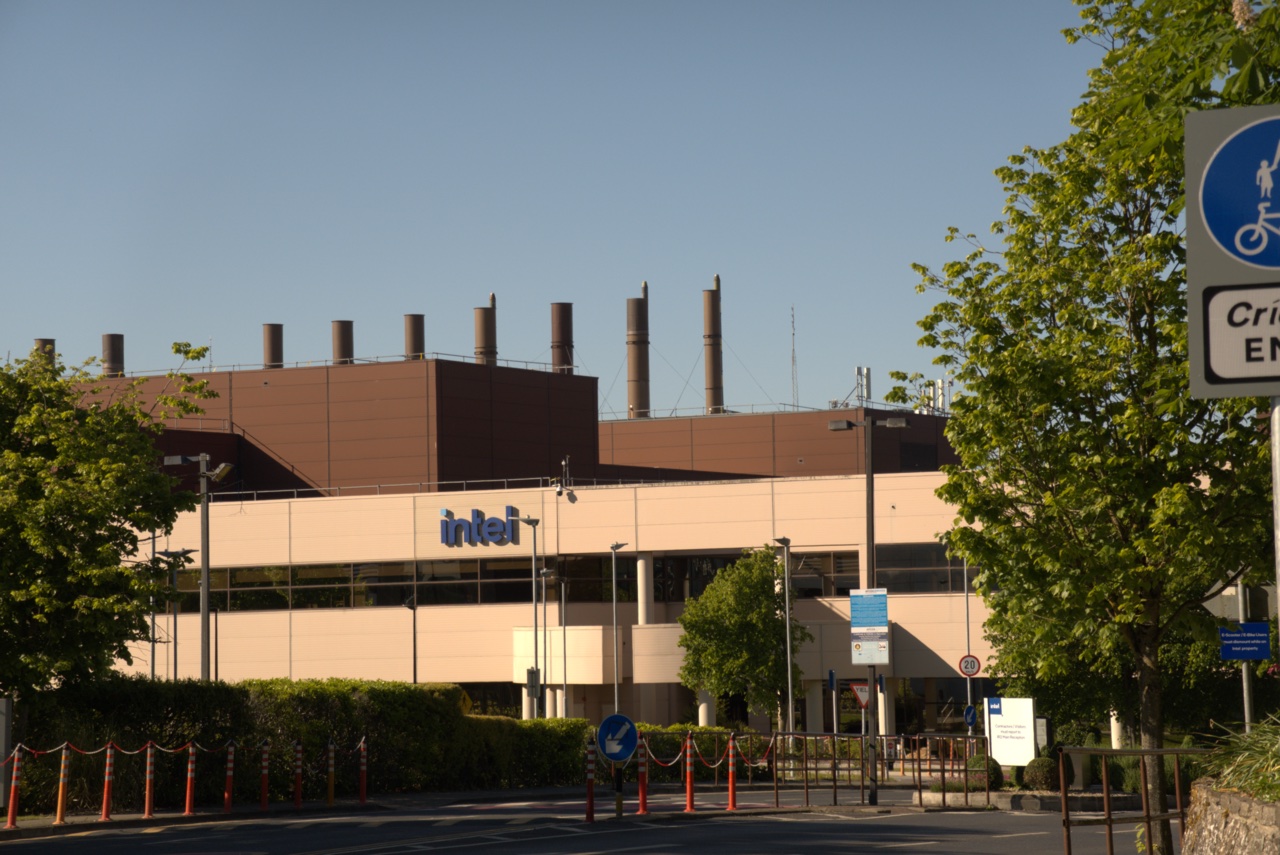
Ireland has one of the largest technology sectors in Europe relative to its size and almost none of the intellectual property. The plants and offices belong to companies that design elsewhere; the profits booked in Dublin are taxed at Irish rates and owned by American shareholders; the software localised in Dublin is written in Redmond and Mountain View. When the minicomputer died, Galway lost 720 jobs in a year and could do nothing about it, because nothing had been decided in Galway. The one company that grew from an Irish university to a Nasdaq listing was sold to an American firm, and the one Irish-founded company of global scale was founded in California. The strategy worked as a strategy: it made a poor agricultural country rich in a generation. What it did not do, and was never meant to do, was create a computer industry, which is why this article has no machine to show and a factory gate for its picture.
📚 Sources
- “Digital Equipment Corporation, fifty years in Galway” — Galway Advertiser
- Economy of the Republic of Ireland — Wikipedia
- Apple’s EU tax dispute — Wikipedia
- Software localisation in Ireland 1982–2002 — TechArchives (MicroPro 1982, Lotus 1984, Microsoft 1985)
- Intel Ireland — Wikipedia (registered 29 September 1989)
- Corporation tax in the Republic of Ireland — Wikipedia (10% manufacturing relief 1981, 12.5% from 2003)
- IONA Technologies — Wikipedia
- Computing and Communications Museum of Ireland — Wikipedia