Crowdfunding and Kickstarter
Abstract
Crowdfunding is paying in advance, in small amounts from many people, for something that does not exist yet. The practice is old; the web made it cheap to organise, and Kickstarter, launched on 28 April 2009, gave it a standard form: a funding goal, a deadline, rewards instead of shares, and no money collected unless the goal was met. Between 2012 and 2015 it financed things the market had refused, including Tim Schafer’s adventure game, the Pebble smartwatch and the Oculus Rift headset, and it also produced Coolest Cooler, which raised $13.3 million in 2014 and left more than 20,000 backers without a cooler. A study commissioned by Kickstarter in 2015 found that 9 percent of funded projects never delivered. The backers of Oculus learned in 2014 what a reward is not: when Facebook paid $2 billion for the company, they owned none of it. By 2025 the site’s funding record was held by a printer from Anker, a large electronics company, and the line between patronage and pre-order that Kickstarter had drawn in 2012 had mostly gone.
Before the Platform
Raising money by public subscription is older than computing. In 1885 Joseph Pulitzer’s New York World collected more than $100,000 from about 160,000 donors to build the pedestal of the Statue of Liberty, printing every donor’s name. The internet version began with fans. In 1997 supporters of the British rock band Marillion raised about $60,000 by email to pay for a North American tour their record label would not fund. ArtistShare, founded in 2001, let musicians sell their fans access to recordings in progress; the jazz composer Maria Schneider’s album Concert in the Garden, funded that way and sold only through the site, won a Grammy in 2005 without ever being in a record shop. The entrepreneur Michael Sullivan is credited with the word “crowdfunding” in 2006. Indiegogo opened in January 2008.
All or Nothing
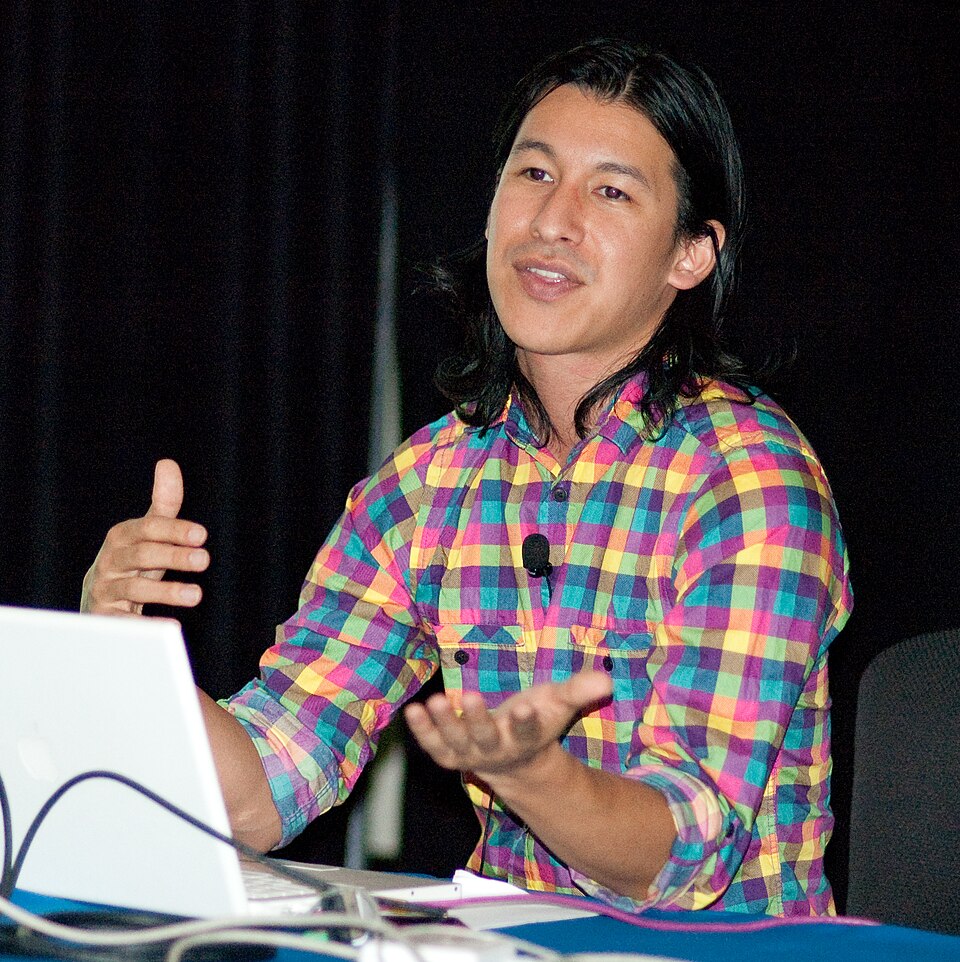
Perry Chen had the idea in 2001, living in New Orleans, when he wanted to bring the Austrian DJ duo Kruder & Dorfmeister to play during the Jazz Festival and could not risk the money on a show that might not sell. What he wanted was a way to ask the audience first. It took until 28 April 2009 for Chen, Yancey Strickler and Charles Adler to launch Kickstarter in New York.
The rules were the product. A creator set a goal and a deadline; backers pledged, and their cards were charged only if the total reached the goal. Kickstarter took 5 percent of successful projects, the payment processor another 3 to 5. Backers received rewards, a thank-you, a copy of the thing, a dinner with the author, never equity or interest, which kept the site outside securities law. All-or-nothing removed the worst risk for both sides: a creator was never obliged to make a film with a third of its budget, and a backer never paid for one that could not be made.
2012
On 8 February 2012 Tim Schafer’s studio Double Fine asked for $400,000 to make a point-and-click adventure game, a genre publishers had abandoned (see LucasArts and the Point-and-Click Adventure). It passed $1 million within 24 hours and closed on 13 March with more than $3.3 million from about 87,000 backers. Two months later, on 11 April, the Pebble e-paper smartwatch asked for $100,000 and closed with $10.3 million from 68,929 backers (the rest of that story is in Dead End: Pebble). In August Oculus VR, founded by the teenage Palmer Luckey, raised $2.4 million for developer kits of the Oculus Rift. Chris Roberts, the designer of Wing Commander, raised more than $2 million on Kickstarter in October and November for a space game called Star Citizen, suggesting a release in 2014.
Hardware brought a problem the founders had not designed for. Backers were treating the site as a shop, and creators were showing them photorealistic renderings of products that did not exist. In September 2012 Kickstarter published a blog post titled “Kickstarter Is Not a Store.” It banned photorealistic renderings in the hardware and product-design categories and required every project to include a section on “Risks and Challenges.”
Backers Are Not Investors
On 25 March 2014 Facebook announced that it would buy Oculus VR for $2 billion in cash and stock. The Kickstarter backers who had made the company’s first product possible got their developer kits and nothing else. Some asked on the project page for their money back; one wrote that the sale “damages not only your reputation, but the whole of crowdfunding.” Markus Persson, the creator of Minecraft, cancelled a planned Oculus version of his game the same day (“Facebook creeps me out”) and wrote that he had not “chip[ped] in ten grand to seed a first investment round to build value for a Facebook acquisition.”
The law was changing in the same years. Title III of the JOBS Act, signed in 2012, allowed small companies to sell actual shares to the general public over the internet; the SEC’s rules took effect on 16 May 2016, with a limit of $1 million a year per company, raised to $5 million in 2021. Equity crowdfunding became a separate industry. Kickstarter stayed with rewards, reincorporated as a public benefit corporation in September 2015, and on 18 February 2020 its staff voted 46 to 37 to join the Office and Professional Employees International Union, the first union at a well-known American technology company.
Records
Pebble returned in February 2015 with the Pebble Time and raised $20.3 million, the record for seven years. The card game Exploding Kittens, by the webcomic artist Matthew Inman with Elan Lee and Shane Small, passed its $10,000 goal in eight minutes in January 2015 and closed with $8.78 million from 219,382 backers, then the most backers of any Kickstarter project. The fantasy novelist Brandon Sanderson broke the funding record in March 2022 with four secret novels, $41.76 million from 185,341 backers, which he could have sold through his publisher and chose to sell directly. In June 2025 the eufyMake E1, a desktop UV printer from the Chinese electronics maker Anker, closed at $46.76 million from 17,822 backers, the largest crowdfunding campaign on record: an established company taking pre-orders at an average of more than $2,600 each.
Star Citizen never needed Kickstarter again. It kept selling virtual spaceships from its own website and had passed $1 billion in crowdfunding and early-access sales by 2026; its single-player campaign, promised for 2014, was scheduled in August 2026 for the second quarter of 2027.
Dead End: The Coolest Cooler
Ryan Grepper, a Portland, Oregon inventor, failed with his first Kickstarter for a picnic cooler in 2013. In the summer of 2014 he tried again with the Coolest Cooler, which added a battery-powered blender, a Bluetooth speaker, a USB charger and LED lights. It raised $13,285,226 from 62,642 backers, the most-funded project on the site at that time, at an average of about $200 each, with delivery promised for February 2015.
The price had been set before the product was engineered. Each cooler cost more to make and ship than backers had paid, and in 2016 Grepper asked waiting backers for an extra $97 to get theirs sooner, while selling the cooler to the public on Amazon and at retail, explaining that retail profits were needed to pay for backer shipments. The Oregon Department of Justice reached a settlement with the company in June 2017 under which unfulfilled backers could claim $20. In December 2019 the company closed, blaming US tariffs on Chinese imports. It had shipped about 40,000 coolers; more than 20,000 backers received none.
The Zano, a palm-sized camera drone from the British company Torquing, was Europe’s biggest Kickstarter, raising about £2.3 million between November 2014 and January 2015. The company collapsed in November 2015 after sending out around 600 drones, very few of them to backers. Kickstarter paid the journalist Mark Harris to investigate its own failure; his report of January 2016 found a team without the experience for the job and “convincing evidence” that the campaign’s demonstration footage had been faked.
The general rate was lower than the headlines suggested. Ethan Mollick of the Wharton School, commissioned by Kickstarter, surveyed 47,188 backers about 65,326 successfully funded projects from April 2009 to May 2015 and published the results in December 2015: 9 percent of projects failed to deliver their rewards, 8 percent of pledged money went to those failures, 7 percent of backers did not get what they paid for, and failed projects gave refunds in only 13 percent of cases. The smallest projects, under $1,000, failed most often; comics and games least. The rest delivered, usually late.
📚 Sources
- Crowdfunding, Wikipedia (Pulitzer 1885, Marillion 1997, ArtistShare and Maria Schneider, Sullivan 2006, JOBS Act)
- Kickstarter, Wikipedia (28 April 2009, founders, all-or-nothing, the 5 percent fee, Double Fine, Coolest Cooler, Pebble Time, public benefit corporation 2015)
- “Kickstarter workers vote to unionize in milestone moment for tech”, CNN, 18 February 2020
- Perry Chen, Wikipedia (the 2001 Kruder & Dorfmeister concert idea)
- Broken Age, Wikipedia (8 February 2012, the $400,000 goal, $1 million in 24 hours, $3.3 million, 13 March close)
- “Kickstarter Says It ‘Is Not A Store’ As It Revises Policy On Projects’ Risks”, NPR, 21 September 2012, and “Kickstarter Is Not a Store”, Kickstarter blog
- “Who hates the Facebook/Oculus deal? Kickstarter backers”, CNBC, 26 March 2014, and “Minecraft Creator Cancels The Oculus Rift Version Because Facebook Creeps Him Out”, TechCrunch, 25 March 2014
- “U.S. Securities-Based Crowdfunding Under Title III of the JOBS Act”, SEC Division of Economic and Risk Analysis (16 May 2016, the $1 million limit)
- Exploding Kittens, Wikipedia ($8,782,571 from 219,382 backers)
- “Fantasy author’s record-breaking Kickstarter campaign closes at $41.7 million”, CNBC, 31 March 2022
- “EufyMake’s Printer Surges to $46.7 Million, Setting a New Crowdfunding Record”, Kickstarter, 24 June 2025 ($46,762,258 from 17,822 backers)
- Star Citizen, Wikipedia (the 2012 Kickstarter, the 2014 target, more than $1 billion, Squadron 42 rescheduled in August 2026)
- Coolest Cooler, Wikipedia and “Coolest Cooler shuts down after 5-year saga, leaving 20,000 backers without Kickstarter reward”, GeekWire, December 2019 (retail sales, the 2016 surcharge, the June 2017 Oregon settlement, tariffs, about 40,000 shipped)
- Zano (drone), Wikipedia (about £2.3 million, liquidation November 2015, Mark Harris’s report)
- Mollick, Ethan, “Delivery Rates on Kickstarter”, SSRN, December 2015, figures via “Kickstarter Study Reveals Failure Rate”, ICv2, 8 December 2015
- Image: Perry Chen of Kickstarter at NXNEi (4708963039) (cropped).jpg by Jason Hargrove from New York (CC BY 2.0), via Wikimedia Commons