Right to Repair
Abstract
Once a car, a tractor, or a phone runs on software, the manufacturer can decide who is allowed to fix it: by withholding diagnostic tools, by pairing parts to serial numbers, and by invoking copyright law against anyone who opens the code. The right-to-repair movement is the campaign, from independent mechanics, farmers, and repair shops, to make manufacturers share parts, tools, and information with owners and independent repairers. It won its first law by referendum in Massachusetts in 2012, got a copyright exemption for tractor software in 2015, and was fought state by state until 2023, when Apple switched sides and Colorado, Minnesota, and California passed laws. In 2024 the European Union adopted a repair directive, and in July 2026 John Deere settled an antitrust suit by the Federal Trade Commission by agreeing to give farmers the dealer’s tools.
The Car Came First
Independent garages were the first to lose access. Once engine computers controlled fuel and emissions, diagnosing a fault required the manufacturer’s scan tool and service information, which dealers had and independent shops often did not. The shops and parts retailers eventually took the question to the voters.
On 6 November 2012 Massachusetts voted on Question 1, which required carmakers to give owners and independent repairers the same diagnostic and repair information they gave their dealers. It passed with 86 percent. Rather than build cars to one standard for Massachusetts and another for everywhere else, the carmakers and the aftermarket trade groups signed a memorandum of understanding in 2014 that applied the Massachusetts rules nationally from the 2018 model year.
The law covered data read from a plug under the dashboard. Newer cars send much of their data over a cellular link straight to the manufacturer, which the 2012 law did not mention. In November 2020 Massachusetts voted again, on a question extending the law to this “telematics” data, and it passed with about 75 percent.
Software Makes It Copyright
Outside cars there was no statute to vote on, and manufacturers had a stronger tool: Section 1201 of the Digital Millennium Copyright Act of 1998, which makes it illegal to circumvent a technical lock protecting copyrighted software, whatever the purpose (see Copyright and IP in the Digital Age). Opening a tractor’s firmware to clear a fault code could be a federal offense. The only relief is an exemption granted by the Librarian of Congress every three years.
In the 2015 round, repair advocates asked for an exemption for vehicle software, and John Deere opposed it. Its filing to the Copyright Office stated that, absent a written license, “the vehicle owner receives an implied license for the life of the vehicle to operate the vehicle.” The owner, in other words, owned the steel and licensed the machine. The Librarian granted the exemption on 27 October 2015, and later rounds in 2018 and 2021 widened it to cover help from third parties and further classes of equipment.
An exemption does not supply tools. In October 2016 Deere began requiring farmers to accept a license agreement that forbade nearly all repair and modification of the equipment’s software and barred suits for “crop loss, lost profits, loss of goodwill, loss of use of equipment” caused by it. A tractor that threw a fault code in harvest season had to wait for the dealer’s technician and laptop. In March 2017 Jason Koebler of Motherboard reported that farmers were instead buying cracked copies of Deere’s diagnostic software, much of it cracked in Poland and Ukraine and traded on invite-only paid forums. The farmers were circumventing the locks on their own tractors with pirated software because the legal route did not exist.
Patents Stop at the Sale
Patent law gave manufacturers a second argument and lost it. Lexmark sold discounted “Return Program” toner cartridges on the condition that the buyer would not refill them, and sued Impression Products, which bought used ones, replaced their chips, refilled them, and resold them. On 30 May 2017 the Supreme Court held in Impression Products v. Lexmark International that a patent holder’s rights are exhausted by the first authorized sale; a post-sale restriction may be a contract term, but it is no longer patent infringement. Chief Justice John Roberts illustrated the point with a used-car shop: “The business works because the shop can rest assured that, so long as those bringing in the cars own them, the shop is free to repair and resell those vehicles.” Extending patent rights beyond the sale, he wrote, “would clog the channels of commerce.” The printer-cartridge side of the story, including HP’s firmware lockouts, is told in The History of Printing.
iFixit and the Phone
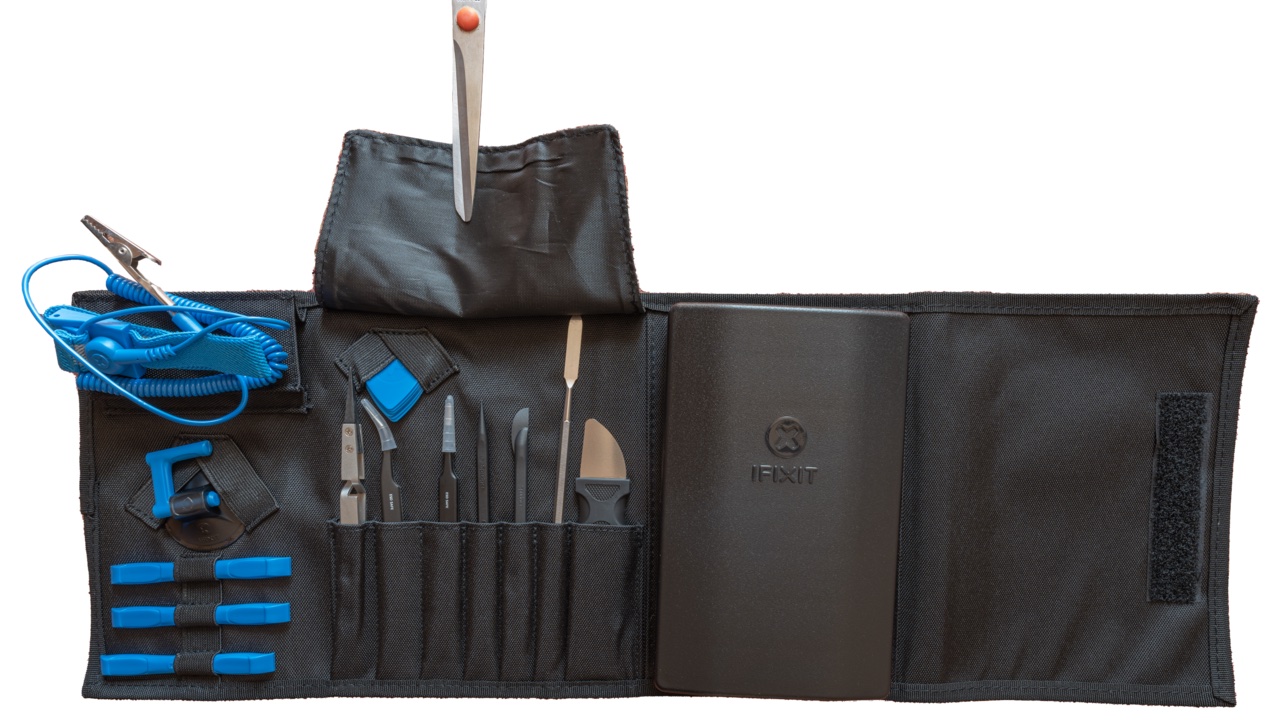
The consumer movement grew around a website. In 2003 Kyle Wiens and Luke Soules, students at Cal Poly in San Luis Obispo, failed to find instructions for fixing an old iBook, wrote their own, and started iFixit, which publishes free repair guides and sells parts and tools. Its photographed teardowns of new phones and laptops, each ending in a repairability score, made glued batteries and proprietary screws visible to people who would never open a device.
Phones were harder to fight than tractors because the obstacles moved into software. Manufacturers began to pair parts: a replacement screen, battery, or camera module is checked against the phone’s serial number, and a part that is not registered by the manufacturer’s own software produces warnings or loses features, even if it is a genuine part taken from another phone. Apple had lobbied against earlier right-to-repair bills. It changed course in steps: an Independent Repair Provider program in August 2019, a Self Service Repair program announced on 17 November 2021 and opened in the United States in April 2022, which rents owners the same tools its technicians use, and, in August 2023, a letter supporting California’s repair bill.
The Laws Arrive
The federal government moved first on paper. In May 2021 the Federal Trade Commission sent Congress a report titled Nixing the Fix, which found “scant evidence” to justify most repair restrictions. On 9 July 2021 President Biden’s executive order on competition directed the FTC to address “unfair anticompetitive restrictions on third-party repair or self-repair of items,” and the FTC voted unanimously that month to make repair restrictions an enforcement priority.
The laws came from the states:
- New York’s Digital Fair Repair Act, signed on 28 December 2022, was the first broad law for electronics. Industry amendments at the signing let manufacturers sell assemblies instead of individual parts and excluded products sold only to businesses and governments.
- Colorado passed the first law for agricultural equipment, signed on 25 April 2023 and effective in 2024.
- Minnesota’s law, signed on 24 May 2023, covers nearly all digital electronics, including home appliances, and requires manufacturers to supply parts and tools within 60 days.
- California’s SB 244, signed on 10 October 2023 with Apple’s support, requires parts, tools, and manuals for seven years after manufacture for products priced above 99.99 dollars.
- Oregon’s law, signed on 27 March 2024, was the first to ban parts pairing that blocks or degrades a repair.
Deere tried to preempt the farm bills. In January 2023 it signed a memorandum of understanding with the American Farm Bureau Federation promising farmers and independent shops access to its tools. The Federal Trade Commission and five states sued it anyway in January 2025, alleging that Deere had restricted the fully functional version of its Service ADVISOR software to its dealers in order to steer repair work and parts sales to them. The case settled on 8 July 2026. For ten years Deere must give farmers and independent repairers the same repair resources as its dealers, including reading and clearing fault codes, reprogramming components, pairing newly installed parts, and restarting machines after an emissions shutdown. “Today’s settlement enables farmers to do what they’ve done for generations,” said Daniel Guarnera, director of the FTC’s Bureau of Competition.
Europe regulated through product rules. Ecodesign regulations adopted in October 2019 required manufacturers of washing machines, refrigerators, and other appliances to supply spare parts for up to ten years, from March 2021. France began requiring a repairability index from 0 to 10 on phones, laptops, and other devices in 2021. Directive (EU) 2024/1799, signed on 13 June 2024, requires manufacturers of products covered by EU repairability rules to repair them after the warranty at a reasonable price, forbids refusing a repair because an independent repairer has worked on the device, and extends the legal guarantee by twelve months when the buyer chooses repair over replacement. Member states had until 31 July 2026 to write it into national law. The same years brought the EU’s common USB-C charger rule (see USB) and, in the wider waste debate, the policies described in The History of Green IT.
⚠️ Dead End: DRM for Coffee
Keurig’s patent on the K-Cup, the single-serve coffee pod, expired in 2012, and other companies started selling compatible pods for less. In August 2014 Keurig launched the Keurig 2.0 brewer, which read a marking printed on the lid of licensed pods and refused to brew anything else. It was a lock with nothing to protect: no software to copy, no safety argument, only a pod market. The workarounds were simple; the best known was to tape the lid of a licensed pod over the reader.
Brewer sales fell 23 percent in the second quarter of Keurig’s 2015 fiscal year. In May 2015 its chief executive, Brian Kelley, told analysts: “Quite honestly, we were wrong. We underestimated the passion the consumer had for this. We missed it.” Keurig had dropped its reusable My K-Cup filter with the 2.0 brewer and now promised to bring it back. The episode became a standard exhibit in repair hearings, because it showed the business reason for a lockout without any of the usual justifications around it.
📚 Sources
- Right to repair — Wikipedia (2014 memorandum, DMCA exemptions 2018 and 2021, Nixing the Fix, EU ecodesign 2019, France repairability index, state laws)
- 2012 Massachusetts Question 1 — Wikipedia (86 percent)
- Massachusetts Question 1, “Right to Repair Law” Vehicle Data Access Requirement Initiative (2020) — Ballotpedia
- Deere & Company: Long Comment Regarding a Proposed Exemption Under 17 U.S.C. 1201, Class 22 (2015) (“implied license for the life of the vehicle”)
- Exemption to Prohibition on Circumvention of Copyright Protection Systems for Access Control Technologies, Federal Register (28 October 2015)
- Koebler, Jason: “Why American Farmers Are Hacking Their Tractors With Ukrainian Firmware,” Motherboard (March 2017)
- Impression Products, Inc. v. Lexmark International, Inc., 581 U.S. ___ (30 May 2017), opinion of the Court
- iFixit — “iFixit’s Story”
- “Apple announces Self Service Repair,” Apple Newsroom (17 November 2021)
- “Apple Launches Self Service Repair Program,” TidBITS (28 April 2022)
- “Apple-Backed Right to Repair Bill Signed Into Law in California,” MacRumors (11 October 2023)
- Federal Trade Commission: Nixing the Fix: An FTC Report to Congress on Repair Restrictions (May 2021)
- “Biden order encourages FTC to consider rules on anticompetitive repair barriers,” Repairer Driven News (12 July 2021)
- “Governor Hochul Signs Digital Fair Repair Act Into Law,” New York State (29 December 2022)
- Digital Fair Repair Act — Wikipedia (New York amendments)
- “Colorado Right to Repair Law a Win for Farmers Across the Country,” National Farmers Union (25 April 2023)
- “Minnesota governor signs broad right to repair law,” The Register (25 May 2023)
- “Oregon becomes fourth state with a ‘right to repair’ law for technology,” Oregon Capital Chronicle (27 March 2024)
- “FTC, States Sue Deere & Company to Protect Farmers from Unfair Corporate Tactics, High Repair Costs,” FTC press release (January 2025)
- “FTC, States Secure Settlement with Deere & Company, Advancing Farmers’ Right to Repair,” FTC press release (8 July 2026)
- Directive (EU) 2024/1799 on common rules promoting the repair of goods, EUR-Lex
- “Keurig to drop coffee DRM after boss admits ‘we were wrong’,” The Register (7 May 2015)
- “What Keurig’s New Stance On DRM Means for Unlicensed K-Cups,” The Motley Fool (11 May 2015)
- “Keurig 2.0 spoofing vulnerability: Hack bypasses coffee DRM,” Computerworld
- Image: IFixit Pro Tech Toolkit 20220418 HOF00786.png by PantheraLeo1359531 (CC BY 4.0), via Wikimedia Commons