The Platform Tax
Abstract
For about a decade almost every store that sold software to consumers, Apple’s App Store, Google Play, Valve’s Steam, and the PlayStation, Xbox, and Nintendo stores, took the same share of each sale: 30 percent. The usual account traces the number to 1984, when Nintendo agreed to make and license Famicom cartridges for Namco and Hudson Soft. Apple copied it in 2008, and Google and the others matched Apple. Developers call it the “platform tax.” It began to crack in 2018 when Epic Games opened a store charging 12 percent, and since then a combination of discounts for small developers, private lawsuits, and laws in South Korea, the European Union, and Japan has broken the single rate into a patchwork of 30, 27, 25, 20, 15, and 12 percent, with a contempt case over Apple’s fees before the US Supreme Court. The article’s figures and court rulings reflect the state of play when it was last reviewed, in September 2026.
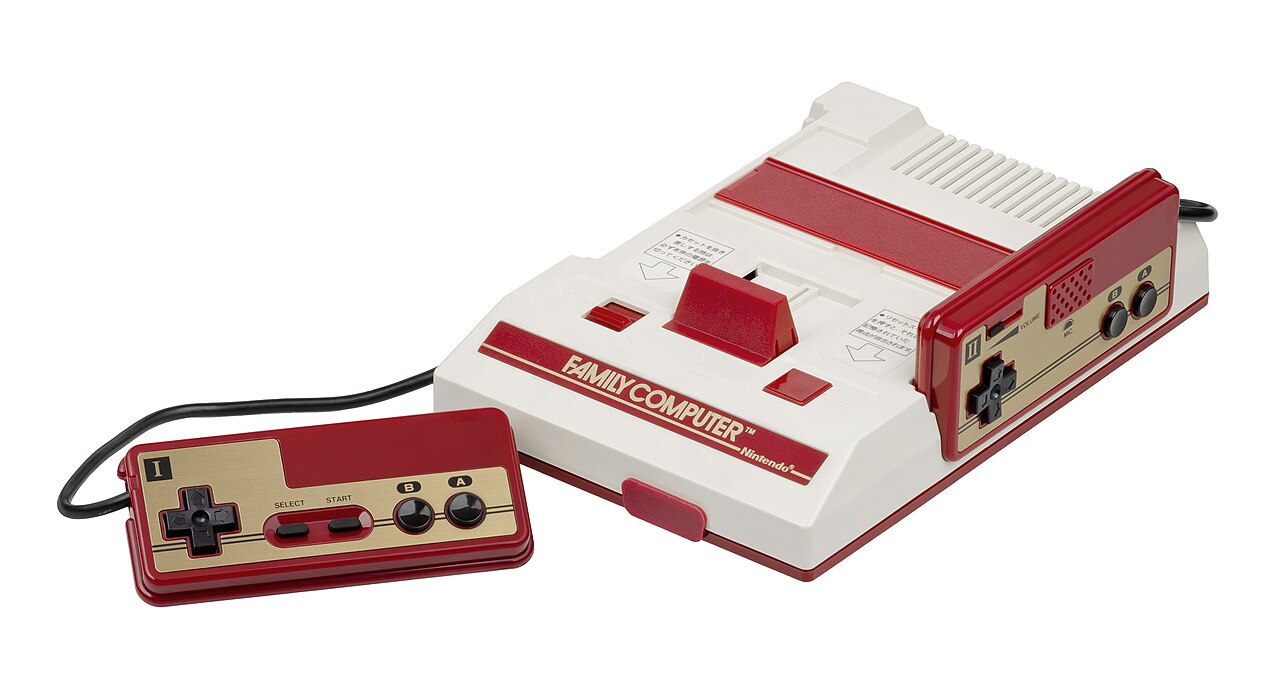
A Cartridge Fee
Nintendo launched the Famicom in Japan in 1983 with its own games only. In 1984 Hudson Soft and Namco asked to publish for it, and Nintendo agreed to take 30 percent: a licensing fee for access to the platform plus the cost of manufacturing the cartridges, which Nintendo controlled. When the console reached North America as the NES, a lockout chip in the cartridge slot enforced the arrangement: a cartridge without Nintendo’s matching chip would not run (see The Video Game Console Wars).
The console business built its economics around the fee. Consoles are sold cheaply to build an audience, and the manufacturer earns its money on the software. When Epic Games sued Apple in 2020, Microsoft’s Xbox vice president Lori Wright was asked in court whether Microsoft had ever made a profit on the sale of an Xbox console. “No,” she said. “We sell the consoles at a loss.” Microsoft took 30 percent of the revenue from games sold for the Xbox.
Apple Copies the Number
On 6 March 2008, announcing the iPhone software development kit, Steve Jobs said developers would set their own prices, including free, and keep 70 percent of sales revenue. Apple would host the apps and pay the credit-card fees, and free apps would cost the developer nothing. The App Store opened on 10 July 2008 with 500 apps (see The Rise of the App Store). Google set the same rate for its Android store, Valve charged it on Steam (see Valve and Steam), and the number became the default for digital storefronts.
The difference between Apple and a console maker was the hardware. Apple made money on each iPhone and then took 30 percent of what its owners spent on apps. Apple’s own managers wondered how long it could last. On 28 July 2011 Phil Schiller, head of marketing, asked Eddy Cue, head of services, whether “we think our 70/30 split will last forever?” He proposed that “once we are making over $1B a year in profit from the App Store,” Apple could “ratchet down from 70/30 to 75/25 or even 80/20,” so that any change would be made “from a position of strength rather than weakness.” The email became public in the Epic trial ten years later; Apple had not cut the rate in between.
The First Undercut
Epic Games, whose Fortnite earned money on every platform, broke ranks. In December 2018 its chief executive Tim Sweeney opened the Epic Games Store on PC with a 12 percent cut. Valve had lowered its own rate days earlier, but only for the largest sellers: 25 percent on a game’s revenue above 10 million dollars and 20 percent above 50 million. Microsoft followed Epic for PC games; from 1 August 2021 the Microsoft Store took 12 percent on PC games. It kept 30 percent on the Xbox.
The mobile stores cut the rate for small developers and kept 30 percent for the large ones. Apple announced the App Store Small Business Program on 18 November 2020: from 1 January 2021 developers with up to 1 million dollars in annual proceeds, which Apple said was “the vast majority of developers,” paid 15 percent. Google announced on 16 March 2021 that from 1 July it would take 15 percent on each developer’s first million dollars a year. Apple had already dropped its rate to 15 percent for subscriptions after their first year, in 2016.
Epic Sues
On 13 August 2020 Epic updated Fortnite on iPhone and Android to sell its in-game currency through Epic’s own payment system at a 20 percent discount. Apple and Google removed the game within hours, and Epic filed antitrust suits against both the same day.
Epic v. Apple was tried before Judge Yvonne Gonzalez Rogers without a jury. Her ruling of 10 September 2021 went against Epic on nine of ten claims: she did not find that Apple held an illegal monopoly. She did find that the App Store’s operating margins, which Epic’s expert put above 75 percent, were “extraordinarily high,” and she struck down Apple’s anti-steering rules, which forbade apps from telling users about cheaper ways to pay outside the app. Apple complied in January 2024 by letting apps link to outside purchases and charging a 27 percent commission on the purchases made through those links, including any made within seven days after the user left the app.
On 30 April 2025 Gonzalez Rogers held Apple in civil contempt. “This is an injunction, not a negotiation,” she wrote. “There are no do-overs once a party willfully disregards a court order.” She found that Tim Cook had chosen the commission plan over the objections of Phil Schiller, that Apple’s vice president of finance Alex Roman had given testimony “replete with misdirection and outright lies,” and she referred the matter to federal prosecutors for possible criminal contempt. She barred Apple from charging any commission on purchases made through links. Fortnite returned to the US App Store in May 2025. On 11 December 2025 the Ninth Circuit upheld the contempt finding but held that a total ban on commissions went too far: Apple may charge for the costs genuinely needed to coordinate external links and for intellectual property actually used, and the district court must set the amount. The Supreme Court agreed on 30 June 2026 to hear Apple’s appeal on the question whether a court may find contempt for violating the “spirit” of an injunction that does not expressly forbid the conduct. Apple filed its opening brief on 14 September 2026. Fortnite returned to the App Store worldwide on 19 May 2026.
Epic v. Google went to a jury, which on 11 December 2023 found unanimously that Google held an illegal monopoly over Android app distribution and billing. On 7 October 2024 Judge James Donato ordered Google, for three years, to allow rival app stores inside Google Play and to distribute them through it, to stop requiring Google Play Billing, and to let developers tell users about cheaper offers elsewhere. The Ninth Circuit affirmed in July 2025, and the Supreme Court declined to hear Google’s appeal in October 2025. In November 2025 Epic and Google proposed a settlement that would cap Google’s fee at 9 or 20 percent depending on the transaction. Donato was unimpressed: “The only changed circumstance that I can see right now is Epic and Google, two mortal enemies who pounded each other relentlessly in this courtroom for many years, are suddenly BFFs.” He had not approved the settlement when this article was last reviewed. Under the injunction, Google said it would begin distributing third-party app stores through Play in the United States on 22 July 2026.
The Legislators
South Korea passed the first law on 31 August 2021, an amendment to its Telecommunications Business Act forbidding app store operators from forcing developers to use their own payment systems. The European Union’s Digital Markets Act, applicable to Apple and Google from March 2024, required them to allow outside payment and steering; on 23 April 2025 the European Commission fined Apple 500 million euros for anti-steering rules that breached it (see The Platform Antitrust Story). Japan’s Mobile Software Competition Act, passed on 12 June 2024, took full effect on 18 December 2025 and required Apple and Google to allow alternative app stores and payment on phones sold there.
Each regime produced its own fee schedule. The 30 percent survives as the standard rate on the largest stores, paid in full mainly by large developers in countries without such laws.
📚 Sources
- Nintendo Entertainment System — Wikipedia (Namco and Hudson Soft in 1984; the 30 percent fee for licensing and production)
- “The 30% Fee Epic Is Fighting Apple Over Began With Nintendo,” GameSpot (August 2020), summarizing Takashi Mochizuki’s Bloomberg report of 19 August 2020
- “Epic v. Apple trial reveals how Microsoft has never made money off Xbox hardware,” GeekWire (May 2021) (Lori Wright testimony; Microsoft’s 30 percent on Xbox)
- “Apple Announces iPhone 2.0 Software Beta,” Apple Newsroom (6 March 2008) (developers “retain 70 percent of all sales revenues”)
- “Live blog: Apple SDK announcement,” Fortune (6 March 2008) (Apple hosts and pays credit-card fees; free apps free)
- “The revolution Steve Jobs resisted: Apple’s App Store marks 10 years,” AppleInsider (10 July 2018) (500 apps at launch)
- Gruber, John: “App Store: The Schiller Cut,” Daring Fireball (June 2021) (Schiller’s email of 28 July 2011)
- “Phil Schiller suggested reduced App Store fees in 2011,” AppleInsider (3 May 2021) (email to Eddy Cue; 15 percent for second-year subscriptions from 2016)
- Epic Games Store — Wikipedia (December 2018 launch, 12 percent)
- Steam (service) — Wikipedia (2018 revenue tiers)
- “Matching Epic, Microsoft is slashing what it takes from developers to 12%,” PC Gamer (April 2021) (from 1 August 2021, PC games only)
- “Apple announces App Store Small Business Program,” Apple Newsroom (18 November 2020)
- “Google Play drops commissions to 15% from 30%, following Apple’s move last year,” TechCrunch (16 March 2021)
- Epic Games v. Apple — Wikipedia (13 August 2020 removal; 10 September 2021 ruling; January 2024 compliance; May 2025 return)
- “The Apple v. Epic Decision,” Stratechery (September 2021) and “Apple vs. Epic ruling reveals 70% of App Store revenue comes from a small fraction of customers playing games,” CNBC (10 September 2021) (operating margin above 75 percent, “extraordinarily high”)
- Gruber, John: “Judge Yvonne Gonzalez Rogers Rules, in Excoriating Decision, That Apple Violated Her 2021 Court Order,” Daring Fireball (30 April 2025) (quotations from the contempt order; 27 percent and seven days; Cook, Schiller, Roman)
- “Northern District of California Finds Willful Violation of Injunction by Apple, Orders Enforcement and Refers Matter for Criminal Contempt,” A&O Shearman Antitrust Blog (2025)
- Epic Games, Inc. v. Apple Inc., No. 25-2935 (9th Cir. 11 December 2025), opinion
- “Ninth Circuit Upholds Apple Contempt Finding But Narrows Scope of Remedial Relief,” Shinder Cantor Lerner (December 2025)
- Apple Inc. v. Epic Games, Inc. (No. 25-1311), SCOTUSblog case page (certiorari granted 30 June 2026; question presented)
- “Apple asks U.S. Supreme Court to vacate App Store contempt finding,” MacDailyNews (15 September 2026)
- “Fortnite Returns to the App Store Worldwide as Epic Signals ‘Final Battle’ With Apple,” MacRumors (19 May 2026)
- Epic Games v. Google — Wikipedia (11 December 2023 verdict; 7 October 2024 injunction; July 2025 affirmance; October 2025 certiorari denial; November 2025 settlement)
- “Federal Judge casts doubt on Epic v. Google settlement,” Game Developer (12 November 2025) (9 and 20 percent caps; “suddenly BFFs”)
- “Epic v. Google Settlement Update April 2026,” Stash (April 2026) (settlement not approved; summer evidentiary hearing)
- “Google app store overhaul expected by end of July,” Courthouse News Service (16 July 2026) (third-party stores through Play from 22 July; injunction through 2029)
- “South Korea passes bill limiting Apple and Google control over app store payments,” CNBC (31 August 2021)
- “Commission finds Apple and Meta in breach of the Digital Markets Act,” European Commission press release (23 April 2025)
- “Japan App Store Gets Alternative Marketplaces, Third-Party Payments and More,” MacRumors (17 December 2025) and “Japan’s Mobile Software Competition Act Grows its Guidelines,” Kluwer Competition Law Blog (passed 12 June 2024; full effect 18 December 2025)