Sandra Kurtzig
Abstract
Sandra Kurtzig (born 1947) started a part-time programming business in the second bedroom of her Silicon Valley apartment in 1972 with a $2,000 commission check, never took venture capital, and in October 1981 took ASK Computer Systems public, the first woman to do so with a technology company she had founded. ASK’s product, MANMAN, ran the factory floors of small manufacturers on Hewlett-Packard minicomputers and made her, by 1983, the owner of a stake worth $67 million. She retired in 1984, was called back by the board in 1989, bought the database company Ingres for $110 million, left again in 1991, and watched Computer Associates buy the company in 1994 for $314 million. At 63 she started over, building cloud manufacturing software at Kenandy.
Los Angeles to Palo Alto
Kurtzig was born Sandra Brody in Chicago on 21 October 1947 and grew up in Los Angeles. Her mother, who had worked in journalism, was the first person in the family to hold a college degree; her father had none. She worked summers at TRW Systems in Redondo Beach, which paid most of her way through UCLA, where she took a degree in mathematics in 1968. At TRW she met closed-shop programming, where the programmer handed a deck over a counter and waited; what changed her mind about computers was a General Electric time-sharing terminal that let her write BASIC and get an answer back.
She took a master’s in aeronautical engineering at Stanford and went to work selling time-sharing services for General Electric, ending up as the top producer in the office. The trigger for leaving was small: she had filled in a quarter’s expense report in one sitting, put the numbers in the wrong column, and was called in about the columns rather than the quarter. She wanted children and a job she could do at home with a terminal in the spare room.
The Second Bedroom
She started in 1972 with a $2,000 commission check from GE and no outside money, then or ever. The name was chosen because ASK was a word people would remember and began with A, which she thought mattered for the telephone directory; that her sons are called Ken and Andy, which makes ASK read as Andy, Sandy and Kenny, is a joke she started making after her divorce. Her husband Arie worked at HP in research and was never involved in the company. Marketing was a flyer her mother helped write, laid out as a wanted poster: a photograph of Kurtzig above the words Have you seen this woman?, mailed to hundreds of firms she had picked out of industrial directories, in an envelope stamped “Dangerous Woman Loose” with no return address. She carried a pink briefcase to sales calls on the theory that everyone else in the room would be a man in the same suit.
The first contract, for a Los Angeles company called Powertech, failed: the software was late, the customer cancelled, and years later someone from that team told her the real reason they had pulled out was that they did not believe a woman could do the work. The next one, a division of Hughes Aircraft, worked, and the manufacturing manager there told everyone how well it had gone. That was the reference customer.
ASK had no computer. It wrote code at night on machines belonging to other people: Hewlett-Packard’s demonstration systems, and then, as orders came in, each customer’s own machine, delivered to ASK’s office, programmed, and shipped on. One night the machine kept crashing until an HP service engineer traced it to Kurtzig’s hair dryer, which was plugged into the same circuit.
MAMA Becomes MANMAN
The program that came out of those contracts handled inventory, bills of material and shop-floor scheduling, the problems small manufacturers could not afford a mainframe to solve. On the time-sharing service it needed a name, and Kurtzig, by then a mother, called it MAMA, for manufacturing management. Manufacturing executives did not buy software called MAMA. She renamed it MANMAN, which stood for exactly the same thing, doubled the price, and sold it.
The hard decision was hardware. MANMAN ran on the HP 2100, and in 1972 HP introduced the HP 3000, a different architecture that the company designated its business computer. Rewriting meant throwing away everything that already worked; not rewriting meant being the manufacturing package on the machine HP no longer sold as a business machine. Kurtzig rewrote. ASK sold MANMAN from 1978 as a turnkey system, software and HP hardware together, at prices from $125,000 to $300,000, which made ASK one of HP’s larger resellers and tied the two companies together for a decade.
Going Public
ASK filed in 1980, pulled the offering on the advice of Ken Oshman of Rolm, who sat on her board and told her the management team had not gelled, and went out a year later. The company listed on NASDAQ in October 1981, in the same window as Seagate, just before the market closed to new issues.
Being the first woman to take a technology company public made the road show a curiosity. “Half the people who were showing up for these road shows were showing up because they wanted to see ASK,” she said. “And the other half were coming to see the freak show. A woman, are you kidding me?” In San Francisco the presentation was booked at the Bohemian Club, which did not admit women upstairs, so the company presented in the basement. Within two years her stake was worth $67 million (see Women in Computing).
Leaving, Returning, Leaving
Kurtzig began stepping back in March 1984; Ronald Branniff became president that year and chief executive in 1985. Growth stalled. Earnings fell to $5.89 million on revenue of $76 million in 1986, competitors arrived, and the company’s attempt to port MANMAN to IBM hardware never shipped, in Kurtzig’s judgment because by then the product had to launch complete rather than grow from a rough first version.
The board asked her back in mid-1989. She had said she would give it three years and gave it about that. ASK put MANMAN on DEC machines and became one of the larger VAX resellers, bought Data 3 Systems for $18.7 million, and in 1990 bought Ingres, the Berkeley-derived relational database company, for $110 million, financed by selling 30 percent of ASK to Hewlett-Packard and EDS for $60 million (see The Database Revolution). Revenue reached $206 million at the end of 1990. Ingres was a fine database losing a market war to Oracle; 1992 brought 23 percent revenue growth and a $44 million loss on write-offs. A new chief executive took over in 1991 and Kurtzig stayed on as non-executive chairman. On hiring her own replacements, three times, her verdict was flat: “I failed Successor 101, that’s for sure.”
Computer Associates tendered for The ASK Group in June 1994 and completed the merger that September, paying about $314 million, less than the $400 million in annual revenue the combined ASK and Ingres had been expected to reach. MANMAN went on through CA’s Interbiz division to SSA Global in 2002 and to Infor in 2006, and factories were still running it decades after the HP 3000 stopped being made.
Kenandy
Kurtzig’s book CEO: Building a $400 Million Company from the Ground Up appeared in 1991. She started eBenefits with her son, an experience with venture capitalists she declines to discuss in detail, and in 2010 founded Kenandy, named after Ken and Andy, to put manufacturing ERP on the Salesforce platform: the same problem she had solved in 1972, with the machine in somebody else’s data centre. Kleiner Perkins led a $10.5 million round in 2011, Salesforce among the investors, and a $33 million round followed in 2013. Rootstock Software, a competitor also built on Salesforce, bought Kenandy in January 2018.
📚 Sources
- Oral History of Sandra Kurtzig, Computer History Museum, 29 September 2017, interviewed by Gardner Hendrie (UCLA and TRW, the GE time-sharing terminal and the expense report, the $2,000 and the second bedroom, never taking venture capital, the choice of the name ASK and the Andy-Sandy-Kenny joke, Arie Kurtzig at HP and not in the company, the “Dangerous Woman Loose” flyer and the pink briefcase, Powertech and the Hughes Aircraft reference customer, the hair dryer, using customers’ machines before shipping them, MAMA to MANMAN and the doubled price, the HP 2100 to HP 3000 decision, Ken Oshman and the pulled 1980 offering, the October 1981 IPO alongside Seagate, the “freak show” and the Bohemian Club basement, retiring in 1984/85 and returning in 1989, the DEC port and the failed IBM port, buying Ingres, “I failed Successor 101”, eBenefits and Kenandy)
- ASK Group, Inc. History — FundingUniverse (International Directory of Company Histories) (founding in 1972 with $2,000 and incorporation in 1974; MANMAN from 1978 at six-figure prices; the 1981 public offering; the $67 million stake by 1983; Branniff as president in 1984 and chief executive in 1985; earnings of $5.89 million on revenue of $76 million in 1986; NCA for $43 million in 1987; Kurtzig’s return in mid-1989 and Data 3 Systems at $18.7 million; Ingres for $110 million in 1990 with $60 million from HP and EDS for 30 percent; revenue of $206 million at the end of 1990; the 1992 loss of $44 million)
- ASK Group — Wikipedia (the HP 2100 origin and the port to the HP 3000, turnkey prices of $125,000 to $300,000, the NASDAQ ticker ASKI, Kurtzig replaced as chief executive in 1991, the CA acquisition in 1994, and MANMAN passing to SSA Global in 2002 and Infor in 2006)
- Computer Associates International, Form 10-Q, FY1995 (SEC EDGAR) (98 percent of ASK’s stock acquired on 22 June 1994, the merger completed on 20 September 1994, and an aggregate cost of approximately $314 million)
- Sandra Kurtzig — Wikipedia (born 21 October 1947 in Chicago; UCLA mathematics 1968 and the Stanford master’s; General Electric; the 1991 book CEO: Building a $400 Million Company from the Ground Up; Kenandy founded in 2010; sons Ken and Andy)
- Kenandy — Wikipedia (founded 2010 on the Salesforce platform; the $10.5 million round led by Kleiner Perkins in 2011 with Salesforce as an investor; the 2016 Series B; the acquisition by Rootstock Software)
- Cloud ERP vendor Rootstock acquires competitor Kenandy — diginomica, January 2018
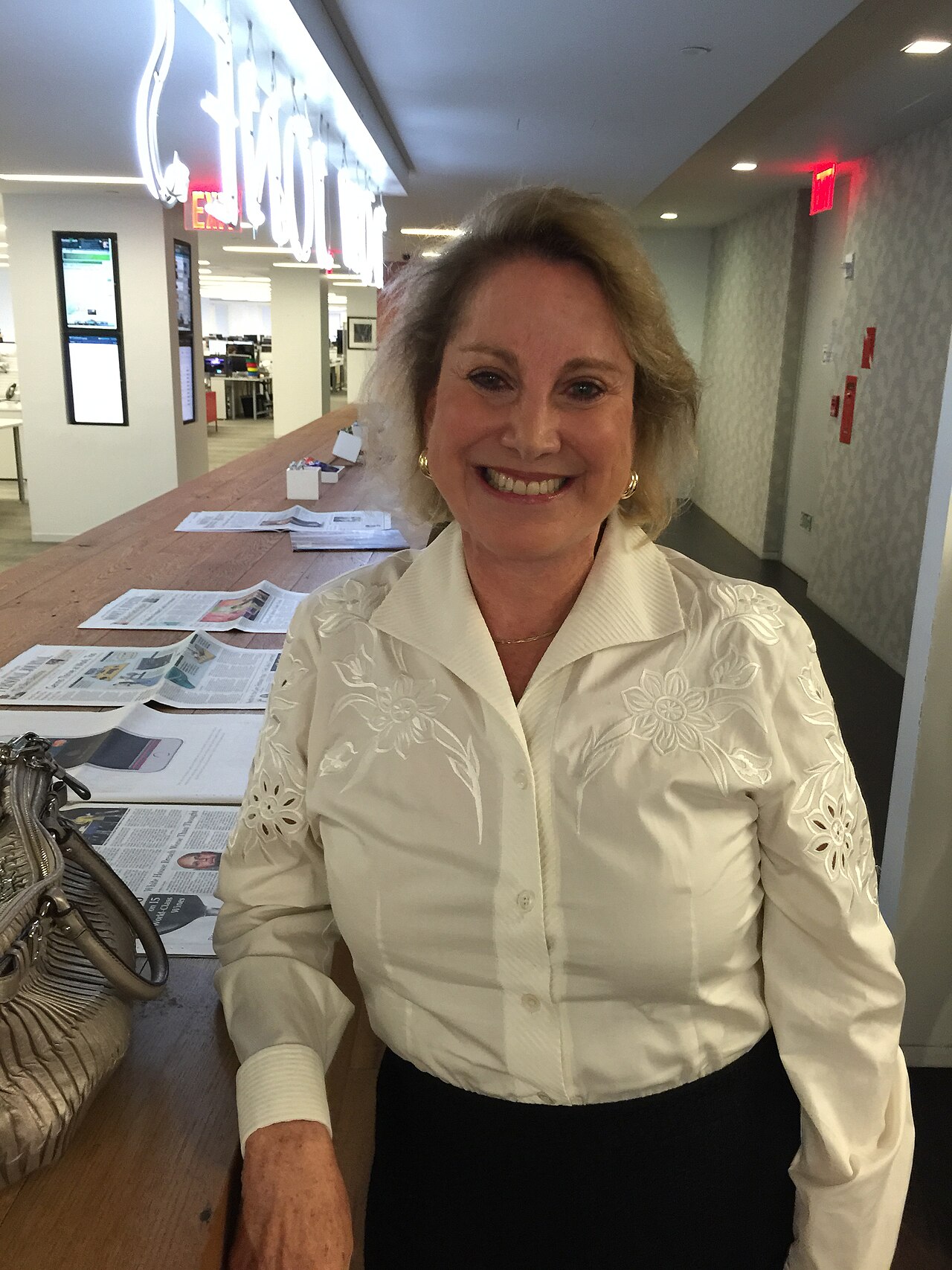
- Image: Sandra Kurtzig in 2014.jpg by tiernantech (CC BY-SA 2.0), via Wikimedia Commons