Gordon Bell: Architect of the Minicomputer
Abstract
C. Gordon Bell (1934–2024) was the second computer engineer hired by Digital Equipment Corporation. In the 1960s he designed the input/output system of the PDP-1, the PDP-4 and the PDP-6; after six years at Carnegie Mellon he came back in 1972 as head of engineering and led DEC into the VAX, the 32-bit line that made it the world’s second-largest computer maker by the early 1980s. A heart attack in 1983 ended his DEC career. He then built startups, ran the computing directorate of the National Science Foundation as it planned a national research network, endowed the Gordon Bell Prize for parallel computing, and spent twenty years at Microsoft Research recording his own life for the MyLifeBits project. With his wife Gwen he founded the museum that became the Computer History Museum.
Kirksville
Chester Gordon Bell was born on 19 August 1934 in Kirksville, Missouri. His father, Chester Bell, was an electrician who ran an appliance business, Bell Electric; his mother, Lola Gordon Bell, taught grade school. A heart condition kept him at home, mostly in bed, for much of the second grade. He learned repair work in his father’s shop and was working as an electrician by twelve, installing some of the town’s first home dishwashers.
He studied electrical engineering at MIT, taking his master’s in 1957, and spent 1957–58 as a Fulbright scholar at the New South Wales University of Technology in Sydney, where he taught the university’s first graduate course in computer design. In Australia he met Gwen Druyor, an American student. He proposed to her, by the Computer History Museum’s account, by way of the university’s English Electric DEUCE computer.
DEC
Back at MIT he started a doctorate and left it in 1960, when Ken Olsen and Harlan Anderson recruited him to Digital Equipment Corporation. He arrived as the PDP-1 was being finished and designed its input/output subsystem. Many of the forty to fifty PDP-1s DEC built went to ITT as message-switching machines, and for them Bell designed a circuit that sampled an incoming teleprinter signal, found the centre of each bit and shifted the bits into a register: the first UART (universal asynchronous receiver/transmitter), the part that later sat behind nearly every serial port.
He was project engineer of the PDP-4, an 18-bit machine for process control that sold for less than half the price of the PDP-1; the PDP-7, PDP-9 and PDP-15 followed its architecture. Then came the 36-bit PDP-6 of 1964, for which he did the architecture and logic design. Bell called it the first commercial time-sharing computer. It sold only 23 units, and DEC nearly dropped the line before reviving the design as the PDP-10, which universities adopted widely for time-sharing. He also contributed to the architecture of the 12-bit PDP-5, the ancestor of the PDP-8, and to the PDP-11 of 1970, whose Unibus and general registers were his.
Carnegie Mellon
In 1966 Bell left DEC to teach computer science and electrical engineering at Carnegie Mellon, while consulting for DEC. With Allen Newell he wrote Computer Structures: Readings and Examples (1971), which described dozens of real machines in two notations of its own: PMS for the processors, memories and switches of a system, and ISP for its instruction set. The book’s register-transfer descriptions were an early ancestor of the hardware description languages. A rewritten edition with Dan Siewiorek appeared in 1982.
In a 1972 paper in Computer, written with two co-authors, Bell plotted the price and function of mainframes and minicomputers against the advance of technology. He developed the idea into Bell’s law of computer classes, stated in full in Communications of the ACM in 2008: roughly once a decade a new, cheaper class of computer forms around a new technology and a new kind of use, and creates its own industry. It fitted the mainframe, the minicomputer, the workstation and PC, and the smartphone (see Eponymous Laws).
The VAX
Bell returned to DEC in 1972 as vice president of engineering. The PDP-11 was running out of address space, and DEC’s answer was a 32-bit extension of it with virtual memory, the Virtual Address eXtension. Bell led its development from 1975 to 1978. The VAX-11/780 was announced at DEC’s shareholders’ meeting on 25 October 1977 and became the yardstick for its successors: one “VAX unit of performance”. Its sales carried DEC to second place among the world’s computer makers by the early 1980s, behind only IBM.
In 1978 Bell wrote the paper that DEC adopted that December as its VAX strategy. “To me, the most exciting time was when I was in Tahiti and wrote a paper that turned out to be the VAX strategy,” he told InfoWorld in 2008. “It was a commitment to having a small number of computers that would cover the whole of computing.” One architecture and one operating system, VMS, would run on everything from a workstation to a cluster of large machines, all of them linked by a network. “It was the idea of using computers in a cluster that really was the big thing about VAX.” To connect them DEC needed a local network, and Bell put the company behind Ethernet together with Xerox and Intel (see Bob Metcalfe and Ethernet). Much of the Unix world grew up on VAXes as well, though DEC was selling VMS.
In March 1983, on a ski trip in Snowmass, Colorado, Bell had a heart attack; a DEC vice president, Bob Puffer, kept him alive with CPR. He resigned that summer. Looking back two years later, he described DEC’s design philosophy to Computerworld in one line: “All the DEC machines were interactive, and we believed in having people talk directly to computers.”
Startups and Washington
After DEC Bell co-founded Encore Computer, which shipped a shared-memory multiprocessor in 1985, and in 1986 joined Ardent, a graphics supercomputer startup that merged with Stellar in 1989 to form Stardent. In between he went to Washington. In 1986 he became the first assistant director of the National Science Foundation’s new Directorate for Computer and Information Science and Engineering, and led the cross-agency group that specified the National Research and Education Network, the plan for a high-speed national network for research and education.
In 1987 he endowed the Gordon Bell Prize with the ACM, at first $1,000 a year, for speeding up real applications on real parallel machines. The first one, in 1988, went to John Gustafson and his colleagues at Sandia National Laboratories for their work on a 1,024-processor nCUBE hypercube. The prize is still awarded at the annual Supercomputing conference (see The Supercomputer Era).
The Museum
Gordon and Gwen Bell had collected computer artifacts since the 1970s. In 1979, with help from DEC and Ken Olsen, they opened the Digital Computer Museum in a former RCA building in DEC’s Marlborough, Massachusetts complex. As The Computer Museum it moved to Museum Wharf in Boston and reopened there on 13 November 1984, with Gwen Bell as its president. In 1996 its board, with Bell and Len Shustek among the founders, set up a West Coast division, The Computer Museum History Center, at Moffett Field in California. The Boston museum merged into the Museum of Science in 1999, its collection went west, and the History Center became the Computer History Museum, which moved into its building in Mountain View in 2002.
MyLifeBits
Bell advised Microsoft from 1991 as it set up its research division and joined Microsoft Research full time in August 1995, at its Silicon Valley lab. From 2001 he was the subject of MyLifeBits, an experiment in recording one person’s whole life, built by Jim Gemmell and Roger Lueder. Bell scanned his papers, books and photographs, kept his email, web browsing, phone calls and instant messages, and wore a camera that took pictures automatically through the day. The idea went back to Vannevar Bush’s Memex of 1945 (see Vannevar Bush and the Memex). With Gemmell he wrote Total Recall: How the E-Memory Revolution Will Change Everything (2009). By 2016 he had put the camera away and said the smartphone had largely done what Bush had imagined.
Recognition and Death
Bell was elected to the National Academy of Engineering in 1977 and the National Academy of Sciences in 2007. He received the National Medal of Technology from President George H. W. Bush in 1991 and was the first recipient of the IEEE John von Neumann Medal in 1992. Datamation called him “the Frank Lloyd Wright of computers”.
He and Gwen Bell divorced in 2002; in 2009 he married Sheridan Sinclaire. Gordon Bell died of aspiration pneumonia on 17 May 2024 at his home in Coronado, California, aged 89.
📚 Sources
- Computer History Museum: “In Memoriam: Gordon Bell (1934–2024)” (birth 19 August 1934 in Kirksville; parents and Bell Electric; Fulbright at UNSW; the DEUCE proposal; recruited by Olsen and Anderson in 1960; PDP-1 I/O and UART; CMU 1966–72; Computer Structures 1971 and 1982; vice president in 1972; VAX 1975–1978; Ethernet with Intel and Xerox; Unix on the VAX; heart attack March 1983; Encore, Ardent, Stardent; Gordon Bell Prize at $1,000 and Gustafson’s 1988 win; National Medal 1991; museum founding and moves; Microsoft 1995; death 17 May 2024; “Frank Lloyd Wright”)
- Wikipedia: Gordon Bell (MIT degrees 1956/1957; Fulbright 1957–58; PDP-4 and PDP-6 architect; Unibus and general registers of the PDP-11; NSF CISE 1986–87 and NREN; Ardent 1986, Stardent 1989; Microsoft from 1991 and 1995; National Academies 1977 and 2007; von Neumann Medal 1992; death of aspiration pneumonia in Coronado)
- Bryan Marquard, “C. Gordon Bell, creator of a personal computer prototype, dies at 89”, Boston Globe, 22 May 2024 (heart problem at seven and the second grade at home; electrician by twelve, dishwashers; Snowmass; first graduate computer-design course at UNSW; second computer engineer at DEC; VAX 780 and DEC’s second place; Snowmass and Bob Puffer’s CPR; NSF in 1986; second marriage 2009; the 1985 Computerworld quote)
- Steven Leibson, “Gordon Bell (1934–2024): Grandmaster of Computer Architecture, Wizard of VAX, Inventor of the UART”, EE Journal, 2024 (arrival in August 1960; ITT’s ADX 7300 PDP-1s and the UART; PDP-4 at under half the PDP-1’s price and its PDP-7/9/15 successors; 23 PDP-6s and the PDP-10; VAX as a 32-bit PDP-11 extension; Encore’s 1985 multiprocessor; divorce 2002)
- Gordon Bell, publications and vita, Microsoft Research (PDP-6 as the “first commercial time sharing computer”; VAX Computing Strategy team leader; Ethernet, DECnet and VAX Clusters 1978–1983)
- Wikipedia: VAX-11 (VAX-11/780 announced 25 October 1977 at the shareholders’ meeting; 1 VUP baseline)
- “IT vet talks about the most influential computers”, InfoWorld, 30 April 2008 (the Tahiti paper, “a small number of computers”, clusters)
- Gordon Bell interview, Computerworld, 2 September 1987 (PDF) (VAX strategy adopted December 1978; clusters, departmental minis and workstations in one environment)
- Wikipedia: Bell’s law of computer classes (Bell, Chen and Rege, “The Effect of Technology on Near Term Computer Structures”, Computer, March–April 1972; Bell, “Bell’s Law for the Birth and Death of Computer Classes”, Communications of the ACM, January 2008)
- Wikipedia: The Computer Museum, Boston (Digital Computer Museum 1979 in a former RCA building in Marlboro; Museum Wharf reopening 13 November 1984; History Center at Moffett Field 1996; merger with the Museum of Science 1999; Mountain View building 2002)
- Wikipedia: MyLifeBits (started 2001; Gemmell and Lueder; what was recorded; Total Recall 2009; camera put away by 2016 and the smartphone as Memex)
- Computer History Museum: Oral history of Gordon Bell, interviewed by Gardner Hendrie, 2005–2006
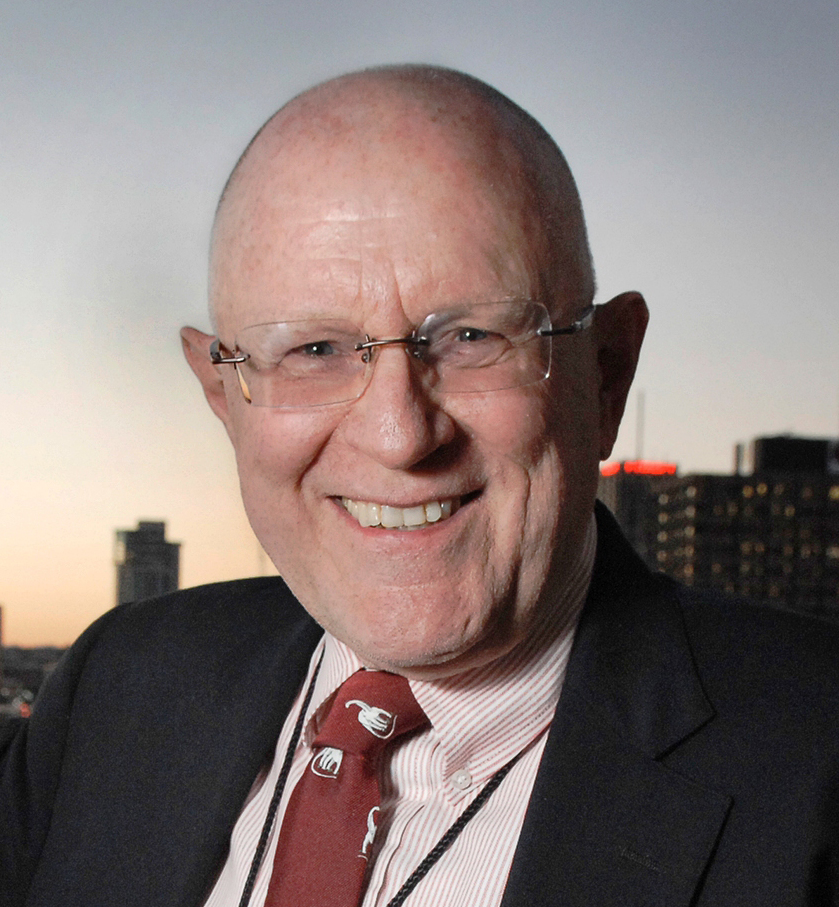
- Image: Gordon Bell (cropped).jpg by Queensland University of Technology (attribution only), via Wikimedia Commons