Dead End: Sony ATRAC and MagicGate
Abstract
In 1999 Sony, the company that had invented portable personal music with the Walkman, showed two digital music players at Comdex, two years before Apple’s iPod. Both were built around ATRAC3, Sony’s own compression format, and OpenMG, a copy-protection system that with its hardware partner MagicGate was meant to satisfy the record industry, Sony’s own music division included. For years Sony’s players accepted MP3 files only after conversion, every transfer went through Sony’s PC software, and a song could be “checked out” to only three devices at once. Sony kept ATRAC at the centre of its players, its MiniDisc line and its Connect download store until 30 August 2007, when it announced that Connect would close and that new Walkmans would play MP3, AAC and Windows Media files copied by drag and drop. By then the iPod had won. Sony’s chief executive Howard Stringer blamed the music division: “They saw digital media, panicked and didn’t like it.”
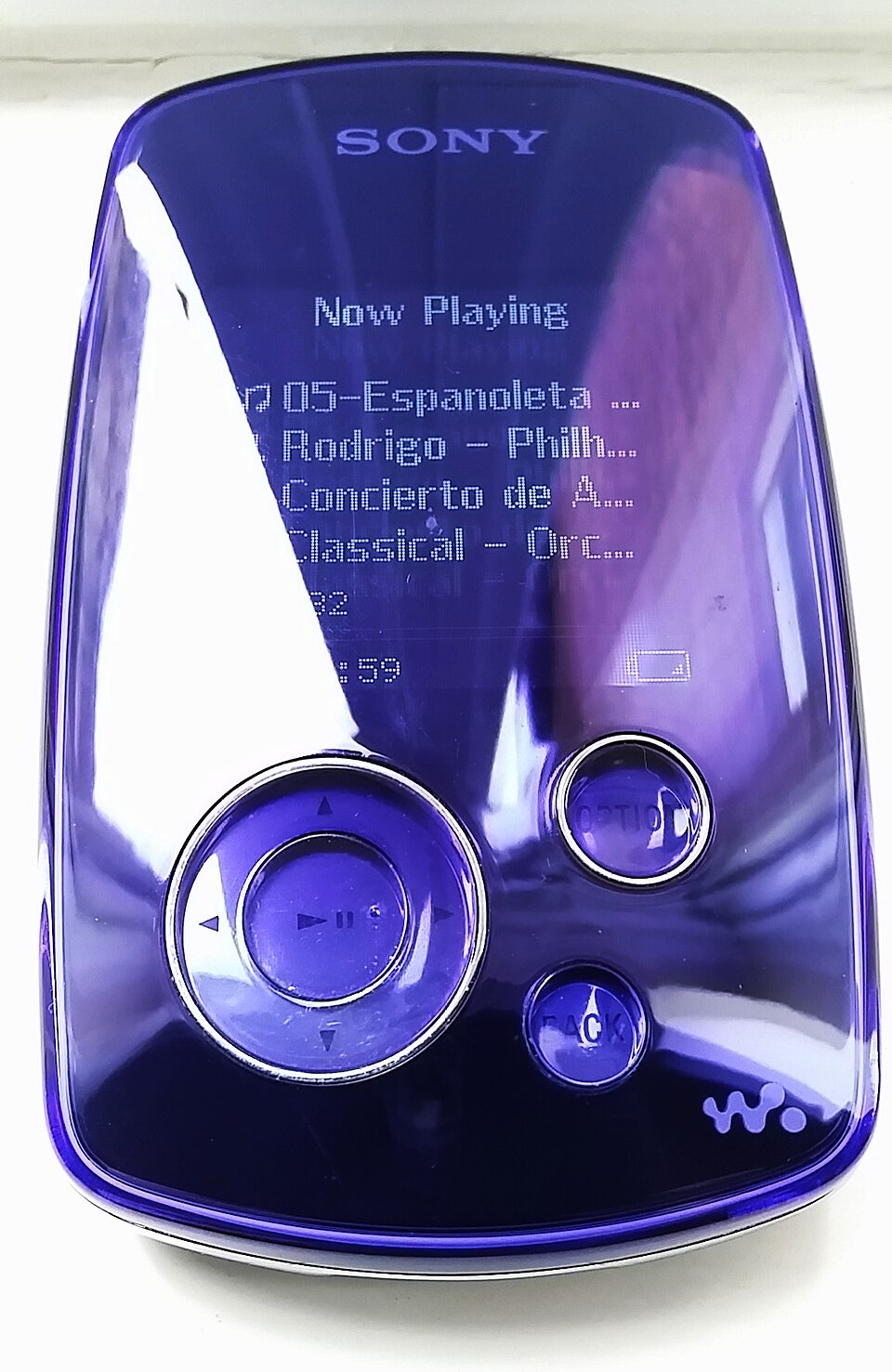
ATRAC and the MiniDisc
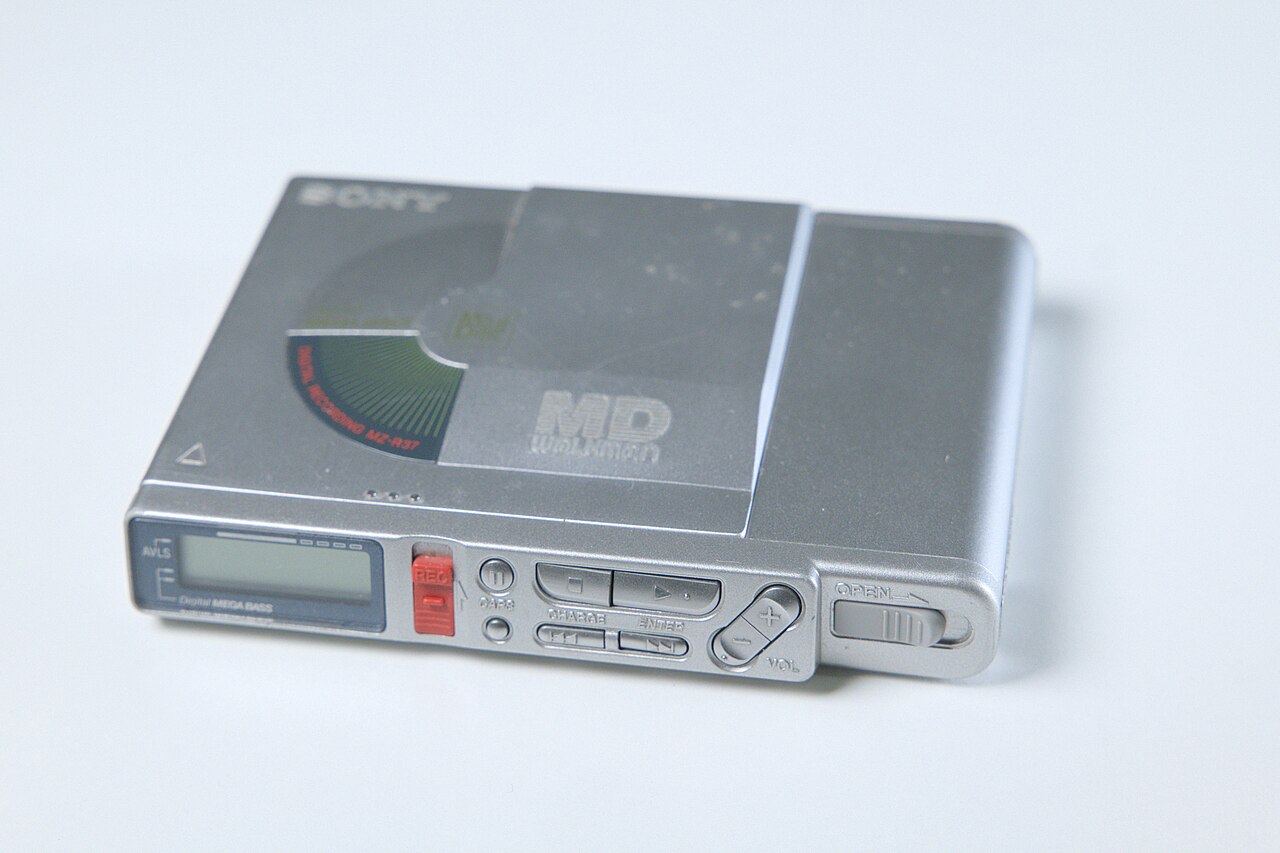
ATRAC (Adaptive Transform Acoustic Coding) was born with the MiniDisc, which Sony released in Japan in November 1992 and in Europe and North America in December. A MiniDisc was a small recordable magneto-optical disc in a cartridge, and to fit 74 minutes of stereo on it Sony needed a compression scheme. ATRAC reduced the CD’s 1.4 megabits per second to a 292-kilobit stream, about five to one, by discarding sound that human hearing masks, the same perceptual principle that the Fraunhofer group used for MP3 (see Karlheinz Brandenburg and MP3). Sony also used ATRAC in its SDDS cinema sound system.
The MiniDisc’s copy protection was mild. Consumer recorders used the Serial Copy Management System, two bits that marked a recording as an original or a copy and allowed one generation of digital copies but not a copy of the copy. Within that rule a user could record from any CD, radio or microphone. The format did well in Japan and parts of Asia and reasonably well in Europe through the 1990s and into the 2000s; in the United States it had limited success. By March 2011 Sony had sold 22 million MiniDisc players.
The second generation of the codec, ATRAC3, arrived in 1999, and in 2000 Sony used it for MDLP, which added long-play modes at 132 and 66 kilobits per second and fitted up to four times as much music on a disc. ATRAC3 became the format of all of Sony’s digital music products.
The Copyright Panic
In 1998 the record industry was frightened of the MP3. Files ripped from CDs were spreading across the internet, the first portable MP3 players had appeared, and the recording companies wanted a technical barrier before the trickle became a flood. Late in 1998 they formed the Secure Digital Music Initiative (SDMI) with consumer electronics and computer companies, led by Leonardo Chiariglione, who had chaired the MPEG committee. More than 200 companies joined. SDMI’s aim was a standard for portable players that would play legitimate music and refuse pirated copies, using encryption and a watermark embedded in the audio.
Sony was on both sides of this table. It made the players, it owned one of the largest record companies, Sony Music, and it led the development of the SDMI specification. On 22 September 1999 it announced the Memory Stick Walkman NW-MS7, which it called the first audio player compliant with the SDMI specifications, although those specifications were not yet final. The player cost 45,000 yen in Japan (about $430), went on sale on 21 December 1999, and came with a 64 MB Memory Stick that held 60 to 120 minutes of music depending on the ATRAC3 bit rate. “Once digital data is downloaded to a personal computer and stored in the hard disk, copyright is ignored,” said Kunitake Ando, president of Sony Information Technology, explaining the design.
SDMI itself did not survive. In September 2000 it challenged the public to remove its candidate watermarks from sample tracks; a team led by the Princeton computer scientist Ed Felten claimed to have done so, and when Felten tried to publish the results, SDMI, the RIAA and the watermark vendor Verance threatened legal action under the Digital Millennium Copyright Act. The paper appeared in 2001 after the US Justice Department gave assurances. SDMI has been inactive since 18 May 2001; Chiariglione later said that none of the submitted technologies could pass the “golden ears” test of being inaudible. Sony’s protection schemes, built to SDMI’s requirements, stayed in its products for another six years.
MagicGate and OpenMG
Sony’s copy protection had two halves. MagicGate was the hardware half: a chip in the player and a matching chip in a special MagicGate Memory Stick (32 MB and 64 MB at launch) authenticated each other and encrypted the music on the card, so that a file copied to another card or to a computer would not play. OpenMG was the software half on the PC. Sony’s jukebox program, first OpenMG Jukebox and from October 2001 SonicStage, encrypted every track it ripped from a CD or downloaded, and kept a licence for each one.
The licence rules turned file copying into a lending library. A track could be checked out from the PC to at most three portable devices or memory cards at a time; a fourth transfer was refused until one of the copies had been checked back in to the same computer. Music could not be copied back from a player to the PC at all. On the Memory Stick and Network Walkmans, MP3 files did not play until the jukebox software had converted them into encrypted ATRAC3, which took time and cost quality, and the converted copies were then bound to the computer that made them. A user whose PC was replaced, reinstalled or broken could lose access to their own CD rips. Some players could not be filled by dragging files into a folder, only through SonicStage.
The pattern repeated on the MiniDisc. NetMD recorders, introduced in late 2001, could receive music from a PC over USB, but only through OpenMG and only in one direction: a recording made on a NetMD deck, of a lecture or a band, could not be copied to the computer. Hi-MD, a 1 GB version of the disc introduced in 2004, gained native MP3 playback on its second-generation players in spring 2005. The restriction on uploading recordings was lifted only in February 2006, with SonicStage 3.4 and the MZ-RH1 recorder.
Two Players and a Third
Sony’s divisions did not pull in one direction even on their own platform. At Comdex in Las Vegas in November 1999 Sony showed two portable digital music players with largely overlapping features. One came from the VAIO computer division, the VAIO MusicClip, a cylindrical USB player 4.7 inches long with 64 MB of memory, priced at $299, which played MP3 and WAV files as well as ATRAC3 under OpenMG; the other, the Memory Stick Walkman, came from the Sony Personal Audio Company. Asked about a music download service, a Sony spokesperson said the company was considering one. The marketing scholar David Aaker later cited the pair as an example of how internal “silos” duplicated effort and confused customers.
On 23 October 2001 Apple introduced the iPod (see Tony Fadell: From iPod to Nest). It played MP3 files directly, held 5 GB on a small hard disk, and copied a user’s whole iTunes library over FireWire without check-out counts. Its copy protection arrived only with the iTunes Music Store in April 2003, as a deal Steve Jobs negotiated with the five major labels, Sony Music among them (see The Digital Music Revolution). Apple’s FairPlay restrictions on purchased songs were looser than OpenMG’s, and they did not apply at all to the music people already owned on CD.
The Network Walkman
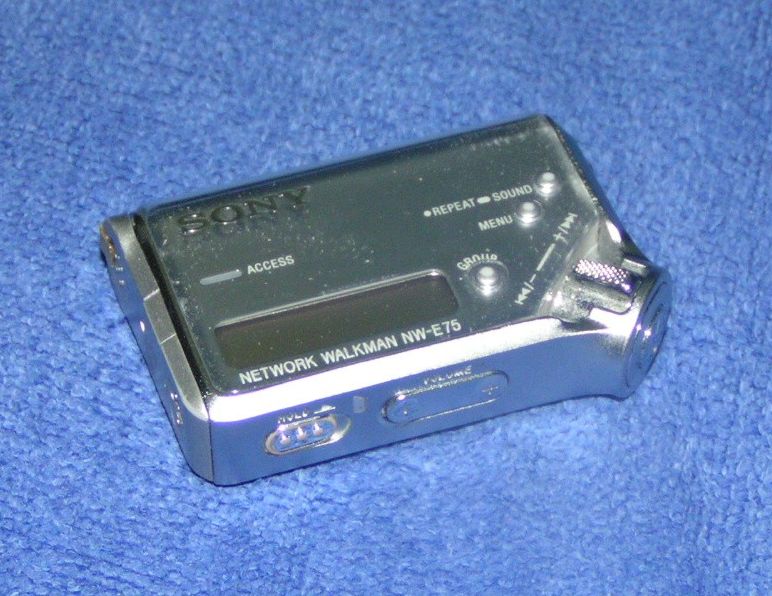
Sony’s answer was a range of players sold as the Network Walkman, many of them small, light and long-running on a battery. They all depended on SonicStage. In 2004 Sony moved into hard-disk players to compete with the iPod directly. As late as September 2004 its revised 20 GB model, the NW-HD2, still played MP3 files only after they had been converted to ATRAC3. The first hard-disk Walkman with native MP3 support, the NW-HD3, followed in December 2004, and by 2005 native MP3 playback had spread across Sony’s range; the files still had to be transferred through SonicStage with its OpenMG layer.
In May 2004 Sony opened its own download store in the United States, Sony Connect, a year after the iTunes Music Store. It sold songs in ATRAC3 with OpenMG protection, which meant they played on Sony’s devices and on almost nothing else. In late 2005 Sony replaced SonicStage on its new NW-A series hard-disk players with a program called Connect Player; it worked so badly that Sony apologized in January 2006 and temporarily withdrew it, and in May 2006 SonicStage CP, a SonicStage release that absorbed Connect Player’s features, took over the players. The Washington Post called Connect an embarrassment. The independent listening tests that hobbyists ran at the time did not help the format: in a public double-blind test at around 128 kilobits per second in 2004 and 2005, ATRAC3 came last behind Ogg Vorbis, AAC and LAME’s MP3 encoder.
Surrender
On 30 August 2007, at the IFA trade fair in Berlin, Sony announced that it would phase out the Connect music services based on ATRAC in North America and Europe, not before March 2008, and that its new Walkmans would use Windows Media technology. The NWZ-A810 and NWZ-S610 video Walkmans and the NWZ-B100 played MP3, AAC and Windows Media Audio, shipped with Windows Media Player 11, and accepted files dragged from the desktop. SonicStage would not be used for future Walkman products, and outside Japan the new players dropped ATRAC altogether. Sony’s statement said only that “the decision to embrace a more open platform will enable us to provide [users] with a better music enjoyment experience.” The Associated Press described Sony’s proprietary audio technology as a marketplace failure. Connect closed in the United States and Europe on 31 March 2008.
Five months earlier, in March 2007, Howard Stringer had described the cause in an interview with the television programme CEO Exchange. When he became chief executive in 2005, he said, almost every part of the company had been a “silo”: “All the divisions were in their own little worlds.” Sony’s engineers had wanted to build the jukebox, and the music label had blocked them. “We were working with IBM on electronic music distribution and could have put this out five years earlier [than the iPod],” he said. “But we couldn’t get our people to understand software. And we are a music company. They saw digital media, panicked and didn’t like it.” In the same months Sony BMG was still dealing with the consequences of the 2005 rootkit scandal, in which copy-protection software on its music CDs had secretly installed itself on customers’ Windows PCs.
Endings
The format lasted longest at home. In Japan the download store mora sold music only in ATRAC until 1 October 2012, when it moved to files without DRM; SonicStage was superseded there in 2013, and the last downloadable version for other countries, SonicStage CP 4.3, was removed from Sony’s websites on 29 March 2013. Sony stopped shipping MiniDisc Walkmans in September 2011 and all MiniDisc devices in March 2013. In January 2025 it announced that it would end production of recordable MiniDisc media the following month, with no successor.
ATRAC itself survived where Sony controlled the whole system: a later version, ATRAC9, is the low-latency audio codec of the PlayStation Vita, PlayStation 4 and PlayStation 5, inside games, invisible to their players.
Dead End
Sony lost the digital music player market with a company that had every part it needed: the Walkman brand, miniaturization skills, a large record label, the VAIO computer line and a codec it owned. It lost because those parts served different interests. The music division wanted every copy controlled; the hardware divisions needed players that people could fill with the music they already had; and the codec gave Sony a format it could license and control, at the price of incompatibility with MP3, the format that music was actually distributed in. Each product carried all three demands, and the user experienced them as a check-out counter.
The comparison with Apple is direct. Apple owned no record label, accepted MP3 from the first day, and introduced copy protection only for the music it sold, after it had already sold millions of iPods. Sony applied copy protection to everything, including recordings its customers had made themselves. When it opened its players to MP3, drag and drop and Windows Media in 2007, the iPod had been on sale for six years and the iPhone for two months.
📚 Sources
- Adaptive Transform Acoustic Coding, Wikipedia (ATRAC versions and dates, SDDS, 2004/05 listening test, mora, ATRAC9, end of ATRAC on Walkmans outside Japan)
- MiniDisc, Wikipedia (1992 launch, 292 kbit/s, SCMS, MDLP 2000, NetMD 2001, Hi-MD 2004/2005, SonicStage 3.4 and MZ-RH1, 22 million players, end of shipments 2011 and 2013, end of media 2025)
- “Sony no longer produces BD-R, MiniDiscs and MiniDV,” heise online, January 2025
- Secure Digital Music Initiative, Wikipedia (founding 1998, membership, Chiariglione, 2000 challenge, Felten, inactive since 18 May 2001)
- Hara, Yoshiko: “Sony puts Memory Stick into latest Walkman,” EE Times, 23 September 1999 (first SDMI-compliant player, 64 MB, playing times, price, Kunitake Ando quote)
- Sony press release (Japanese), 22 September 1999: Memory Stick Walkman NW-MS7, 45,000 yen, MagicGate, ATRAC3
- MagicGate, Wikipedia (mutual authentication and encryption; introduced 1999 as part of SDMI)
- OpenMG, Wikipedia (three check-outs, MP3 to ATRAC3 conversion, compatible software, user complaints)
- SonicStage, Wikipedia (October 2001 debut, Connect Player problems, IFA 2007, removal on 29 March 2013)
- Williams, Martyn: “Sony debuts MusicClip MP3 player,” IDG via CNN, 16 November 1999 (size, memory, price, formats, OpenMG, Sony’s lead role in SDMI, download service)
- Kenney, Brad: “Apple Didn’t Just Win – Sony Lost, Too,” IndustryWeek, 6 December 2010 (two players at Comdex 1999; Aaker on silos)
- “Craptacular Sony Network Walkman now in iPod mini colors,” MacTech, 29 September 2004 (NW-HD2 needs MP3 conversion)
- “Sony to ship true MP3 HDD music player next month,” The Register, 30 November 2004 (NW-HD3 on sale 10 December 2004, MP3 without conversion, OpenMG wrapper)
- “SonicStage CP,” AV Watch, 29 May 2006 (SonicStage CP replaces Connect Player for the NW-A players; Japanese)
- “Sony to kill Connect music service,” The Register, 30 August 2007 (Connect launched May 2004; MP3 support 2004; Windows Media; Sony statement; Washington Post remark)
- Moore, Matt: “Sony to shut down its online music store,” Associated Press via NBC News, 30 August 2007 (new Walkman models and formats, Windows Media Player 11, marketplace failure)
- Sony Connect, Wikipedia (closure on 31 March 2008)
- “Sony apologises for Connect Player problems,” The Register, 30 January 2006
- Malley, Aidan: “Sony boss rues losing to iPod, on guard against iPhone,” AppleInsider, 19 March 2007 (Stringer quotes from CEO Exchange)
- Image: Sony MZ-R37 1.jpg by -stk (CC BY-SA 4.0), via Wikimedia Commons
- Image: Network Walkman NW-E75.jpg by Alex Pappajohn (CC BY 2.0), via Wikimedia Commons