Scandinavian Participatory Design
Abstract
In the 1970s, when computers arrived on the shop floors and in the print shops of Norway, Sweden and Denmark, the unions there did not try to stop them. They tried to design them. The line of work began in 1970 with a project in which Kristen Nygaard, co-inventor of the Simula language, and Olav Terje Bergo helped the Norwegian Iron and Metal Workers’ Union study the planning systems being installed in its members’ factories, and it led to agreements that gave workers “data shop stewards” with a right to see the documentation of the systems. Swedish and Danish projects followed. In 1981 a group of researchers around Pelle Ehn and Morten Kyng went further and, with the Nordic Graphic Workers’ Union, set out to build the newspaper production technology that typographers themselves wanted, the UTOPIA project, which used cardboard mock-ups to let skilled workers design software. The union strategy did not survive the 1980s. The methods did: as “participatory design” they became part of human-computer interaction research worldwide.
The Iron and Metal Workers
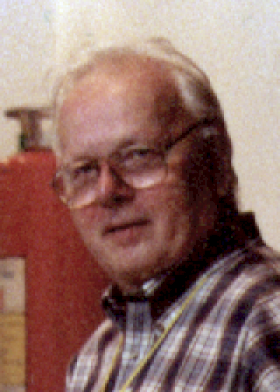
In 1970 the Norwegian Iron and Metal Workers’ Union (Norsk Jern- og Metallarbeiderforbund, NJMF) began a research project of its own on planning, control and data processing in the companies where its members worked. Nygaard, then at the Norwegian Computing Center, had moved politically to the left in the 1960s and turned to the social consequences of computing (see Ole-Johan Dahl and Kristen Nygaard). With Olav Terje Bergo he ran the work for the union. Accounts give the core project as running from 1971 to 1973, and Pelle Ehn later described the whole effort as lasting until 1975.
The first plan was copied from the research methods of management consultants and did not suit the union. It was restructured so that local union clubs chose what to study, and groups of union members at four workplaces investigated the systems introduced there. Nygaard and Bergo wrote a textbook for the labour movement on data processing, planning and control, published by the Norwegian Computing Center in 1972. The results were organisational, not technical. The first local data agreement was signed at the beginning of 1974, and in April 1975 a central agreement created data shop stewards, union representatives with a specific mandate for computer systems. “The representatives must have access to all documentation about software and hardware within the area of the agreement,” it said.
DEMOS and DUE
The Norwegian project had two successors. In Sweden, DEMOS (Democratic Control and Planning in Working Life) ran from 1975 to 1980 as a cooperation between the new Swedish Center for Working Life and a number of trade unions, supported by the Swedish Trade Union Confederation, with local projects at a daily newspaper, a locomotive repair shop, a metal factory and a department store. At the State Railways’ repair shop in Örebro, where the union learned in 1974 that a computer-based planning system would be introduced, the union formed its own investigating group of 14 members in March 1976 and finished in June 1977. It concluded that the system should be stopped until a codetermination agreement was reached and demanded in May 1978 that rationalisation “not result in work measurement of individuals or groups.” In Denmark the sister project was DUE, for democracy, education and computer-based systems.
The political frame was a decade of labour legislation. Sweden’s Codetermination Act (MBL) of 1976, in force from January 1977, required employers to negotiate with local unions before major changes in production, and the parliament decided in June 1976 to create the Swedish Center for Working Life, financed through a wage tax paid by all employers, to bring researchers and unions together; its statutes required “action research” dependent on the actions of the local parties. Norway’s Work Environment Act of 1977 gave workers rights to stop dangerous production. West Germany passed its own codetermination law the same year as Sweden.
The projects also showed the limits of the approach. Ehn summarised the experience: workers could influence how technology was introduced, how they were trained and how work was organised only to a limited degree, because the technology on offer was already designed for other purposes. In the words of the UTOPIA research programme of 1980, existing production technology “more and more often constitutes an insurmountable barrier preventing the realization of trade union demands for the quality of work and a meaningful job.”
UTOPIA
The answer was to design the technology. UTOPIA, a Swedish acronym for training, technology and products from a skilled-worker perspective (Utbildning, teknik och produkt i arbetskvalitetsperspektiv), ran from 1981 to 1985 or 1986, depending on the account. It was a different project from NJMF in a different industry: newspaper and printing work, in close cooperation with the Nordic Graphic Workers’ Union, which represented about 120,000 printers, typographers and lithographers in the five Nordic countries. The research was done at the Swedish Center for Working Life, the Royal Institute of Technology (KTH) in Stockholm and Aarhus University in Denmark, with Ehn as project leader, Kyng among the researchers and Yngve Sundblad and Susanne Bødker in the team; about fifteen people took part, among them a group of representatives that the Nordic Graphic Workers’ Union appointed from Denmark, Finland, Norway and Sweden. Most of the money came from the Center for Working Life and the National Board for Technical Development.
The graphic workers had reason to care. Microelectronics transformed their work from the mid-1970s, and in the United States and Britain, the historian Per Lundin wrote, many lost their jobs while their unions mostly resisted the new technology. UTOPIA’s aim was to show that newspaper page make-up and image processing could be computerised in a way that kept and extended typographers’ skills.
The project’s lasting contribution was method. Data-flow diagrams and written specifications meant nothing to typographers, so the researchers built mock-ups instead and practised what they called design-by-doing. In 1982 an empty cardboard box labelled “desktop laser printer” stood in for a device that did not yet exist, and with paper, slides and simple simulations of screens, typographers worked out how page make-up on a workstation should go. The design rested on what Ehn called the tool perspective: computer tools as extensions of the craft tools that skilled workers already used, designed by those workers together with computer specialists.
UTOPIA worked with the state-owned publisher and computer supplier Liber and its Text and Image Processing System (TIPS), with the Social Democratic newspaper Aftonbladet in Stockholm and with the Danish cooperatively owned newspaper Information. In 1983 it published requirement specifications that unions used in collective bargaining, and in May 1984 it presented its results at Bommersvik, the Social Democratic youth league’s study centre. TIPS was tested at newspapers, but Liber ran short of capital and sold the rights to a firm concerned mainly with image processing. Technology Review in Massachusetts sent Robert Howard, who described graphic workers and computer scientists sitting side by side as “an intriguing experiment in technology development.”
Dead End: Union Technology
The researchers had hoped for a “new Scandinavian model” in which unions would develop technology as a normal part of their work. They later wrote that the lack of cooperation from the unions themselves ended that hope. UTOPIA was a single demonstration, made possible by state and union-owned companies, cooperative newspapers and a Social Democratic research institute, an arrangement that did not exist outside the Nordic welfare states. Later projects, such as the Florence project on nurses’ work, designed with professional groups in their workplaces. One observer noted in 1990 that Swedish graphic workers had kept their jobs to a considerably greater extent than those in the English-speaking countries.
The methods outlived the strategy. Bjerknes, Ehn and Kyng edited Computers and Democracy: A Scandinavian Challenge (1987), Ehn published Work-Oriented Design of Computer Artifacts (1988), and Joan Greenbaum and Kyng edited Design at Work (1991). The American group Computer Professionals for Social Responsibility organised the first Participatory Design Conference in Seattle on 31 March and 1 April 1990, just before the CHI conference, and it has been held every other year since. In that literature the “Scandinavian school” of system development came to mean what UTOPIA’s cardboard box had stood for: low-tech prototypes, design sessions with users from the start, and the users’ skill treated as a resource.
📚 Sources
- Lundin, Per: “Designing Democracy: The UTOPIA-project and the Role of the Nordic Labor Movement in Technological Change during the 1970s and 1980s,” History of Nordic Computing 3, IFIP AICT 350, 2011 (UTOPIA 1981–1986, acronym, partners, 120,000 members, about fifteen participants, funding, Nygaard and Bergo, DEMOS 1975–1980, MBL 1976, Center for Working Life, 1980 programme quotation, Robert Howard, 1983 specifications, May 1984 Bommersvik, “new Scandinavian model,” 1990 observation)
- Ehn, Pelle: “Scandinavian Design: On Participation and Skill,” in Schuler and Namioka (eds.), Participatory Design: Principles and Practices, 1993 (NJMF 1970–1975, four workplaces, data agreements of 1974 and April 1975, data shop stewards and quotation, DEMOS Örebro case, DUE, UTOPIA mock-ups and the 1982 cardboard laser printer, tool perspective, TIPS rights sold, MBL in force January 1977, Norwegian Work Environment Act 1977, Florence project)
- Sundblad, Yngve: “UTOPIA: Participatory Design from Scandinavia to the World,” History of Nordic Computing 3, 2011 (Ehn as leader, Kyng, Liber/TIPS, Aftonbladet)
- Bødker, Susanne; Ehn, Pelle; Sjögren, Dan; Sundblad, Yngve: “Co-operative Design: perspectives on 20 years with ’the Scandinavian IT Design Model’,” NordiCHI 2000 keynote, Stockholm, October 2000
- Participatory design: A systematic review and insights for future practice, arXiv:2409.17952 (NJMF 1971–1973, outputs, textbook)
- Bjerknes, Gro; Ehn, Pelle; Kyng, Morten (eds.): Computers and Democracy: A Scandinavian Challenge, Avebury, 1987, Open Library, Ehn, Pelle: Work-Oriented Design of Computer Artifacts, 1988 and Greenbaum, Joan; Kyng, Morten (eds.): Design at Work, 1991
- “Origins and Future of the Participatory Design Conference,” ACM Interactions, July–August 2025 (PDC 1990, CPSR, held every other year) and The early shaping of participatory design at PDC (31 March to 1 April 1990, University of Washington, before CHI'90)